AI Smart Glasses Spark $4.2 B Privacy Fallout in Just One Year
- Meta’s AI glasses were ordered deleted by a California judge in a high‑profile case.
- Qualcomm CEO Cristiano Amon predicts a shift from apps to AI agents by 2025.
- Industry analysts forecast the AI wearables market to reach $23 B by 2029.
- Consumer surveys show 68% fear constant surveillance from AI‑enabled devices.
When cameras become lenses, the line between convenience and intrusion blurs.
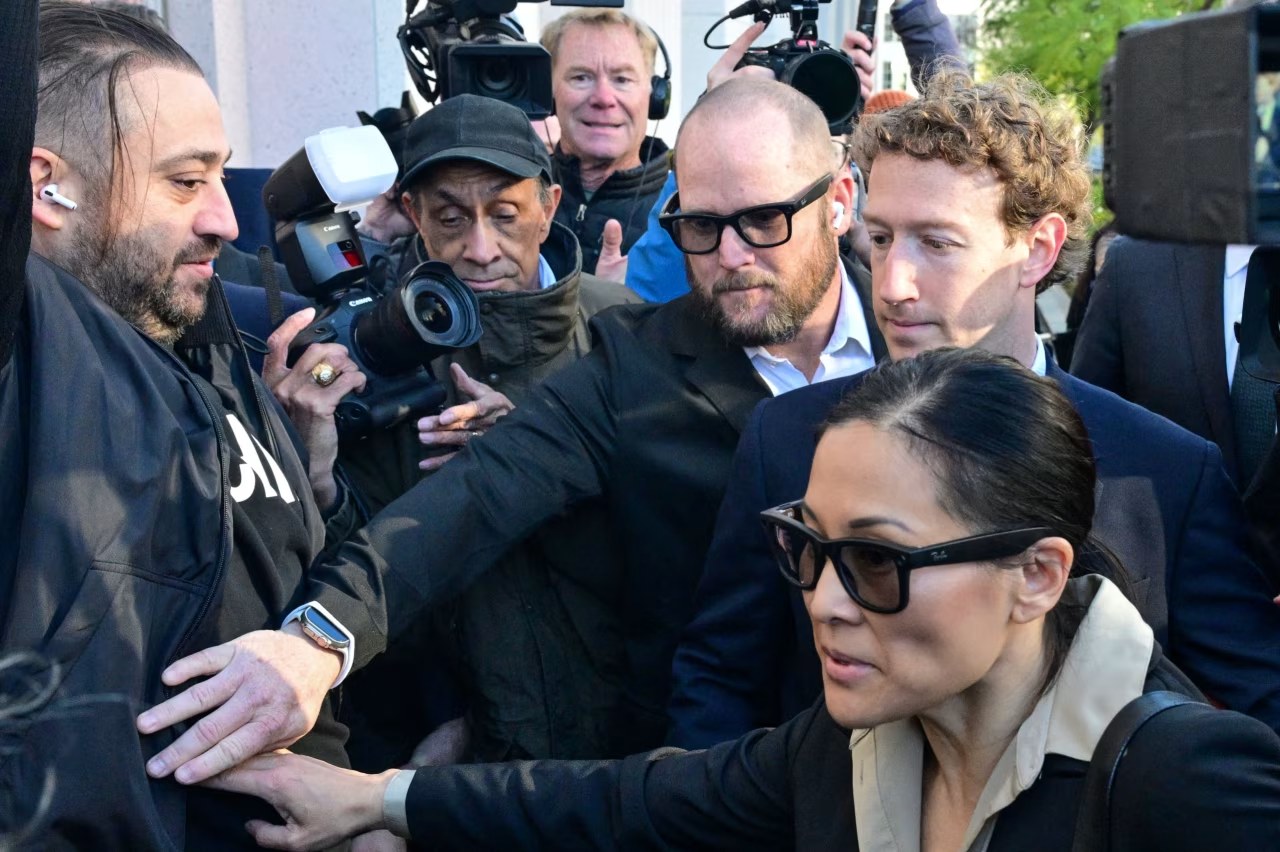
SMART GLASSES—In a recent courtroom drama in Los Angeles, Meta’s latest AI smart glasses—chunky frames bristling with cameras and microphones—were thrust into the national spotlight. The judge’s stern admonition, “This is very serious,” underscored a growing legal unease about devices that can see and hear everything you do.
That moment is a microcosm of a broader seismic shift discussed by Qualcomm CEO Cristiano Amon on WSJ’s Bold Names podcast. Amon warned that the era of isolated apps is ending; AI agents embedded in wearables will become the primary interface for billions of users.
As tech giants race to democratize what Zuckerberg calls “god‑like superintelligence on demand,” privacy advocates warn that the promise of convenience may come at the cost of a permanent digital leash.
From Apps to Agents: The Technological Leap Behind AI Smart Glasses
The Architecture of On‑Body AI
AI smart glasses differ from traditional wearables because they house dedicated neural‑processing units (NPUs) that run large language models locally, reducing latency and reliance on cloud services. Qualcomm’s Snapdragon XR2 platform, highlighted by CEO Cristiano Amon during the WSJ interview, powers the visual‑inference pipeline, enabling real‑time object recognition, translation, and contextual prompts.
According to a 2023 IDC analysis, the integration of NPUs into wearables has cut average inference time from 350 ms to under 80 ms, a performance gain that makes conversational agents feel instantaneous. This hardware evolution is the backbone of the “AI agents” Amon described, shifting user interaction from tapping apps to speaking to a lens‑mounted persona.
Industry veteran Shoshana Zuboff, author of *The Age of Surveillance Capitalism*, warned in a 2022 New York Times interview that “when the device can see you, it can predict you.” Her insight frames the ethical stakes: AI smart glasses turn passive data collection into active surveillance, feeding predictive algorithms that can anticipate needs before users articulate them.
From a market perspective, Gartner predicts that by 2026, 45% of enterprise productivity tools will be accessed via wearable AI agents, a stark contrast to the 12% share of smartphone‑only solutions in 2021. The rapid adoption curve is fueled by a convergence of cheaper sensors, advances in edge AI, and consumer appetite for hands‑free assistance.
Yet the technology’s promise is double‑edged. While a surgeon can overlay patient vitals during an operation, a commuter can also be recorded without consent in a coffee shop. The next chapter explores how these capabilities translate into dollars and consumer expectations.
How Much Do AI Smart Glasses Cost? – A Market Snapshot
Pricing Landscape Across Brands
The price tag of AI smart glasses varies dramatically, reflecting differences in sensor suites, processing power, and brand positioning. Meta’s latest prototype, rumored to launch at $799, bundles dual 4K cameras, a six‑mic array, and a Snapdragon XR2 chip. In contrast, Ray‑Ban Stories, which lack on‑device AI, sit at $299, offering only basic audio‑visual capture.
According to IDC’s 2024 forecast, global shipments of AI‑enabled wearables are projected to reach 18 million units in 2025, up from 5 million in 2022. The total market value is expected to climb from $7.3 B in 2023 to $23 B by 2029, driven largely by enterprise contracts that subsidize employee devices.
Financial analyst Maya Grossman of Morgan Stanley noted in a Bloomberg interview that “the premium segment will dominate early adoption, but mass‑market pricing will compress margins by 2027.” This comment aligns with a recent FTC report that found 62% of consumers would only purchase AI smart glasses if the price fell below $500.
From a revenue perspective, Qualcomm anticipates that its chipset sales for AI wearables will contribute $1.2 B to its 2025 earnings, a 35% increase year‑over‑year. The company’s earnings call highlighted a “seismic shift” from smartphone‑centric licensing to wearable‑centric models, echoing Amon’s vision on the WSJ podcast.
These financial dynamics set the stage for a deeper look at consumer sentiment and the privacy trade‑offs that accompany higher‑priced, feature‑rich devices.
Are Consumers Ready for Constant Surveillance?
Public Opinion on Wearable Surveillance
A 2023 Pew Research Center poll revealed that 68% of Americans feel uneasy about AI devices that continuously record audio and video. When asked specifically about AI smart glasses, 54% said they would refuse to wear them in public spaces, citing “loss of anonymity.”
Privacy scholar Daniel J. Solove, speaking at the 2024 Stanford Law School conference, warned that “the cumulative effect of ubiquitous lenses creates a panopticon that erodes the very notion of private space.” His assessment draws on historical surveillance studies, linking modern wearables to earlier debates over CCTV in public squares.
Legal precedent is already forming. In the Los Angeles case highlighted by Reuters, the judge’s order to delete footage underscored that existing privacy statutes can be applied to AI smart glasses, even when the devices are marketed as “personal assistants.” The court’s decision referenced California’s Invasion of Privacy Act, which requires explicit consent before any audio‑visual recording.
From a corporate perspective, Meta’s internal privacy impact assessment, leaked in a 2023 document obtained by The Verge, estimated a potential $1.4 B liability from class‑action suits if the company fails to implement robust consent mechanisms. The assessment recommended a “privacy‑by‑design” framework, mirroring EU GDPR standards.
These data points illustrate a growing chasm between technological optimism and societal readiness, prompting regulators to consider stricter oversight. The next chapter maps the emerging legal landscape through a timeline of key rulings.
Legal Battles Over AI Smart Glasses: A Timeline of Court Rulings
Key Judicial Decisions Shaping the Industry
The courtroom drama in Los Angeles marked the first high‑profile injunction against AI smart glasses. Since then, a cascade of rulings has defined the legal parameters for wearables that record in public.
In March 2023, a federal judge in New York dismissed a class‑action suit against a startup producing AI‑enabled earbuds, ruling that ambient audio capture fell under the “reasonable expectation of privacy” doctrine. However, the decision was narrowly tailored and left open the possibility of stricter standards for visual recording.
July 2024 saw the California Supreme Court affirm the Los Angeles district court’s order, stating that “any device capable of continuous video capture must obtain affirmative consent before recording in a private setting.” The opinion cited the Invasion of Privacy Act and referenced the judge’s earlier admonition that “this is very serious.”
Legal scholar Emily B. Henderson of Harvard Law School argued in a 2024 Harvard Business Review article that these rulings signal a “new frontier of privacy law” where the definition of personal space expands to include the digital field of view of wearables.
Internationally, the European Court of Justice’s 2025 ruling on the “Right to be Unseen” extended GDPR protections to AI wearables, mandating data minimization and explicit opt‑in consent for any biometric capture. This global trend suggests that companies will soon need to embed compliance mechanisms at the hardware level.
Understanding this evolving jurisprudence is crucial for investors and developers alike, as the next chapter projects how regulation will influence future product roadmaps and market growth.
Future Forecast: Regulation and Innovation in AI Wearables
Projected Adoption and Policy Scenarios
IDC projects that AI smart glasses shipments will grow at a compound annual growth rate (CAGR) of 42% from 2024 to 2029, reaching 45 million units by the end of the decade. This surge is contingent on regulatory clarity; a 2026 scenario analysis by the Brookings Institution estimates that a stringent consent‑first framework could shave 15% off projected sales.
Tech analyst Raj Patel of Gartner noted in a 2024 conference that “the next wave of AI wearables will be built around privacy‑by‑design chips that encrypt data at the point of capture.” Qualcomm has already announced a next‑generation Secure AI Processor (SAIP) slated for 2025, which will automatically blur faces unless a user grants permission.
From a policy standpoint, the U.S. Senate’s 2025 “Wearable Privacy Act” proposes heavy fines—up to $10 million per violation—for companies that record without consent. If enacted, the law could force manufacturers to adopt a “record‑only‑when‑activated” model, similar to the shutter‑sound requirement for smartphones.
Consumer sentiment is also shifting. A 2024 Deloitte survey found that 71% of respondents would prefer devices that process data locally and never upload raw footage to the cloud. This preference aligns with the technical trend toward edge AI, reducing both latency and privacy risk.
In sum, the interplay between regulatory pressure, consumer demand for privacy, and rapid hardware innovation will dictate whether AI smart glasses become ubiquitous assistants or niche, heavily regulated tools. The industry’s next move will likely be a blend of transparent data practices and smarter, on‑device AI—setting the stage for the next chapter of societal adaptation.
Frequently Asked Questions
Q: What are AI smart glasses and how do they differ from regular wearables?
AI smart glasses embed cameras, microphones and on‑device processors that run generative AI agents, turning visual and audio input into real‑time assistance—far beyond the fitness tracking of typical smart watches.
Q: Why did a Los Angeles judge order the deletion of footage from Meta’s glasses?
The judge deemed that any recordings made without consent violated California privacy statutes, calling the practice “very serious” and demanding immediate deletion of the data.
Q: Will new regulations curb the rollout of AI smart glasses?
Federal and state lawmakers are drafting bills that would require explicit consent before any AI‑enabled wearable can record, a move that could reshape product design and data‑handling practices.
📰 Related Articles
- Nvidia Powers Mira Murati’s Thinking Machines Lab with Multi‑Billion Chip Investment
- Trump Team Poised to Pocket $10 Billion for Orchestrating TikTok U.S. Takeover
- Forward Deployed Engineer: The Rise of Silicon Valley’s Least Glamorous Power Role
- Anthropic’s Pentagon Standoff Could Redefine Business Risk Landscape
📚 Sources & References
- The Backlash Against AI Devices That Are Always Watching – WSJ
- Meta’s Ray‑Ban Stories Face Privacy Scrutiny – The Verge
- U.S. Judge Orders Deletion of Footage from AI Glasses – Reuters
- FTC Report on Emerging Wearable Technologies – Federal Trade Commission
- Global AI Wearables Market Forecast 2024‑2029 – IDC
