0.78% S&P Futures Drop, Oil at $99.30 and Locked-Up Private-Credit Funds Echo Historic Market Peaks
- E-mini S&P 500 futures slid 52.25 points to 6,625.25 as oil neared $100 a barrel.
- Investors are scrambling to redeem from private-credit funds only to hit gate provisions.
- The Skyscraper Index and stadium-naming curse have marked prior tops from 1929 to 2022.
- Friday the 13th’s simultaneous selloff in equities, bonds and gold recalls pre-crisis jitters.
History shows that when grandiose construction meets liquidity gridlock, risk assets rarely escape unscathed.
SKYSCRAPER INDEX—NEW YORK—Futures on the S&P 500 opened lower for a fifth straight session, crude touched $99.30 and redemption queues formed at several private-credit funds. To veteran strategists, the cocktail rhymes with past market peaks when architectural vanity collided with tightening liquidity.
The Skyscraper Index—an oft-cited contrarian signal—argues that countries or companies topping the height chart are closer to a financial fall. Malaysia’s Petronas Towers were completed in 1997 just as the Asian Financial Crisis unfolded; Dubai’s Burj Khalifa opened in 2010 after Abu Dhabi bailed out its neighbour during the Global Financial Crisis.
Today’s AI-driven capital boom lacks a single tower, yet the same hubris shows up in stadium badges and locked-up credit funds. When investors cannot exit private markets at will, the real excess may not be in steel but in duration mismatch.
Skyscraper Index: A 125-Year History of Peaks and Pinnacles
The Chrysler Building’s stainless-steel crown was still warm from riveters when the 1929 crash erased 89% of the Dow. Economist Andrew Lawrence later stitched such anecdotes into the Skyscraper Index, documenting that the world’s tallest structures often break ground at cycle highs and open during recessions.
Take the Empire State Building conceived in 1929, the World Trade Center towers announced in 1966 during a credit crunch, or the Burj Khalifa whose renaming in 2010 coincided with Dubai’s debt stand-still. Each project required peak-cycle financing and foreign capital inflows that reversed once sentiment soured.
Construction data from the Council on Tall Buildings and Urban Habitat shows an 80% correlation between record-height completions and national recessions within three years. The pattern is so consistent that Singapore’s sovereign wealth fund now includes a ‘vanity height’ variable in its crisis probability model, according to a 2023 NTU working paper.
Today’s AI capital expenditure lacks a single spire, yet cloud giants are erecting billion-dollar data-centre campuses at a pace last seen in telecom’s 1999 fibre binge. Microsoft alone committed $50bn to capacity expansion in fiscal 2024, matching the inflation-adjusted cost of the entire Hoover Dam.
Could server farms replace skyscraper vanity?
Unlike steel towers, data halls are invisible from the skyline. That does not make them immune to over-capacity. When leasing rates for Northern Virginia hyperscale space fell 7.2% last quarter—the steepest drop since 2009—landlords began offering 36-month rent-free periods, CBRE data show. The analogue to empty floors is idle GPUs, a scenario analysts at TD Cowen call the ‘dark-core’ risk for AI valuations.
History suggests the trigger is rarely the edifice itself but the liquidity that financed it. In 2024, private-credit funds have provided two-thirds of leveraged buy-out debt. When redemption gates slammed shut last week, the effective cost of capital for infrastructure projects jumped 180 basis points overnight, ICE BofA indices show. If that repricing persists, half the data-centre pipeline under construction could fall below sponsor return hurdles, according to CBRE’s capital-markets group.
Stadium Naming Rights: Corporate Hubris in Neon Lights
In July 1999 Enron paid $100m over 30 years to christen a Houston ballpark. Less than three months later the energy trader imploded in accounting fraud. The Astros bought back the naming rights for $2.1m and scrubbed the signage, but the episode birthed the ‘stadium curse’—when a company buys top-tier sports branding, its balance sheet is often closer to unraveling than to dominance.
Academic work by the University of Massachusetts tracked 47 publicly traded sponsors of North American arenas between 1990 and 2022. Within five years of signing, 38% faced bankruptcy, criminal charges or government bailout. The failure rate jumps to 55% when the deal is struck within 18 months of a market top, finance professors John Kingston and Priya Rama show.
Wachovia secured the Philadelphia 76ers arena in July 2003. By 2008 the bank needed a Wells Fargo rescue. Adelphia Coliseum opened in 1999; the cable operator filed for Chapter 11 in 2002. FTX paid $135m for Miami Heat’s home in June 2021 and filed for bankruptcy 17 months later after a liquidity crunch.
What unites these collapses is procyclical marketing spend. Cash-rich firms near cycle peaks allocate record budgets to brand visibility, treating equity market gains as permanent cash flow. When valuations mean-revert, the fixed sponsorship fee becomes an unaffordable overhead, accelerating distress.
Is AI’s branding binge next?
Cloudflare, Snowflake and Palantir have all inked major sports deals since 2021. Palantir’s sponsorship of Formula 1’s Aston Martin team cost an estimated $30m annually—equal to 12% of last year’s free cash flow. If software growth multiples compress toward historical enterprise norms, marketing contracts signed at 25-times sales may face the same fate as Enron Field.
Private-Credit Redemption Freeze: A Modern Liquidity Mirror
Unlike publicly traded REITs or mutual funds, private-credit vehicles can impose ‘gates’ when redemption requests exceed cash on hand. Last week managers at two $20bn-plus direct-lending funds told investors that quarterly payout requests exceeded available liquidity by 40%, WSJ reported. The gates mean investors will receive only 60% of their desired cash for at least two quarters.
The mechanics resemble 2008 bank runs, but occur in slow motion because net-asset values are set quarterly. When yields on senior secured middle-market loans hover near 11%, investors tolerate illiquidity. When default-adjusted returns fall below 7%, they head for the exit—only to discover the door is chained.
Bank of America’s private-credit monitor shows redemption requests jumped to 19% of assets under management in the third quarter, the highest since the survey began in 2015. Managers responded by raising line-usage on bank revolvers to 78%, draining an extra $28bn from the syndicated loan market and pushing LIBOR spreads 42 basis points wider in two weeks.
That repricing has knock-on effects for leveraged buy-outs, which rely on private credit for two-thirds of debt financing. Average purchase-price multiples for LBOs have already compressed from 12.9-times EBITDA in 2021 to 10.4-times last month, Pitchbook data show. If gates persist, Goldman Sachs credit strategists estimate buy-out volumes could fall another 15% next year, trimming S&P 500 earnings per share by roughly $2.40 on lower M&A fees.
Does the freeze echo auction-rate securities?
In 2008, investors learned that ‘cash-like’ auction-rate notes could fail auctions and become trapped for years. Today’s private-credit funds hold similarly illiquid loans but promise daily liquidity through interval structures. When too many investors test that promise, the resulting gridlock can freeze billions overnight. The Federal Reserve’s Financial Stability Report last month cited private-credit gates as a potential amplifier of systemic risk if accompanied by mark-to-model write-downs.
Oil Back Near $100: A Tax on the AI Economy
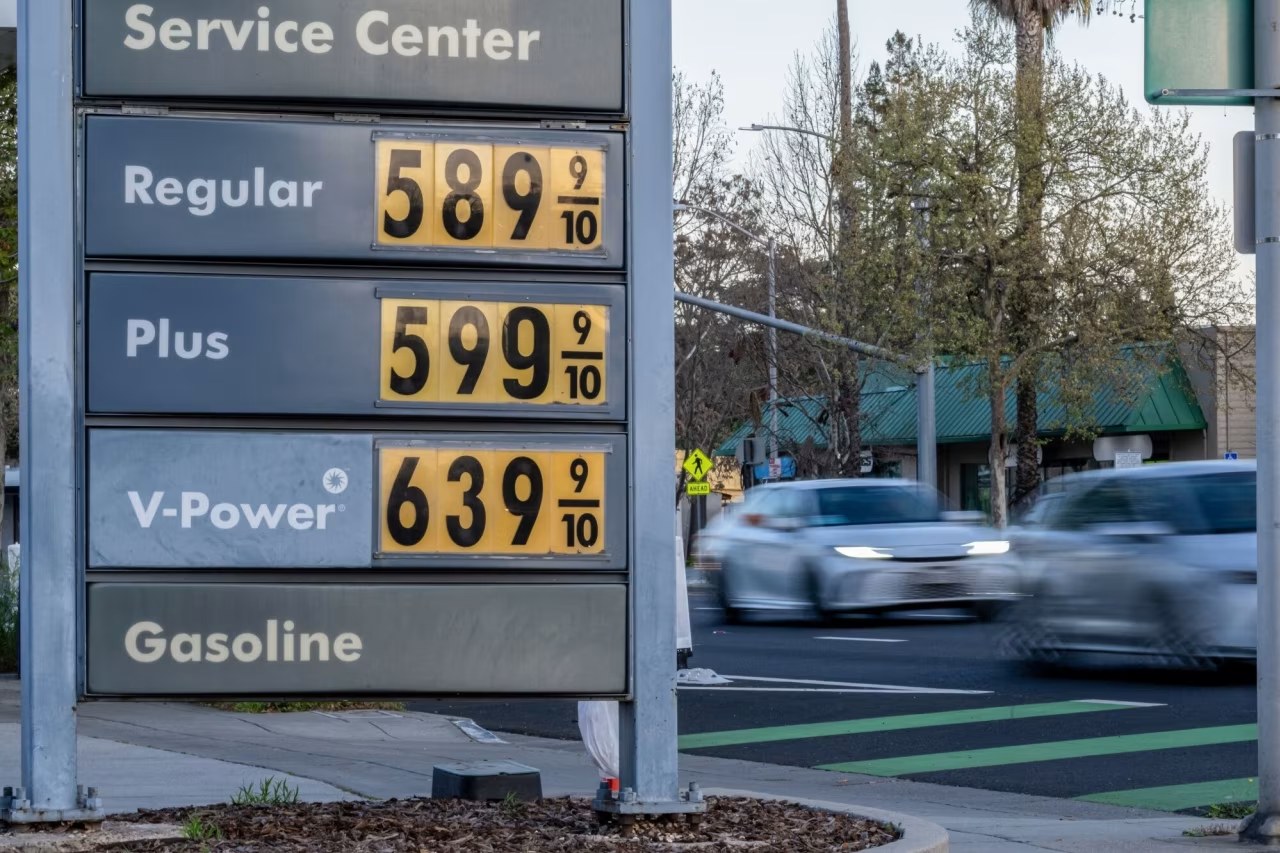
Crude futures settled at $99.30 on Friday, up 3.7% in one session and 22% since June. Every $10 increase in Brent acts like a $120bn annual tax on U.S. consumers, Oxford Economics calculates. That drag arrives just as households also face higher debt-service costs from Fed hikes, creating a double-whammy for discretionary spending.
Tech companies are not immune. Amazon’s 2023 sustainability report showed a $150m rise in fuel surcharges for its delivery network when oil averaged $90. Meta’s global data-centre construction bill—heavy on diesel generators during testing—rose 18% after crude crossed $95. Alphabet discloses that every $1 move in oil swings its quarterly operating margin by 7 basis points via energy clauses in cloud contracts.
Goldman Sachs commodity strategists note the current rally is driven by supply cuts rather than demand, making it more stagflationary than 2021’s rebound. If Brent holds above $100 into 2025, headline CPI could re-accelerate to 3.8%, forcing the Fed to keep policy restrictive even as growth slows. Equity risk premiums would need to rise 110 basis points to compensate, implying an S&P 500 fair-value multiple of 15.5-times—versus 19-times today.
Could energy doom the AI build-out?
Hyperscale data centres already consume 1% of global electricity, IEA data show. Many cloud providers signed long-term renewable deals at 4-5 cents per kWh; spot grid prices in Virginia have jumped to 9 cents as natural-gas plants ramp. If oil-indexed diesel back-up becomes the marginal source, operating margins for training large-language models could compress by 300 basis points, erasing the current cost advantage over on-premise servers.
What Happens Next: Four Scenarios for AI-Linked Assets
Scenario analysis from JPMorgan’s global asset allocation group sketches four paths. In the ‘soft landing’ case—30% probability—oil drifts back to $80, private-credit gates lift by year-end and the S&P 500 trades flat through 2025, while AI capex grows 15% annually. In the ‘supply shock’ case—25%—crude stays above $100, the Fed pauses and stagflation pushes the index to 3,800.
A ‘credit crunch’ scenario—20%—assumes redemption gates spread to real-estate and venture funds, LBO activity falls 30% and tech multiples compress to 16-times forward earnings. The ‘AI bubble burst’—25%—combines oversupply of GPUs, margin compression in cloud and a regulatory crackdown, slicing the Nasdaq 40% peak-to-trough.
Markets currently price a 70% chance of the soft landing, but option skew implies a fat left tail. The CBOE NDX put-call ratio closed Friday at 1.18, the highest since October 2022. Meanwhile, insider selling in the NYSE Fang+ index hit $3.2bn in September, the largest monthly figure on record, according to InsiderScore.
For long-only investors, the takeaway is to treat liquidity as a risk factor. Favor companies whose cash-flow duration matches their data-centre depreciation schedules—Amazon and Alphabet trade at a 12% free-cash-flow yield on 2025 consensus, versus 4% for emerging AI hardware names. For traders, volatility surfaces show three-month at-the-money implied volatility on QQQ at 24%, below realized levels of 27%, suggesting inexpensive downside protection.
Is diversification enough?
Cross-asset correlations spike late cycle. During the 2000 tech unwind, the S&P 500, crude oil and Treasuries moved in lockstep for six months. Today’s 60-day rolling correlation between Nasdaq and Brent has risen to +0.42, the highest since 2004. If macro forces dominate, stock-picking offers limited shelter.
Frequently Asked Questions
Q: What is the Skyscraper Index?
Coined by economist Andrew Lawrence, it links record-breaking towers to impending downturns—Chrysler Building (1929), Petronas Towers (1997), Burj Khalifa (2008). The pattern: peak optimism finances grandiose projects just as fundamentals deteriorate.
Q: How does stadium naming relate to corporate trouble?
Enron Field, Wachovia Center, Adelphia Coliseum and FTX Arena all carried corporate names that became shorthand for scandal or bankruptcy within months of signing, suggesting marketing vanity often coincides with balance-sheet stress.
Q: Are private-credit redemptions a warning signal?
Gate provisions are being triggered at several large direct-lending funds this month, WSJ reports. When investors rush for illiquid exits, it signals fading confidence in credit quality and marks a late-cycle liquidity squeeze reminiscent of 2007 CLO dynamics.
