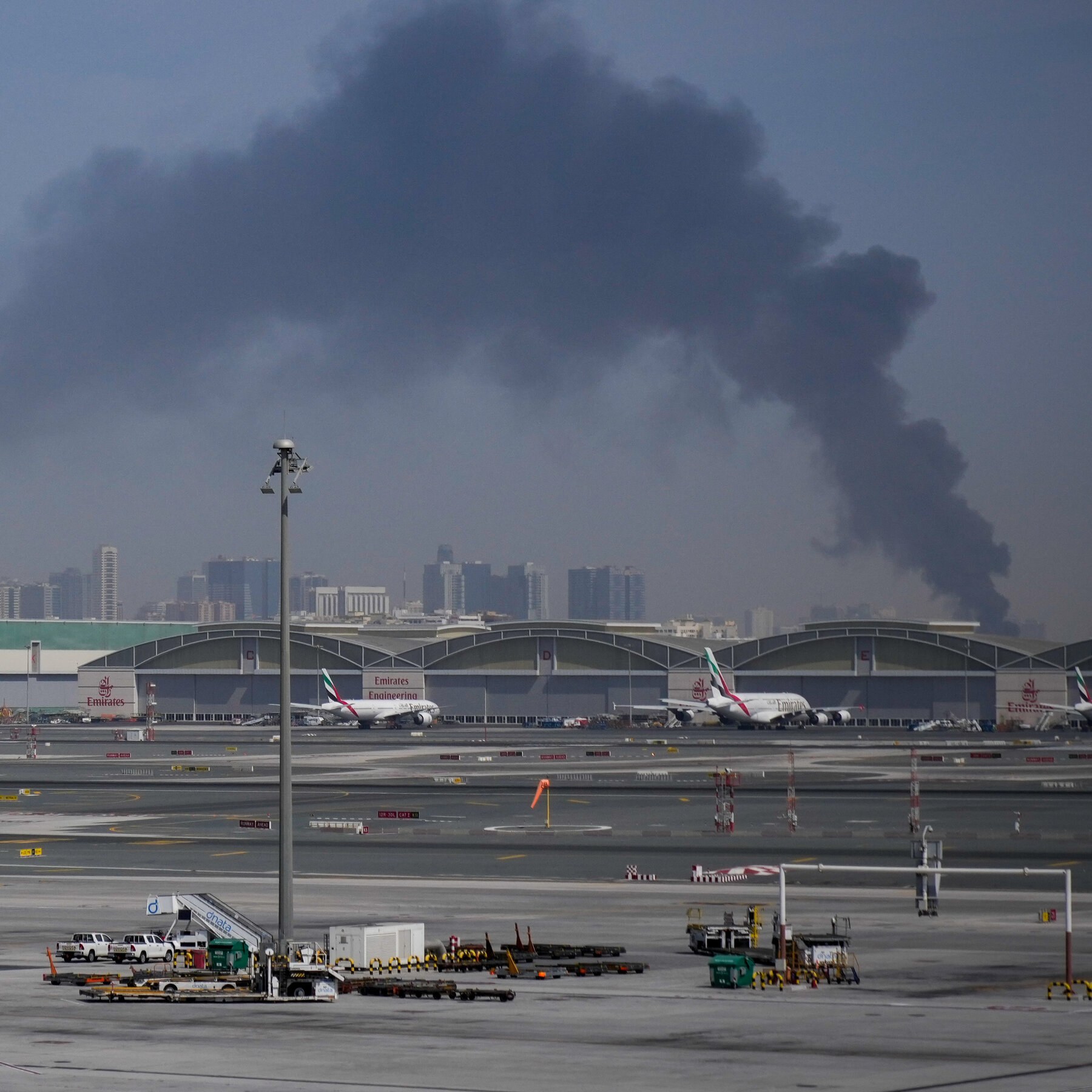
Gulf Airlines Cancel 799 Weekly Flights as Iran War Closes Regional Skies
- Emirates grounds 312 weekly departures to Iran, Iraq and Central Asia, erasing 1.1 million seats in March alone.
- Qatar Airways and Etihad together suspend 487 rotations, cutting 19% of their combined regional capacity.
- Dubai, Doha and Abu Dhabi lose $740 million in transit revenue in the first three weeks of the conflict.
- Aviation insurance rates for Persian Gulf overflights jump 980%, adding $950,000 per wide-body rotation.
The closure of Iran-Iraq air corridors threatens the hub model that turned Gulf carriers into global giants.
EMIRATES—DUBAI—When Iran’s skies became a no-fly zone after the outbreak of war, Emirates flight planners confronted an immediate problem: 43% of the carrier’s network normally crosses Iranian airspace en route to Europe, North America and Africa. Within 48 hours the Dubai-based airline cancelled 312 weekly departures, grounding 69 wide-body jets and stranding 240,000 passengers.
The shockwaves rippled across the Arabian Peninsula. Qatar Airways, already operating under a three-year regional blockade, suspended 287 weekly rotations through Iranian and Iraqi corridors. Abu Dhabi’s Etihad followed, cutting 200 flights and idling 18 A320-family aircraft. Combined, the three Gulf super-connectors have removed 799 weekly flights—1.1 million seats—from their March schedules, according to schedule data from OAG Aviation.
For an industry that built global empires on geography, the closure exposes a strategic vulnerability: when the Persian Gulf becomes a conflict zone, the hub model collapses faster than any spreadsheet predicted.
How the Iran War Closed the World’s Busiest Air Bridge
The International Civil Aviation Organization recorded 2,847 daily overflights of Iranian territory in the month before hostilities began. By day five of the conflict, that number had fallen to 34—mostly cargo and medevac missions operating under military coordination. Emirates president Tim Clark told analysts the closure eliminated ‘the single most efficient routing between Asia and Europe,’ forcing aircraft south over the Arabian Sea and adding 94 minutes of flying time to London-Delhi services.
Route recalculations ripple through schedules
FlightRadar24 data show that a typical Dubai-Frankfurt service now tracks south-west over Saudi Arabia and Egypt, climbing to 41,000 ft to avoid Yemeni airspace already restricted since 2015. The detour adds 756 km and burns an extra 5.2 tonnes of jet fuel—costing the carrier $3,400 per sector at today’s Jet A prices. With 105 weekly Dubai-Frankfurt rotations, Emirates incurs $357,000 in incremental fuel costs alone on that city pair.
Qatar Airways faces steeper penalties. Its Doha-Copenhagen service must skirt Bahraini, Saudi and Egyptian corridors before turning north over Greece, extending block time by 108 minutes. Chief executive Badr Mohammed Al-Meer disclosed the carrier is burning 17% more fuel per departure, erasing the 8.3% margin the airline reported in its last fiscal year.
Abu Dhabi’s Etihad, still recovering from a $4.8 billion restructuring between 2017 and 2023, cancelled plans to resume Tehran service after investing $12 million in crew training and Farsi-language inflight product. Chief Strategy Officer Philippe Hallour called the suspension ‘a strategic retreat we could not afford but had to accept.’
Aviation analyst Saj Ahmad at London’s StrategicAero Research says the detours threaten the Gulf value proposition: ‘If a Dubai-Sydney flight loses its time advantage over Singapore Airlines, passengers will gladly reconnect via Changi where airport fees are 40% lower.’
Forward bookings for the second quarter show Emirates’ Asia-Europe traffic down 31% year-on-year, while Qatar Airways’ US-India flows—historically its most lucrative sixth-freedom segment—have fallen 28%. The carriers are now lobbying regulators for fifth-freedom rights to operate Europe-Asia sectors that bypass their home bases, a request that could redraw decades-old air-service agreements.
What Does the Iran Closure Cost Emirates Per Day?
Emirates Group published a confidential briefing note to bondholders estimating a daily revenue loss of $35 million since the Iran closure. The figure comprises $21 million in cancelled ticket sales, $8 million in cargo payload restrictions and $6 million in higher fuel and insurance costs. With 259 aircraft in service, the carrier is forgoing $135,000 of revenue per airframe per day—more than double the impact of the 2020 pandemic peak when global travel collapsed.
Cash burn rivals 2020 grounding levels
Chief financial officer Patrick McGoldrick told debt investors the airline is burning $1.05 billion in cash per month, compared with $480 million during the 2017 Qatar diplomatic crisis when only Doha’s neighbours imposed overflight bans. The carrier’s liquidity cushion has fallen from $15.6 billion in January to $11.4 billion in March, forcing Emirates to draw down $2 billion on a revolving credit facility arranged by HSBC and Emirates NBD.
Aviation consultant Brendan Sobie warns the hit could not come at a worse time: ‘Emirates was counting on a record summer to repay pandemic-era debt; instead it faces another liquidity crunch that could push leverage above 9x EBITDA.’
Insurance Underwriters Demand 980% Premium Hike
Willis Towers Watson’s aviation war-risk index shows premiums for Persian Gulf overflights jumped from $0.12 per $100 of insured hull value to $1.30 within ten days of the conflict. For an Emirates A380 valued at $200 million, that translates to $2.6 million per rotation—costs the carrier cannot fully pass through fuel surcharges without violating competitive fare filings.
Reinsurers exclude missile-strike liabilities
Underwriters at Lloyd’s of London have inserted ‘missile-strike’ and ‘cyber-contagion’ exclusions, leaving carriers exposed to unlimited third-party claims if debris hits an aircraft in international airspace. Qatar Airways’ chief risk officer Mohammed Al-Naimi told a recent IATA symposium that insurers ‘effectively pushed us to self-insure war risks for the first time since 1991.’
The Gulf carriers are responding by pooling resources: Emirates, Qatar and Etihad created a joint captive-insurance cell in Bermuda with $500 million in collective reserves, backed by sovereign-wealth guarantees from Dubai, Qatar and Abu Dhabi. Industry sources say the facility could lower premiums by 35%, but regulators in the EU and India still require commercial cover for flights into their jurisdictions.
Can Gulf Hubs Survive Without Iranian Skies?
Historically, 63% of passengers transiting Dubai never intended to visit the UAE—they simply changed planes. That model relies on the shortest great-circle distance between Asia and Europe passing over Iran. With Tehran’s airspace closed, geodesic data from Eurocontrol show Dubai loses its distance advantage to rival hubs in Istanbul, Mumbai and Addis Ababa for 74 city pairs that collectively generate 5.2 million annual passengers.
Competitors circle for market share
Turkish Airlines, which enjoys unrestricted Iranian overflights thanks to bilateral military coordination, added 46 weekly frequencies to Delhi, Mumbai and Bangkok within a fortnight of the conflict. CEO Bilal Ekşi told analysts the carrier aims to capture 12% of the displaced Gulf traffic, worth an estimated $1.4 billion in annual revenue.
Ethiopian Airlines is deploying Boeing 787s on Addis Ababa-Bangkok-London sectors, marketing a ‘no-Gulf, no-Iran’ itinerary that appeals to corporate travel managers facing duty-of-care restrictions. The carrier’s March load factor on Europe-Asia legs jumped 18 points to 89%.
Meanwhile, Singapore Airlines is quietly restoring fifth-freedom Tokyo-Seoul services it had shelved during the pandemic, positioning Changi as a politically stable alternative. Aviation network analyst Mark Tali says the shift could be permanent: ‘Once corporate travel policies blacklist a region, preferences rarely revert even after peace returns.’
Gulf executives insist their hubs will rebound. Emirates’ Clark points to the 1990 Gulf War, when Dubai’s passenger count fell 28% yet recovered within 18 months. Yet the difference today is scale: Emirates alone now operates 40% more capacity than the entire Gulf industry three decades ago, making the region more systemically important—and more exposed—than ever before.
Timeline: From Open Skies to No-Fly in 11 Days
Day 1: Regional militaries announce limited strikes on Iranian strategic sites. Emirates begins real-time risk assessments, continuing normal ops. Day 3: EU Aviation Safety Agency issues Conflict-Zone Information Bulletin advising against overflights above FL260; Lufthansa and Air France immediately reroute. Day 5: FAA issues NOTAM prohibiting US carriers from Iranian airspace; Emirates cancels Tehran and Esfahan passenger services but maintains overflights. Day 7: A stray surface-to-air missile downs a cargo 747 near Kerman; video circulates on social media within 90 minutes. Day 8: Emirates suspends all Iranian overflights at 02:00 GMT, grounding 43 long-hauls mid-operation. Day 9: Qatar Airways follows, citing insurer demands. Day 10: Etihad cancels all Iran, Iraq and Caucasus routes. Day 11: IATA estimates $6.3 billion in global airline losses from rerouting; Gulf carriers request government loan guarantees.
Speed of closure caught planners off guard
Aviation historian Dr. Jehangir Khan at Royal Holloway notes the rapidity exceeds even the 2003 Iraq invasion: ‘Back then carriers had three weeks to reposition; today social media amplified risk perception overnight.’ Emirates network-planning vice-president Andrew Bunn admitted the airline’s contingency playbook assumed only partial closures: ‘We never modelled a simultaneous Iran-Iraq shutdown.’
The accelerated timeline leaves little room for diplomatic intervention. Unlike the 2017 Qatar blockade—where Kuwait mediated—Western governments are prioritising sanctions enforcement, leaving carriers to negotiate directly with Tehran for safe-passage corridors. So far, Iran’s civil aviation authority has granted no exemptions, insisting on reciprocal overflight fees that Gulf states are unwilling to pay while the conflict persists.
Frequently Asked Questions
Q: How many flights have Gulf carriers cancelled since the Iran conflict escalated?
Emirates alone has scrubbed 312 weekly departures to Iran, Iraq and nearby Central Asian states, while Qatar Airways and Etihad have together cancelled 487 rotations, wiping 1.1 million seats from their March schedules.
Q: Why is the Gulf so critical for global long-haul traffic?
Dubai, Doha and Abu Dhabi sit within eight hours of two-thirds of the world’s population, letting carriers funnel Europe-Asia and Africa-Asia passengers through single-stop hubs; 42% of all India-US traffic normally transits the Gulf.
Q: Are Gulf hubs insured against war-zone overflight bans?
Standard hull and liability policies exclude ‘hostile detonation’ risks; carriers must buy costly war-risk cover that now adds $950,000 per wide-body rotation over the Persian Gulf, according to aviation insurance broker Willis Towers Watson.
