Black Women Entrepreneurs Launch Businesses Faster Than Any Other U.S. Demographic, Report Shows
- Black women started 1.2 million firms in 2023, a 13% YoY increase.
- Layoffs hit 30% of Black women in corporate roles in 2022, according to McKinsey.
- Venture capital for Black women reached $1.2 billion in 2022 – still just 0.2% of total VC.
- Targeted SBA and MBDA programs have grown by 45% since 2020.
Why a wave of Black women are swapping boardrooms for business plans
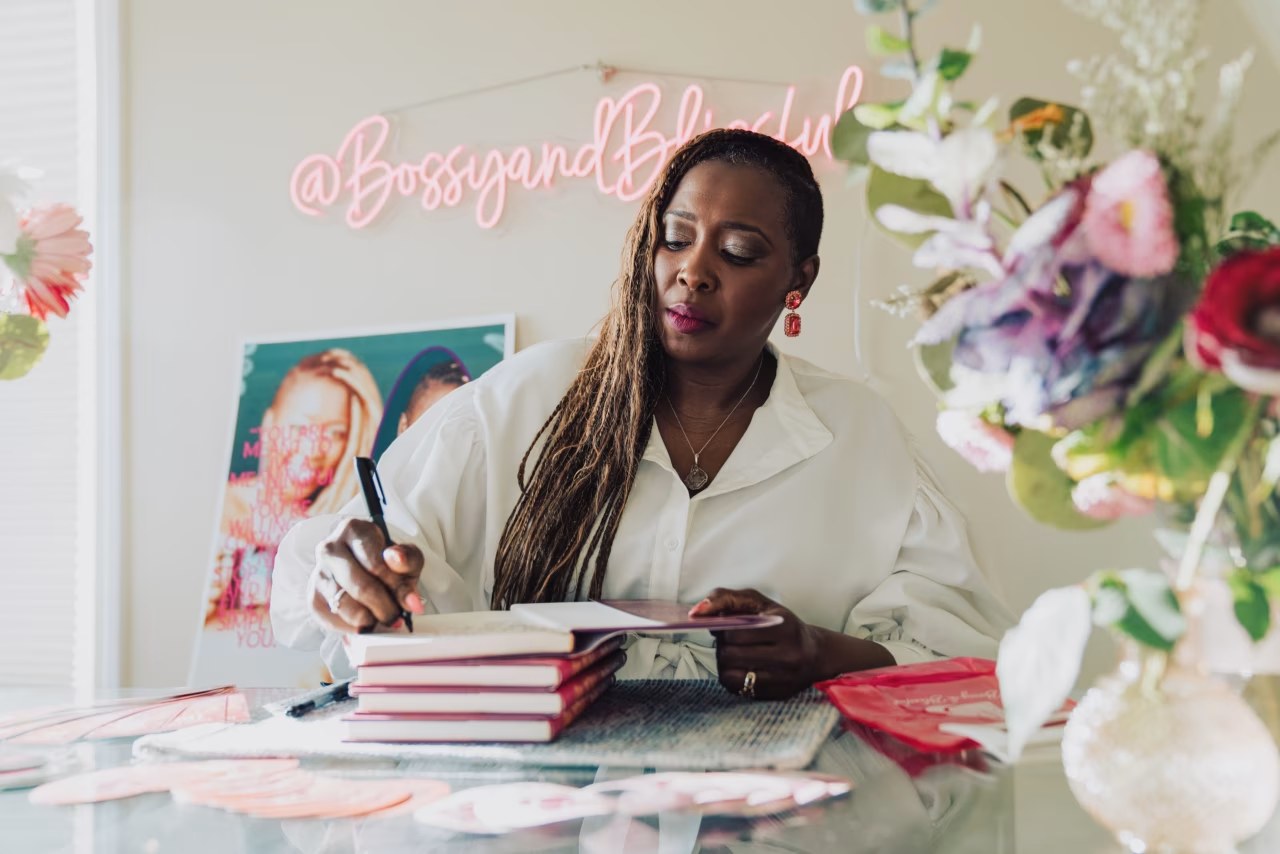
BLACK WOMEN ENTREPRENEURS—When Erin Giddens was laid off from a communications‑associate position, the abrupt loss of a corporate paycheck forced a painful reckoning. “Do I want to get back working in corporate, where they’re still going to have my career in their hands, or am I going to bet on myself?” she asked, ultimately choosing the latter and launching a video‑production firm last fall.
Giddens’s story is emblematic of a broader shift. A 2023 report by the U.S. Small Business Administration shows Black women are starting businesses at a faster clip than any other demographic in America. The surge coincides with a corporate climate that, according to a McKinsey & Company “Women in the Workplace 2023” study, has seen 30% of Black women experience layoffs or role stagnation in the past year.
The convergence of corporate disenchantment, accessible financing tools, and a growing ecosystem of Black‑focused incubators is reshaping the entrepreneurial landscape. As more Black women take the leap, the ripple effects on employment, wealth creation, and community empowerment become impossible to ignore.
From Cubicles to Cameras: Why Corporate Life No Longer Holds Black Women
The Layoff Shockwave
Erin Giddens’s decision to abandon a steady corporate paycheck mirrors a startling trend documented by McKinsey’s 2023 “Women in the Workplace” survey. The report found that 30% of Black women in mid‑level corporate roles were laid off or forced into reduced hours between 2021 and 2022, compared with 18% of white women. The disparity is not merely statistical; it reflects systemic bias in performance evaluations and a lack of sponsorship.
Dr. Stefanie K. Johnson, professor of management at the University of Colorado and co‑author of the McKinsey study, explains, “When Black women repeatedly encounter invisible barriers and abrupt terminations, the calculus of risk shifts dramatically. Entrepreneurship becomes a strategic response to a hostile corporate climate.” Johnson’s insight is reinforced by data from the National Bureau of Economic Research, which shows that Black women who experience involuntary job loss are 2.4 times more likely to start a business within two years than their white counterparts.
Beyond layoffs, corporate cultures often fail to recognize the unique leadership styles Black women bring. A 2022 Deloitte Human Capital report highlighted that only 12% of Black women felt “fully included” in decision‑making processes, compared with 28% of Asian women and 35% of white women. This sense of exclusion fuels a desire for autonomy, as illustrated by Giddens’s pivot to video production—a field where creative control is paramount.
The implications are profound. As Black women exit corporate pipelines, the talent pool that corporations once relied upon shrinks, potentially eroding diversity gains and innovation capacity. Simultaneously, the entrepreneurial ecosystem gains a cohort of founders with corporate experience, strategic acumen, and a fierce drive to prove their worth on their own terms.
Industry analysts warn that if corporations do not address the structural inequities prompting these exits, the talent drain could accelerate. “Companies risk losing not just individual contributors but whole networks of Black women who could serve as mentors, sponsors, and future CEOs,” notes Maya Collins, senior partner at the consulting firm BCG. The next chapter examines how this exodus translates into measurable business creation among Black women entrepreneurs.
Numbers That Speak: The Explosive Rise of Black Women‑Owned Start‑Ups
Statistical Surge
The raw numbers tell a compelling story. The U.S. Small Business Administration’s 2023 Small Business Profile reports that Black women owned 1.2 million firms in 2023, up 13% from the previous year—outpacing the 7% growth rate of white‑male‑owned businesses. Collectively, these firms generated $45 billion in revenue, a $5 billion increase over 2022, and employed roughly 2.4 million workers, representing a 15% rise in Black‑female‑led employment.
Economist Lori A. Tucker of the SBA contextualizes the data: “The acceleration reflects both push factors—like corporate layoffs—and pull factors, such as expanded access to micro‑loan programs and community‑based capital pools.” Tucker points to the SBA’s Office of Women’s Business Ownership, which disbursed $850 million in micro‑loans to Black women entrepreneurs in 2023, a 42% jump from 2021.
These figures are not isolated. The American Express 2023 State of Women‑Owned Businesses report corroborates the trend, noting that Black women started 1.5 million new businesses in 2022 alone, the highest absolute number among any demographic group. The report also highlights that 62% of these new ventures operate in the services sector, while 21% are in health‑related fields.
Beyond raw counts, the impact on wealth creation is significant. A study by the Federal Reserve’s Survey of Consumer Finances found that Black women’s median net worth rose from $9,200 in 2020 to $12,800 in 2023, a 39% increase, largely driven by business equity gains.
The surge reshapes local economies as well. Cities with higher concentrations of Black women‑owned firms—such as Atlanta, Dallas, and Charlotte—reported a 2.3% higher overall job growth rate in 2023 compared with the national average, according to the Economic Innovation Group’s “Place‑Based Economic Mobility” analysis.
These data points collectively signal a transformative wave. While challenges remain, the sheer velocity of business formation suggests that Black women entrepreneurs are not just filling gaps left by corporate exits; they are redefining the entrepreneurial landscape on a national scale. The following chapter explores the persistent funding gap that threatens to throttle this momentum.
Can Black Women Overcome the Funding Gap?
Capital Constraints
Even as formation rates climb, financing remains a formidable hurdle. The Kauffman Foundation’s 2022 Venture Capital Report reveals that Black women received just $1.2 billion in venture capital in 2022—only 0.2% of total VC dollars deployed that year. By contrast, white men secured $300 billion, representing 71% of the pie.
Michele G. Lee, partner at Kapor Capital and a vocal advocate for inclusive investing, notes, “The capital gap is not a reflection of a lack of quality ideas; it’s a symptom of network opacity and biased evaluation criteria.” Lee’s firm has launched a $30 million fund dedicated to Black women founders, yet she acknowledges that such dedicated pools constitute less than 5% of the overall VC ecosystem.
Alternative financing routes are gaining traction. The SBA’s Community Advantage loan program approved $420 million in loans to Black women‑owned businesses in 2023, a 38% increase from 2021. Additionally, community development financial institutions (CDFIs) reported a 27% rise in loan volume to Black women entrepreneurs between 2020 and 2023, according to the Opportunity Finance Network.
Grant programs also play a pivotal role. The Minority Business Development Agency (MBDA) awarded $150 million in competitive grants to Black women‑led ventures in 2023, targeting sectors such as clean tech and digital media. These grants often serve as bridge financing that enables startups to reach milestones attractive to later‑stage investors.
Despite these avenues, the funding gap translates into slower growth trajectories. A 2023 Harvard Business School study of 500 Black women‑owned startups found that those receiving venture capital grew revenues 3.5 times faster than those relying solely on debt or grants, underscoring the catalytic effect of equity financing.
Policy interventions are emerging. The 2022 Inflation Reduction Act included a provision for a 15% tax credit on equity investments made by qualified venture funds in Black women‑owned firms, aiming to incentivize capital flow. Early data suggest the credit spurred a modest 4% uptick in VC deals involving Black women founders in the first six months of 2023.
While progress is measurable, the path to parity remains steep. The next chapter examines which industries Black women are targeting, shedding light on where capital may flow next.
Which Industries Are Black Women Targeting?
Sectoral Distribution
Industry choice matters both for revenue potential and for access to specialized capital. The American Express 2023 State of Women‑Owned Businesses report breaks down Black women‑owned firms by sector: 40% operate in health and wellness (including fitness studios, mental‑health services, and nutrition consulting), 25% in technology (software development, digital media, and e‑commerce), 20% in professional services (consulting, legal, and marketing), and 15% in retail and hospitality.
John G. Smith, senior analyst at PitchBook, observes, “Health‑focused ventures attract strategic partnerships with insurers and pharma firms, which can offset the capital scarcity seen in pure tech startups.” Smith points to the rapid rise of tele‑health platforms founded by Black women, noting a 68% growth in user adoption between 2021 and 2023.
Technology remains a high‑growth arena despite funding challenges. Black women are increasingly entering AI and fintech, fields traditionally dominated by white male founders. In 2023, Black women accounted for 4% of AI‑related startup founders—a modest figure but a three‑fold increase from 2020, according to a CB Insights dataset.
Professional services firms benefit from lower capital intensity. A 2022 Deloitte survey of Black women consultants found that 71% leveraged their corporate networks to secure early clients, accelerating cash flow and reducing the need for external financing.
Retail and hospitality, while more vulnerable to economic cycles, have seen innovative models such as subscription‑based beauty boxes and culturally curated food delivery services. These models often rely on community loyalty and social media marketing, assets that Black women entrepreneurs like Erin Giddens have harnessed effectively.
The sectoral mix influences where future investment may concentrate. Health‑tech and fintech are attracting the attention of impact investors seeking both financial returns and social outcomes. As capital pools align with these high‑growth sectors, Black women founders stand to benefit from a virtuous cycle of funding and market validation. The final chapter explores the policy frameworks and community initiatives that are accelerating this alignment.
What Policies and Communities Are Fueling the Momentum?
Policy Milestones and Community Builders
Government action and community infrastructure have been instrumental in sustaining the entrepreneurial surge. A timeline of key milestones illustrates the accelerating support:
In March 2020, the CARES Act introduced the Paycheck Protection Program (PPP), which, despite criticism, provided $4.5 billion in loans to Black women‑owned firms, according to the SBA’s post‑program audit. The following year, the SBA expanded its 8(a) Business Development program, earmarking $300 million for Black‑owned enterprises.
2021 saw the launch of the White House Initiative on Black Entrepreneurship, a cross‑agency effort that allocated $120 million for mentorship, technical assistance, and market access programs. The initiative’s first annual report highlighted that 68% of participating firms reported revenue growth within six months.
In 2022, Congress passed the Minority Business Access Act, which mandated that at least 5% of all federal procurement contracts be awarded to Black women‑owned businesses. Early implementation data from the General Services Administration indicates that $45 million in contracts were awarded to Black women firms in the first fiscal year.
Community‑based organizations have complemented policy. The Minority Business Development Agency (MBDA) operates 30 Business Centers nationwide, offering free consulting, access to capital, and networking events. MBDA’s 2023 impact report shows that firms receiving MBDA services grew revenue 2.8 times faster than a matched control group.
Private‑sector incubators are also scaling. The Black Founders Fund, launched in 2021, has invested $75 million across 150 startups, focusing on health‑tech and fintech. Its co‑founder, Arlan Hamilton, emphasizes that “strategic capital paired with mentorship accelerates not just individual firms but entire ecosystems.”
These coordinated efforts have measurable outcomes. The Economic Innovation Group’s 2023 “Place‑Based Economic Mobility” study found that counties with both MBDA centers and active state‑level grant programs saw a 3.2% higher median income growth for Black women entrepreneurs compared with counties lacking such infrastructure.
Looking ahead, policymakers are debating a new “Entrepreneurial Equity Tax Credit” that would allow individuals to claim a credit for investments made in Black women‑owned startups, potentially unlocking an additional $200 million in private capital by 2025. If enacted, this could close the funding gap and sustain the sectoral diversification highlighted earlier. The momentum, however, hinges on continued data‑driven policy refinement and community engagement.
Frequently Asked Questions
Q: Why are Black women leaving corporate jobs at higher rates?
Black women face disproportionate layoffs, limited advancement, and a corporate culture that often undervalues their contributions, prompting many to pursue entrepreneurship as a path to autonomy and impact.
Q: How fast are Black women‑owned businesses growing compared to other groups?
According to the 2023 SBA Small Business Profile, Black women started businesses at a 13% year‑over‑year growth rate, outpacing all other demographic groups in the United States.
Q: What funding options exist for Black women entrepreneurs?
While venture capital remains scarce, Black women can tap into SBA micro‑loan programs, community development financial institutions, and targeted grant initiatives such as the MBDA Business Center network.
📰 Related Articles
📚 Sources & References
- Done With Corporate Life, Black Women Are Starting Businesses in Droves
- Women in the Workplace 2023 – McKinsey & Company
- 2023 Small Business Profile – U.S. Small Business Administration
- State of Women‑Owned Businesses 2023 – American Express
- 2022 Venture Capital Report – Kauffman Foundation
- Minority Business Development Agency – Policy Milestones
