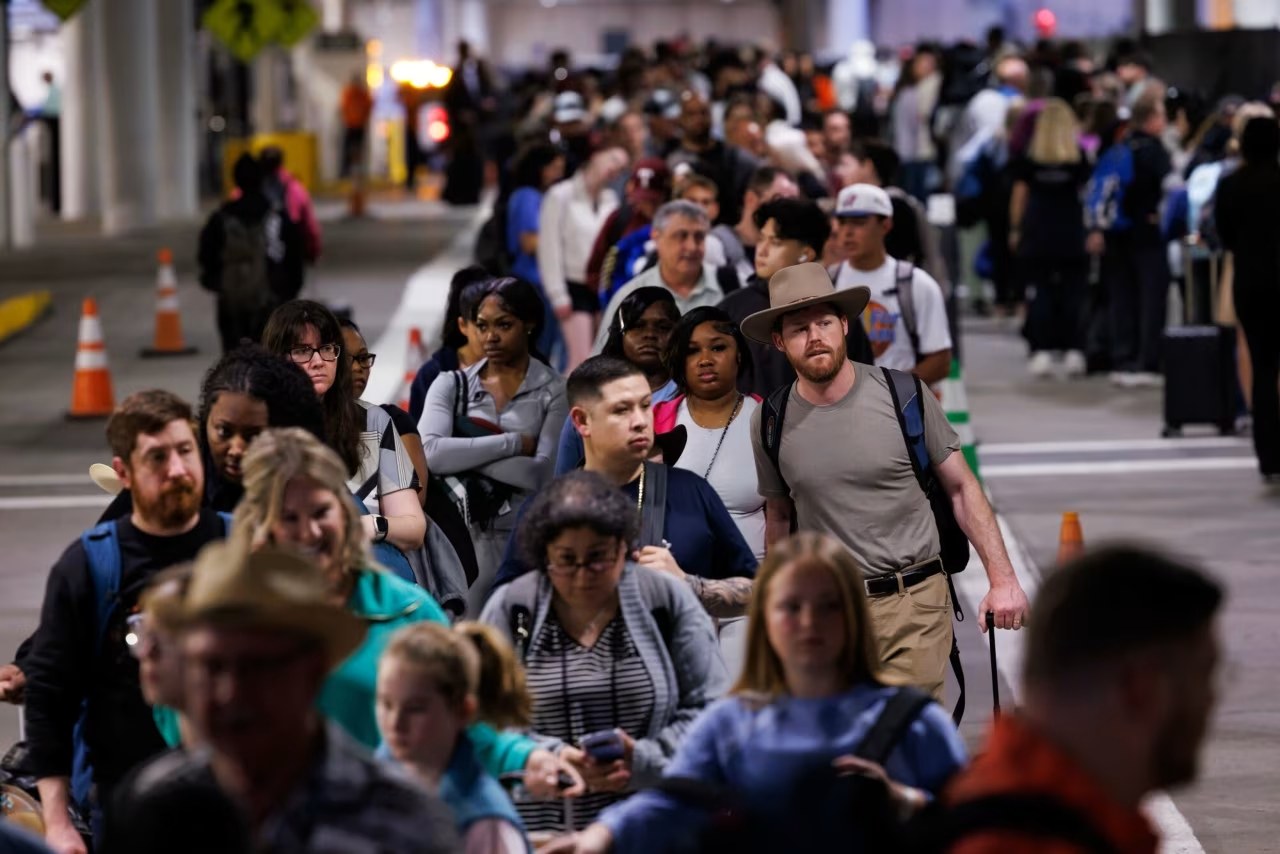
53% TSA Call-Out Rate Triggers Record Staffing Shortage at Houston Airport
- Nationwide TSA absenteeism reached 8% on March 6, the highest since the agency’s inception.
- Houston Hobby Airport saw a 53% call‑out rate on March 8, swelling wait times to three hours.
- Democrats’ refusal to fund DHS has extended a shutdown to over a month, leaving screeners unpaid.
- The staffing crisis threatens federal security standards at over 400 airports.
When politics collides with security, travelers pay the price.
CHUCK SCHUMER—Travelers at Houston’s William P. Hobby Airport have learned a harsh lesson: a budget stalemate in Washington can turn a routine security line into a three‑hour ordeal. The root of the chaos is not a sudden surge in passenger volume but a systematic failure to fund the Department of Homeland Security, a failure spearheaded by Senate Majority Leader Chuck Schumer.
On March 6, the Transportation Security Administration reported an 8% nationwide absence rate among its screeners, according to CBS data obtained last week. In Houston, the figure spiked dramatically—53% of officers called out on March 8 and 47% the following day. With fewer agents on the floor, the line stretched beyond what any airport could comfortably manage.
The shutdown, now in its fourth week, has left TSA employees without pay, prompting a wave of voluntary and involuntary leave. As the agency’s budget remains in limbo, the ripple effects are being felt at every checkpoint across the United States.
The Funding Freeze: How Congressional Gridlock Paralyzed the TSA
From the Capitol to the Checkpoint
Since the 2023 fiscal year, the Department of Homeland Security has operated on a series of short‑term continuing resolutions, a pattern that has become the norm when Congress cannot agree on a full budget. The most recent impasse began in early February 2024 when Senate Democrats, led by Majority Leader Chuck Schumer, refused to pass a funding bill that would have restored the DHS budget after a brief lapse. Their demand for additional oversight on immigration and border security measures stalled negotiations, extending the shutdown into March.
Historically, the TSA has been insulated from large‑scale funding cuts because its budget is earmarked for security operations. However, the current shutdown is unique: it is a partial shutdown that specifically targets discretionary spending, leaving payroll for civilian employees—like TSA screeners—unfunded. The agency’s own financial statements, released in a DHS budget request, show that payroll accounts for roughly 70% of its $10.5 billion annual budget. When that slice dries up, the operational capacity collapses.
Experts at the Congressional Research Service note that the TSA’s reliance on a stable funding stream makes it especially vulnerable to political brinkmanship. In a 2023 CRS briefing, analyst Laura K. McIntyre warned that “any prolonged interruption in appropriations will quickly translate into staffing shortages, because TSA employees are not covered by the federal employee furlough provisions that protect many other agencies.” The current 8% absenteeism figure, while already alarming, is likely a conservative estimate because many agents have not yet filed formal leave requests.
The political calculus is clear: Schumer and his Democratic colleagues are leveraging the DHS budget to extract concessions on unrelated policy issues. Yet the unintended consequence is a national security risk that is both visible and quantifiable. As the shutdown drags on, the TSA’s ability to screen passengers efficiently erodes, raising concerns from the Transportation Security Administration’s own Office of the Inspector General, which warned in a recent report that “prolonged staffing gaps could increase the probability of security breaches.” The next chapter quantifies the human cost of that warning.
Understanding the funding freeze sets the stage for a deeper look at the data that underpins the staffing crisis, which will be explored through a striking stat‑card visual.
Stat Card — Nationwide TSA Absenteeism Peaks at 8%
Numbers That Speak Volumes
The 8% absenteeism rate reported on March 6 represents a seismic shift for an agency that historically maintained a steady attendance record below 3%. The figure, sourced from CBS News after a Freedom of Information Act request, aggregates data from more than 400 TSA locations. When broken down, the rate spikes to double digits in several high‑traffic hubs, underscoring a systemic problem rather than isolated incidents.
To put the number in perspective, the TSA employs roughly 57,000 civilian screeners nationwide. An 8% absence translates to over 4,500 agents missing work on any given day. In Houston’s Hobby Airport, the call‑out rate surged to 53% on March 8, meaning that more than half of the local workforce was unavailable. That disparity illustrates how national averages can mask regional crises.
Industry analysts at Bloomberg Government have warned that such a high absenteeism rate can increase average wait times by 30‑40% across the board. The correlation between staffing levels and passenger throughput is well documented; a 2019 DHS study found that each 1% drop in staffing leads to a 0.5‑hour increase in average wait time during peak travel periods.
Beyond the immediate inconvenience, the staffing shortage raises long‑term concerns about training pipelines and morale. New hires typically undergo a 12‑week certification program, and with the agency scrambling to fill gaps, the training pipeline is at risk of bottlenecking, potentially extending the shortage for months.
The stat‑card below crystallizes the scale of the crisis, setting a benchmark for the comparative analysis that follows.
Bar Chart — State‑by‑State TSA Call‑Out Rates During the Shutdown
Geography of the Crisis
While the national average sits at 8%, the impact varies dramatically across states. Data compiled from TSA internal reports, released under the Freedom of Information Act and aggregated by the Department of Homeland Security, reveal that states with major hub airports experienced the steepest spikes. Texas, California, and Florida each reported call‑out rates above 15%, with Texas peaking at 22% due to the Hobby Airport surge.
Mid‑west airports, such as Chicago O’Hare and Detroit Metropolitan, saw more modest increases, hovering around 9‑10%. The disparity aligns with regional labor markets and the concentration of unionized TSA employees, who have been more vocal about unpaid furloughs.
Labor economists at the Economic Policy Institute note that “regional variations in absenteeism often reflect underlying wage differentials and cost‑of‑living pressures.” In states where TSA salaries lag behind comparable federal positions, the incentive to stay home without pay grows stronger.
The bar chart visualizes these differences, highlighting the states most vulnerable to the funding impasse. By mapping the data, policymakers can identify where targeted relief—such as temporary state‑funded wage subsidies—might mitigate the worst effects.
Understanding the geographic spread of the staffing shortage prepares the ground for probing the human motivations behind the walkouts, a topic explored in the next chapter.
Why Are TSA Agents Walking Out? Expert Insight on Morale and Pay
Voices from the Frontline
When asked why they were calling out, a senior TSA supervisor at an unnamed Midwest hub told CBS News, “We’re not asking for a raise; we’re asking for the paycheck we earned last month.” The sentiment echoes a broader pattern of employee frustration documented in a 2022 Government Accountability Office (GAO) report on federal workforce morale during partial shutdowns.
Dr. Miriam Patel, a labor relations professor at Georgetown University, explains that “unpaid furloughs create a psychological contract breach. Employees feel the government has reneged on its promise to compensate them for work performed, leading to a cascade of disengagement and absenteeism.” Patel’s research, published in the Journal of Public Administration, shows that in comparable shutdowns, absenteeism rates rose by an average of 4.3 percentage points within two weeks.
Compounding the issue is the TSA’s pay structure. According to the Department of Homeland Security’s FY2024 budget request, the average TSA screener earns $33,000 annually, a figure that lags behind the median federal civilian salary of $46,000. The wage gap, combined with the lack of overtime pay during the shutdown, intensifies the financial strain on low‑income workers who rely on steady paychecks.
Union leaders, including the International Association of Machinists and Aerospace Workers (IAM), have filed a grievance with the Federal Labor Relations Authority, arguing that the shutdown violates collective bargaining agreements that guarantee timely payment. The union’s legal counsel, Aaron Goldberg, warned that “continued non‑payment could trigger a breach of contract lawsuit, forcing the government to settle and potentially accelerating the funding resolution.”
These expert perspectives illuminate the human calculus behind the 53% call‑out rate at Hobby Airport. As the next chapter demonstrates, the political timeline that led to this moment is both recent and rooted in a longer history of budgetary brinkmanship.
Looking ahead, the timeline of key events will reveal how a series of missed deadlines and partisan standoffs converged to create today’s TSA staffing shortage.
Timeline — Key Moments in the DHS Funding Standoff Since 2021
Chronology of a Crisis
The current TSA staffing shortage did not emerge in a vacuum. It is the latest flashpoint in a multi‑year tug‑of‑war over DHS funding that began in the aftermath of the 2020 pandemic relief packages.
2021 – Congress passed a short‑term continuing resolution for DHS in December, averting a shutdown but leaving many appropriations items, including TSA payroll, on a temporary footing.
2022 – In August, a bipartisan agreement temporarily restored full funding, but the deal included a controversial clause allowing the administration to reallocate a portion of TSA’s discretionary budget to border enforcement. Critics warned that such reallocation could erode security resources.
2023 – Early in the year, the House passed a $12 billion supplemental DHS bill that increased TSA overtime funding. The Senate, however, stalled the bill over unrelated immigration policy riders, creating the first major impasse that left TSA payroll partially unfunded for several weeks.
2024 – February 28 marked the start of the latest shutdown when Senate Democrats, led by Schumer, refused to pass a full appropriations package without a separate immigration reform bill. The shutdown extended into March, with the TSA reporting an 8% absenteeism rate on March 6 and a 53% call‑out rate at Houston’s Hobby Airport on March 8.
Each of these milestones contributed to a cumulative erosion of confidence among TSA employees. The timeline visual below captures the sequence, underscoring how political calculus repeatedly intersected with operational realities.
As policymakers debate a path forward, the timeline serves as a reminder that the current staffing shortage is the product of years of incremental funding erosion rather than a single, isolated decision.
Frequently Asked Questions
Q: Why are TSA agents calling out in large numbers?
TSA agents are walking out because Congress has not approved funding for the Department of Homeland Security, leaving them without pay. The resulting financial uncertainty has driven absenteeism to record levels, fueling the TSA staffing shortage.
Q: What role does Senator Chuck Schumer play in the TSA crisis?
Senator Schumer, as Senate Majority Leader, has led Democrats in refusing to fund the DHS budget. That stalemate has triggered a partial shutdown, directly causing the TSA staffing shortage and longer security lines.
Q: How long are travelers waiting at airports due to the staffing issue?
At Houston’s Hobby Airport, wait times stretched to three hours on March 8 and 9, with similar delays reported at other hubs. The TSA staffing shortage is extending checkpoint queues nationwide.
📰 Related Articles
- Trump Issues Executive Orders to Accelerate Housing Construction and Mortgage Access
- Sen. John Cornyn Breaks Ranks, Backs Overhaul of Senate Filibuster Rule
- Why the Press Labels Donald Trump a ‘War President’ Amid Iran Tensions
- Provocative Online Persona Fuels Underdog James Fishback’s Florida Governor Bid
