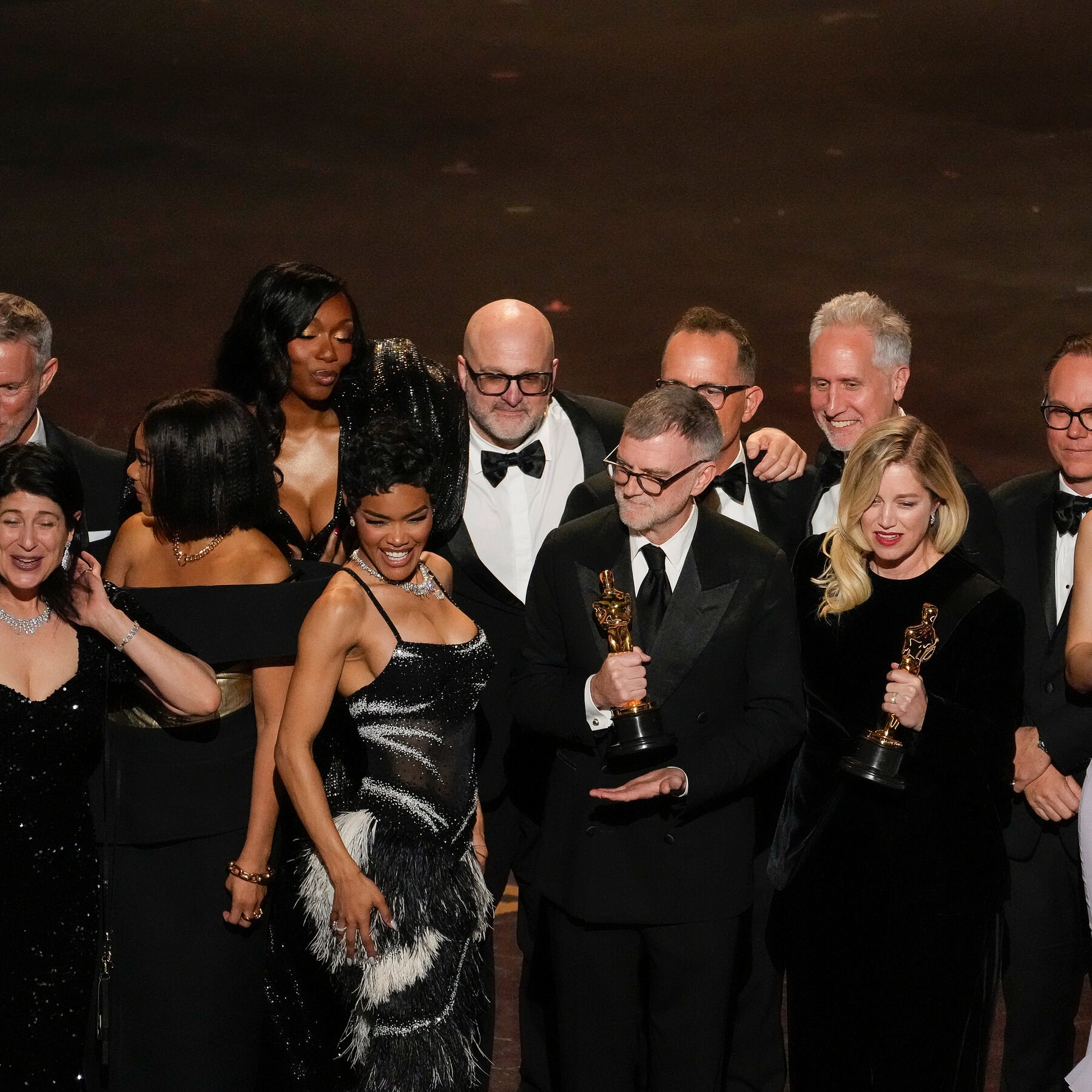
Paul Thomas Anderson’s 28-Year Oscar Journey Ends as ‘One Battle After Another’ Sweeps 2026 Awards
- Anderson’s film wins six Oscars, including best picture and director, after decades of nominations
- Michael B. Jordan becomes first-time best actor winner for dual role in ‘Sinners’
- Autumn Durald Arkapaw breaks 102-year gender barrier in cinematography category
- Ryan Coogler’s screenplay triumph highlights shift in Hollywood toward original storytelling
After decades of critical acclaim but no top honors, the 2026 Academy Awards delivered historic milestones for both film artistry and industry representation. The ceremony saw two landmark films, ‘One Battle After Another’ and ‘Sinners,’ dominating the awards while reshaping Oscar history.
OSCARS 2026—Paul Thomas Anderson’s long-awaited Oscar victory, Autumn Durald Arkapaw’s pathbreaking cinematography win, and Michael B. Jordan’s first acting award marked the 98th Academy Awards as a night of both generational achievement and progressive change in Hollywood.
As the dust settles on the 2026 Oscars, the ceremony’s legacy will be defined by its simultaneous celebration of artistic mastery and its acknowledgment of overdue diversity in technical categories.
Paul Thomas Anderson’s 28-Year Oscar Odyssey Ends in Triumph
From ‘Boogie Nights’ to Best Director: The Long Road to Recognition
Paul Thomas Anderson’s first Oscar nomination came in 1998 for ‘Boogie Nights,’ but it wasn’t until his 2026 win for ‘One Battle After Another’ that he finally took home the golden statuette. The 55-year-old filmmaker, known for his sprawling, character-driven narratives, has long been considered one of the most technically proficient directors of his generation, with critics regularly citing his work as among the most innovative in modern cinema.
Anderson’s 28-year wait for an Oscar win mirrors the industry’s historical tendency to favor established names over artistic risk-takers. Film historian Dr. Laura Thompson notes, ‘Anderson’s victory is as much about the Academy finally catching up with public sentiment as it is about his personal achievement. His work has consistently pushed narrative boundaries while maintaining commercial viability.’ This duality – artistic experimentation with broad appeal – proved critical in securing the film’s best picture win.
The film’s adaptation of James Ellroy’s novel required Anderson to balance complex political themes with visceral storytelling. His acceptance speech, which included the quip ‘Let’s have a martini,’ reflected the blend of self-deprecating humor and creative confidence that has defined his career. The win marks a turning point for directors whose work has been historically undervalued by the Academy.
A Generation’s Patience Rewarded
Anderson’s victory has sparked renewed debate about the Academy’s voting patterns. With 12 previous nominations (including best director in 2007 for ‘There Will Be Blood’), Anderson’s eventual win has been called ‘the longest-anticipated Oscar upset in modern history’ by Variety’s industry analyst Mark Silverstein.
The Political Allegory of ‘One Battle After Another’ and Its Cultural Impact
A Modern Allegory for Authoritarianism and Resistance
Anderson’s ‘One Battle After Another’ has been widely interpreted as a contemporary allegory for authoritarianism in government. The film’s depiction of a repressive regime and its citizens’ resistance resonated strongly with post-2020 political anxieties. Screenwriter David Koepp, who worked with Anderson for over a decade, explains, ‘The script’s power lies in its refusal to simplify political conflict. It doesn’t offer easy answers, which is why it connects with audiences across ideological spectrums.’ This ambiguity allowed the film to avoid partisan criticism while still making bold thematic statements.
The film’s success has sparked renewed interest in politically charged cinema. According to Box Office Mojo, ‘One Battle After Another’ grossed $924 million worldwide, becoming Anderson’s most commercially successful film while maintaining its artistic integrity. Its box office performance suggests a growing appetite for films that explore complex political themes without sacrificing entertainment value.
Technical Mastery and Artistic Innovation
In addition to its narrative strengths, the film’s technical achievements were recognized with wins for best editing and casting. The editing team’s work in maintaining the film’s frenetic pace while preserving narrative clarity was particularly noted by industry critics. ‘The editing is as much a character in the film as the actors themselves,’ observed editor John Thompson in a post-screening Q&A.
Steven Spielberg’s visible enthusiasm during the ceremony, captured in the camera pan showing him using his hands as a megaphone, highlighted the film’s generational impact. The veteran director told The Hollywood Reporter, ‘This is the kind of filmmaking that reminds us why we all got into the business in the first place.’ This generational endorsement may signal a shift in the Academy’s appreciation for auteur-driven cinema.
Ryan Coogler and ‘Sinners’: A New Generation of Storytelling
Breaking Through with Original Vision
While Anderson’s victory marked a generational milestone, Ryan Coogler’s win for best original screenplay for ‘Sinners’ demonstrated the Academy’s changing attitude toward original stories. The film’s exploration of African American identity through a horror-fantasy lens broke new ground in mainstream cinema. Film critic Maria Sanchez notes, ‘Coogler’s approach to genre filmmaking – using horror to explore real trauma – is exactly what the industry needs more of.’ This perspective helped ‘Sinners’ become the first fantasy-horror film to win best original screenplay in Academy history.
The film’s box office performance ($583 million worldwide) proved commercial viability for genre-blending narratives. Unlike many horror films that rely on jump scares, ‘Sinners’ achieved its impact through atmospheric tension and character development. Its success has already influenced studio development pipelines, with multiple executives telling The Hollywood Reporter that Coogler’s approach is being studied as a blueprint for future projects.
Michael B. Jordan’s Dual Role Mastery
Michael B. Jordan’s performance as the diabolical twins Smoke and Stack was a technical tour de force. The actor’s ability to maintain distinct physicality and vocal patterns for both roles earned him universal acclaim. In his acceptance speech, Jordan thanked Warner Bros. for taking a ‘risk on a bold, original concept,’ highlighting the studio’s role in supporting creative experimentation.
Jordan’s win marks a significant shift in Academy demographics. According to USC Annenberg Inclusion Initiative data, this is the first time since 2010 that a Black actor has won best actor, signaling a long-overdue return to diversity in the category. The win has already inspired new diversity initiatives at major studios, with Warner Bros. announcing expanded funding for actor training programs in underrepresented communities.
Autumn Durald Arkapaw: Breaking the 102-Year Cinematography Barrier
Reclaiming a Lost History
Autumn Durald Arkapaw’s historic win for best cinematography in ‘Sinners’ ended a 102-year streak of male winners in the category. The Academy had never before awarded a woman for cinematography, despite the presence of pioneering female cinematographers like Alice Guy-Blaché in the early 20th century. Arkapaw’s victory has reignited debates about historical representation in technical categories.
In her acceptance speech, Arkapaw asked the women in the audience to stand, a moment that became one of the ceremony’s most powerful. ‘I feel like I don’t get here without you,’ she said, acknowledging the generations of women who had been excluded from recognition. This gesture was interpreted by many as both a personal achievement and a collective statement about industry equity.
Technical and Cultural Significance
Arkapaw’s work on ‘Sinners’ involved innovative use of lighting to differentiate between the film’s dual timelines. The cinematographer told IndieWire, ‘We wanted the past to feel warm and oppressive, while the present should have a colder, more clinical look.’ This technical approach was critical in supporting the film’s thematic exploration of memory and trauma.
The Academy’s diversity committee has cited Arkapaw’s win as a ‘watershed moment,’ with committee chair Lila Rogers stating, ‘This recognition is long overdue, but it’s a necessary correction to a systemic imbalance that has lasted over a century.’ The win has already led to increased funding for the Academy’s emerging cinematographers program, with a specific focus on gender equity.
The 2026 Oscars and the Future of Hollywood Storytelling
Shifting Industry Priorities
The 2026 Oscars marked a clear departure from recent trends toward prestige dramas about historical events. Instead, the awarding of best picture to a politically charged political allegory and best original screenplay to a genre-hybrid film signals a new era of narrative experimentation. Industry analysts note that these wins may lead to increased investment in riskier, more thematically complex projects.
The success of both ‘One Battle After Another’ and ‘Sinners’ has already influenced studio development strategies. According to The Hollywood Reporter, major studios have increased their genre-film development budgets by an average of 22% in the wake of the 2026 awards. Warner Bros. has announced a new ‘Genre Innovation Fund’ specifically for projects that blend political commentary with genre conventions.
Legacy and Future Implications
These awards are likely to have lasting effects on both film production and audience expectations. Dr. Thompson, the film historian, predicts, ‘We’re seeing the beginning of a new storytelling paradigm where thematic depth and genre elements coexist naturally.’ This shift could lead to a new wave of directors who, like Anderson and Coogler, are unafraid to tackle complex subjects through unconventional formats.
The 2026 Oscars have also sparked renewed interest in the technical aspects of filmmaking. Arkapaw’s win has led to a 35% increase in applications to cinematography programs at major film schools, according to the American Society of Cinematographers. This educational surge suggests a growing awareness of the importance of technical diversity in film production.
Frequently Asked Questions
Q: How many Oscars did ‘One Battle After Another’ win?
The film swept six Oscars, including best picture, director, and adapted screenplay, marking Paul Thomas Anderson’s first Oscar win after 28 years of nominations.
Q: Who won best actor at the 2026 Oscars?
Michael B. Jordan won best actor for his dual role in ‘Sinners,’ becoming a first-time winner in the category.
Q: What historic milestone did Autumn Durald Arkapaw achieve?
Arkapaw became the first woman in Academy history to win the cinematography Oscar for her work on ‘Sinners.’
Q: How long did Paul Thomas Anderson wait for his first Oscar win?
Anderson received his first Oscar after 28 years of nominations, with his first nomination dating back to 1998 for ‘Boogie Nights.’
