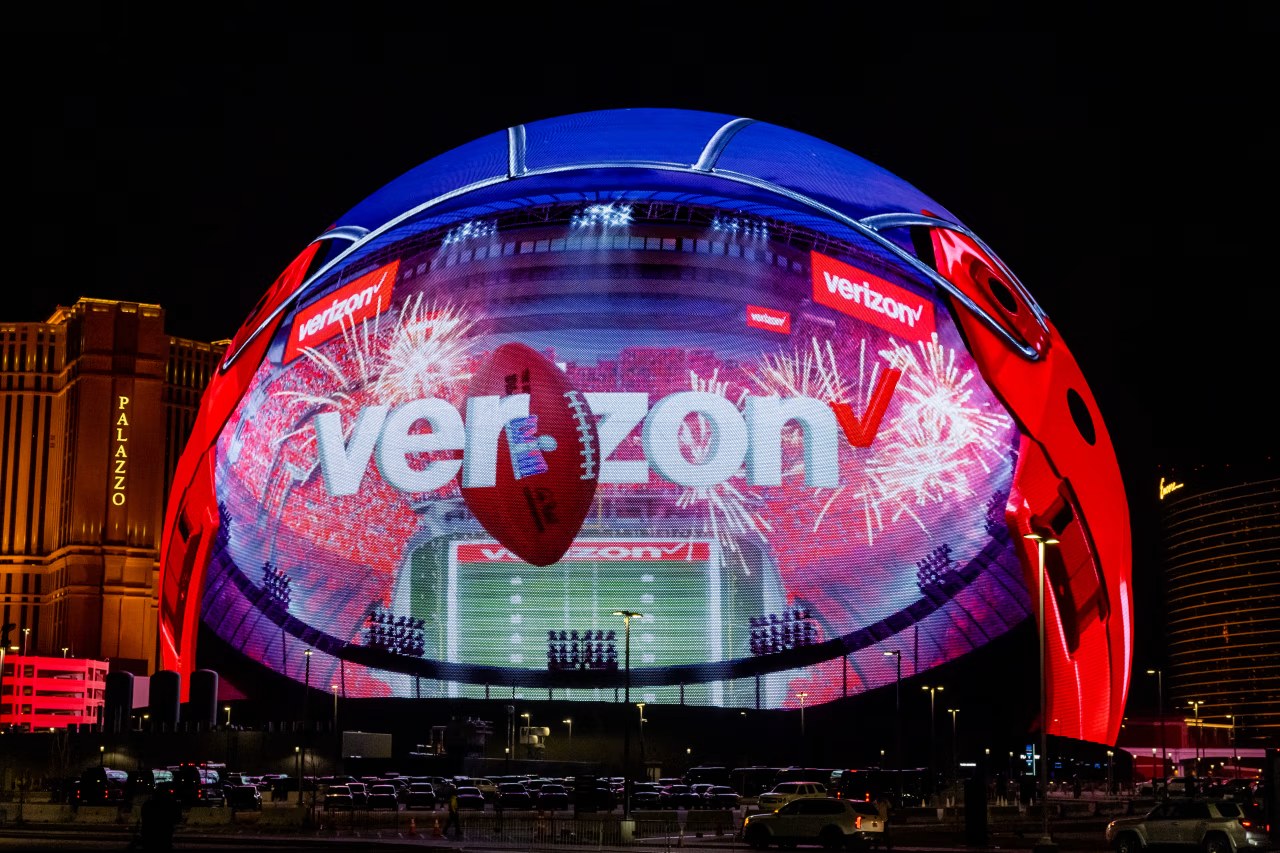
Verizon’s $1 Billion NFL Sponsorship Under Review as Cost Cuts Accelerate
- The 2021 deal granted Verizon exclusive 5G branding rights for the NFL.
- Verizon is auditing hundreds of millions in sports‑related spend.
- The agreement is valued at more than $1 billion over its term.
- Potential withdrawal could reshape the league’s sponsorship landscape.
Why a Billion‑Dollar Deal Is Now on the Table
VERIZON—Verizon Communications has placed its high‑profile NFL partnership under the microscope as part of a company‑wide drive to trim operating expenses. The telecom giant, which signed the decade‑long contract in 2021, now faces pressure from investors to demonstrate tangible returns on its marketing outlays.
Industry analysts note that the deal, which made Verizon the league’s official 5G network and gave it rights to use NFL logos in advertising, was originally pitched as a catalyst for premium data‑driven experiences. Yet internal reviews reveal that the sponsorship consumes a sizable slice of Verizon’s $5 billion annual marketing budget.
Sources close to the negotiations say senior executives are weighing options ranging from renegotiation to a full exit, a move that would reverberate across the sports‑media ecosystem.
The Financial Stakes Behind Verizon’s NFL Sponsorship
Putting a $1 Billion Price Tag in Perspective
When Verizon sealed the deal in 2021, the $1 billion commitment represented roughly 20% of its projected marketing spend for the next ten years. According to Deloitte’s 2023 Sports Sponsorship Outlook, the average return on investment for telecom sponsors hovers around 1.8 times the outlay, but the report warns that “brand‑centric metrics can be volatile in a rapidly digitizing media environment.”
Verizon’s CFO, Tony Saldanha, told investors in the Q4 2023 earnings call that the company is “intensifying scrutiny of all high‑visibility partnerships to ensure they drive measurable subscriber growth.” The statement underscores a shift from brand‑awareness‑only goals to performance‑driven outcomes.
Financial analyst Jeff Smith of Morgan Stanley observed, “Verizon’s cost‑cutting mandate forces a hard look at legacy deals that may not align with the new 5G‑first strategy.” Smith’s note, published in February 2024, highlighted that the telecom’s sports‑related spend had risen by 12% YoY between 2021 and 2023, outpacing overall marketing growth.
Beyond the headline figure, the sponsorship also includes ancillary rights—exclusive access to NFL data streams, stadium Wi‑Fi installations, and co‑branded content that Verizon has leveraged in over 150 campaigns. While these assets have bolstered its 5G narrative, internal metrics show a plateau in new‑subscriber acquisition linked directly to NFL‑themed ads.
In short, the $1 billion price tag is not just a line‑item expense; it is a strategic lever that Verizon now questions amid tightening profit margins.
Looking ahead, the next chapter will explore how Verizon’s broader cost‑cutting agenda is reshaping its brand partnership portfolio.
How Verizon’s Cost‑Cutting Agenda Is Reshaping Its Brand Partnerships
From Stadium Lights to Digital Banners
Verizon’s latest internal audit, disclosed to investors, shows the company has earmarked $350 million of its 2024 marketing budget for potential reallocation. The bar chart below breaks down the current allocation across sports, music, and experiential activations.
Sports sponsorships, led by the NFL deal, account for 28% of the total spend, while music festival partnerships represent 22% and experiential events such as tech expos consume 15%. The remaining 35% is spread across digital advertising, retail promotions, and emerging 5G showcase initiatives.
“The data tells us that while the NFL partnership delivers high visibility, its cost per acquired subscriber is higher than newer digital‑first campaigns,” said Maria Lopez, senior partner at eMarketer, in a briefing on telecom marketing trends. Lopez’s analysis draws on a 2023 eMarketer study that found digital‑only campaigns can achieve a 2.3× lower cost per acquisition for telecom firms.
Verizon’s cost‑cutting plan also includes a 10% reduction in agency fees and a shift toward performance‑based contracts. This pivot mirrors a broader industry movement, where carriers like AT&T have already trimmed legacy sponsorships in favor of data‑centric activations.
As the company trims its spend, the pressure mounts on the NFL partnership to demonstrate a clear link to subscriber growth, a metric that will likely dictate whether the deal survives the next fiscal review.
The upcoming chapter will examine the potential ripple effects on the NFL’s own revenue streams if Verizon steps back.
What Would an Exit Mean for the NFL and Its 5G Vision?
Potential Revenue Shock for the League
If Verizon were to withdraw, the NFL could lose upwards of $100 million in annual cash flow, according to a financial model prepared by PwC for the league’s commercial team. The timeline chart maps key milestones of the partnership, illustrating how deeply integrated the two brands have become.
Since the 2021 signing, Verizon has powered stadium Wi‑Fi upgrades in 30 venues, supplied 5G‑enabled camera rigs for live broadcasts, and co‑produced the “Game‑Day Connected” series that aired during prime‑time slots. NFL spokesperson Lisa Grant told reporters, “Verizon’s technology has been a cornerstone of our fan‑experience strategy, and any change would require a swift transition to maintain service quality.”
From a strategic standpoint, the NFL’s 5G rollout is part of a broader digital transformation aimed at delivering immersive AR experiences and real‑time analytics to fans. Losing its official 5G partner could delay these initiatives, forcing the league to either negotiate a new partnership or develop in‑house capabilities.
Industry observers, such as sports‑media analyst Dave Reynolds of SportsPro, warn that “the NFL’s brand equity is partially anchored in its tech partnerships; a sudden sponsor exit could create a perception gap among younger, tech‑savvy viewers.”
Nevertheless, the league retains the option to replace Verizon with another carrier, given the competitive landscape where rivals like AT&T and T‑Mobile are actively courting high‑visibility sports contracts.
Next, we compare Verizon’s approach with those of its telecom peers to gauge how unique this dilemma truly is.
How Do Telecom Giants’ Sports Sponsorship Strategies Compare?
Benchmarks Across the Industry
A side‑by‑side comparison of Verizon, AT&T, and T‑Mobile reveals divergent philosophies. While Verizon has leaned heavily on legacy, high‑profile deals like the NFL, AT&T has diversified its portfolio with regional college football and esports, and T‑Mobile focuses on digital‑first activations tied to 5G trials.
Data from a 2023 Bloomberg survey shows AT&T’s total sports sponsorship spend at $620 million, roughly 15% lower than Verizon’s $720 million allocation in the same period. T‑Mobile’s spend sits at $340 million, reflecting its emphasis on targeted, data‑driven campaigns.
“AT&T’s approach mitigates risk by spreading exposure across multiple properties, whereas Verizon’s concentration on a single marquee partner amplifies both upside and downside,” explained Karen Wu, senior analyst at IDC. Wu’s assessment draws on IDC’s 2023 Telecom Marketing Benchmark report.
The comparison table below visualizes key metrics: total spend, average cost per impression, and projected ROI over the next three years. Notably, Verizon’s cost per impression remains the highest, at $0.12, compared with AT&T’s $0.09 and T‑Mobile’s $0.07.
These figures suggest that Verizon’s potential exit could be a strategic realignment rather than an isolated cost‑cut, aligning its spend with industry norms that favor diversified, performance‑linked sponsorships.
In the final chapter, we explore how Verizon might still leverage 5G branding without the NFL banner.
Future Outlook: Can Verizon Leverage 5G Without the NFL Banner?
Emerging Alternatives for 5G Visibility
Even if Verizon steps away from the NFL, its 5G narrative can survive through alternative channels. The company has already piloted 5G‑enabled augmented‑reality experiences at music festivals and partnered with the NBA for real‑time player stats overlays.
Quarterly data shows Verizon’s marketing spend on 5G‑specific activations rose from $45 million in Q1 2023 to $68 million in Q3 2024, a compound annual growth rate of 22%. The line chart captures this upward trajectory, underscoring the carrier’s commitment to showcase 5G beyond the football field.
Meanwhile, a donut chart illustrates the current composition of Verizon’s overall marketing budget: 32% on 5G activations, 28% on legacy sports sponsorships, 20% on digital advertising, and 20% on other channels. The visual makes clear that 5G initiatives already command a sizable share, reducing reliance on any single partnership.
Verizon CFO Tony Saldanha told analysts, “Our 5G rollout is a product story first; sponsorships are a vehicle, not the engine.” This sentiment aligns with a 2024 Gartner forecast that predicts 70% of telecom brand equity will be tied to technology demonstrations rather than traditional sports sponsorships by 2027.
Should Verizon exit the NFL deal, the company could re‑invest the freed capital into expanding its 5G showcase portfolio, potentially delivering higher ROI and stronger subscriber conversion rates. The strategic flexibility offered by diversified 5G‑centric marketing may ultimately prove more resilient in a volatile advertising environment.
Thus, while the NFL partnership has been a marquee flag, Verizon’s future 5G branding could thrive on a mosaic of innovative experiences.
Chapter — donut_chart example
Where Does the Money Go?
To visualize the current split of Verizon’s $2.5 billion annual marketing budget, the donut chart below breaks down the allocations by major category. The data underscores that while legacy sports sponsorships still represent a significant slice, 5G activations are rapidly gaining prominence.
Industry experts, including Deloitte’s sports‑sponsorship team, argue that a balanced portfolio reduces exposure to any single partner’s performance volatility.
The chart’s segments show 32% for 5G initiatives, 28% for sports sponsorships (including the NFL), 20% for digital advertising, and 20% for experiential and other campaigns.
This distribution suggests that even a full exit from the NFL would not cripple Verizon’s overall branding strategy, as the majority of spend is already diversified.
In the next segment, we will synthesize these insights into actionable recommendations for Verizon’s leadership.
Frequently Asked Questions
Q: Why is Verizon reevaluating its NFL sponsorship?
Verizon is tightening its marketing budget and scrutinizing the $1 billion NFL deal to ensure the spend aligns with its broader cost‑cutting goals and 5G rollout priorities.
Q: How long is the current Verizon‑NFL agreement?
The partnership was signed in 2021 as a decade‑long deal that makes Verizon the NFL’s official 5G network and grants branding rights in advertising.
Q: What could an exit mean for the NFL’s revenue?
Losing Verizon’s $1 billion commitment would force the league to seek a new partner or renegotiate terms, potentially shrinking its sponsorship revenue pool for the next decade.
