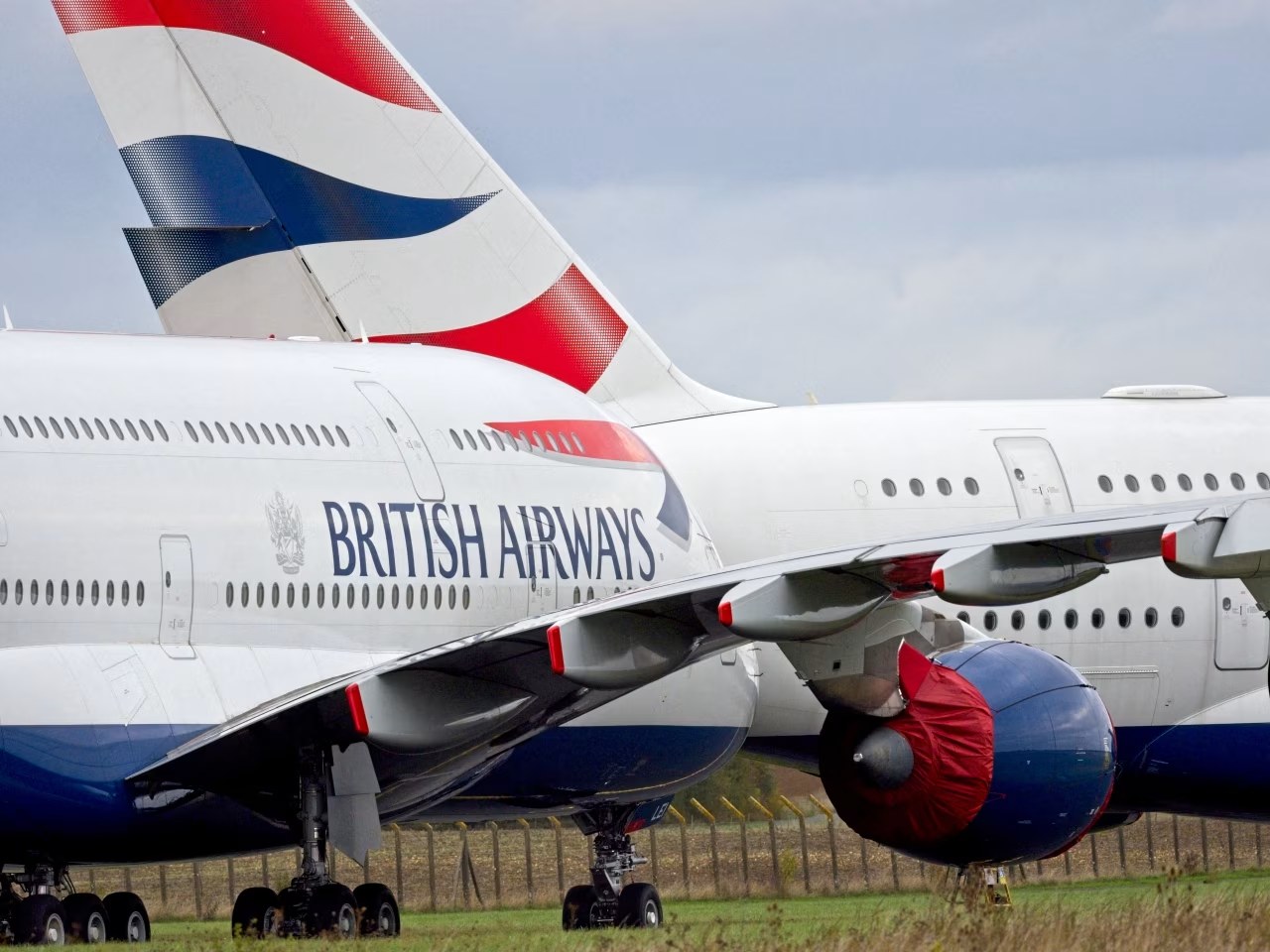
British Airways Grounds 6 Middle East Routes Until May 31 Amid Regional Conflict
- Flights to Amman, Bahrain, Dubai, and Tel Aviv are canceled through May 31; Doha suspended until April 30.
- The IAG-owned carrier cited airspace instability and regional uncertainty for the extension.
- BA has not indicated when normal service might resume, leaving thousands of passengers rebooking.
- The move follows earlier suspensions triggered by the ongoing Middle East conflict.
The airline’s decision underscores the widening fallout from regional instability on global aviation.
BRITISH AIRWAYS—LONDON — British Airways on Monday extended its suspension of flights to six key Middle East destinations, telling passengers that planes will stay grounded through at least May 31 as airspace risks persist.
The carrier, owned by International Airlines Group (IAG), first halted the routes as hostilities escalated across the region. With no immediate easing of tensions, BA said it needed “to provide more clarity to our customers” by pushing back resumption dates.
The extension affects roughly one-tenth of BA’s long-haul network measured by pre-crisis seat capacity, according to aviation analytics firm Cirium. Competitors including Lufthansa and Air France have taken similar precautions, but BA’s May 31 cutoff is among the furthest out on record for a European full-service airline.
Which Routes Are Grounded and for How Long?
British Airways published an updated schedule on Monday that cancels all flights to Amman, Bahrain, Dubai, and Tel Aviv through May 31. Service to Doha is halted until April 30. The carrier had already scrubbed these destinations from its booking engine in earlier rounds of suspensions, but the new end-dates represent the longest extension so far.
Combined, the six cities accounted for 42 weekly departures from London Heathrow during the comparable period last year, Cirium data show. Dubai alone represented 14 flights a week, making it BA’s third-busiest long-haul route after New York JFK and Los Angeles. Amman and Bahrain each saw five weekly frequencies, while Doha and Tel Aviv had four and six respectively.
Passenger impact
BA is offering rebooking on partner carriers within the Oneworld alliance, full refunds, or the option to re-route via London on dates after service resumes. The airline’s customer-service phone lines logged hold times exceeding two hours on Monday morning, passengers reported on social media, underscoring the volume of rebookings.
Aviation analyst Alex Macheras told the BBC that extending suspensions into late spring “signals BA does not expect a near-term stabilization,” adding that the May 31 date could still slide. BA has not placed pilot rosters beyond that point, leaving open the possibility of a further push-back.
The carrier’s cargo division is also affected. IAG Cargo normally lifts pharmaceutical exports and fresh produce from the UK to Gulf hubs, then onward to Asia and Australia. Industry sources estimate the route freeze removes roughly 1,200 tonnes of weekly belly-freight capacity at a time when air-cargo rates ex-Europe are already 18 percent above last year’s level, according to WorldACD.
Looking ahead, BA must weigh passenger safety against the revenue hole. The six suspended routes generated about $1.1 billion in ticket sales for the airline in 2023, internal IAG figures seen by investors show. Until flights resume, that revenue is effectively zero.
Why Airspace Instability Is Driving Airline Decisions
BA’s statement pinned the extension on two factors: “continuing uncertainty of the situation in the Middle East and airspace instability.” The phrase references both the geopolitical climate and the practical risks civilian aircraft face when routing over or near conflict zones.
Since the outbreak of wider hostilities, regulators including the UK Civil Aviation Authority and the European Union Aviation Safety Agency have issued NOTAMs (Notices to Airmen) advising carriers to avoid segments of airspace over the eastern Mediterranean, parts of Iraq, and Iran. Avoiding those corridors lengthens flight times and complicates crew-duty limits, but more critically, insurers have reacted.
Insurance and operational hurdles
Underwriters now demand detailed risk assessments for any carrier overflying areas within 200 nautical miles of active missile ranges. Premiums for such routes have jumped 30–50 percent since January, according to Willis Towers Watson. Some underwriters exclude hull-loss coverage entirely if airlines venture into designated high-risk zones, forcing carriers either to pay exorbitant surcharges or suspend services.
Captain Jon Horne, president of the International Federation of Air Line Pilots’ Associations, told Reuters that “no captain wants to be in a position where the threat level changes mid-flight.” BA’s decision, he added, reflects a broader industry shift toward pre-emptive cancellations rather than real-time diversions.
Airspace closures also reverberate economically. Rerouting a London-Dubai service southward over Saudi Arabia instead of the usual Iraqi corridor adds roughly 45 minutes of flying time and 3.5 tonnes of jet-fuel burn each way. At today’s fuel prices, that equates to about $2,400 per sector, wiping out thin margins on economy-heavy configurations.
Looking forward, Eurocontrol predicts that until a durable cease-fire is reached, Middle East overflight restrictions will pare 1.2 percent off European airline capacity, the equivalent of grounding 50 single-aisle aircraft for the summer season.
How Long Could the Suspension Last?
BA has not offered guidance beyond the May 31 date, but history offers clues. After the 1990–91 Gulf War, European carriers needed roughly six months to restore full schedules once airspace reopened. Following the 2003 Iraq invasion, normal traffic patterns resumed within four months once hostilities stabilized.
Yet the current conflict is more fragmented, with multiple flashpoints. Eurasia Group analyst Henry Rome told clients in a note that “a cease-fire in one theater does not necessarily calm others,” suggesting airlines may adopt a piecemeal restoration rather than a single restart date.
Internal planning scenarios
BA’s operations control center is gaming three scenarios: a phased resumption beginning in June, a further three-month delay, and an open-ended freeze lasting into the northern-winter schedule. Each scenario triggers different aircraft-deployment plans. Under the most pessimistic, BA would redeploy five wide-body jets to trans-Atlantic routes and Asian leisure markets such as Maldives and Phuket to soak up capacity.
Crew training cycles add another layer. Pilots rated specifically for Tel Aviv’s David Ben-Gurion approach procedures need recurrent simulator sessions every 12 months. If the suspension drags past August, a portion of BA’s 787 and A350 captains will require refresher courses before they can legally operate into Tel Aviv again, potentially delaying any restart by weeks.
Investor sentiment is already pricing in a long freeze. Barclays analysts trimmed IAG’s 2024 earnings forecast by 6 percent, citing lost Gulf premium traffic and €180 million in higher fuel and insurance costs. Shares in IAG have fallen 11 percent since the first suspension, underperforming the Stoxx Europe 600 Travel & Leisure index by 8 percentage points.
The airline has stressed that safety, not speed, will dictate the return. “We will not rush back just to hit a date,” a senior BA operations executive said on condition of anonymity. “When we restart, it has to be sustainable.”
What Are the Alternatives for Stranded Travelers?
Passengers holding BA tickets have three formal options: rebook on Oneworld partners, claim a full refund, or accept an alternate BA destination with onward ground transport. In practice, availability is tight. Qatar Airways, also a Oneworld member, is accepting BA codeshare passengers to Doha, but onward seats to secondary Gulf cities are heavily booked through June.
Emirates and Etihad are picking up some spillover, yet neither has formal re-protection agreements with BA, meaning travelers must first secure a refund, then purchase new tickets—often at higher last-minute fares.
Corporate travel disruption
London-based consultancy PwC estimates 1,400 of its staff had planned BA trips to the Gulf between now and May. The firm has switched 60 percent of those bookings to Emirates or Saudia, increasing average ticket cost by $340 per round trip. “We’re absorbing the difference for now,” said PwC global mobility head Sarah McEwan, “but if this lasts into Q3, we’ll revisit travel budgets.”
Leisure travelers face steeper surcharges. A family of four wanting to reach Dubai over the Easter school break would pay £1,200 more for the cheapest alternative nonstop on Emirates versus the canceled BA service, according to data from Skyscanner on Monday afternoon.
Meanwhile, cargo shippers are turning to dedicated freighters. DHL has added a temporary Leipzig-Bahrain 777F rotation, and Turkish Cargo is marketing Istanbul-Doha-Amman connections. Rates ex-London to Gulf hubs have jumped 22 percent since January, reflecting both the loss of belly capacity and higher jet-fuel prices.
For travelers, the key advice is flexibility. BA’s waiver policies allow one free date change, but passengers must keep the same origin and destination. Switching to a different city—even within the same country—requires repricing at current fares, which can double the cost during peak periods.
Broader Industry Implications
BA’s prolonged freeze is reverberating across the aviation value chain. Aircraft lessors report a spike in short-term wide-body demand as carriers reallocate jets. Avalon CEO Andy Cronin said last week that “any time a major European airline parks capacity, we see a 5-10 percent uptick in lease rates for 787s and A350s.”
Engine manufacturers are also affected. Rolls-Royce, which powers BA’s entire 787 fleet, had factored 2 percent more flying hours into its 2024 maintenance forecasts. Fewer cycles now mean a potential £30 million revenue shortfall for the Derby-based firm, according to Berenberg analyst Andrew Douglas.
Geopolitical risk premiums
Consultancy IHS Markit tracks a geopolitical risk index for aviation that has risen 40 percent since January. Airlines are responding by embedding conflict clauses in supplier contracts, allowing faster termination of airport-handling agreements if routes are suspended for more than 60 days.
Environmental metrics are slipping too. Longer detours around closed airspace add an estimated 450,000 tonnes of CO₂ annually for all European carriers combined, equivalent to the yearly emissions of Malta. Green lobby group Transport & Environment warns that if instability persists, the EU may need to rethink its aviation carbon-reduction targets.
For passengers, the episode is a reminder of how quickly geopolitics can unravel route maps. “We took the nonstop for granted,” said Dubai-based Briton Karen Ellis, whose April BA holiday was canceled. “Next time we’ll book flexible fares even if they cost more.”
Industry veterans expect a gradual, city-by-city restart rather than a single big-bang return. When that happens, fares will likely stay elevated through the summer as BA and rivals rebuild schedules from scratch.
Frequently Asked Questions
Q: Which British Airways routes to the Middle East are suspended?
British Airways has canceled flights to Amman, Bahrain, Dubai, and Tel Aviv until May 31, and Doha until April 30. The suspensions affect six cities in total.
Q: Why did British Airways extend the suspension?
The airline cited continuing uncertainty in the Middle East and airspace instability as the primary reasons, aiming to give customers clarity.
Q: Is there a chance the suspension could be extended again?
British Airways has not ruled out further extensions. The airline says it will review the situation periodically and update customers accordingly.
