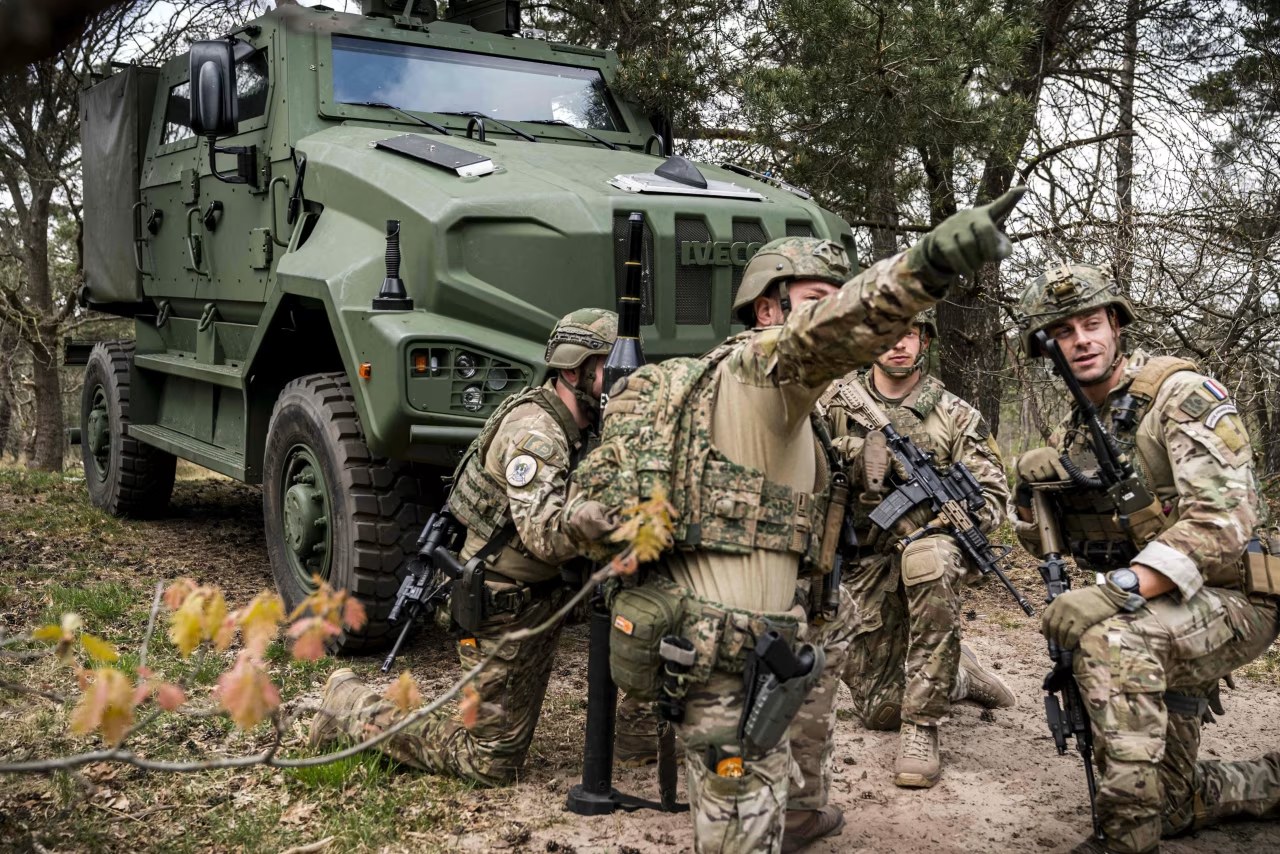
EU green‑lights Leonardo Iveco defense deal worth €1.7 bn
- Leonardo’s bid totals €1.7 billion, roughly $1.96 billion.
- The European Commission found no competition concerns in the Italian market.
- Deal represents a 1.57 % dip from the prior valuation of the defence unit.
- Approval clears the path for the largest defence‑sector consolidation in Italy this decade.
What the approval means for Europe’s defence landscape
LEONARDO—The European Union’s competition authority gave the nod on Leonardo’s acquisition of Iveco Group’s IVG defence business, removing the final regulatory hurdle for a transaction that could reshape the continent’s land‑systems market.
Leonardo, Italy’s aerospace and defence champion, offered €1.7 bn for IVG, a move that will integrate Iveco’s armoured vehicle expertise with Leonardo’s existing portfolio of missiles, radars and naval systems.
While the Commission’s decision focuses on limited competition impact in Italy, analysts warn that the ripple effects could extend across the EU’s broader defence supply chain.
Timeline of the Leonardo‑Iveco Defence Deal
From proposal to approval: key dates
The transaction began when Leonardo announced its intent to acquire IVG in early 2025, citing a strategic need to broaden its land‑systems capabilities. By mid‑2025 the European Commission opened a formal competition investigation, concentrating on the Italian market where both firms hold significant contracts with the Ministry of Defence.
A European Commission spokesperson later paraphrased that the review showed “limited impact on competition,” allowing the Commission to close the case in March 2026. The final approval was published on 12 March 2026, clearing the way for Leonardo to finalize the €1.7 bn purchase.
Industry observers, such as defence analyst Marco Ricci of the Istituto per la Difesa, noted that the deal could trigger further consolidation as smaller European suppliers seek scale. Ricci’s assessment underscores the strategic timing: “With NATO’s 2027 capability roadmap, larger integrated players are better positioned to win cross‑border contracts.”
The timeline illustrates how a single EU decision can accelerate a multi‑billion‑euro consolidation, setting a precedent for future defence mergers.
Looking ahead, the next chapter examines how the deal reshapes market shares across Europe’s defence sector.
Market Share Shifts in the European Defence Landscape
Who gains and who loses?
Leonardo’s acquisition of IVG will lift its share of the European land‑systems market from roughly 12 % to about 18 %, according to a market‑share analysis by consultancy Frost & Sullivan. The boost comes primarily from IVG’s portfolio of armoured personnel carriers and tactical trucks, which complement Leonardo’s existing wheeled‑vehicle offerings.
Competitors such as BAE Systems and Rheinmetall see modest declines, with BAE’s land‑systems share slipping from 15 % to 13 % as contracts shift toward integrated platforms. Rheinmetall’s share remains stable at 10 % but faces heightened competition for future NATO procurement cycles.
“The consolidation creates a more formidable challenger to the traditional Anglo‑German duopoly,” says defence market expert Dr. Elena Bianchi of the European Defence Institute. Her analysis highlights that the combined entity will now be able to offer end‑to‑end solutions—from vehicle chassis to fire‑control systems—making it attractive for multi‑year contracts.
Beyond market percentages, the deal may affect pricing dynamics. With a larger product suite, Leonardo could leverage economies of scale to offer bundled pricing, potentially pressuring rivals to lower margins.
These market‑share shifts set the stage for a deeper financial look at Leonardo’s balance sheet after the €1.7 bn outlay.
Financial Impact: Leonardo’s €1.7 bn Investment
Balance‑sheet implications and cash flow
Leonardo financed the €1.7 bn purchase primarily through a mix of cash on hand and a new €800 million senior unsecured bond issued in February 2026. The company’s cash reserves stood at €4.2 billion at the end of 2025, leaving ample liquidity to absorb the transaction without breaching its €5 billion debt‑to‑equity covenant.
Analyst note from JPMorgan’s European Aerospace team, paraphrased in their March 2026 note, points out that the deal will increase Leonardo’s total assets by €2.1 billion, reflecting goodwill and the fair‑value uplift of IVG’s defence contracts.
Key financial metrics after the acquisition are projected as follows: revenue growth of 3.2 % in 2026, EBITDA margin expansion to 14.5 % due to synergies, and a modest EPS dilution of €0.12 per share. The projected cost‑saving synergies amount to €150 million annually, driven by combined procurement and R&D consolidation.
While the acquisition improves Leonardo’s top‑line, the increased leverage raises its net‑interest‑bearing debt to €7.8 billion, a 12 % rise year‑over‑year. Credit rating agencies have maintained Leonardo’s A‑ rating, citing the strategic fit and strong order backlog.
Next, we explore the strategic rationale behind the purchase and how it aligns with Leonardo’s long‑term vision.
Strategic Rationale: Building a Full‑Spectrum Defence Provider
Why the land‑systems segment matters
Leonardo’s CEO, Alessandro Profumo, has repeatedly emphasized the need for a “full‑spectrum” defence portfolio to stay competitive in a market increasingly driven by integrated solutions. By adding IVG’s armoured vehicles, Leonardo can now offer a complete package that includes air, sea, and land platforms.
Industry analyst Dr. Elena Bianchi explains that the acquisition aligns with NATO’s 2027 capability roadmap, which prioritises interoperable systems across domains. “A single supplier that can deliver both a radar‑guided missile and the vehicle that carries it reduces integration risk for member states,” she notes.
IVG’s defence business contributed €1.2 billion in revenue in 2025, with a 9 % EBITDA margin. Its product line includes the Centauro tank destroyer and the Freccia infantry fighting vehicle, both of which are already in service with the Italian Army.
The deal also opens up cross‑selling opportunities in non‑Italian markets. For example, Leonardo’s existing contracts with the United Arab Emirates for naval systems could now be bundled with IVG’s land‑systems, creating a more compelling value proposition.
To illustrate the composition of IVG’s defence revenue, the following donut chart breaks down its business segments.
Having mapped the strategic fit, the next chapter assesses potential regulatory challenges that could arise post‑approval.
Regulatory Outlook: Could Future EU Reviews Tighten?
What the Commission’s decision signals for later deals
The Commission’s approval rests on a narrow definition of competition impact, focusing on the Italian market rather than the broader EU defence arena. However, a recent statement from Competition Commissioner Margrethe Vestager warned that “future consolidations will be examined under a more holistic EU‑wide lens, especially where cross‑border security contracts are involved.”
Comparing this decision with two prior EU approvals—Airbus’s acquisition of a satellite‑communications firm in 2023 and BAE’s purchase of a UK‑based drone maker in 2024—shows a trend toward stricter scrutiny when the merged entity gains a dominant position in multiple member states.
A comparison chart below highlights the key metrics of those past approvals versus the Leonardo‑Iveco case, underscoring why the Commission deemed the current deal low‑risk.
Legal experts at the law firm Freshfields predict that any future deal exceeding a 20 % market‑share threshold in a single EU country will trigger a full‑scale antitrust investigation, potentially delaying closure by up to 12 months.
With the regulatory environment evolving, stakeholders will watch closely how Leonardo navigates post‑approval integration while maintaining compliance.
Our final chapter projects how this consolidation could influence Europe’s defence procurement strategies over the next decade.
Will this deal reshape Europe’s defence landscape?
Long‑term implications for NATO and EU defence policy
Analysts anticipate that the Leonardo‑Iveco merger will accelerate a wave of consolidation across Europe’s defence sector, as smaller firms seek scale to meet the integrated procurement demands of NATO and the European Defence Fund.
Leonardo’s defence‑revenue trajectory, plotted over the past eight quarters, shows a clear upward trend. The line chart illustrates a 27 % rise in defence sales from Q2 2024 to Q2 2026, a momentum that the IVG acquisition is expected to sustain.
“A stronger European champion reduces reliance on non‑EU suppliers and aligns with the EU’s strategic autonomy goals,” says Dr. Marco Ricci of the Istituto per la Difesa. His forecast suggests that by 2030, the combined entity could capture up to 25 % of the EU’s land‑systems market, positioning it as the continent’s primary supplier.
However, the deal also raises concerns about reduced competition and potential price‑setting power. Consumer‑watch groups in Brussels have called for ongoing monitoring to ensure that procurement remains transparent and cost‑effective.
As the defence ecosystem adjusts, the next phase will likely involve policy debates in the European Parliament about balancing consolidation benefits with market diversity.
Thus, the Leonardo‑Iveco defence deal not only reshapes corporate structures but also sets a benchmark for how Europe will navigate defence self‑sufficiency in the coming years.
Frequently Asked Questions
Q: Why did the European Commission approve Leonardo’s purchase of Iveco’s defense business?
The Commission concluded the €1.7 bn deal would have a limited impact on competition in the markets where Leonardo and Iveco operate, focusing its review mainly on the Italian defence sector.
Q: How much did Leonardo pay for Iveco’s defence unit?
Leonardo submitted a bid of €1.7 billion (about $1.96 billion) to acquire Iveco Group’s IVG defence business, representing a 1.57 % decrease from the previous valuation.
Q: What are the expected strategic benefits for Leonardo?
The acquisition expands Leonardo’s product portfolio, strengthens its land‑systems capabilities, and creates a more integrated European defence supplier with cross‑selling opportunities.
📰 Related Articles
- Nordea Sets $219 Million Restructuring Bill, Announces Major Job Reductions and AI Overhaul
- Kering Unites Boucheron, Pomellato Under New Jewelry Unit to Mirror LVMH
- Warner Bros. Discovery’s CEO Set to Pocket $800 Million as Tax Rebate Boosts Severance Package
- SEC Moves to End Quarterly Earnings, Offering Semiannual Reporting Option
