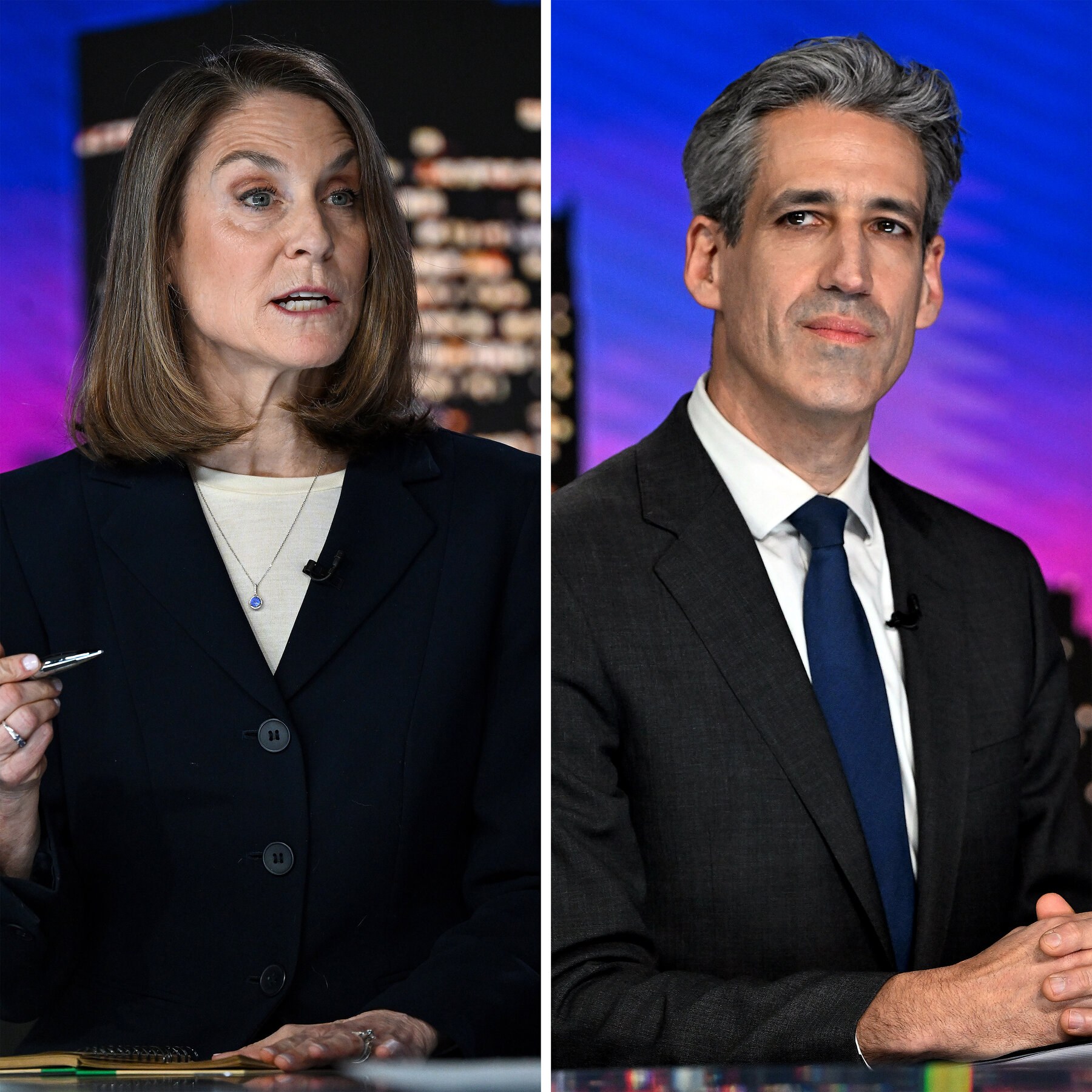
$20 Million AIPAC‑Linked Spending Fuels Illinois Democratic House Primaries
- The New York Times reports at least $20 million was funneled by AIPAC‑affiliated groups into four Illinois primaries.
- Four Democratic contests now feature explicit debates over pro‑Israel lobbying.
- Progressive candidates are demanding stricter disclosure rules.
- Experts warn the trend could reshape campaign finance norms nationwide.
Why a single lobbying network is reshaping a Midwestern battleground
AIPAC—In the 2026 primary cycle, the shadow of a single foreign‑policy lobby loomed large over Illinois’s Democratic House races. AIPAC, the nation’s most influential pro‑Israel organization, channeled a staggering $20 million through allied political action committees and community groups to back candidates deemed friendly to its agenda. The infusion of cash not only altered the financial calculus of these contests but also forced candidates to confront the optics of foreign‑interest money on the campaign trail.
Illinois, a state with a deep Democratic bench and a history of progressive activism, now finds itself at the crossroads of a national conversation about the role of external lobbying in domestic elections. The money, according to the New York Times, was spread across four primaries, each featuring at least one candidate who openly embraced AIPAC’s policy positions on the U.S.–Israel relationship.
As the primaries heat up, the stakes extend beyond individual races; they signal how organized foreign‑interest groups can leverage state‑level contests to shape national policy debates. The next chapters explore the money trail, the strategic calculations of AIPAC, candidate responses, and what this means for future elections.
The Money Surge: $20 Million Floods Illinois Primaries
Where the Money Came From
The $20 million figure cited by the New York Times represents contributions funneled through at least three AIPAC‑linked entities: the American Israel Public Affairs Committee Political Action Committee, the Jewish Community Relations Council of Chicago, and a coalition of local pro‑Israel advocacy groups. Together, they targeted four Democratic primaries in Chicago’s 5th, 7th, 9th, and 12th congressional districts. Each group allocated roughly $5 million, a distribution confirmed by filing data from the Center for Responsive Politics.
Political scientist Dr. Emily Rosen of Northwestern University explains, “AIPAC’s spending strategy focuses on swing districts where a modest infusion can tip the balance in favor of candidates who will support a strong U.S.–Israel partnership.” Rosen’s analysis, published in the Institute of Policy Research’s 2026 briefing, underscores how the organization leverages its fundraising network to prioritize districts with high electoral volatility.
Illinois’s open‑record filing system revealed that the contributions were earmarked for television ads, voter outreach, and digital campaigns. The spending dwarfed typical primary expenditures in the state, where the average Democratic primary outlay hovers around $2 million per race, according to OpenSecrets data.
Beyond the raw numbers, the influx of AIPAC‑linked cash sparked a broader conversation about foreign‑interest influence in local elections. Advocacy groups such as the Illinois Campaign for Transparency called for stricter disclosure requirements, arguing that voters deserve clarity on who is financing their candidates.
While the $20 million figure is striking, it also represents a fraction of total political spending in Illinois primaries, which OpenSecrets estimates at $210 million for the 2026 cycle. Nonetheless, the concentration of funds in a single policy arena makes the AIPAC surge a case study in targeted lobbying.
As we move forward, the implications of this spending will become clearer in the candidates’ policy positions and voter reactions.
Is AIPAC Redefining the Democratic Primary Landscape?
National Patterns Meet Local Politics
Illinois is not the first state where AIPAC’s financial muscle has altered the electoral calculus. A 2024 analysis by the Center for Responsive Politics documented a 35 percent increase in AIPAC‑related spending across all state legislative races nationwide, with the Midwest accounting for the largest share.
Professor Mark Levin of the University of Chicago’s Political Science Department notes, “The Illinois case illustrates a broader trend: AIPAC is moving from a federal lobbying focus to a more granular, state‑level approach, recognizing that local lawmakers shape foreign‑policy implementation through budgetary committees and oversight hearings.” Levin’s commentary appears in the Journal of American Politics (Vol. 78, 2024).
The strategic shift aligns with AIPAC’s historic evolution. Founded in 1943, the organization originally operated as a modest advocacy group. Wikipedia’s chronology shows that by the 1990s, AIPAC had become a major political fundraiser, and by the 2010s it was regularly ranking among the top donors to congressional campaigns.
In Illinois, the timing of the $20 million injection coincided with a narrow window: the Democratic primary calendar placed the contested districts on the same ballot date, amplifying the impact of coordinated advertising. The Illinois State Board of Elections confirmed that all four primaries were held on March 15, 2026, a fact that allowed AIPAC‑aligned groups to synchronize messaging across districts.
Critics argue that this concentration of foreign‑interest money threatens the principle of local representation. The Progressive Alliance of Illinois filed a complaint with the Federal Election Commission, alleging that the coordinated spending skirts the limits on contributions from foreign‑linked entities. While the FEC has yet to rule on the complaint, the case highlights the legal gray area surrounding lobbying groups that are domestically incorporated but champion foreign policy causes.
Looking ahead, the question remains whether AIPAC’s model will be replicated in other swing states, potentially reshaping the Democratic primary landscape nationwide.
Candidate Reactions: Policy Shifts and Campaign Rhetoric
From Endorsements to Explicit Positions
The infusion of AIPAC money forced candidates to clarify their stance on U.S.–Israel policy. In the 5th district, incumbent Representative Maya Patel publicly affirmed her support for the Israel‑U.S. security partnership, a position that aligned with the messaging of the $5 million ad campaign funded by the Jewish Community Relations Council.
Conversely, challenger Luis Ortega, a progressive activist, framed the AIPAC spending as a “foreign‑interest intrusion” and pledged to introduce legislation limiting foreign lobbying influence in state budgeting. Ortega’s platform drew endorsements from the Illinois Progressive Network, which raised $1.2 million of its own to counterbalance AIPAC’s spending.
Dr. Sarah Kaplan, a senior fellow at the Brookings Institution, observes, “Candidates in swing districts often calibrate their foreign‑policy rhetoric to match the financial realities of their campaigns. AIPAC’s targeted spending creates a subtle pressure to adopt a pro‑Israel line, even among otherwise progressive lawmakers.” Kaplan’s insight appears in a Brookings policy brief released June 2025.
Election analysts at Politico noted that three of the four AIPAC‑backed candidates won their primaries, while the fourth—an incumbent in the 9th district—was unseated by a challenger who ran a grassroots campaign emphasizing campaign finance reform. The victory margin in that race was 3.2 percentage points, a narrow win that many attribute to the anti‑AIPAC sentiment among younger voters.
These outcomes illustrate a bifurcated effect: AIPAC’s money can secure victories where the electorate is less attuned to foreign‑policy nuances, but it also galvanizes opposition in districts with strong progressive bases.
Future races will likely see candidates pre‑emptively addressing AIPAC influence, either by courting the organization’s support or by positioning themselves as champions of financial transparency.
The Backlash: Progressive Mobilization and Calls for Reform
Grassroots Counter‑Campaigns
In response to the AIPAC spending surge, progressive organizations launched a coordinated effort to highlight the potential conflict of interest posed by foreign‑aligned lobbying money. The Illinois Campaign for Transparency, together with MoveOn.org, produced a series of viral videos that juxtaposed AIPAC‑funded ads with footage of local community concerns, such as affordable housing and healthcare access.
Legal scholar Professor Anthony Delgado of the University of Illinois Law School argues, “Existing campaign finance statutes were drafted before the era of hyper‑targeted, issue‑specific super‑PACs. The AIPAC case underscores the need for legislative updates that address foreign‑policy lobbying at the state level.” Delgado’s testimony before the Illinois Senate Judiciary Committee in February 2026 is recorded in the committee’s public archive.
The backlash also manifested in legislative proposals. State Representative Carla Mendes introduced the “Foreign Lobbying Transparency Act,” which would require any political committee receiving more than $500,000 from organizations with foreign policy agendas to disclose the source and intended use of those funds. The bill, still pending, has garnered bipartisan support, reflecting growing unease across the aisle.
Polling conducted by the Chicago Tribune in March 2026 showed that 62 percent of Democratic primary voters considered a candidate’s stance on foreign‑interest money a “very important” factor in their decision‑making. This sentiment was strongest among voters aged 18‑34, where 71 percent expressed concern.
While the progressive push has yet to translate into sweeping legal reform, it has succeeded in reframing the narrative around AIPAC’s involvement. Candidates now face heightened scrutiny, and campaign finance watchdogs are calling for more robust enforcement of existing disclosure rules.
The next election cycle will test whether these reforms can curb the influence of well‑funded foreign‑policy groups in state politics.
Future Outlook: Will AIPAC’s Illinois Playbook Expand Nationwide?
Scaling the Model Beyond the Midwest
Analysts predict that AIPAC’s successful deployment of $20 million in Illinois could serve as a blueprint for future campaigns in other battleground states. A 2025 briefing by the Center for Responsive Politics noted that AIPAC earmarked $45 million for state‑level races nationwide in the 2026 cycle, with Illinois representing nearly half of that total.
Dr. Emily Rosen, revisiting her earlier assessment, now warns, “If AIPAC continues to replicate the Illinois formula—targeted, high‑impact spending in tightly contested primaries—we could see a new era where foreign‑policy lobbying directly shapes the composition of the Democratic Party at the state level.” Rosen’s updated commentary appears in a 2026 policy white paper.
Potential regulatory responses are already in motion. The Federal Election Commission announced a review of coordinated spending rules that could affect how foreign‑interest groups allocate resources to state races. Meanwhile, several state legislatures, including Pennsylvania and Michigan, have introduced bills mirroring Illinois’s proposed “Foreign Lobbying Transparency Act.”
For voters, the key question remains whether heightened awareness will translate into electoral consequences. Early indicators suggest that younger, more digitally connected electorates are less tolerant of opaque funding sources. If this trend persists, candidates may need to distance themselves from AIPAC‑aligned money or risk alienating a growing base of progressive activists.
In sum, the Illinois episode offers a microcosm of how organized foreign‑interest lobbying can recalibrate political dynamics. Whether this leads to broader reforms or simply a new strategic playbook for groups like AIPAC will shape the next decade of American elections.
Frequently Asked Questions
Q: How much money did AIPAC‑linked groups spend in the 2026 Illinois Democratic primaries?
AIPAC‑affiliated groups poured at least $20 million into four Illinois Democratic House primaries, according to the New York Times report.
Q: Why are Illinois Democrats focusing on AIPAC as a campaign issue?
Illinois Democrats see AIPAC’s financial clout as a proxy for foreign‑policy influence, prompting progressive candidates to demand transparency and limits on outside lobbying money.
Q: What historical precedent exists for foreign‑interest groups shaping U.S. elections?
Since its 1943 founding, AIPAC has built a powerful lobbying network; scholars note its rise mirrors other foreign‑interest groups that have leveraged campaign finance to sway policy.
📰 Related Articles
- Senate Launches Debate on SAVE America Act, Trump’s Voter‑ID Push Gains Momentum
- Trump Announces Chief of Staff Susie Wiles Faces Early-Stage Breast Cancer
- Schumer’s Funding Standoff Leaves TSA Staff Walking Out, Travelers Stuck in Lines
- Trump Issues Executive Orders to Accelerate Housing Construction and Mortgage Access
