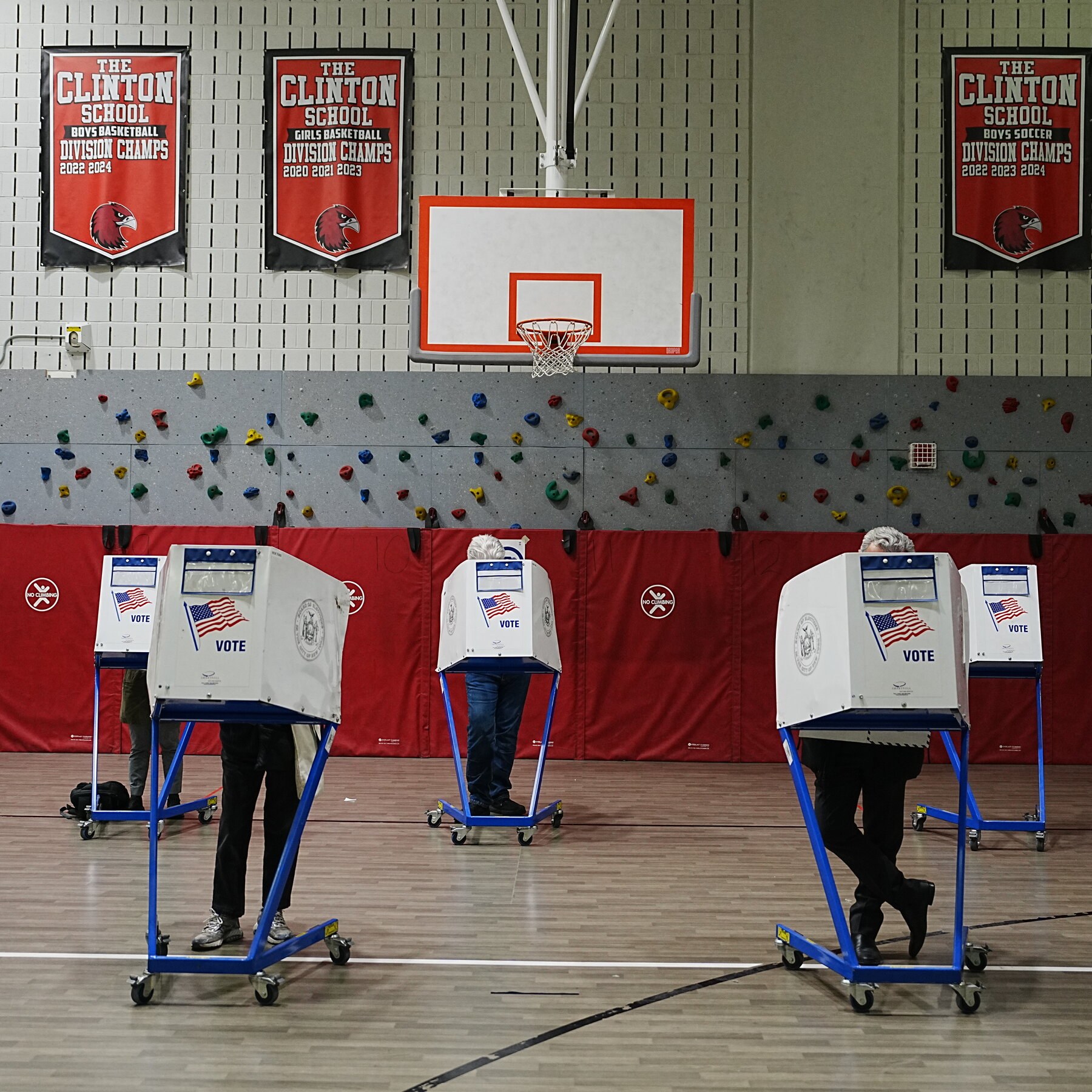
Trump Threatens Veto Spree to Force SAVE Act Through Senate, Citing 0.0001% Noncitizen Ballot Rate
- House passed SAVE Act 219-212 last month; Senate needs 60 votes that Republicans do not yet have.
- Bill demands passport or birth certificate to register, ending affidavit options used by 3.4 million Americans in 2024.
- Trump told GOP lawmakers: ‘If you don’t get it—big trouble,’ making it his sole legislative precondition.
- Noncitizen voting prosecutions averaged 12 per year over the past decade, per Heritage Foundation database.
A president with no patience for parliamentary niceties is turning a rare form of fraud into a litmus test for his party.
SAVE ACT—President Donald Trump has weaponized the powers of his office to elevate a once-fringe voter-ID proposal into a must-pass Republican priority, warning senators they will see no other bill reach his desk until the SAVE Act lands there first. The threat, delivered last week in a closed-door meeting at the U.S. Capitol, transforms an otherwise routine messaging bill into a high-stakes confrontation over Senate procedure and ballot access.
The legislation, which cleared the House on a party-line vote in February, would require every voter to produce documentary proof of citizenship—typically a passport, birth certificate or naturalization papers—before registering or updating registration. Currently, 34 states request photo ID at the polls, but only four demand proof of citizenship for registration. The federal mandate would override those looser systems and end the sworn-attestation process now accepted in states such as California, New York and Illinois.
Trump’s ultimatum forces Senate Republicans to choose between loyalty to the president and the institutional norm of the 60-vote filibuster, a threshold the bill is almost certain to fail. With the mid-term map already looking treacherous for the GOP, the gambit could keep the Senate floor paralyzed for weeks, delaying must-pass spending bills and annual defense authorization.
Inside the SAVE Act: What the 29-Page Bill Actually Mandates
The 29-page SAVE Act—short for Safeguard American Voter Eligibility—rewrites two core sections of the National Voter Registration Act of 1993. Section 4(a) strikes the current language that lets applicants swear under penalty of perjury that they are citizens. Instead, it demands a ‘secure documentary’ such as a passport, birth certificate or naturalization form. States would scan and store copies of those documents for four years, creating a de-facto federal citizenship registry searchable by the Department of Homeland Security.
Failure to comply would trigger loss of federal highway and education funds under a penalty clause modeled after the 1984 drinking-age law that coerced states into raising the limit to 21. The Congressional Budget Office has not yet scored enforcement costs, but the National Association of Secretaries of State estimates that retraining poll-workers, upgrading software and storing 150 million paper copies could exceed $2.8 billion over the first five years.
Expert view: ‘A modern poll tax’
‘The bill’s documentation burden falls hardest on people who change addresses frequently—renters, students, domestic-violence survivors and military spouses,’ says Wendy Weiser, director of the Democracy Program at the Brennan Center for Justice. Her 2023 survey found that 9 percent of voting-age citizens—21 million people—lack ready access to citizenship papers, and the number jumps to 16 percent among adults earning under $35,000. ‘That is not an accidental side effect; it is the design,’ she adds.
Republicans counter that the same documents are already required to board a domestic flight or purchase certain cold medicines. Senator Mike Lee of Utah, the bill’s lead Senate sponsor, argues that ‘protecting the ballot box is worth the same inconvenience we accept at TSA checkpoints.’ Yet the analogy breaks down under scrutiny: airlines accept 15 alternate IDs including tribal cards and veteran IDs, while the SAVE Act accepts only three federal documents.
What happens if a newly naturalized citizen’s certificate is lost in the mail before election day? The bill allows provisional ballots, but they are counted only if the voter presents the document to an election office within 48 hours—an impossibility for many rural voters who live 100 miles from the nearest clerk. In 2024, 42,000 provisional ballots were rejected across states that impose similar deadlines, according to the U.S. Election Assistance Commission.
The legislation also criminalizes ‘knowingly registering an ineligible voter,’ a provision that election-law professors warn could intimidate registration-drive volunteers. The penalty—up to five years in prison—mirrors Florida’s 2022 law that caused the League of Women Voters to suspend field operations for three months while it rewrote training protocols.
Why Trump Calls Noncitizen Voting a Crisis With No Evidence
Trump’s fixation on noncitizen voting dates back to 2016, when he claimed—without proof—that ‘millions’ of undocumented immigrants cost him the popular vote. Since then, the Heritage Foundation has built the most comprehensive public database of proven fraud cases: 1,513 instances across all 50 states from 1982 to present. Within that dataset, only 24 involve noncitizens casting ballots, a rate of 0.0001 percent of votes cast.
The Department of Homeland Security detected a similarly microscopic threat. In 2022, the department audited 11.8 million voter-registration records and referred 146 cases to prosecutors; 11 led to convictions. Even Georgia’s Republican Secretary of State, Brad Raffensperger, concluded a six-month probe in 2023 by charging exactly zero noncitizens.
Expert view: ‘A solution in search of a problem’
‘The data are unambiguous: voter impersonation by noncitizens is rarer than getting struck by lightning,’ says Lorraine Minnite, a political-science professor at Rutgers University and author of ‘The Myth of Voter Fraud.’ Minnite’s peer-reviewed 2021 study of 1.2 billion ballots cast over 20 years found a fraud rate of 0.00004 percent. She notes that the SAVE Act’s documentation mandate ‘addresses a phantom menace while creating real barriers for legitimate voters.’
Yet the narrative persists. Trump has amplified the claim on Truth Social at least 47 times since January, including a post that warned, ‘If we don’t stop the invasion at the ballot box, we lose our country.’ Each post receives hundreds of thousands of interactions, helping the topic trend on platforms that drive conservative media coverage. A Media Matters analysis found that Fox News mentioned ‘noncitizen voting’ 312 times in February 2026, up from 28 mentions the previous February.
The rhetoric has policy consequences. A recent NPR/PBS poll found that 71 percent of Republican voters now believe noncitizen voting is a ‘major problem,’ triple the share in 2020. That perception gap explains why GOP senators who privately doubt the bill’s necessity are reluctant to break with Trump publicly. ‘No one wants to be the next Liz Cheney,’ says a senior Republican aide, referring to the Wyoming congresswoman who lost her primary after challenging Trump’s 2020 fraud claims.
Could the Senate Bypass the 60-Vote Rule to Pass SAVE?
The math is brutal for Republicans. They control 53 Senate seats, seven short of the 60 needed to break a Democratic filibuster. No Democrat has publicly endorsed the SAVE Act, and party leaders label it ‘voter suppression cloaked as election integrity.’ That leaves GOP leaders with three procedural options, each carrying heavy political costs.
Option one: attach the bill to budget reconciliation, which requires only 51 votes. Yet the Senate parliamentarian would almost certainly strike it down because the legislation has no direct impact on federal revenue or spending. In 2021, the parliamentarian rejected two immigration provisions for the same reason, setting a precedent that experts say applies here.
Option two: invoke the ‘nuclear option’ to abolish the legislative filibuster entirely. Senator Josh Hawley of Missouri has circulated a memo urging colleagues to seize the moment, arguing that ‘if Democrats kill the filibuster for voting rights in 2022, we can kill it for voter integrity in 2026.’ But at least four Republicans—Susan Collins, Lisa Murkowski, Mitt Romney and Mitch McConnell—have pledged to protect the 60-vote threshold, calling it ‘essential to the Senate’s identity.’
Expert view: ‘A Rubicon moment’
‘Eliminating the filibuster would fundamentally alter the Senate’s cooling-saucer function,’ says Sarah Binder, a senior fellow at the Brookings Institution and co-author of ‘Politics or Principle? Filibustering in the United States Senate.’ Binder notes that once the majority changes, ‘the party in power will face immense pressure to retaliate, leading to a perpetual cycle of rule changes that could include Supreme Court expansion or national abortion legislation.’
Option three: keep the bill on the floor indefinitely, daring Democrats to mount talking filibusters. Senate Majority Leader John Thune has privately discussed forcing an around-the-clock session similar to the 1988 civil-rights debate that lasted 37 days. The goal would be to extract a public price from Democrats for blocking what Republicans frame as a ‘commonsense integrity measure.’ Yet such a spectacle risks backfiring if moderate voters perceive it as government dysfunction.
Meanwhile, Trump’s veto threat hangs over every unrelated bill. The FAA reauthorization expires in June, farm-credit subsidies lapse in September, and the annual National Defense Authorization Act traditionally passes before the August recess. A prolonged standoff could force the administration to issue emergency stop-gap orders, raising legal questions about the separation of powers.
Which Voters Would Be Most Affected—and Where?
Using Census micro-data, the Brennan Center modeled the SAVE Act’s impact on the 2024 electorate. Nationally, 22 percent of Black citizens, 18 percent of Hispanic citizens and 26 percent of Native Americans lack the mandated documents, compared with 11 percent of white citizens. The disparity widens in the 16 states that currently accept sworn attestations, home to 42 percent of the nation’s Latino population.
Texas illustrates the stakes. The state has 3.1 million registered Latino voters, of whom 430,000 registered by signing an affidavit. Under the SAVE Act, those voters would have to travel to a county clerk within ten days of an election to deliver citizenship papers; the average round-trip distance in rural counties is 87 miles. During the 2022 mid-terms, 38 percent of affidavit registrants cast their ballots on election day, making post-election document delivery impossible.
Expert view: ‘Collateral damage is the point’
‘The burden is not incidental; it is targeted,’ says Nina Perales, vice-president of litigation at the Mexican American Legal Defense and Educational Fund. MALDEF represented plaintiffs in Veasey v. Abbott, the 2016 case that found Texas’ voter-ID law violated the Voting Rights Act. Perales notes that ‘the same legislators who champion the SAVE Act previously backed closure of 866 DMV offices in majority-minority counties, exacerbating document-access hurdles.’
Women who changed surnames after marriage face a secondary hurdle. The Social Security Administration estimates that 68 percent of married women have driver’s licenses that do not match birth-certificate surnames, requiring them to produce marriage licenses or divorce decrees. In Georgia, where a similar rule was briefly implemented in 2018, 4,600 registration applications were rejected for name mismatch; 78 percent came from women.
College students are another vulnerable bloc. Universities in 14 states—including Wisconsin and North Carolina—use dorm addresses for registration. Students born overseas to military or diplomatic parents often lack passports because they entered the country on dependent visas and later naturalized. Campus vote-project coordinators report that obtaining replacement naturalization certificates takes four to six months and costs $555, a price out of reach for many working students.
The bill exempts voters over age 75, a concession championed by Senator Chuck Grassley of Iowa. Yet only 7 percent of affidavit registrants fall into that age group, limiting the exemption’s practical impact. Meanwhile, the same seniors would still face documentation hurdles if they move to assisted-living facilities and need to update addresses.
What Happens Next: Scenarios From Stalemate to Signature
Republican leadership aides have sketched three potential endgames. Scenario A: Trump folds under pressure from defense contractors and farm-state senators, allowing the NDAA to pass without the SAVE Act attached. Scenario B: the bill becomes a 2026 campaign cudgel, with Senate candidates in swing states forced to take sides. Scenario C: a grand bargain emerges in which Democrats trade SAVE Act passage for a pathway to citizenship for Dreamers, a swap that enrages both parties’ bases but clears the 60-vote bar.
Scenario A grows more likely if markets revolt. The U.S. Chamber of Commerce has privately warned Thune that prolonged FAA reauthorization delays could ground 1,200 regional flights daily, affecting 180,000 passengers and costing airlines $340 million per week. Similarly, farm-credit lapses would raise loan rates for 47,000 farmers just as spring planting begins. Historical precedent supports retreat: in 1995, House Speaker Newt Gingrich abandoned a similar veto threat after 21 Republicans signaled they would break ranks.
Expert view: ‘Campaign issue trumps legislative win’
‘Trump does not need the bill to become law; he needs the fight,’ says Frances Lee, a Princeton University professor who studies partisan polarization. Lee notes that Trump’s 2024 campaign raised $45 million off voter-fraud emails within 48 hours of House passage. ‘A lost Senate vote keeps the issue alive through November, energizing low-propensity GOP voters who believe the system is rigged.’
Scenario C—a citizenship trade—faces opposition from progressive Democrats who view ballot access as non-negotiable. Representative Alexandria Ocasio-Cortez told reporters that ‘trading voting rights for immigrant rights is a false choice; we can protect both.’ Conversely, hard-line Republicans such as Senator Ted Cruz reject any ‘amnesty’ linkage, narrowing the corridor for compromise.
Meanwhile, state-level action continues. Florida and Texas legislatures have introduced copycat bills that would implement SAVE Act rules for state elections even if the federal bill stalls. Legal scholars predict such laws would face immediate lawsuits under the 14th Amendment’s equal-protection clause, teeing up a Supreme Court battle that could redefine the balance between state election control and federal voting-rights guarantees.
Whatever the outcome, the SAVE Act has already shifted the Overton window. What began as a fringe proposal now anchors the GOP platform, ensuring that voter documentation—rather than healthcare or inflation—will dominate the 2026 mid-term conversation. The only certainty is that the next nine months will test the durability of Senate norms and the elasticity of American voting rights alike.
Frequently Asked Questions
Q: What does the SAVE Act require?
The SAVE Act mandates documentary proof of U.S. citizenship—such as a passport or birth certificate—to register or update voter registration, ending sworn attestations now accepted in 16 states.
Q: Why does Trump call it his ‘No. 1 priority’?
Trump claims the bill will ‘guarantee the midterms’ for Republicans by preventing what he baselessly calls mass noncitizen voting, and he has threatened to veto any other legislation until it passes.
Q: Can the SAVE Act survive a Senate filibuster?
No. With only 53 Republican senators, the bill lacks the 60 votes needed to break a Democratic filibuster, and no Democrat has signaled support, making enactment unlikely without rules reform.
📰 Related Articles
- Pro-Israel and Crypto Super PACs Pour Record Cash Into Illinois Primary Races
- Admiral Breaks Ranks, Slams Cluster Bombs as ‘Indiscriminate’ in Policy Reversal
- Alabama GOP Leaders Ignite Anti-Muslim Rhetoric Targeting Islamic School
- Alexander Butterfield, Who Revealed Nixon Tapes in Watergate Scandal, Dies at 99
