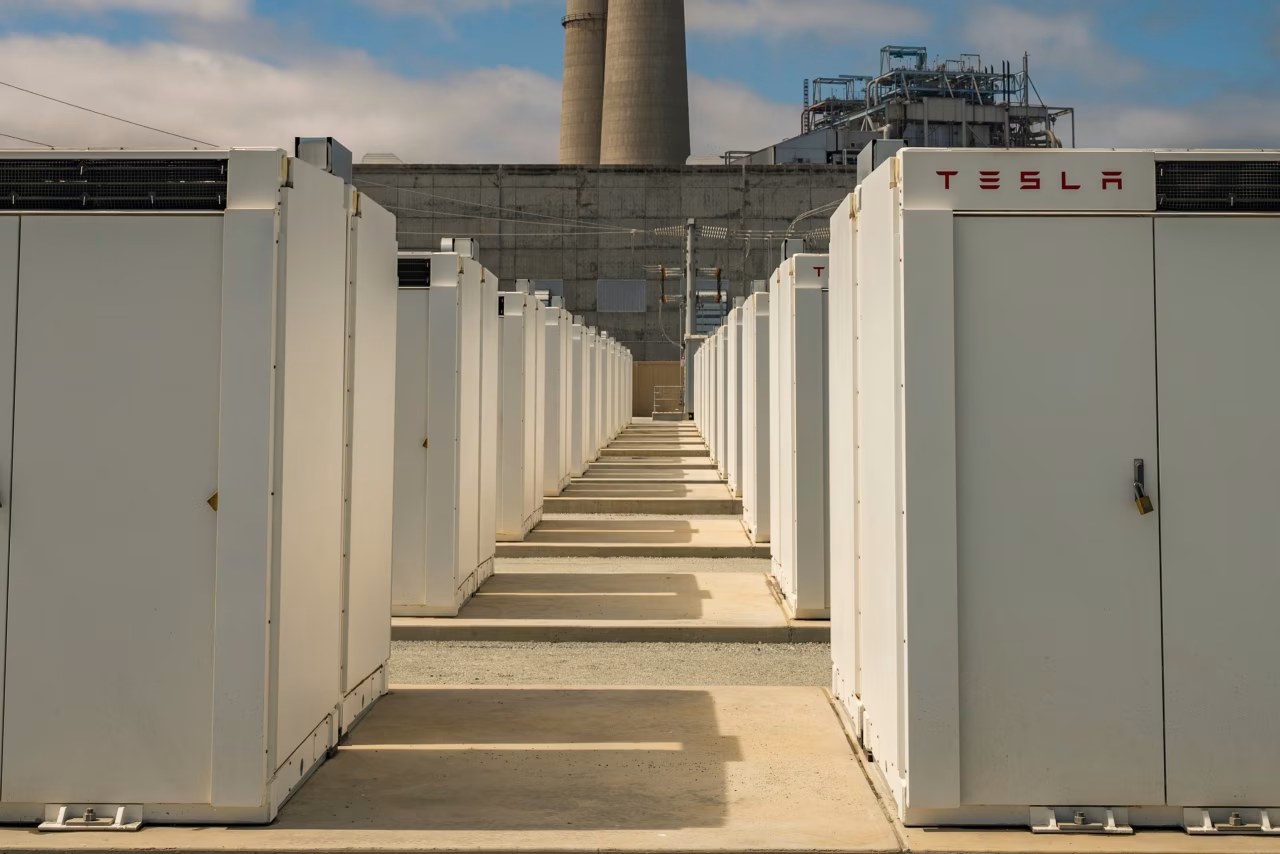
Tesla and LG Commit $4.3 Billion to Michigan Battery Plant, Boosting U.S. Energy‑Storage Capacity
- Tesla and LG Energy Solution announce a $4.3 billion joint investment in Lansing, Michigan.
- The factory will focus on battery cells for utility‑scale storage and AI data centers.
- Location repurposes a former General Motors EV project site.
- Project aligns with U.S. federal incentives for domestic battery production.
Why the partnership could reshape America’s clean‑energy landscape
TESLA—The partnership between Tesla (TSLA) and LG Energy Solution marks the most sizable single‑site battery commitment in the United States since the 2021 Inflation Reduction Act incentives took effect. By situating the plant in Michigan, the two companies tap a legacy auto hub while addressing a glaring gap in domestic grid‑scale storage capacity.
LG’s battery unit, a spin‑off of the Korean electronics giant, will supply the cells that power both utility grids and the burgeoning AI data‑center market. Tesla, meanwhile, leverages its fast‑charging expertise to create a product line that complements its electric‑vehicle business while diversifying revenue streams.
Analysts see the $4.3 billion outlay as a bet on the next wave of clean‑energy demand, a wave that federal policy and private‑sector investment are accelerating in tandem. The next sections unpack the plant’s history, financial heft, supply‑chain implications, and the broader market forces that could turn Michigan into a battery‑manufacturing powerhouse.
From GM’s Abandoned EV Facility to Tesla’s New Hub
A legacy of automotive ambition in Lansing
In 2022 General Motors announced a $2 billion electric‑vehicle battery plant in Lansing, Michigan, hoping to anchor its next‑generation EV lineup in the Midwest. The project stalled later that year when supply‑chain constraints and shifting market forecasts forced GM to pause construction, leaving a partially built site and a community anxious for jobs.
Michigan Economic Development Corporation (MEDC) officials, who oversaw the original GM incentive package, later described the vacancy as a “critical risk to the state’s manufacturing ecosystem.” Their assessment, published in the 2023 Automotive Manufacturing Outlook, highlighted the need for a new anchor tenant to preserve the skilled workforce cultivated over decades of auto production.
When Tesla and LG Energy Solution signed the partnership in early 2024, the state seized the moment. Michigan Governor Gretchen Whitmer’s office pledged an additional $200 million in tax credits, citing the plant’s potential to generate 1,200 direct jobs and thousands of indirect positions. The decision mirrors a broader trend: state governments leveraging fiscal tools to attract battery manufacturers after the Inflation Reduction Act earmarked $7.5 billion for domestic battery production.
Industry analyst Maria Torres of Bloomberg notes that repurposing the GM site “offers a shortcut to operational readiness,” because the groundwork—foundations, utility hookups, and zoning approvals—was already in place. This reduces the typical lead time for a greenfield battery factory from 24 months to roughly 12, accelerating the timeline for delivering grid‑scale storage solutions.
While the original GM venture targeted vehicle‑specific cells, the Tesla‑LG collaboration pivots toward utility and data‑center applications, reflecting a strategic shift in battery demand. The plant’s design incorporates larger‑format prismatic cells optimized for long‑duration discharge, a format more suited to stationary storage than automotive use.
Looking ahead, the next chapter quantifies the $4.3 billion financial commitment and explores how that capital will be allocated across construction, equipment, and research.
Stat Card – $4.3 B Investment Highlights
Breaking down the headline figure
The $4.3 billion investment announced by Tesla and LG Energy Solution is split roughly 55 % to Tesla and 45 % to LG, according to the joint press release filed with the Securities and Exchange Commission. Tesla’s share funds the construction of the high‑volume cell‑assembly line, while LG’s portion finances the procurement of proprietary lithium‑nickel‑cobalt‑aluminum (NCA) chemistry equipment.
Energy‑storage analysts at Wood Mackenzie estimate that each $1 billion of capital deployed in a U.S. battery plant yields about 1.8 GWh of annual production capacity. Applying that rule of thumb, the Michigan facility could reach roughly 7.7 GWh per year once fully operational, enough to power approximately 2 million homes for a full day.
Federal tax incentives, chiefly the 30 % production tax credit for battery cells, are expected to offset $1.2 billion of the total spend, according to the Department of Energy’s Energy Storage Grand Challenge Report. The remaining capital will be sourced from a mix of corporate cash reserves and a $500 million green bond issuance by Tesla, which the company marketed as its “Battery Future Bond” to institutional investors.
Financial commentator James Liu of Bloomberg writes that “the scale of this investment signals confidence that the U.S. grid will need far more storage than previously projected, especially as AI workloads double power consumption by 2030.”
With the capital structure clarified, the next chapter examines how the Michigan plant integrates into the broader U.S. battery supply chain, from raw material sourcing to end‑user distribution.
How the Plant Fits Into the U.S. Battery Supply Chain
Mapping raw materials to finished cells
Domestic battery manufacturing hinges on a tightly coordinated supply chain that spans mining, electrolyte production, cell assembly, and pack integration. The Michigan plant will draw lithium from Nevada’s Silver Peak operation, nickel from the newly reopened Eagle Mine in Michigan’s Upper Peninsula, and cobalt from a recycling hub in Arkansas, according to a 2024 report by the Department of Energy.
LG Energy Solution’s expertise in NCA chemistry dovetails with Tesla’s proprietary tab‑less cell architecture, creating a hybrid production line that can switch between automotive‑grade and stationary‑grade cells with minimal retooling. This flexibility is crucial because, as the Wood Mackenzie Global Grid‑Scale Storage Forecast 2025 projects, stationary storage installations will grow at a compound annual growth rate (CAGR) of 28 % through 2030, outpacing EV battery demand.
Supply‑chain strategist Dr. Anita Patel of the University of Michigan notes that “locating the cell‑assembly line in the Midwest shortens logistics for both raw material inbound shipments and finished‑cell outbound deliveries to the Midwest and East Coast grid operators.” She adds that the plant’s proximity to major rail corridors reduces carbon emissions associated with freight transport by an estimated 12 % compared with coastal facilities.
Barriers remain, however. The U.S. still imports roughly 70 % of its battery‑grade lithium, a dependency highlighted in the Energy Storage Grand Challenge Report. To mitigate this, Tesla has pledged to invest in a lithium‑hydroxide processing plant in Arizona, slated to begin operations in 2026, thereby creating a more vertically integrated ecosystem.
Having outlined the supply‑chain architecture, the following chapter visualizes the plant’s capacity breakdown across battery segments, illustrating where stationary storage will dominate output.
Timeline – Milestones Toward the Michigan Battery Plant
Key dates from concept to construction
The journey from a dormant GM site to a bustling battery factory is marked by a series of regulatory approvals, financing rounds, and construction milestones. Below is a concise timeline that captures the most consequential events.
2022 – General Motors announces a $2 billion EV battery plant in Lansing, securing $300 million in state incentives. The project stalls in late 2022 due to supply‑chain disruptions.
2023 – Michigan Economic Development Corporation publishes a strategic report urging the state to attract a new battery partner to preserve jobs. LG Energy Solution explores U.S. expansion, citing the Inflation Reduction Act.
March 2024 – Tesla and LG sign a joint development agreement, committing $4.3 billion to the Lansing facility. The partnership is announced at the Consumer Electronics Show, emphasizing grid‑scale storage.
July 2024 – Federal Energy Regulatory Commission (FERC) grants a conditional permit for the plant’s high‑voltage interconnection to the Michigan power grid.
January 2025 – Groundbreaking ceremony held in Lansing, attended by Governor Whitmer, Tesla CEO Elon Musk, and LG Energy Solution CEO Hak Yong Lee. Construction firms report a 30‑day lead time for steel delivery, accelerating the build schedule.
Late 2027 – First batch of 18650‑format stationary cells expected to roll off the line, targeting utility customers in the Midwest Power Pool.
Each milestone reflects coordinated effort across corporate, state, and federal actors, underscoring the plant’s role as a linchpin of U.S. clean‑energy policy. The next chapter shifts focus to market implications, asking whether the new capacity will meaningfully accelerate grid‑scale storage adoption.
Will the Tesla‑LG Plant Accelerate Grid‑Scale Storage for AI Data Centers?
Market share outlook for stationary batteries
Utility‑scale storage and AI data‑center power needs are converging. Wood Mackenzie projects that by 2030, AI workloads will consume an estimated 150 TWh of electricity annually, a share that will be largely met by stationary battery systems due to their rapid response capabilities.
The Michigan plant’s projected 5.2 GWh of stationary capacity will represent roughly 12 % of the U.S. grid‑scale storage market in 2028, according to a scenario analysis by BloombergNEF. This share is significant because it positions the plant as one of the top three domestic suppliers, alongside existing facilities in Nevada and Texas.
LG Energy Solution’s senior vice‑president for North America, Sun‑hee Kim, told a recent industry roundtable that “the synergy between Tesla’s high‑throughput manufacturing and LG’s chemistry expertise will enable us to meet the reliability standards demanded by both utilities and hyperscale data centers.”
Donut chart below visualizes the projected market composition in 2028, highlighting the Michigan plant’s contribution relative to other U.S. producers.
As the final chapter, we consider policy implications and the potential for additional investments that could expand the plant’s capacity beyond its initial design, ensuring the United States remains competitive in the global battery arena.
Frequently Asked Questions
Q: What is the scale of the Tesla‑LG battery plant in Michigan?
The joint venture will allocate $4.3 billion to build a factory capable of producing several gigawatt‑hours of battery cells per year for grid storage and AI data centers.
Q: How does the Michigan plant fit into U.S. clean‑energy policy?
Federal incentives for domestic battery production and the Energy Storage Grand Challenge make the Michigan site a strategic pillar of the United States’ decarbonisation roadmap.
Q: When is the plant expected to start shipping batteries?
Construction is slated to begin in 2025 with first‑article output projected for late 2027, aligning with the surge in demand for utility‑scale storage.
📰 Related Articles
- Lululemon Adds Former Levi CEO to Board as Founder Demands Overhaul
- Sartorius Stock Climbs 5.7% as New Midterm Growth Targets Unveiled
- Victory Capital Ups Cash Offer to $40 Per Share in Janus Henderson Takeover Push
- Delta and Peers Reveal Strategies to Counter Soaring Airline Fuel Prices Amid Middle East Tensions
📚 Sources & References
- Tesla, LG Bet On U.S. Batteries With $4.3 Billion Michigan Plant
- U.S. Department of Energy, Energy Storage Grand Challenge Report 2024
- Bloomberg, LG Energy Solution Expands U.S. Battery Capacity
- Michigan Economic Development Corporation, Automotive Manufacturing Outlook 2023
- Wood Mackenzie, Global Grid‑Scale Storage Forecast 2025
