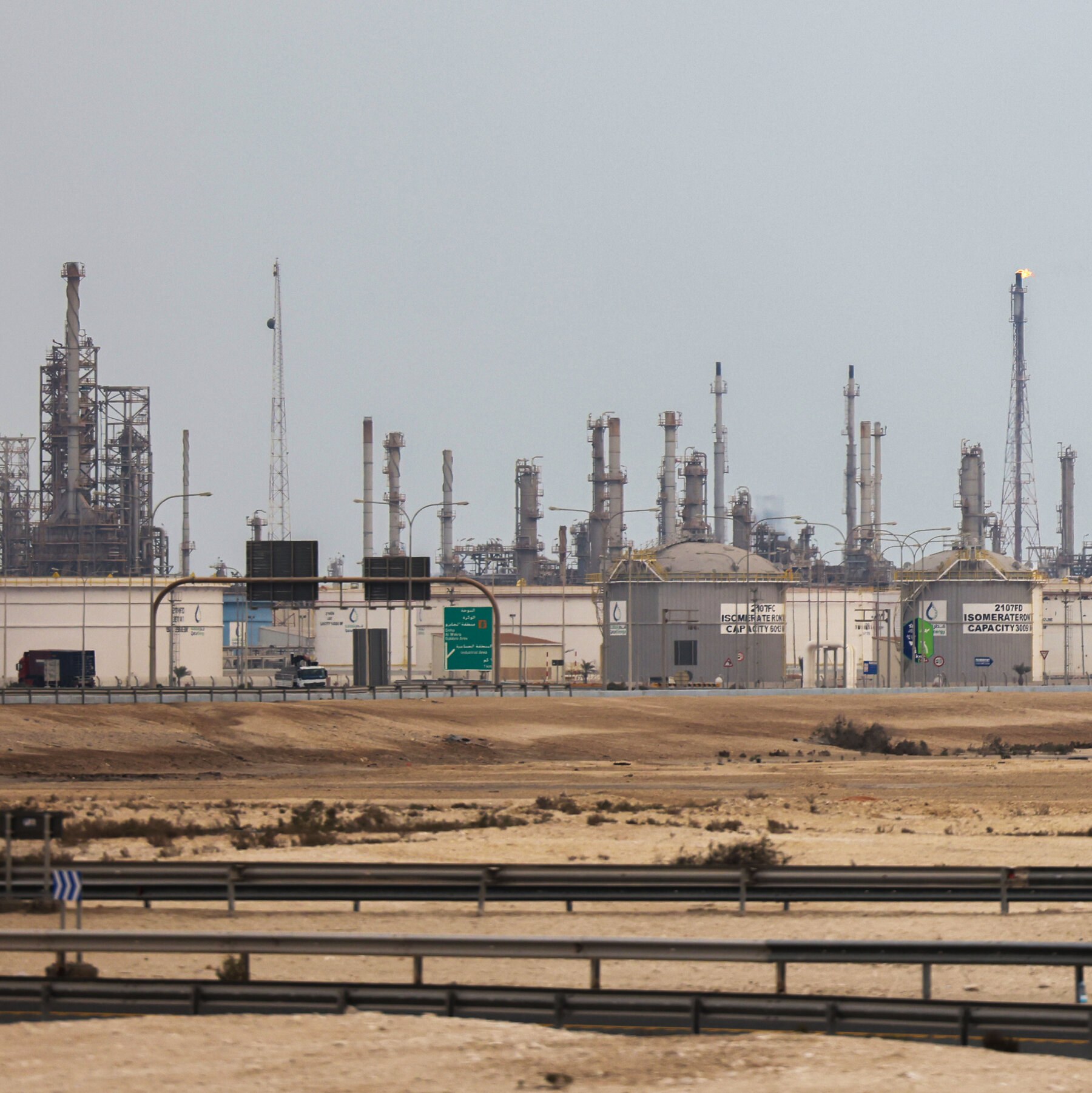
One-Fifth of Global LNG Vanishes as War Shuts Strait of Hormuz
- Fighting has closed the Strait of Hormuz and halted Qatari output, erasing about 20% of the world’s liquefied natural gas supply.
- Asia receives more than 80% of Qatar’s LNG and uses the fuel for a third or more of power generation in Japan, Singapore, Thailand, Taiwan, Pakistan and Bangladesh.
- Utilities are paying record spot prices for remaining cargoes while governments draw on state funds and reactivate coal plants to keep grids stable.
- Shell projects Asian demand will drive global LNG consumption up 85% by 2050, but the current shock is forcing an immediate return to coal.
Energy officials warn the disruption could outlast the conflict, upending Asia’s decarbonisation timetable.
ASIA ENERGY—Three weeks into the Middle East war, the waterway that carries one in every five LNG cargoes on earth has become a no-go zone. Tanker traffic through the 21-mile-wide Strait of Hormuz has stopped, and with it Qatar’s liquefaction plants have gone offline. The ripple effect is being felt from Tokyo to Dhaka as utilities scramble for molecules that no longer exist.
Asian spot LNG prices have rocketed to all-time highs, topping the previous record set after Russia’s 2022 invasion of Ukraine. Governments that spent years touting gas as a cleaner “bridge fuel” now face the uncomfortable reality that the bridge can be blown up overnight. Coal stockpiles—once dismissed as stranded assets—are suddenly valuable again.
Energy ministries across the region have issued emergency instructions: restart idle coal units, lift pollution caps and tap sovereign wealth to subsidise power bills. The pivot is happening faster than any policy white paper predicted, raising the prospect of a carbon spike that could linger well beyond the current conflict.
Strait of Hormuz Shutdown Erases One-Fifth of Global LNG Supply
The Strait of Hormuz handles roughly 21% of global liquefied natural gas trade, according to the International Energy Agency. When military action closed the channel in early March 2026, Qatari trains with nameplate capacity of 77 million metric tons per year—about one-tenth of planet-wide LNG output—were immediately idled. Traders describe the moment as a supply shock without precedent in the modern gas era.
Japan’s Ministry of Economy, Trade and Industry convened an emergency session within 24 hours. Officials learned that 18 Q-Max tankers bound for Japanese ports had been diverted to the Gulf of Oman, where they remain anchored. Each vessel carries up to 266,000 cubic metres of LNG, enough to fuel 100,000 homes for a year. With those cargoes stuck, Japan’s utilities faced an instant 12% shortfall in scheduled deliveries for March.
Why Asia cannot quickly replace Qatari volumes
Unlike crude oil, LNG supply chains are rigid. Liquefaction trains require 60-month build cycles, and spot cargoes account for barely 30% of the market. “There is no swing producer for LNG,” explains Dr. Xiulan Li, senior gas analyst at the Oxford Institute for Energy Studies. “When Qatar sneezes, Asia catches pneumonia.”
Singapore’s Sembcorp has already cancelled maintenance at its 3.3 GW Tembusu multi-fuel plant so the unit can burn low-sulphur fuel oil instead of gas. Taiwan’s Taipower reactivated the 500 MW coal-fired Hoping unit that had been mothballed since 2021. Even energy-rich Brunei has imposed curbs on industrial gas use to prioritise electricity generation.
The knock-on cost is measured in billions. Japan’s spot purchases for April delivery averaged USD 47 per million British thermal units, triple the 2025 average and higher than the post-Ukraine peak of USD 38. Analysts at Wood Mackenzie estimate that every week of Hormuz closure adds USD 2.8 billion to Asia’s collective import bill.
For a region that burns 280 million tons of LNG a year, the psychological impact is equally large. Governments that banked on gas to phase out coal must now explain to citizens why emissions are rising again.
Japan’s Utilities Pay Record Spot Prices to Keep Grids Stable
Japan imported 68 million metric tons of LNG in 2025, government data show. Roughly 15% came from long-term Qatari contracts priced at oil-indexed formulas that today equate to about USD 12 per million Btu. The remainder is sourced on short-term or spot markets, where prices have exploded to USD 47. Japanese buyers Tokyo Gas, Osaka Gas and JERA are collectively spending an extra USD 1.1 billion per month compared with 2025 baselines.
How high prices ripple through the economy
The Bank of Japan estimates that every USD 1 increase in the average LNG import price adds 0.1% to consumer price inflation within six months. At current spot levels, household electricity bills will rise 18% this summer unless regulators approve emergency subsidies. Analysts at Nomura Securities warn that energy-intensive industries—steel, chemicals, paper—could see profit margins fall 12% in the June quarter.
Tokyo Gas shares have dropped 22% since the conflict began, while Japan’s five largest electric utilities lost a combined JPY 1.4 trillion in market capitalisation. Credit-rating agency S&P placed three of them on negative outlook, citing liquidity pressure from margin calls on forward LNG purchases.
Meanwhile, the government is drawing on its sovereign wealth fund to cushion consumers. A JPY 500 billion relief package announced on 17 March will cap tariff increases at 15%, leaving utilities to absorb the balance. Critics argue the measure merely delays the pain. “Subsidies don’t solve the molecule shortage,” says Hiroshi Matsuda, energy director at the Institute for Energy Economics, Japan. “They just socialise the cost.”
Forward curves imply spot LNG will average USD 35 through 2026 even if the strait reopens within weeks, because Europe will compete with Asia for available cargoes. Japan’s last comparable price shock followed the 2011 Fukushima nuclear shutdown, which triggered a decade of trade deficits. Today the country’s LNG dependency is even higher, leaving policymakers with few levers beyond rationing.
Coal Plants Restart as Governments Lift Pollution Caps
Coal’s share of Asian electricity generation had fallen to a modern low of 48% in 2025, down from 58% a decade earlier, according to Ember. The war-induced LNG crunch is reversing that trajectory. Thailand’s Ministry of Energy ordered EGAT to fire up three 600 MW coal units that were placed on cold reserve last year. Bangladesh’s Adani 1.6 GW Godda plant, built to export power to India, is now running flat-out to supply Dhaka’s grid.
Environmental officials privately admit that nitrogen-oxide and sulphur-dioxide emissions will breach 2024 levels, erasing two years of air-quality gains. Singapore’s National Environment Agency has suspended particulate-matter targets for the rest of 2026, citing force-majeure conditions. “The policy default is keep the lights on first, apologise later,” says Dr. Melissa Chong, air-quality researcher at the National University of Singapore.
What the coal pivot means for net-zero pledges
Japan’s 6th Strategic Energy Plan targets a 46% cut in greenhouse-gas emissions by 2030. Analysts at Rystad Energy calculate that restarting 7 GW of coal capacity for 12 months would add 28 million metric tons of CO₂, equal to 2.1% of Japan’s current annual emissions. Across Asia, the figure climbs to 180 million tons—roughly the annual output of Spain.
Carbon pricing offers little deterrence when gas prices exceed USD 30 per million Btu. At those levels, the variable cost of coal generation falls below USD 35 per megawatt-hour even after buying EU-equivalent emissions permits. In other words, economics trump climate policy.
Investors are taking note. Shares of Indonesia’s Adaro Energy and Australia’s Whitehaven Coal have rallied 40% and 55% respectively since hostilities began. Traders anticipate European buyers will also seek coal if Russian pipeline gas is curtailed again next winter. The International Energy Agency now expects global coal demand to rise 3% in 2026, the first increase since 2013.
Is the Global LNG Market Now Too Geopolitically Fragile?
The concentration of LNG flows through the Strait of Hormuz is only one vulnerability. Qatar and Australia together supply 55% of global LNG, while the top five exporters control 78%. “Energy security circles have long warned about choke-point risk, yet import dependence keeps rising,” says Dr. Michal Meidan, director of the China Energy Programme at Oxford. Asia’s import dependency ratio for natural gas reached 72% in 2025, up from 58% in 2015.
Compounding the risk is the limited elasticity of demand. Gas-fired power plants cannot switch to diesel for more than a few days without retrofits. Industrial users such as Malaysia’s petrochemical crackers require constant heat; shutdowns damage furnaces. These technical constraints give exporters asymmetric leverage during disruptions.
Could new supply corridors emerge?
The United States, now the world’s largest LNG exporter, could theoretically redirect cargoes. Yet trans-Atlantic voyages take 25 days versus 12 from Qatar, and the Panama Canal’s draft limits restrict winter transits. Mozambique’s 13 million ton per year Rovuma project is still recovering from insurgent attacks in Cabo Delgado. Meanwhile, Russia’s Arctic LNG 2 remains under sanctions, eliminating another potential swing supplier.
Analysts at Goldman Sachs argue the current crisis will accelerate investment in floating storage and regasification units (FSRUs) to diversify import routes. Pakistan’s 750 MW Port Qasim FSRU is already operating at 105% of nameplate throughput; Bangladesh’s Summit LNG has chartered two additional FSRUs at daily rates of USD 140,000—triple 2024 levels.
Still, new liquefaction trains take five to seven years to commission, so relief is not imminent. Wood Mackenzie’s base-case forecast shows global LNG supply growing at 4% annually through 2030, yet Asian demand is projected to rise 6%. The structural gap implies repeated price spikes each time a geopolitical event removes even 5% of supply.
For policymakers, the lesson is stark: treating LNG as a bridge fuel only works if the bridge has multiple on-ramps. Right now, Asia’s energy security hinges on a single maritime choke point—and the war has exposed how quickly that bottleneck can slam shut.
Long-Term Demand Outlook: Can Renewables Fill the Gap?
Shell’s latest LNG outlook projects Asian demand rising to 540 million metric tons by 2040, up from 280 million in 2025. The forecast assumes renewables will complement, not replace, gas-fired balancing power. Yet the current price shock is forcing governments to re-examine that logic. Japan’s cabinet approved a JPY 3 trillion acceleration fund for offshore wind, aiming for 45 GW by 2035—double the 2025 target. South Korea’s new energy white paper raises the renewable share target to 42% by 2035, up from 32%.
Storage technology is central. Lithium-ion battery pack prices have fallen 82% since 2013, according to BloombergNEF, but grid-scale deployments still cover only 2% of Asian peak demand. Pumped hydro remains geography-constrained. “Gas is still the cheapest peaking asset once you factor in battery degradation and two-hour duration limits,” says Jenny Kim, APAC power analyst at S&P Global.
What a faster renewables build-out implies for LNG
Wood Mackenzie modelled a scenario where Asian renewables capacity additions double the current 65 GW annual average. Even then, LNG demand plateaus only after 2035, declining at 1.5% per year. The reason: industrial heat needs 24/7 reliability that wind and solar cannot yet provide without long-duration storage.
Carbon capture offers another route. Japan’s GX strategy earmarks USD 150 billion over ten years for hydrogen and CCS projects. If successful, the country could retrofit 10 GW of gas turbines to burn 30% hydrogen by 2035, cutting LNG unit consumption by 20%. Yet the technology is still pre-commercial, with levelised costs above USD 120 per megawatt-hour.
For investors, the implication is volatility ahead. Long-term LNG contracts priced at 12% of Brent crude still look attractive compared with USD 50-plus spot prices, but buyers are demanding destination-flexibility clauses to reroute cargoes if another choke point emerges. Sellers, in turn, want floor-price mechanisms indexed to coal to protect margins when renewables flood grids at midday.
Thus, even under the most optimistic renewables scenario, Asia cannot wean itself off LNG within the decade. The current war-induced coal relapse underscores the geopolitical premium baked into every molecule—and the urgent need to diversify both supply routes and power-generation portfolios.
Frequently Asked Questions
Q: How much of the world’s LNG transits the Strait of Hormuz?
Roughly one-fifth of global liquefied natural gas supply normally flows through the strait, making any prolonged closure a systemic risk for importers.
Q: Which Asian countries rely most on Qatari LNG?
Japan, Singapore, Thailand, Taiwan, Pakistan and Bangladesh each buy large shares of Qatar’s exports and generate a third or more of their electricity from natural gas.
Q: Why are Asian utilities restarting coal plants?
With spot LNG prices at record highs and cargoes scarce, coal offers the fastest, cheapest way to avoid blackouts while governments dip into state funds to cushion price spikes.
📰 Related Articles
- Exxon, Chevron and ConocoPhillips Tell Trump Team Hormuz Disruptions Will Prolong Fuel Squeeze
- Oil Prices Surge Past $100 as Iran Intensifies Drone Strikes on Energy Sites
- Exxon, Chevron Tell Trump Team Hormuz Disruption Could Push Oil Past $100
- Fujairah and Yanbu Pipelines Become Gulf’s Only Reliable Oil Escape Routes
