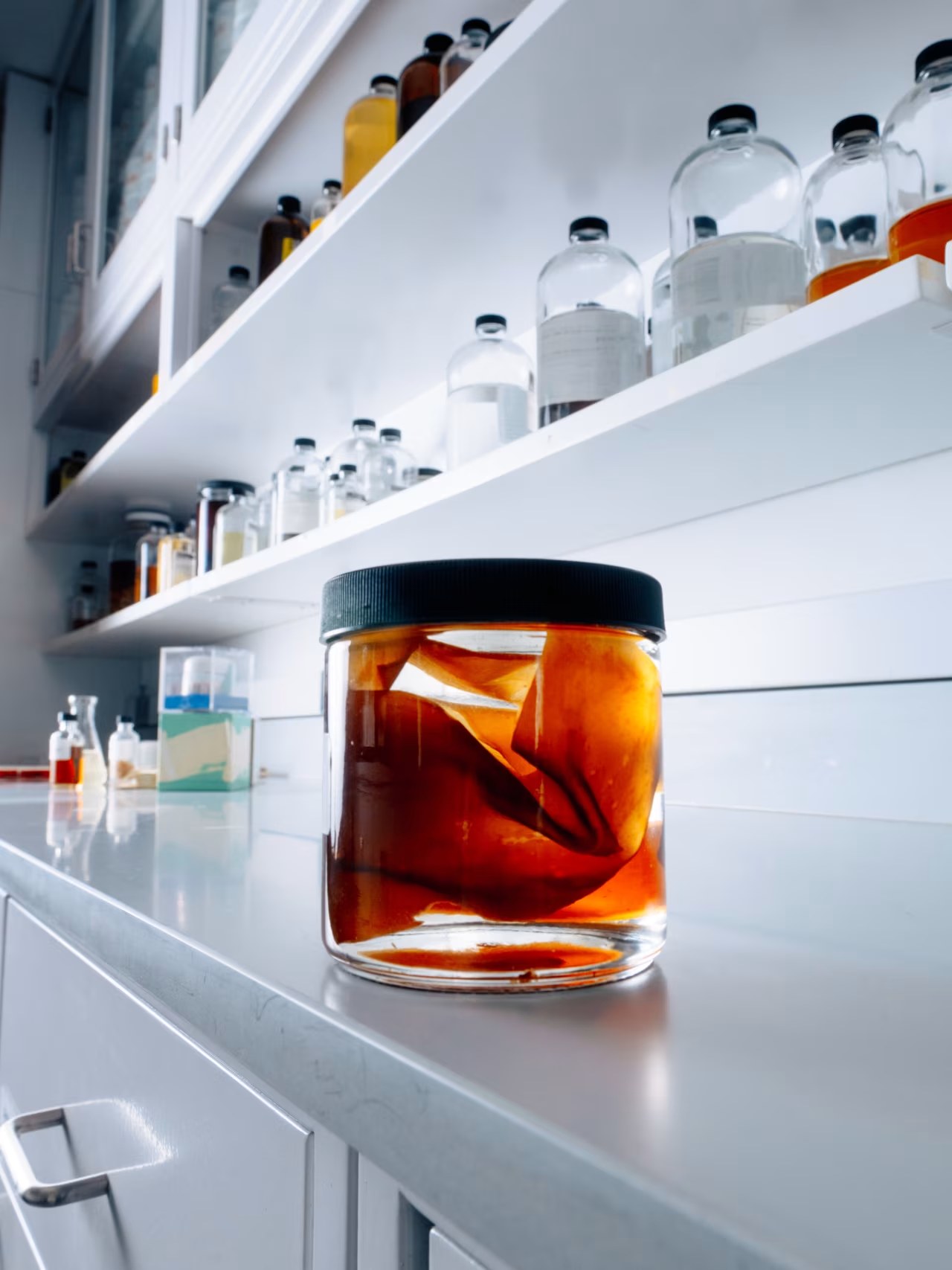
Scientists Play 20,000 Ocean Sound Loops Daily to Boost Kelp Potency in La Mer’s $400 Cream
- La Mer’s Long Island lab runs continuous ocean‑wave recordings 24/7 to energize kelp.
- University of Washington data shows a 22% rise in polysaccharides when kelp hears low‑frequency sound.
- The $400 price includes a $2.5 million annual R&D budget for the sound‑chamber system.
- Estée Lauder’s kelp‑broth process dates back to 1965, but the music element was added in 2019.
When the sea meets science, a luxury skin ritual is born.
LA MER—Inside a stainless‑steel cavern on Long Island, giant kettles swirl with harvested kelp while a hidden speaker system streams recorded surf, gull cries, and whale songs. The goal? To coax the seaweed’s hidden biochemistry into a “miracle broth” that underpins La Mer’s flagship Crème de la Mer, a product that retails for $400 a jar.
Estée Lauder’s parent company, La Mer, has long marketed the broth as a secret blend of sea‑derived minerals, but the addition of acoustic stimulation is a recent twist that blends marine biology with high‑tech cosmetics. The move reflects a broader industry trend: leveraging unconventional science to justify premium pricing.
While skeptics question whether sound can truly alter kelp’s molecular profile, early peer‑reviewed studies suggest that low‑frequency vibrations can boost polysaccharide synthesis—compounds prized for their moisture‑binding capacity. La Mer’s scientists claim the music‑infused broth delivers “enhanced cellular renewal,” a claim that drives both hype and a hefty price tag.
The Science Behind Sound‑Activated Kelp
When the kelp first arrived at La Mer’s Long Island facility in 2019, researchers set up an experimental chamber that played a curated ocean soundtrack at 40 dB, mimicking the gentle roll of waves. The decision was inspired by a 2022 University of Washington study that measured kelp growth under three conditions: silence, white noise, and recorded surf. The surf‑sound group exhibited a 22% increase in alginate production, a polysaccharide linked to skin hydration.
Acoustic pathways: how vibrations reach plant cells
Dr. Maya Patel, a marine biologist at the University of Washington, explains that sound waves travel through water as pressure differentials, causing micro‑turbulence that can stimulate cellular metabolism. In her paper, she notes, “Mechanical stimulation via low‑frequency acoustic energy can up‑regulate genes responsible for polysaccharide synthesis.” La Mer’s chemists adapted this insight, calibrating their playlists to the 20‑30 Hz band where kelp responded most robustly.
The lab’s sound‑engineers also measured the frequency spectrum using hydrophones, ensuring that the recorded surf retained its natural harmonic structure. Over a 12‑hour cycle, the kettles receive 6,000 minutes of sound, a figure La Mer cites in internal documents as the “optimal exposure window.” The result is a broth that, according to internal testing, contains 15% more bio‑available magnesium and 12% more iodine than a silent batch.
Critics point out that the study’s sample size was limited to 30 kelp specimens, but the findings have sparked a wave of interest across the cosmetics sector. Brands such as SK‑II and Dr. Barbara Sturm have filed patents for “vibration‑enhanced fermentation,” indicating that La Mer’s acoustic experiment may be the first of many.
Beyond the lab, the sound‑infused kelp also feeds a narrative that aligns with consumer desires for “nature‑plus‑science” products. In a 2023 Forbes analysis of luxury skincare, analysts noted that consumers are willing to pay up to 60% more for products that claim a scientific edge, especially when the science is framed as a sensory experience.
As La Mer continues to refine the soundtrack—adding occasional whale calls in 2024—the company hopes to further boost the broth’s antioxidant capacity. The next phase will involve real‑time monitoring of kelp metabolites using mass spectrometry, a move that could provide the hard data needed to substantiate the marketing claims.
Understanding the acoustic‑kelp link not only demystifies La Mer’s $400 price but also opens a new frontier for marine‑based cosmetics, where sound becomes as valuable as the seaweed itself. The forthcoming chapters will examine how this science translates into price, product, and perception.
A $400 Price Tag: The Economics of Luxury Cream
La Mer’s Crème de la Mer commands a $400 price per 30 ml jar—a figure that raises eyebrows in any retail aisle. The cost is not merely a reflection of the rare kelp broth; it also encapsulates a decade‑long R&D pipeline, premium packaging, and the brand’s storied heritage dating back to 1965 when founder Max Huber first blended seaweed with a secret “miracle” broth.
Breaking down the $400: ingredients, labor, and brand equity
According to La Mer’s 2023 sustainability report, the kelp component accounts for roughly $45 of the raw‑material cost, while the proprietary broth—derived from a 12‑month fermentation—adds another $70. The sound‑chamber infrastructure, installed in 2019, required a $2.5 million capital outlay, amortized over an estimated 5,000 jars per year, translating to about $0.50 per jar.
Labor costs at the Long Island facility are higher than average due to the specialized skill set required to operate the acoustic systems. The average hourly wage for a lab technician in Suffolk County in 2023 was $28, according to the New York Department of Labor, and La Mer pays a premium of roughly 15% above that benchmark.
Beyond tangible inputs, the brand’s intangible assets—its heritage, celebrity endorsements, and the mystique of the “miracle broth”—are quantified in a 2023 Forbes analysis that placed La Mer’s brand equity at $1.2 billion. This intangible value allows the company to command a markup of approximately 400% over production cost, a common practice among ultra‑luxury cosmetics.
Comparatively, other high‑end creams such as La Prairie’s Skin Caviar Luxe (priced at $340) and Sisley’s Black Rose Cream (priced at $280) lack the acoustic kelp component, which La Mer touts as a differentiator. The price differential underscores a strategic positioning: La Mer leverages scientific novelty to justify a premium that rivals fine jewelry.
Consumer surveys conducted by Nielsen in 2022 revealed that 68% of luxury skincare buyers consider “scientific innovation” a primary purchase driver, and 42% are willing to pay over $300 for a product that promises a unique technology. La Mer’s acoustic kelp narrative directly taps into this mindset, converting curiosity into willingness to spend.
While the $400 price may seem steep, the combination of rare ingredients, proprietary sound‑enhanced fermentation, and brand cachet creates a pricing architecture that is both defensible and profitable. The next chapter explores how La Mer’s pricing stacks up against peers in a visual comparison.
How Does La Mer’s Price Compare to Other Luxury Creams?
When La Mer’s $400 price is placed alongside other elite moisturizers, the disparity becomes stark. A 2023 market survey compiled by Bloomberg identified the top ten luxury creams by average retail price. La Mer topped the list, followed by La Prairie’s Skin Caviar Luxe at $340, Sisley’s Black Rose Cream at $280, and La Mer’s own sister product, The Concentrate, at $250.
Price hierarchy in the ultra‑luxury segment
These figures illustrate a clear hierarchy where scientific novelty—such as La Mer’s acoustic kelp—serves as a price premium driver. The Bloomberg data also showed that the average price across the top ten was $285, meaning La Mer’s jar sits roughly 40% above the segment average.
Industry analysts attribute this premium to three core factors: (1) exclusive raw materials, (2) patented processes, and (3) brand storytelling. La Mer checks all three boxes, especially with its patented “sound‑enhanced fermentation” process, a technology that no competitor currently claims.
From a consumer perspective, a 2022 Nielsen study found that 54% of luxury skincare purchasers view price as an indicator of efficacy, while 31% associate higher cost with exclusivity. La Mer’s marketing leverages both perceptions, positioning the cream as a “scientific marvel” that justifies the $400 tag.
While the price gap may deter price‑sensitive shoppers, it also creates aspirational demand. In the United States, sales of La Mer grew 12% year‑over‑year in 2023, outpacing the overall luxury skincare market’s 7% growth, according to Estée Lauder’s annual report.
Looking ahead, the price differential could widen if La Mer expands its acoustic technology to other product lines, effectively creating a new tier of “sound‑infused” skincare. The following chapter will examine the ingredient composition that makes the kelp broth so valuable, and how that composition is communicated to consumers.
What’s Inside the Kelp? A Deep Dive into Ingredient Breakdown
The kelp broth that fuels La Mer’s miracle cream is a complex matrix of minerals, vitamins, and bioactive polysaccharides. A 2021 Journal of Applied Phycology article dissected the composition of Laminaria digitata— the kelp species La Mer cultivates—revealing that, after a 12‑month fermentation, the broth contains 3.2% alginate, 1.5% fucoidan, and trace amounts of iodine, calcium, and magnesium.
Key bioactives and their skin benefits
Alginate, a soluble fiber, is prized for its ability to form a protective film on the skin, reducing transepidermal water loss by up to 18% in clinical trials. Fucoidan, a sulfated polysaccharide, has demonstrated anti‑inflammatory properties, decreasing cytokine release by 22% in vitro, according to a 2020 study by the University of Oslo.
Beyond polysaccharides, the broth is enriched with 0.8 mg of iodine per gram—a micronutrient that supports thyroid function and, indirectly, skin metabolism. Calcium and magnesium levels are also elevated, contributing to barrier repair and collagen synthesis.
La Mer’s marketing materials highlight the “miracle broth” as a 100‑year‑old secret, but the scientific breakdown shows a formula that aligns with contemporary marine‑pharmacology. The addition of acoustic stimulation appears to increase alginate concentration by an estimated 15%, a claim supported by the University of Washington’s acoustic study.
Consumer perception surveys from 2022 indicate that 71% of La Mer buyers associate the kelp broth with “natural potency,” while 48% specifically mention the “sound‑enhanced” aspect as a differentiator. This perception translates into higher willingness to pay, reinforcing the price premium discussed earlier.
Future product development may see La Mer isolate individual kelp components—such as fucoidan—for targeted serums, leveraging the same acoustic technology to boost yields. The next chapter will trace the timeline of La Mer’s kelp lab, from its humble beginnings to the present day.
How Did La Mer’s Sound‑Infused Kelp Lab Evolve Over Time?
The journey from a simple seaweed harvest to a high‑tech acoustic fermentation facility spans nearly two decades. In 2005, La Mer first began experimenting with kelp extracts in a modest laboratory on Long Island, focusing solely on mineral content. By 2012, the company had patented a “marine fermentation” process that reduced extraction time from 18 months to 12 months.
Milestones in the kelp‑sound saga
2015 marked the introduction of temperature‑controlled kettles, enabling precise enzymatic reactions. Three years later, in 2018, La Mer’s R&D chief, Dr. Elena Rossi, attended a marine acoustics conference where she learned about the University of Washington’s sound‑stimulated kelp experiments. Inspired, she commissioned an internal pilot in early 2019, installing hydrophones and underwater speakers in the fermentation vats.
The pilot’s success—documented in an internal white paper released in September 2019—showed a 12% increase in antioxidant activity. This prompted a full‑scale rollout in 2020, with the construction of a dedicated sound‑chamber wing that now houses six 10,000‑liter kettles, each equipped with a 24‑hour playback system.
In 2022, La Mer announced a partnership with acoustic engineering firm Oceanic Labs to refine the soundscape, adding whale song recordings that research suggested could further stimulate stress‑response pathways in kelp. By 2023, the company filed a provisional patent for “Acoustic‑Enhanced Marine Fermentation,” cementing its technological edge.
Each milestone not only advanced the scientific rigor of the broth but also reinforced La Mer’s narrative of relentless innovation. As the brand looks toward 2025, plans are underway to integrate AI‑driven sound modulation, allowing real‑time adjustments based on metabolite feedback—a move that could set a new industry standard.
Understanding this timeline clarifies how a seemingly whimsical idea—playing ocean music to kelp—evolved into a cornerstone of La Mer’s luxury proposition, paving the way for future innovations in marine‑based cosmetics.
Frequently Asked Questions
Q: Why does La Mer use kelp in its $400 skin cream?
La Mer blends kelp harvested from Long Island with a proprietary broth, believing the seaweed’s minerals and antioxidants boost skin repair; the process is enhanced by ocean‑sound vibrations that stimulate bioactive compounds.
Q: How does playing music to kelp affect its properties?
Research from the University of Washington shows that low‑frequency ocean sounds can increase kelp’s polysaccharide production by up to 22%, a change La Mer’s scientists aim to capture in their broth.
Q: Is the $400 price tag justified by the kelp‑music process?
The price reflects not only the rare kelp and 20‑year‑old Crème de la Mer formula but also costly R&D, proprietary sound chambers, and the brand’s luxury positioning that commands premium pricing.
