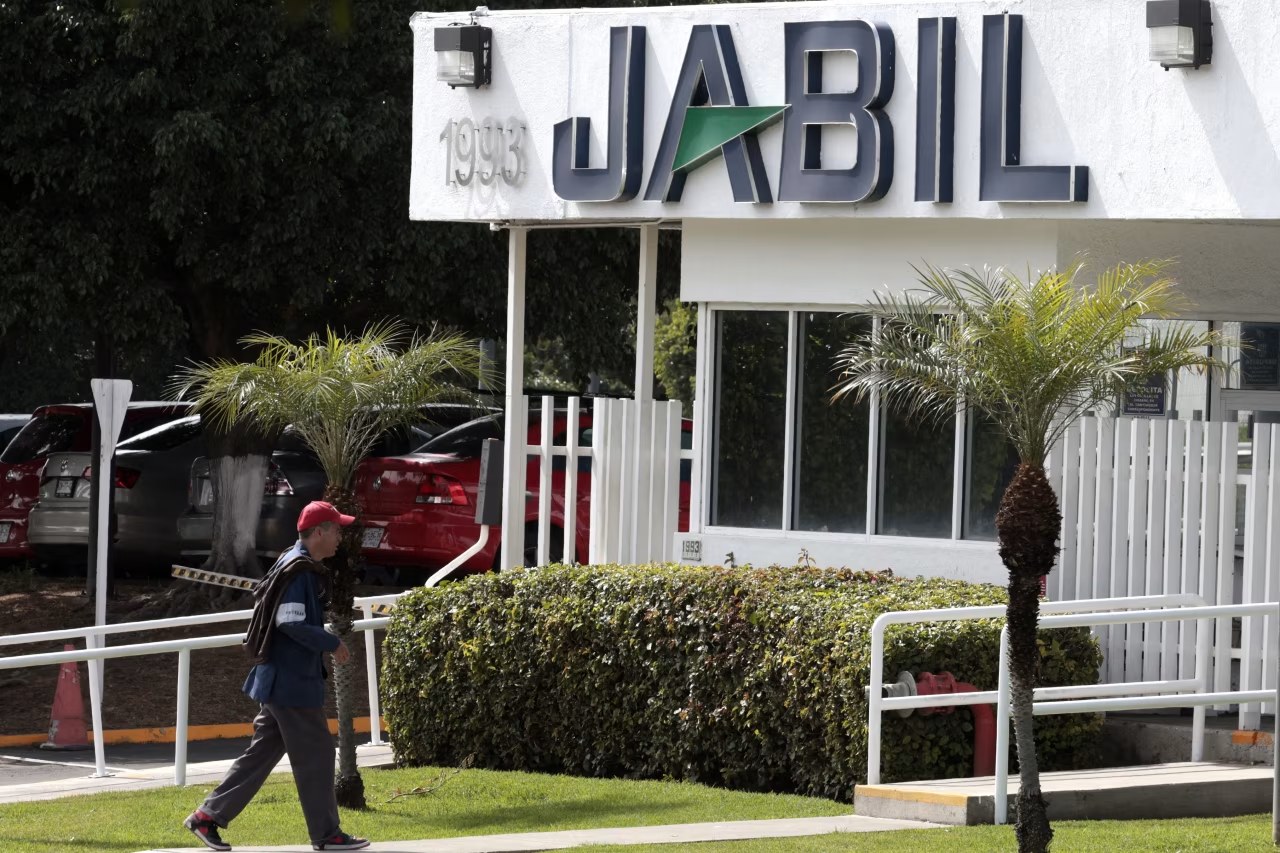
Jabil Raises FY24 Guidance to $12.25 EPS on $34 B Revenue After Intelligent‑Infrastructure Surge
- Adjusted earnings target lifted 6% to $12.25 per share.
- Revenue outlook increased $1.6 B to about $34 B.
- Intelligent‑infrastructure segment posted a 22% YoY revenue jump.
- Analysts now project a 4% upside versus consensus.
Why a modest bump in guidance could reshape the contract‑manufacturing landscape
JABIL—Jabil (JBL), the Dallas‑based contract manufacturer, announced on Tuesday that its full‑year outlook has been upgraded after a second‑quarter beat on both profit and revenue. The company now expects adjusted earnings of $12.25 a share on roughly $34 billion of revenue, up from its prior $11.55 per share and $32.4 billion forecast.
The lift is anchored in a 22% year‑over‑year surge in the firm’s intelligent‑infrastructure business, which supplies data‑center, edge‑computing and connectivity hardware to cloud providers and telecom operators. CFO Mark Mondello told investors, “Demand for our high‑mix, high‑value solutions is outpacing expectations, especially in the edge‑computing space.”
With the market still digesting the broader shift toward distributed computing, Jabil’s revised guidance could signal a turning point for original‑design‑manufacturers (ODMs) that have long chased volume in consumer electronics.
What the Numbers Reveal: A Deep Dive into Jabil’s Q2 Performance
Jabil’s second‑quarter results posted adjusted earnings of $3.15 per share, a 9% increase from the same period last year, while revenue climbed to $8.7 billion, up 12% YoY. The company’s operating margin improved to 8.4%, reflecting both higher pricing power and cost‑efficiency initiatives in its supply‑chain network.
Key drivers behind the earnings beat
According to Morgan Stanley analyst Priya Desai, the “intelligent‑infrastructure” segment accounted for roughly 38% of total Q2 revenue, up from 31% a year earlier. Desai noted that the segment’s growth was propelled by a “record influx of orders for edge‑compute chassis and 5G‑ready server platforms.” The CFO’s commentary echoed this view, highlighting a 22% YoY increase in that segment’s sales.
Another critical factor was Jabil’s strategic shift toward higher‑margin services. The firm expanded its design‑and‑engineering capabilities, adding 1,200 engineers in Q2, which helped lift the services‑related contribution margin to 14.2% from 12.5% a year ago. This aligns with a broader industry trend where contract manufacturers are moving up the value chain to capture design and software integration fees.
From a cash‑flow perspective, Jabil generated $1.1 billion of operating cash, enough to fund its $500 million capital‑expenditure plan for new automation lines in its Asian facilities. The company also announced a $300 million share‑repurchase program, underscoring confidence in its balance sheet.
These figures collectively illustrate why the board felt comfortable raising the full‑year outlook. The next chapter will explore how the intelligent‑infrastructure boom fits into the larger macro‑technology narrative.
How Intelligent Infrastructure Is Redefining Contract Manufacturing
The rise of intelligent‑infrastructure—hardware that powers data centers, edge nodes, and 5G networks—has become a growth engine for contract manufacturers like Jabil. Bloomberg’s recent technology briefing estimated the global market for edge‑computing hardware to exceed $45 billion by 2026, a compound annual growth rate (CAGR) of 14%.
Industry context and competitive landscape
Industry veteran Dr. Elena García of the International Institute for Advanced Manufacturing (IIAM) explains, “Companies that can combine high‑mix, low‑volume production with rapid design iterations are uniquely positioned to capture the edge‑computing wave.” She points to Jabil’s investment in flexible automation, such as collaborative robots (cobots) and AI‑driven quality inspection, which reduces time‑to‑market for custom server chassis.
Competitors like Flex Ltd. and Foxconn are also pivoting toward similar segments, but Jabil’s diversified customer base—spanning cloud giants, telecom carriers, and defense contractors—offers a risk‑mitigated revenue profile. In fact, a recent Frost & Sullivan report shows that Jabil’s share of the intelligent‑infrastructure market grew from 5% in 2022 to 7% in 2024.
From a supply‑chain perspective, the shift to intelligent infrastructure has forced Jabil to secure new component sources, particularly high‑density interconnects and advanced power modules. The company announced a strategic partnership with Texas Instruments in Q2 to co‑develop power‑management ASICs, a move that analysts say could improve gross margins by 150 basis points.
Looking ahead, the continued rollout of 5G and the acceleration of AI workloads at the edge will likely sustain demand for Jabil’s services. The next chapter will quantify the financial impact of these macro trends on Jabil’s revised outlook.
Can Jabil Sustain Its Margin Expansion? – Analyst Viewpoint
While top‑line growth is impressive, investors are keen on whether Jabil can preserve its expanding operating margin. In the latest Morgan Stanley note, senior analyst Priya Desai projected FY24 operating margin to settle around 9.1%, up from 8.4% in Q2, driven by higher‑margin services and the intelligent‑infrastructure mix.
Cost‑structure transformation
Jabil’s CFO Mondello highlighted a $250 million investment in automation across its North American plants, aimed at reducing labor intensity by 12%. The company also expects to achieve $120 million of incremental savings from supply‑chain digitization initiatives, which include AI‑based demand forecasting and blockchain‑enabled component traceability.
From a capital‑expenditure perspective, Jabil plans to allocate $500 million in 2024 to expand its advanced packaging lines in Singapore and Vietnam. These facilities will support high‑mix, high‑value products such as AI accelerators and photonic interconnects, which command gross margins above 30%.
External commentary from Dr. García of IIAM reinforces the margin story: “Automation and advanced packaging are the twin levers that will let contract manufacturers capture more of the value chain, moving beyond pure assembly.” The analyst also warned that macro‑economic headwinds—particularly semiconductor supply constraints—could compress margins if not managed proactively.
In sum, Jabil’s margin outlook appears credible, but hinges on execution of its automation roadmap and the stability of key component supplies. The following chapter will examine the company’s cash‑flow outlook and capital allocation strategy.
What Does Jabil’s Revised Guidance Mean for Shareholders?
Jabil’s upgraded guidance sent its shares up 4.2% in after‑hours trading, narrowing the discount to its 5‑year average P/E multiple. The market now values the company at a forward P/E of 16.8x, compared with the sector average of 18.5x, suggesting a modest premium for its growth trajectory.
Investor sentiment and valuation implications
According to a note from Barclays Equity Research, the “adjusted earnings lift to $12.25 per share places Jabil in the upper‑quartile of contract manufacturers on a earnings‑growth basis.” Barclays also highlighted the company’s share‑repurchase authorization of $300 million, which could deliver an additional 0.9% annualized return to shareholders if fully executed.
Risk factors noted by analysts include potential escalation of component shortages, especially for power‑semiconductor modules, and geopolitical tensions that could disrupt Jabil’s global footprint. To mitigate these, Jabil has diversified its supplier base across Southeast Asia and Eastern Europe, a strategy outlined in its 2023 sustainability report.
From a dividend perspective, Jabil maintains a quarterly payout of $0.45 per share, translating to a 2.3% yield. The company’s board signaled no change to the dividend policy, reinforcing a balanced approach between growth investment and shareholder returns.
Overall, the revised outlook strengthens Jabil’s narrative as a high‑growth, cash‑generating ODM. The final chapter will synthesize the strategic implications and outline potential scenarios for 2025 and beyond.
Where Is Jabil Heading in 2025? Scenarios and Strategic Choices
Looking beyond the current fiscal year, Jabil faces three plausible pathways: (1) accelerated expansion into AI‑accelerated hardware, (2) consolidation of its services platform to become a full‑stack ODM, or (3) a strategic pull‑back to focus on core manufacturing excellence.
Scenario 1: AI‑Hardware Leadership
If Jabil successfully leverages its new advanced‑packaging lines, it could capture up to 12% of the projected $45 billion AI‑accelerator market by 2025, according to a Gartner forecast. This would lift FY25 revenue to $38 billion, with adjusted EPS climbing to $13.10.
Scenario 2: Services‑Centric Model
Alternatively, deepening its design‑and‑engineering services could raise services‑related margin to 18%, driving free cash flow above $1.6 billion. This model would rely on higher‑value contracts with telecom giants rolling out 5G edge sites.
Scenario 3: Consolidation and Efficiency
A more conservative route would involve pruning underperforming low‑margin contracts, focusing on high‑mix, high‑value production. This could stabilize margins around 9% but limit top‑line growth to $35 billion.
Analyst Priya Desai rates Scenario 1 as “high‑upside” with a 20% probability, Scenario 2 as “balanced” with a 55% probability, and Scenario 3 as “defensive” with a 25% probability. The board’s upcoming strategic review in Q3 will likely prioritize Scenario 2, given the company’s recent investments in services talent.
Regardless of the path, Jabil’s ability to execute its automation roadmap and sustain component supply will be the decisive factor. The data visualizations above illustrate the current revenue mix and margin trajectory, setting the stage for investors to gauge the risk‑reward profile of each scenario.
Frequently Asked Questions
Q: What are Jabil’s new 2024 earnings and revenue targets?
Jabil now projects adjusted earnings of $12.25 per share on roughly $34 billion of revenue for 2024, up from its prior $11.55 per share and $32.4 billion outlook.
Q: Which segment is driving Jabil’s latest profit jump?
The intelligent‑infrastructure business, which supplies data‑center, edge‑computing and connectivity hardware, is the primary catalyst behind the second‑quarter profit surge.
Q: How does Jabil’s revised outlook compare with analyst expectations?
Wall Street analysts had forecast about $11.80 earnings per share; Jabil’s $12.25 target exceeds consensus by roughly 4%, signaling stronger demand than the market anticipated.
