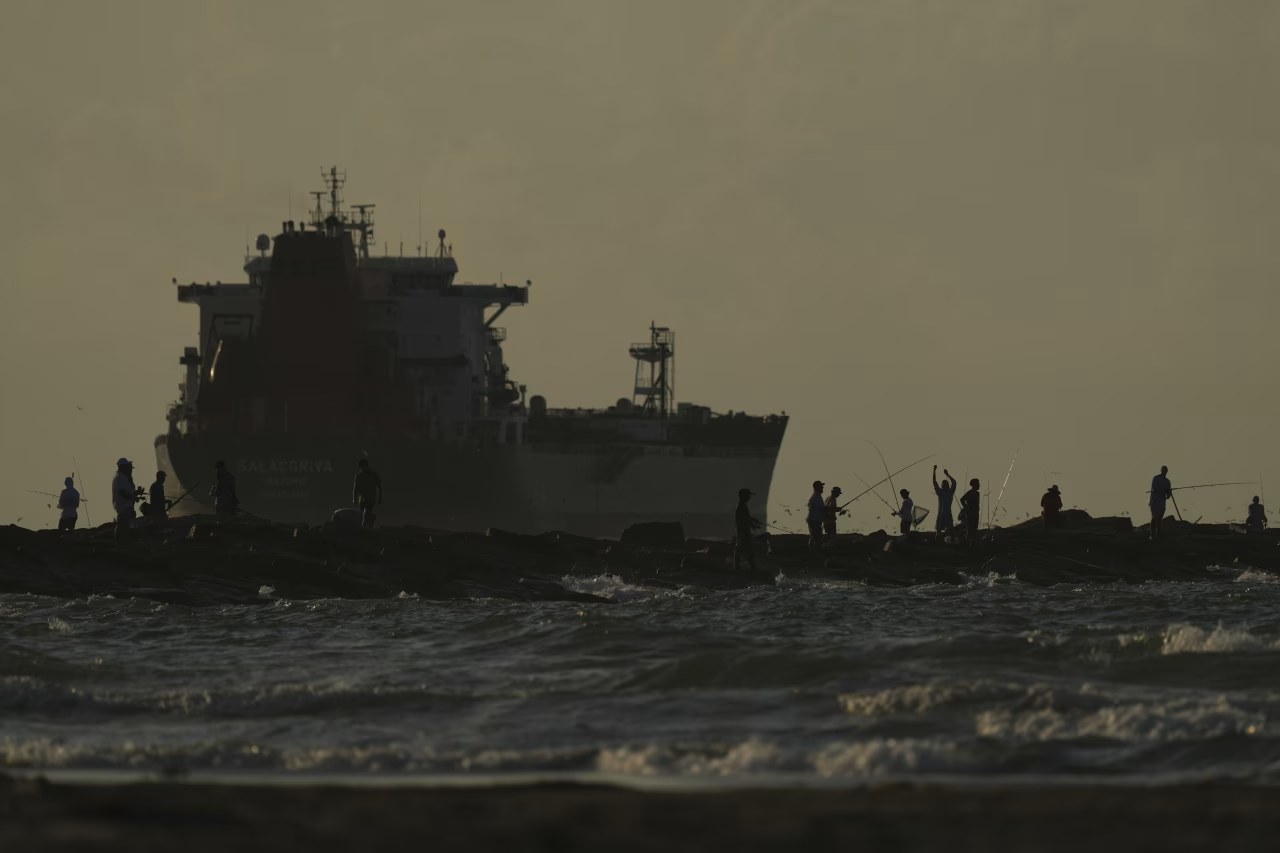
Trump Waives Jones Act for 60 Days, Opening U.S. Oil Trade to 1,200+ Foreign Tankers
- President Trump signed a 60-day waiver letting foreign-flag tankers haul oil, gasoline, jet fuel and fertilizer between U.S. ports.
- The 1920 Jones Act normally requires coastwise cargo to move only on U.S.-built, U.S.-flag ships crewed by Americans.
- Industry analysts estimate the waiver could shave 3-5 cents per gallon off East and West Coast fuel prices within weeks.
- U.S. shipyards and maritime unions warn the move undercuts domestic shipbuilding already down to fewer than 100 large oceangoing commercial hulls.
Why a century-old protectionist law still shapes what Americans pay at the pump
JONES ACT—President Donald Trump on Friday granted the first blanket Jones-Act waiver for petroleum products since 2005, suspending for 60 days the century-old rule that only U.S.-flag, U.S.-built and U.S.-crewed vessels may move goods between American ports. The order, effective immediately, opens the coastwise trade to roughly 1,200 foreign-flag tankers that until now were barred from loading gasoline in Houston and discharging it in New York.
Administration officials cast the move as an emergency cost-relief measure, arguing that freight rates on Jones-Act compliant tankers can run double or triple the world spot market. With jet fuel and diesel inventories seasonally tight on both coasts, the White House hopes cheaper shipping will trickle through to retail prices. Shipping veterans are less sanguine, noting that a two-month window may not be enough to reposition ships or secure long-haul contracts.
The waiver covers not only crude and refined products but also fertilizer and other “vital” bulk commodities. It does not apply to containerized or general cargo, leaving the wider Jones-Act regime intact. Still, the symbolic breach of the long-protected cabotage wall has already drawn sharp opposition from U.S. shipyards and maritime unions who see it as the thin end of a deregulatory wedge.
What the Jones Act Requires—and Why It Raises Freight Costs
Signed into law on June 5 1920, Section 27 of the Merchant Marine Act—better known as the Jones Act—mandates that any merchandise transported by water between two U.S. points move only on vessels that are (1) U.S.-flagged, (2) at least 75 percent U.S.-crewed, (3) U.S.-built, and (4) U.S.-owned. The statute was originally pitched as a national-security hedge, ensuring the country retained a commercial shipbuilding and seafaring base after World War I.
How the Jones Act inflates tanker rates
Because oceangoing tankers must be built in domestic yards, the fleet is tiny: the U.S. Maritime Administration counts only 90 Jones-Act-qualified petroleum tankers over 10,000 deadweight tons. Limited supply plus statutory protection lets those ships command day-rates of $80,000–$120,000, compared with $25,000–$40,000 for a similar-sized foreign-flag vessel on the global spot market, according to brokerage data from Clarksons Platou.
The cost premium ripples through the energy chain. A single Jones-Act tanker hauling 300,000 barrels of gasoline from Beaumont, Texas, to New York Harbor adds roughly 9–10 cents per gallon in freight, versus 3 cents on a foreign ship. Refiners pass the difference to wholesalers, who in turn pass it to motorists. With U.S. drivers burning about 9 million barrels of gasoline per day, even a one-cent nationwide reduction equates to $140 million in annual savings, says energy economist Phil Verleger.
Supporters counter that the rule keeps shipyard jobs in places like Philadelphia, San Diego and Pascagoula. Yet output has collapsed: U.S. yards delivered only six large commercial vessels last year, down from 89 in 1980, per the Shipbuilders Council of America. Critics argue the Jones Act now functions less as industrial policy and more as a rent-seeking device for a handful of carriers and one monopolistic shipbuilder, Philly Shipyard.
How a 60-Day Waiver Can Actually Move the Market
Although 60 days sounds fleeting in an industry where ships sign six-month charters, petroleum traders say the presidential waiver can still alter economics. The East Coast refinery gap—the difference between regional demand and local output—runs about 2.4 million barrels per day, according to the Energy Information Administration. Gulf Coast refiners historically fill the gap via Jones-Act tankers, but the waiver lets foreign ships step in.
Immediate spare capacity on tap
Clarksons counts 1,200 foreign-flag product tankers and 550 crude carriers already trading worldwide that could legally enter the U.S. coastwise trade during the waiver. Roughly 90 of them are within a 10-day steam of Houston or Corpus Christi, brokers say. If only 20 additional ships divert, they could deliver 6–7 million barrels of gasoline or diesel before the waiver expires, enough to add 2–3 days of East Coast inventory cover.
Logistics matter: foreign ships must still comply with U.S. pollution and safety rules, including double-hull standards and the 1920-hour crew-rest regime. Port labor contracts also require union longshoremen to handle cargo, so the waiver does not undercut dock jobs. What changes is the flag on the stack and the wage scale for mariners: Filipino or Eastern European officers earn roughly half the $14,000-per-month Jones-Act rate.
Refiners are already testing the waters. Phillips 66 chartered the Marshall-Islands-flag steamer STI Donald on a spot basis to move jet fuel from Lake Charles to Jacksonville, traders told OPIS, the first such coastwise foreign voyage since 2005. If the cargo arrives without customs hitches, more fixtures are expected this week.
Shipyards and Unions Draw a Red Line
Within hours of the White House announcement, the Shipbuilders Council of America issued a statement warning that even a temporary waiver “sends a signal that U.S. commercial shipbuilding is expendable.” The council represents 300 member companies employing 110,000 workers, but fewer than 10 percent of those jobs involve large oceangoing hulls; the rest service Navy contracts or build tugs and barges.
Union leaders fear permanent erosion
The Masters, Mates & Pilots union, part of the International Longshoremen’s Association, counts 5,600 licensed officers sailing on Jones-Act ships. President Don Marcus told Maritime Executive that “a two-month foreign invasion of our domestic trade normalizes cheap, unsafe foreign labor and undercuts U.S. mariner wage standards.” The union has lobbied Congress to insert language in the next defense bill that would bar any future blanket waivers absent a declared national emergency.
History tempers their alarm. After Hurricane Katrina in 2005, President George W. Bush waived the Jones Act for petroleum products for 19 days. When the waiver lapsed, freight rates rebounded and the domestic tanker fleet remained intact. Yet shipowners fear today’s political dynamic differs: shale-driven oil surpluses and bipartisan scrutiny of Jones-Act shipping costs make another waiver more likely.
Economist James Mak at the University of Hawaii, who has studied the law for four decades, says the real threat is not temporary waivers but long-term legislative reform. “Once policymakers see foreign ships can move U.S. cargo without incident, pressure mounts to make the change permanent,” Mak notes. Hawaii and Puerto Rico, both almost wholly dependent on Jones-Act shipping, pay fuel prices 30 percent above the mainland average, fueling bipartisan support for broader repeal.
Could a Short-Term Waiver Become Permanent?
Trump’s 60-day order avoids the legislative morass that has defeated every major Jones-Act reform effort since 1998. Still, Capitol Hill watchers say the petroleum waiver could embolden lawmakers from energy-intensive states. Senator Mike Lee (R-Utah) has already re-introduced his “Open America’s Waters Act,” which would permanently exempt all bulk commodities from Jones-Act requirements; the bill stalled last session but has picked up two additional co-sponsors since the waiver announcement.
Coalition politics remain tricky
Repeal advocates span the ideological spectrum: free-market think tanks such as the Cato Institute, consumer groups in Puerto Rico, and refiners along the Gulf and East coasts. Opposition unites defense hawks, labor unions and shipyards who frame the rule as a naval readiness issue. The Navy’s 2018 Mobility Capabilities and Requirements Study concluded that “eliminating the Jones Act would reduce the surge sealift fleet by 57 percent,” though that estimate assumes no replacement subsidies.
The political math is brutal for reformers. A 2019 Government Accountability Office report found that full repeal could save U.S. consumers $200 million per year in shipping costs, but the figure is too diffuse to mobilize voters. Conversely, the 12 congressional districts with major shipyards form a concentrated lobby that has defeated repeated repeal attempts. The waiver experiment may offer fresh data, but without a crisis bigger than pump prices, insiders expect the 60-day window to close quietly.
What happens next depends on metrics. If retail gasoline falls 4–5 cents and no supply-chain accidents occur, waiver supporters will claim vindication. If prices barely budge and foreign ships ballast back to Asia empty, the status quo re-asserts itself. Either way, the episode has cracked the once-unassailable protectionist wall around U.S. domestic shipping—and every stakeholder knows it.
Frequently Asked Questions
Q: What is the Jones Act?
The Jones Act is a 1920 U.S. law requiring all cargo moved between domestic ports to travel on ships that are U.S.-flagged, U.S.-built and at least 75% crewed by Americans. The rule shields domestic shipyards and mariners from foreign competition but raises freight costs.
Q: How does waiving the Jones Act lower fuel prices?
By letting foreign-flag tankers carry gasoline, diesel or jet fuel from Gulf Coast refineries to East Coast ports, the waiver adds instant spare capacity. More ships bidding for the same cargo pushes freight rates down, trimming a few cents per gallon off the final pump or airport refill price.
Q: How long will the Jones Act waiver last?
President Trump’s prologue limits the suspension to 60 days. After that, only U.S.-built, U.S.-crewed vessels may again haul coastwise oil unless Congress or a future executive order extends the exemption.
