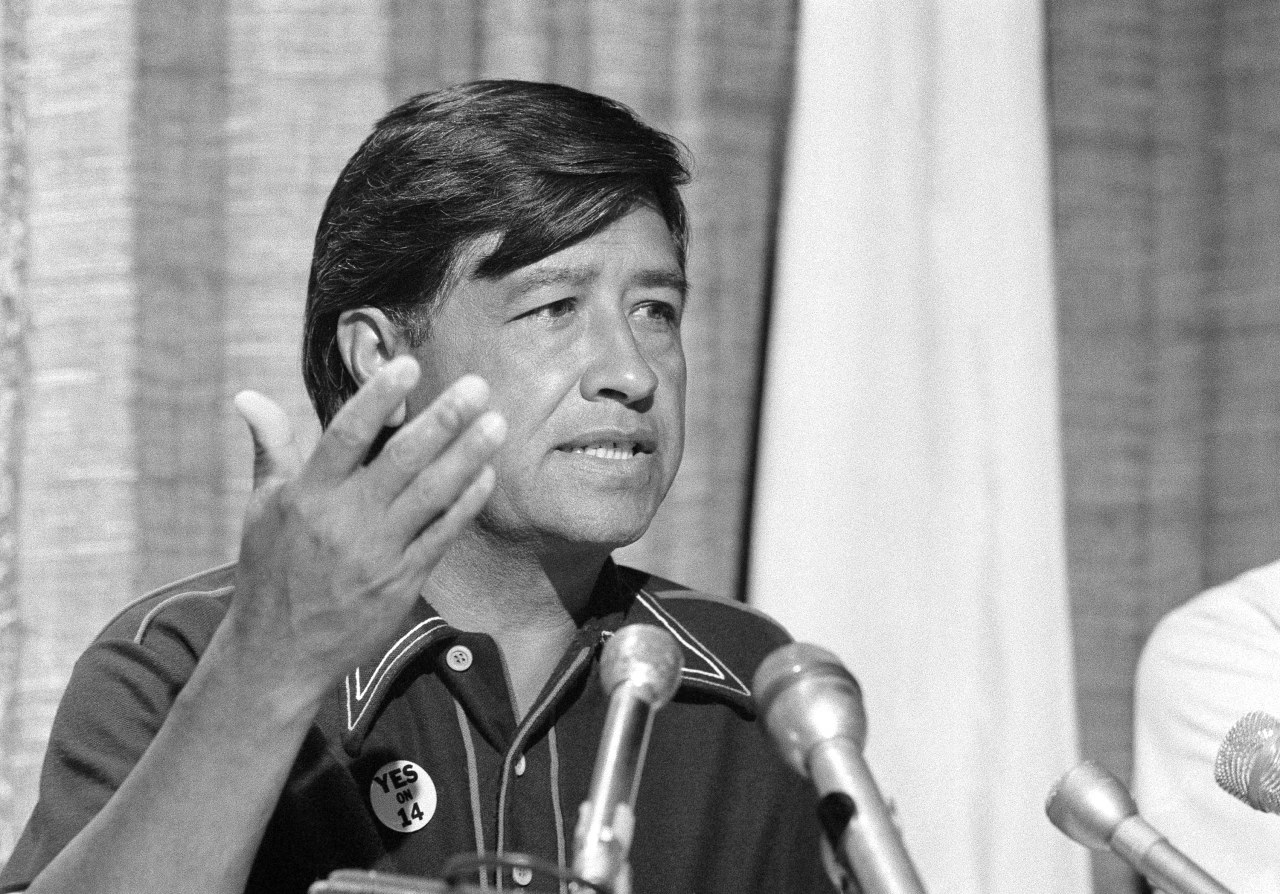
Farm-labor icon Cesar Chavez accused of sexually abusing women and minors, union halts March 31 events
- United Farm Workers Union confirms it will skip Cesar Chavez Day commemorations for the first time since the state holiday began in 2000.
- Statement cites credible reports that co-founder Chavez engaged in inappropriate sexual behavior with women and minors during the 1960s-70s.
- California, Arizona, Colorado and Michigan still list March 31 as a paid or commemorative public holiday; no legislation has been introduced to rescind it.
- At least five school districts and two municipal governments have paused renaming ceremonies or removed Chavez murals while investigations continue.
Allegations surface three decades after labor leader’s death, shaking organizations that built their identity on his non-violent legacy.
CESAR CHAVEZ—SACRAMENTO—The United Farm Workers of America, the union that turned Cesar Chavez into a global symbol of non-violent labor activism, said Tuesday it will not participate in any official Chavez Day events, acknowledging what it called credible evidence that the late leader sexually abused women and under-age girls during the height of his influence in the 1960s and 1970s.
The announcement, released on the eve of what would have been Chavez’s 97th birthday, lands like a thunderbolt in California’s progressive coalition. For 24 years California has observed March 31 as a paid state holiday; schools close, state workers collect overtime, and lesson plans lionize the man who led grape boycotts that forced growers to sign the first farm-labor contracts in U.S. history.
Now school boards, city councils and the union itself are grappling with how, or whether, to honor a figure whose personal conduct is being re-examined through the lens of the #MeToo era.
Union That Chavez Built Breaks With Its Own Founder
The UFW’s governing board voted 8-1 on Monday night to suspend all Chavez Day activities, according to two staffers who asked not to be named because the session was closed. The only dissenting vote came from a member who wanted the union to go further and remove Chavez’s name from its Fresno headquarters, the sources said.
In a terse public statement released at 6 a.m. Tuesday, the union said it had received deeply troubling allegations that co-founder Cesar Chavez engaged in inappropriate sexual behavior with women and minors during the 1960s and 1970s. The statement did not detail the number of accusers, specific dates or whether the incidents were reported to law enforcement while Chavez was alive.
UFW President Teresa Romero declined interview requests but confirmed through a spokesperson that the union has hired the law firm Keker, Van Nest & Peters to conduct an external review of its own historical records and to establish a process for any additional survivors to come forward.
Legal exposure for the union
Employment attorney Michael Rubin, who has represented unions in harassment cases, said the UFW could face civil liability if investigations show the organization knowingly ignored misconduct. Because Chavez died in 1993, criminal prosecution is impossible, but alleged victims could still file civil suits against the union’s assets, which federal filings show stood at $88 million in 2022.
The union’s decision to distance itself from its most recognizable symbol marks a dramatic reversal. As recently as 2022 the UFW used Chavez’s image in fundraising drives that collected $14.7 million in donations, tax forms show.
Forward-looking: Across California, labor councils that normally sponsor marches and scholarship breakfasts now must decide whether to follow the UFW’s lead or risk alienating members who see the allegations as an unproven attack on a civil-rights hero.
How California Created a Holiday for a Man Now Accused of Abuse
State Senator Richard Polanco, author of the 2000 bill that created Cesar Chavez Day, told the Los Angeles Times then that the holiday would ensure that every California schoolchild learns how farmworkers won the right to drinking water and toilets in the fields. Governor Gray Davis signed the measure amid cheers from 2,000 union supporters on the Capitol lawn.
Today the holiday costs California roughly $32 million a year in overtime for essential workers who must be paid double-time when offices close, according to the non-partisan Legislative Analyst’s Office. Arizona, Colorado and Michigan later adopted similar observances, though only California gives state employees a paid day off.
Legislative options narrow
Assemblymember Cecilia Aguiar-Curry, chair of the Governmental Organization Committee, said no bill to repeal or rename the holiday has been introduced this session. Doing so would require a two-thirds vote because the holiday was etched into the Government Code. With the legislature adjourning in six weeks, action in 2024 appears unlikely.
Political historian Thad Kousser of UC San Diego said lawmakers are wary of alienating Latino voters. A 2023 PPIC survey found 68 percent of Latino registered voters view Chavez favorably, compared with 42 percent of white voters, indicating the issue splits along ethnic lines that politicians rarely want to inflame.
Forward-looking: Legislative inaction means the debate will shift to local school boards and city councils, where parents can pressure officials without needing Sacramento’s two-thirds threshold.
School Boards Face Parent Revolts Over Chavez Murals and Lesson Plans
At Cesar Chavez Elementary in Davis, principal Jennifer Garcia convened an emergency parent meeting Tuesday night after third-graders asked why their school might be renamed. The district’s PTA president, Maya Lopez, said 47 parents spoke; 22 favored keeping the name, 17 wanted it changed, and 8 advocated for a contextual plaque that includes the new allegations.
Similar scenes are playing out in San Diego, Oakland and Berkeley, where districts must decide whether to scrub murals, reprint textbooks and rewrite performance standards that currently require students to recite Chavez’s motto Sí se puede.
Cost of rebranding
Berkeley Unified estimates it will cost $240,000 to replace signage, gym floor graphics and 18,000 student Chromebook stickers bearing Chavez’s name and face, according to district spokesman Trish McDermott. The expense would come from the same fund used to repair leaky roofs, angering some teachers.
Education professor Nolan Cabrera at the University of Arizona warns that erasing Chavez from curricula could backfire. His research on ethnic-studies programs shows student GPA rises when coursework connects to community history; removing a figure students already know could reduce engagement.
Forward-looking: The State Board of Education is scheduled to vote in November on a revised history-social-science framework that could add footnotes about the abuse allegations, setting a precedent for how textbooks nationwide handle fallen icons.
What Did Union Officials Know and When?
Internal UFW meeting minutes from 1978, archived at the University of California, San Diego, record an unnamed female organizer complaining to the executive board about unwelcome advances by the union’s top leader. The minutes do not detail action taken, if any. Scholars say the entry is the earliest documented hint of internal unrest.
Former UFW vice-president Mario Bustamante, 81, told the Sacramento Bee he recalled informal warnings to young female volunteers to avoid traveling alone with Chavez, but said no formal grievance was ever filed. Labor historians say such whisper networks were common in 1970s social movements, where legal protections were weak and reputation management trumped transparency.
Statute of limitations hurdle
California law allows child-sex-abuse victims to sue institutions until age 40, or five years from discovery of psychological injury. Because the alleged acts occurred more than 45 years ago, any surviving victims would now be in their late 50s at least, meaning the window for civil claims is technically open but evidentiary challenges loom large.
Attorney Morgan Stewart, who represented plaintiffs in the recent Miramonte Elementary abuse case against Los Angeles Unified, said plaintiffs would need to show the union had prior knowledge and failed to act. The UFW’s decision to commission an external review could supply claimants with precisely the kind of internal documents that prove institutional negligence.
Forward-looking: If the Keker firm’s report finds evidence of cover-up, the union may pivot to a restorative-justice model—funding counseling centers or scholarships—rather than risk a jury trial that could award punitive damages.
Could Other Labor Icons Be Next?
The reassessment of Chavez fits a broader pattern of re-evaluating movement heroes. The Southern Poverty Law Center removed founder Morris Dees in 2019 amid staff allegations of racial discrimination and sexual harassment. In 2018, the National Park Service quietly withdrew a children’s biography of Sierra Club founder John Muir that glossed over his racist views toward Native Americans.
Historian Karen Ferguson, author of Liberalism’s Forgotten Troubadour, argues that social-movement organizations build mythic narratives that erase human flaws. When archival evidence surfaces, institutions face a choice: protective hagiography or transparent reckoning. The UFW’s public statement, she notes, is unusually swift compared with the defensive postures taken by other legacy groups.
Implications for museum fund-raising
The Smithsonian’s National Museum of American History lists a Cesar Chavez robe among its treasured labor artifacts. Curator Mireya Loza said the museum is re-evaluating exhibit labels to add context about the abuse allegations, a move that could alienate donors who pledged $2.3 million for a planned Chavez gallery.
Labor archivist Jennifer Ho at the University of Maryland warns that purging flawed leaders from public memory risks sanitizing history. Instead, she advocates interpretive panels that present both accomplishments and transgressions, allowing visitors to wrestle with complexity rather than worship false idols.
Forward-looking: As Gen-Z activists demand moral consistency, unions and museums must decide whether to preserve imperfect legacies or search for untarnished new heroes—an elusive quest in the messy annals of social change.
Is Rebranding Inevitable for Chavez’s Legacy?
Brand strategist Rochelle Newman-Carrasco advises nonprofits on reputation crises. She predicts the UFW will gradually shift from Chavez-centric imagery to a collective farmworker identity—photos of anonymous field hands rather than a single charismatic face. Such a pivot, she says, allows the movement to retain its cultural capital while sidelining a tarnished namesake.
Early signs of this shift are visible in the union’s 2024 fundraising mailer, which features current organizers under the banner Somos el movimiento without mentioning Chavez once—a first in the union’s direct-mail history.
Corporate sponsors reassess
Grocery giant Kroger, which markets a Cesar Chavez commemorative reusable bag every March, has paused production. A spokesperson said the company is reviewing the program in light of the allegations and will decide by February whether to redesign or retire the product. Proceeds previously funded college scholarships for the children of farmworkers.
Marketing analyst Patty Odell sees a broader trend: corporations are conducting legacy audits of philanthropic partnerships to avoid backlash. She notes that the cost of canceling merchandise is dwarfed by the reputational risk of appearing to excuse sexual misconduct.
Forward-looking: If more sponsors follow Kroger’s lead, the union could lose an estimated $1.2 million in annual licensing revenue, forcing it to rely more heavily on member dues just as agriculture mechanization shrinks the organizer base.
Frequently Asked Questions
Q: What are the specific allegations against Cesar Chavez?
The UFW says it received credible reports that Chavez engaged in inappropriate sexual behavior with women and minors during the 1960s and 1970s; no criminal charges were filed before his 1993 death.
Q: Is Cesar Chavez Day still a legal holiday in California?
Yes; California Government Code 6722 keeps March 31 as a paid state holiday, but the union he founded will not sponsor official events while it reviews the misconduct claims.
Q: How are schools and parks reacting to the allegations?
At least three California school districts and the City of Berkeley have renamed Chavez-themed campuses or postponed commemorations pending further historical review.
