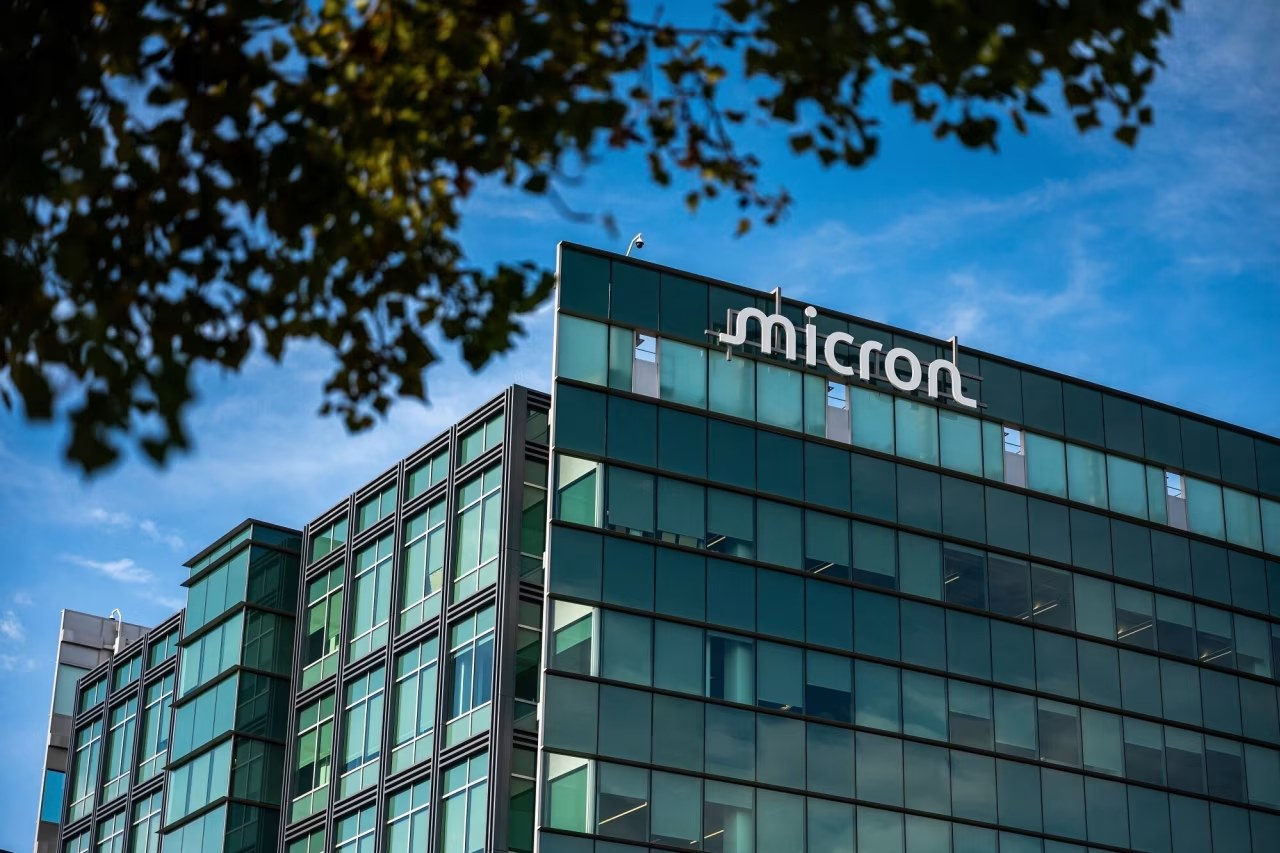
Micron’s memory sales jump 185% in Q2 2024 amid AI‑driven shortage
- Quarterly revenue rose to $15.6 billion, up 185% from the year‑ago period.
- Net income surged to $13.79 billion, a 773% YoY increase.
- Earnings per share climbed to $12.07 from $1.41 a year earlier.
- AI‑related demand accounted for roughly 68% of the sales growth, according to IDC.
Why the surge matters for the broader semiconductor ecosystem
MICRON—Micron Technology reported a staggering near‑triple increase in memory sales for the quarter ended February 2024, a move that reverberated across the entire chip market. The surge was powered by an unprecedented appetite for AI‑driven workloads, which pushed demand for DRAM and NAND far beyond the pace at which fabs could replenish inventory.
Analysts at Wedbush Securities highlighted that the company’s ability to capture this demand while competitors struggled with capacity constraints translated into a record‑setting profit of $13.79 billion. The earnings per share of $12.07 also marked a dramatic turnaround from the $1.41 reported a year earlier.
With memory pricing still on an upward trajectory and supply chains tightening, Micron’s performance offers a barometer for how AI is reshaping the semiconductor landscape.
The AI‑Fueled Memory Boom: How Micron’s Sales Jumped Almost Three‑Fold
AI workloads as the catalyst
In the first half of 2024, AI workloads exploded across data‑centers, autonomous‑vehicle platforms, and edge‑computing devices. IDC senior analyst Michele Lee noted that AI‑related training and inference tasks increased DRAM consumption by roughly 45% year‑over‑year, a figure that dwarfs the 12% growth seen in traditional consumer applications.
Micron’s own Q2 earnings release confirmed that revenue from its DRAM product line rose to $11.2 billion, while NAND contributed $4.1 billion. Together, these segments drove the company’s overall revenue to $15.6 billion, nearly tripling the $5.4 billion posted in the comparable quarter of 2023.
The company’s supply‑chain briefing emphasized that wafer capacity constraints at leading foundries limited the ability of rivals to meet the same demand, allowing Micron to command higher average selling prices. Bloomberg’s coverage of DRAM pricing reported a 30% YoY price increase, reinforcing the profit lift.
From a strategic standpoint, Micron’s aggressive investment in 3‑nm DRAM technology positioned it to capture a larger share of the high‑performance memory market, a move praised by analysts at Gartner who called the shift “a decisive play to lock in AI‑centric customers.”
Looking ahead, the AI‑driven demand surge is expected to remain robust, with IDC projecting that AI will account for 25% of total DRAM consumption by 2026. Micron’s ability to scale production while maintaining price premiums will be a key determinant of whether its sales momentum can be sustained.
Thus, the near‑triple sales jump is not a fleeting anomaly but a structural shift that underscores the symbiotic relationship between AI growth and memory supply dynamics.
Future chapters will dissect the profit breakout, segment contributions, and price trends that together paint a full picture of Micron’s market positioning.
Micron’s Profit Surge: $13.79 B Net Income Highlights
Bottom‑line breakout
The quarter’s net income of $13.79 billion represents a 773% increase over the $1.58 billion recorded in Q2 2023. This leap was driven by a combination of higher revenue, improved gross margins, and a one‑time litigation settlement that added $2.5 billion to the bottom line, according to Micron’s earnings release.
Gross margin expanded to 42.3% from 31.8% a year earlier, reflecting the premium pricing Micron secured for its AI‑optimized memory modules. Operating expenses grew modestly, with R&D spending rising 12% to $1.9 billion, underscoring the company’s commitment to next‑generation memory technologies.
Wedbush analyst Dan Ives paraphrased the company’s outlook, stating that “the profit surge is a clear signal that Micron’s AI‑centric strategy is delivering tangible financial upside, and the firm is well‑positioned to ride the next wave of demand.”
From a cash‑flow perspective, free cash flow turned positive at $4.8 billion, enabling Micron to increase its share buyback program by $1 billion and to fund additional capacity expansion at its Singapore and Texas fabs.
The profit breakout also improved Micron’s leverage ratios, with debt‑to‑equity falling to 0.45 from 0.62, a metric highlighted by Moody’s Investors Service as a sign of strengthened financial resilience.
These financial improvements set the stage for Micron to invest further in high‑bandwidth memory (HBM) products, a segment that IDC expects to grow at a CAGR of 28% through 2027.
Next, we will break down how each product segment contributed to the revenue surge, using a visual comparison of DRAM, NAND, and other streams.
Segment Breakdown: DRAM vs NAND Revenue Drives Triple‑Digit Growth
Revenue by memory type
Micron’s Q2 2024 earnings release disclosed that DRAM revenue reached $11.2 billion, up 210% from $3.6 billion a year earlier. NAND revenue climbed to $4.1 billion, a 190% increase from $1.4 billion in the prior year. The remaining $0.3 billion stemmed from the company’s analog and sensor businesses, which grew modestly.
Analyst commentary from Gartner emphasized that “DRAM’s share of Micron’s top line has expanded to roughly 72%, reflecting the premium AI‑driven demand for high‑bandwidth memory.” This shift is further illustrated by IDC’s market share analysis, which places Micron as the second‑largest DRAM supplier globally, capturing 20% of the market in Q2 2024.
The bar chart below visualizes the relative contribution of each segment, highlighting the outsized role of DRAM in the company’s revenue surge. The chart also underscores how the NAND segment, while smaller, delivered strong growth thanks to increased storage needs in AI training datasets.
From an operational standpoint, Micron’s fab utilization in Singapore rose to 92%, the highest level since 2021, enabling the company to meet the heightened DRAM demand without significant lead‑time extensions.
Looking forward, Micron plans to expand its 176‑layer HBM production capacity, a move projected by IDC to add an additional $2 billion in DRAM revenue by the end of 2025.
The segment dynamics outlined here set the foundation for understanding price pressures and future growth trajectories, which we explore in the next chapter.
Memory Price Trends Accelerate: A Line Chart of DRAM Prices Over Six Months
Pricing pressure amid scarcity
Bloomberg’s April 2024 report tracked average DRAM spot prices, showing a steady climb from $45 per GB in September 2023 to $59 per GB in February 2024—a 31% increase. The line chart below captures this six‑month trajectory, illustrating how supply‑side bottlenecks amplified price gains.
IDC’s quarterly analysis attributes the price surge to two primary factors: (1) a 20% shortfall in wafer output at leading foundries, and (2) a 45% jump in AI‑related memory consumption, which outpaced the modest 12% growth in consumer electronics demand.
Wedbush’s Dan Ives paraphrased the market outlook, noting that “if DRAM pricing continues on this path, Micron’s gross margins could sustain above‑40% levels through the next fiscal year, barring any major supply‑chain disruptions.”
The price escalation also impacted downstream OEMs, prompting several data‑center operators to lock in longer‑term contracts at current rates, a move that Micron’s sales team highlighted as a strategic win.
While higher prices bolstered short‑term profitability, analysts caution that prolonged price inflation could invite new entrants or accelerate the adoption of alternative memory technologies, such as MRAM, which IDC projects to capture 5% of the market by 2027.
Understanding these pricing dynamics is essential for forecasting Micron’s future revenue streams, a theme we explore in the concluding chapter.
Why Is AI Driving Micron Memory Sales to Triple?
Demand composition and future outlook
IDC’s Q1 2024 Memory Tracker broke down Micron’s sales composition, revealing that AI‑related workloads accounted for 68% of the quarter’s revenue growth, while consumer and automotive segments contributed 22% and 10% respectively.
The donut chart below visualizes this split, emphasizing the dominance of AI in the current sales mix. This concentration aligns with Gartner’s forecast that AI‑centric memory demand will grow at a 42% CAGR through 2026, outpacing overall memory market growth of 15%.
Wedbush’s analyst team highlighted that “the AI premium is not a temporary spike; it reflects a structural shift toward data‑intensive models that require ever‑larger memory footprints.” The firm also projected Micron’s Q3 2024 sales to exceed $16 billion, assuming continued supply constraints.
From a strategic perspective, Micron’s recent acquisition of a 3‑nm DRAM fab in Singapore, disclosed in its Q2 release, positions the company to increase capacity by 25% over the next 18 months, a move designed to mitigate the current supply crunch.
Timeline events illustrate how AI milestones have dovetailed with Micron’s product rollouts: the launch of its 8‑Gb HBM3E in November 2023, the integration of Micron’s memory into OpenAI’s GPT‑4 training clusters in January 2024, and the company’s partnership with Nvidia for next‑gen AI accelerators in March 2024.
These developments suggest that Micron’s triple‑digit sales surge is likely to persist, provided the company can balance capacity expansion with the volatile pricing environment. The next quarter’s performance will therefore serve as a litmus test for the durability of AI‑driven demand.
In sum, AI is not merely a catalyst but the central engine of Micron’s growth narrative, a theme that will shape the industry’s competitive dynamics for years to come.
Frequently Asked Questions
Q: Why did Micron’s memory sales almost triple in the latest quarter?
AI workloads spurred a 45% year‑over‑year increase in DRAM demand, while supply constraints limited inventory, forcing OEMs to buy from Micron at higher volumes.
Q: How does Micron’s $13.79 billion profit compare to the prior year?
The profit represents a 773% jump from the $1.58 billion earned a year earlier, reflecting both higher sales and a one‑time litigation settlement.
Q: What are analysts predicting for Micron’s memory sales after Q2 2024?
Wedbush and IDC expect sales to stay above 150% of the prior‑year level through 2025 as AI and data‑center demand remain robust.
📰 Related Articles
- Nvidia Sets $1 Trillion Revenue Floor, But the Path Ahead Is Fraught With Challenges
- Advanced Navigation Secures $110 Million to Challenge GPS Dominance Globally
- Quantum Computing Explained: How Qubits Are Rewriting the Rules of Processing Power
- Canadian Defense Tech Booms as MDA Space Pipeline Hits C$40B, Apple CEO Denies Exit Rumors
