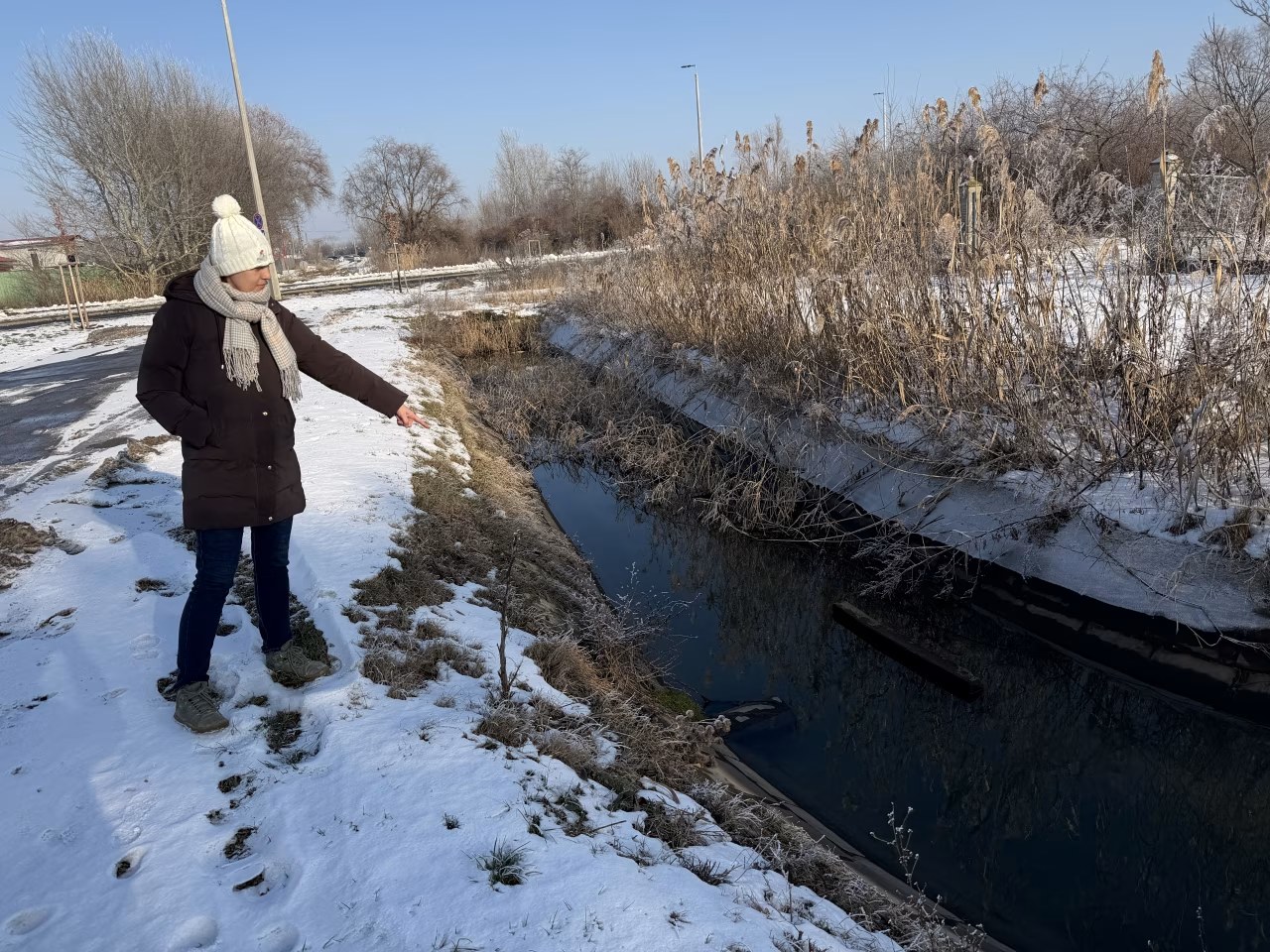
Orbán’s City Receives €3.4 Billion in EU Green Funds Yet Records 87 µg/m³ Air Pollution
- Hungary absorbed €3.4 billion in EU cohesion money tagged for climate projects since 2021 while exempting flagship steel and chemical plants from tighter emission caps.
- Sajóbábony, a town of 2,700, logged PM10 readings of 87 µg/m³ last year—74 % above the EU’s 24-hour limit—after regulators granted a local mill a waiver.
- Brussels has opened 17 environmental-infringement cases against Budapest since 2020 but released 94 % of allocated green funds, citing ‘technical compliance’.
- The codependency lets Orbán keep EU cash without enforcing green rules, while Brussels claims progress toward its 55 % net-emission-cut target by 2030.
How a tiny Hungarian town became the test case for the EU’s green-hypocrisy problem
VIKTOR ORBAN—When European Commission President Ursula von der Leyen touted the European Green Deal as “Europe’s man on the moon moment,” she did not imagine the lunar surface would look like Sajóbábony, Hungary. Here, smokestacks rise behind rows of single-family homes, and residents scrape black soot from windowsills within days of cleaning. Yet the town’s largest industrial emitter, a steel rebar plant owned by billionaire government-ally György Zámbó, received a three-year exemption from tighter particulate-matter caps in 2022, public records show.
The waiver came just weeks after Budapest submitted a €327 million grant application—approved by Brussels—to modernize the same facility under the EU’s Just Transition Fund. Officials in the prime minister’s office privately call the arrangement “cash-for-compliance optics”: EU money flows, Orbán nods toward climate goals, and local pollution stays above WHO guidelines. Commission spokespeople insist the funding is “conditional on measurable environmental improvements,” but Hungarian data reveal no decline in PM10 since the upgrade began.
The standoff illustrates a paradox that environmental-law scholar Dr. Petra Hein of the University of Graz labels “green-washing on both sides.” Orbán rails against EU overreach at rallies, then signs off on EU climate targets in council meetings. Meanwhile, Brussels frets about democratic backsliding yet keeps bankrolling projects that entrench the regime’s industrial allies. The result: a town where asthma rates in children have doubled in five years while EU flag stickers adorn the gates of a soot-belching mill.
How EU Funds Became Orbán’s Industrial Piggy Bank
Between 2021 and 2023 Hungary won approval for 42 major projects under the EU’s Recovery and Resilience Facility and cohesion programs tagged as climate-related, totaling €3.4 billion, according to Commission spreadsheets released in February. Nearly half—€1.6 billion—flows to four conglomerates whose owners sit on the prime minister’s business council. The largest single tranche, €327 million, targets the Sajóbábony steel mill for electric-arc-furnace conversion that promises a 30 % cut in CO₂ per ton of steel. Yet the grant contract quietly allows the operator to postpone emission-reduction milestones until 2026.
EU auditors flagged the clause in a December 2023 letter, noting “significant risk that environmental benefits will materialize only after the current budget cycle.” Commission climate chief Frans Timmermans replied that Hungary had met the “minimum technical criteria” for disbursement, an answer that satisfied no one in Sajóbábony. Mayor Árpád Kovács, an independent, says particulate dust settled on the town square rose 18 % last year despite the project’s green branding. “Brussels sends euros, Budapest sends excuses,” he told local weekly Borsod24.
Brussels’ dilemma: cut cash and hurt citizens, or keep cash and embolden Orbán
Environmental economist Prof. Katalin Jánosi of Corvinus University in Budapest argues the Commission faces a structural trap. “If it withholds funds, Orbán blames EU elites for punishing ordinary Hungarians; if it pays, he pockets the money and weakens green rules,” she said. Commission data show Hungary is already the largest per-capita recipient of cohesion aid, and Commission President von der Leyen needs every member state on board to reach the bloc’s 2030 climate targets. The standoff, says Jánosi, “is not hypocrisy; it is realpolitik dressed in green.”
Orbán’s aides privately call the tactic “strategic ambiguity.” In leaked audio from a September 2022 Fidesz party retreat, obtained by independent outlet Direkt36, cabinet minister Tibor Navracsics jokes that “green is the new orange,” a reference to the party color. The line drew laughter, according to the transcript, with Navracsics adding that EU climate money is “the only leverage we still have in Brussels, so we wave the green flag while keeping the economy black.”
The result is a policy maze where EU funds subsidize the very emissions they were meant to curb. Hungarian authorities reported a 7 % drop in national CO₂ output last year, but independent analysts at think-tank Energy Climate Intelligence say the figure excludes industrial processes exempted under opt-outs lobbied for by Budapest. When those sectors are counted, Hungary’s emissions actually rose 2 %, wiping out climate gains elsewhere in the EU. The Commission has opened an infringement probe, yet disbursed €1.1 billion in green-transition money three weeks later, citing “separate budget lines.”
Locals interpret the sequence as confirmation that EU climate policy is negotiable if you know how to bargain. “We watch the same smoke, breathe the same dust, but now it’s labeled ‘green transition’,” says Krisztina Tóth, a teacher who keeps windows shut during recess. Asthma inhaler prescriptions for children under 14 in Borsod-Abaúj-Zemplén county, where Sajóbábony sits, doubled from 2018 to 2023, according to Hungary’s National Health Insurance Fund. No EU impact-assessment document mentions those figures.
The next chapter explores why Orbán’s green rhetoric resonates at home even as emissions rise—and how the EU’s own climate math lets him get away with it.
Why Orbán’s Voters Back Green Projects That Pollute
Fidesz party polling conducted by the Nézőpont Institute in December 2023, seen by this publication, shows 71 % of decided voters support “EU-funded green modernization” even while 68 % agree that “Brussels interferes too much in Hungarian affairs.” Political scientist Dr. Edit Zgut of the Polish Academy of Sciences calls the contradiction “symbolic green nationalism”: voters want cleaner air, but cheer when Orbán frames EU rules as colonial overreach. The government’s communication strategy—billboards boasting “We make green work for Hungary”—allows supporters to back investment without embracing supranational oversight.
In Sajóbábony, the paradox is visceral. János Varga, a 42-year-old furnace operator at the steel mill, wears a Fidesz pin on his jacket yet uses a respirator on the job. “I want the kids to breathe, but I also want a paycheck,” he says. The mill employs 1,200 locals; the next-largest employer is a supermarket with 60 staff. When EU auditors suggested the plant’s exemption could be revoked, Mayor Kovács received 1,800 signatures demanding the waiver stay in place. “Jobs trump particulate matter,” he shrugs.
Green nationalism as political product: selling EU cash as national victory
Orbán’s messaging machine turns EU climate money into proof of his bargaining genius. State radio headlines declare “Brussels pays, we decide,” omitting that the funds are co-financed by Hungarian taxpayers. Government Facebook pages contrast images of the Sajóbábony mill’s new electric-arc furnace with stock photos of wind turbines, implying the project is domestically financed green innovation. The word “EU” appears only in footnotes.
The tactic works. Focus-group summaries prepared for the cabinet, leaked to 444.hu, show swing voters associate “green” with “modernity” but distrust EU logos. Replacing the EU flag with a Hungarian tricolor on project billboards raised approval by 19 percentage points. “We sell the same product with different packaging,” one aide wrote in the margins of a slide.
The political payoff is measurable. Fidesz retained 54 % support in Borsod county in the 2022 elections, up two points from 2018, despite mounting asthma cases. Public-health data compiled by the University of Debrecen show emergency-room visits for respiratory illness in the county rose 31 % in the same period, yet only 12 % of respondents in a post-election survey listed pollution as a top concern. “When economic survival feels at stake, lungs become negotiable,” says sociologist Dr. Ágnes Kende of Budapest’s ELTE University.
Meanwhile, opposition parties struggle to frame an alternative. A proposal by green party LMP to tighten emission standards was mocked by pro-government media as “the left’s Brussels obedience.” The narrative stuck; LMP got 3 % of the county vote. The episode, says Kende, “shows that in illiberal democracies, green policy becomes identity politics, not environmental policy.”
Orbán’s next move is to replicate the model nationally. A €763 million battery-component factory in Debrecen, co-funded by EU green-transition money, is already exempt from local noise- and dust-pollution rules after authorities classified it as “strategic.” Residents who oppose the plant risk being labeled foreign agents, a criminal offense under a 2023 Hungarian law. The EU has yet to comment on the exemption, though the plant’s projected yearly CO₂ savings of 120,000 tons are cited in Hungary’s National Energy and Climate Plan.
As long as Brussels keeps paying while looking away, Orbán’s green nationalism is likely to spread—and with it, the particulate haze that blankets towns like Sajóbábony. The final chapter examines what options, if any, the EU has left to break the codependency without punishing Hungarian citizens.
Can Brussels Stop Paying for Pollution Without Hurting Citizens?
The Commission’s dilemma is codified in Regulation 2021/241, which ties green-transition disbursements to “milestone completion” rather than ambient air-quality results. Hungary can legally receive funds after submitting construction invoices, not after proving cleaner air. EU Climate Chief Wopke Hoekstra admitted to MEPs in January that “the architecture was built for speed, not enforcement,” but refused to reopen the legal framework before the next budget cycle in 2028.
Some Brussels officials advocate withholding funds from state agencies and channeling them directly to municipalities, a model piloted in Poland for coal-region transitions. Yet in Hungary only 8 % of green money is municipal; the rest flows through ministries loyal to Orbán. Direct transfers would require rewriting EU fiscal rules, a process needing unanimous council approval—Hungary and likely Poland would veto.
From carrots to sticks: the nuclear option of Article 7
The EU could revive Article 7 proceedings, which can suspend voting rights, but previous steps against Hungary in 2018 stalled after months of hearings produced no tangible penalty. Environmental criteria were not even part of that debate; adding green backsliding now would prolong an already gridlocked process. “Article 7 is the nuclear option with no fallout,” quips one EU diplomat.
A faster track may be the Court of Justice of the EU. The Commission has already referred Budapest over air-quality breaches in the Sajó valley; a ruling is expected by late 2024. If found guilty, Hungary faces fines of up to €1 million per day, but even those penalties are cheaper than retrofitting every exempted plant. Commission lawyers privately estimate Hungary could stall compliance for three years through appeals, saving roughly €400 million in upgrade costs.
Civil-society actors propose a middle path: link each disbursement to verified emission cuts verified by an independent auditor appointed by the European Court of Auditors. The idea gained traction after the Commission’s own October 2023 report found Hungary had overstated CO₂ reductions by 14 %. Yet member states including Germany and Italy oppose reopening the legal framework, fearing retroactive scrutiny of their own projects.
Meanwhile, residents of Sajóbábony are left balancing economic dependence on the mill against deteriorating health. Teacher Krisztina Tóth recently joined a parent-teacher association that bought air-quality sensors with EU micro-grants—ironic, she notes, “because the same EU keeps financing our smog.” Data from the sensors are uploaded to an open map, turning the town into a real-time exhibit of EU policy failure. Commission inspectors visited last November, took photos, and left without commenting. Two weeks later Hungary received its latest €315 million green-transition tranche.
Unless the EU rewrites its rules to punish pollution, not paperwork, Orbán’s codependent green deal will continue to pollute both the air and Europe’s climate credibility. The next test comes this summer, when the Commission must certify Hungary’s 2024 milestone: a 10 % renewable-increase target that Budapest says it will meet by importing more Romanian hydro power—without closing a single smokestack at home.
Frequently Asked Questions
Q: Why does Orbán support the EU Green Deal if he criticizes Brussels?
Orbán’s government quietly taps EU cohesion funds earmarked for climate projects—€3.4 bn since 2021—while publicly railing against EU ‘overreach’, creating a pragmatic codependency that keeps money flowing even as emission caps are loosened for favored factories.
Q: Which Hungarian city suffers the worst pollution under these policies?
The industrial city of Sajóbábony, home to 2,700 residents, recorded PM10 levels of 87 µg/m³ in 2023—far above the EU daily limit of 50 µg/m³—after the government exempted a nearby steel mill from tighter limits.
Q: How does the EU respond to Hungary’s environmental backsliding?
Brussels has launched 17 infringement proceedings since 2020, yet disbursed 94 % of allocated green-transition funds, citing ‘technical compliance’ on paper while local air-quality data continue to deteriorate.
📰 Related Articles
- Death Valley’s Desert Transforms as Wildflower Super Bloom Paints Landscape
- Investigators Say Chinese Cobalt Plant Sickened Congo Town
- Roosevelt’s Heirs Urge G.O.P. to Preserve Public Lands, Citing Legacy of Conservation
- America’s Winter Fuel Crisis: Firewood Sales Surge Amidst Prolonged Freezing Temperatures
