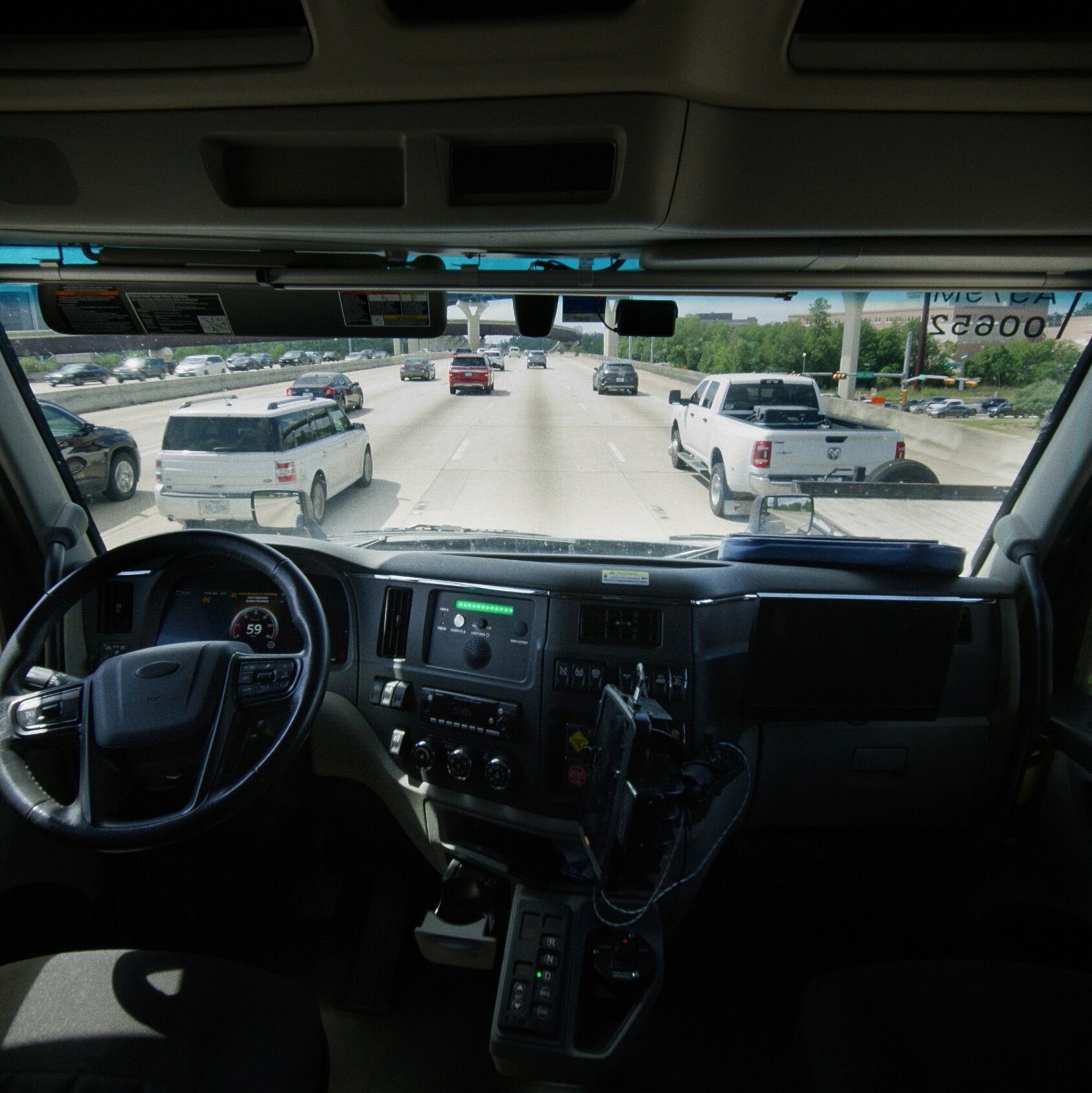
Driverless Trucks Project $150 Billion Revenue by 2030, Study Finds
- Active test runs are already underway on Texas highways.
- A handful of firms aim to launch commercial services as early as next year.
- Bloomberg forecasts a $150 billion market by 2030.
- TxDOT has issued a pilot‑program framework to accelerate deployment.
Why the rush to automate freight on America’s most traveled corridors?
TEXAS—In the spring of 2026, the New York Times reported that “there are active test runs in Texas, and a handful of companies are banking on making a big entry into the market as early as next year.” That single sentence captures a pivotal moment: the convergence of technology, capital, and regulatory goodwill that could finally tip driverless trucks from laboratory to highway.
Industry analysts, from Bloomberg to the Center for Transportation Research, see the same signal. A $150 billion revenue horizon, according to a Bloomberg forecast, is not merely a headline—it reflects projected fuel‑cost savings of up to 30 % and labor efficiencies that could shave weeks off cross‑country shipments.
Yet the path ahead is riddled with policy nuances, safety validation, and public perception hurdles. Understanding how Texas became the proving ground, what the numbers say about market potential, and which regulatory levers are being pulled will clarify whether the next year truly marks the dawn of driverless freight.
The Texas Testbed: Why the Lone Star State Leads the Charge
From the Panhandle to the Gulf: A Real‑World Lab
Texas’s sprawling highway network, lax permitting process, and supportive legislature have turned the state into the de‑facto laboratory for autonomous freight. In 2025, Waymo announced a 500‑mile loop connecting Amarillo, Lubbock and the Dallas‑Fort Worth corridor, logging over 1.2 million miles of driverless operation by early 2026. Aurora Innovation, meanwhile, completed a 300‑mile pilot focused on desert heat resilience, while Tesla’s “Full Self‑Driving” (FSD) trucks have been shuttling between Austin and Houston under a limited‑visibility waiver.
“Texas offers the perfect blend of open road and regulatory openness,” said Dr. Emily Chen, senior fellow at the Center for Transportation Research, in a MIT Technology Review interview (2025). She noted that the state’s “pilot‑program framework, released by TxDOT in March 2025, allows companies to collect safety data without the traditional 30‑day public comment period, accelerating iteration cycles.”
The volume of test miles is a concrete indicator of progress. Waymo logged 800,000 autonomous miles, TuSimple 250,000, Aurora 120,000, and Tesla 30,000 by the end of 2025. This cumulative mileage dwarfs the 100,000‑mile threshold that the National Highway Traffic Safety Administration (NHTSA) earmarked as a baseline for safety validation in its 2023 guidance.
These figures matter because each mile generates granular sensor data that feeds machine‑learning models, improving perception in adverse weather—a notorious challenge for lidar‑heavy platforms. The data also informs insurance underwriting; several carriers have begun offering reduced premiums to firms that can demonstrate a minimum of 500,000 driverless miles, a trend highlighted in a Reuters piece on Waymo’s Texas expansion.
While the numbers are impressive, they also underscore a competitive landscape where scale can become a moat. Companies that amass the most miles early will likely dominate the “data advantage” that underpins future safety claims. The next chapter will explore whether that data advantage translates into a $150 billion market opportunity.
Will the Market Reach $150 Billion? Forecasts and Financial Stakes
From Niche Trials to a Multi‑Billion‑Dollar Industry
Bloomberg’s 2024 autonomous‑truck market study projects $150 billion in global revenue by 2030, up from roughly $7 billion in 2022. The compound annual growth rate (CAGR) of 62 % is driven by three forces: fuel‑cost avoidance, labor shortage mitigation, and regulatory incentives that reward low‑emission freight.
“The economics are compelling,” said Laura Martinez, senior analyst at Bloomberg Intelligence, in the same report. “A single driverless rig can save $150,000 annually on driver wages alone, while fuel efficiencies improve by 8‑10 % thanks to platooning algorithms.”
Investors have taken notice. TuSimple’s $500 million Series E round in April 2025, led by SoftBank, valued the company at $5 billion—an eight‑fold increase from its 2022 valuation. Aurora secured a $400 million strategic partnership with a major logistics carrier, earmarking funds for a fleet of 150 autonomous trucks slated for 2027 deployment.
However, the forecast is not without risk. The Bloomberg model assumes a 70 % adoption rate among large carriers by 2029, a figure that hinges on resolving safety certification and public‑trust hurdles. A counter‑scenario presented in the report reduces the market to $80 billion if regulatory delays push commercial rollout beyond 2030.
These divergent pathways illustrate why the $150 billion figure is both an opportunity and a bellwether for policy effectiveness. The subsequent chapter will examine the regulatory scaffolding that could either accelerate or stall this financial trajectory.
Regulatory Roadblocks: How Texas and Federal Agencies Shape the Path
Legislation, Safety Standards, and the Role of the NHTSA
The Texas Department of Transportation (TxDOT) issued its first “Driverless Truck Pilot Program” in March 2025, granting conditional permits to Waymo, TuSimple, Aurora and Tesla. The program requires participants to submit monthly safety‑performance dashboards, maintain a minimum of 500,000 autonomous miles before scaling, and provide real‑time telemetry to a state‑run monitoring center.
“Our goal is to create a data‑rich environment that informs both state and federal rulemaking,” TxDOT Director Maria Gonzales said in the agency’s press release (2025). The framework aligns closely with NHTSA’s 2023 “Automated Driving Systems” guidance, which recommends a tiered safety‑case approach: Level 3 (conditional automation) first, followed by Level 4 (high‑automation) after demonstrated reliability.
Federal progress has been slower. In September 2024, the Federal Highway Administration (FHWA) released a draft rulemaking that would allow “platooning” of driverless trucks on interstate highways, but it stopped short of authorizing fully driverless operation without a human in the cab. The rule is expected to be finalized in late 2026, pending public comment.
Legal scholars at the University of Texas School of Law warn that liability frameworks remain ambiguous. Professor Alan Weiss noted in a recent law review article that “without clear statutory language assigning fault, manufacturers could face a patchwork of state‑level lawsuits, undermining the business case for large‑scale deployment.”
These regulatory currents suggest a staggered rollout: limited‑area pilots in Texas through 2026, followed by broader interstate access once FHWA finalizes its rule. The next chapter will explore the societal challenges—public perception, labor concerns, and safety skepticism—that could influence the speed of that rollout.
What Challenges Remain for Driverless Trucks? Safety, Labor, and Public Perception
Beyond the Data: Human Factors and Societal Acceptance
Even with miles logged and regulations in place, driverless trucks must win over a skeptical public and a wary workforce. A 2025 Pew Research poll found that 58 % of Americans express concern about safety, while 42 % worry about job displacement for truck drivers.
“Safety perception is the biggest barrier to adoption,” explained Dr. Michael O’Leary, a transportation safety professor at the University of Michigan, during a panel at the 2025 International Conference on Autonomous Vehicles. He cited a recent NHTSA analysis showing that while autonomous trucks have a lower crash rate per million miles than human‑driven rigs, high‑visibility incidents—such as a Level 4 system disengagement—receive disproportionate media coverage.
Labor unions have also entered the debate. The Teamsters’ National Highway Workers’ Union released a statement in April 2025 demanding a “just transition” for the estimated 3.5 million U.S. truck drivers. The union proposes a federal retraining fund of $12 billion, funded through a small surcharge on autonomous‑truck freight bills.
Public‑trust initiatives are emerging. Waymo launched a “Ride‑Along” program in Austin, allowing community members to sit in a safety‑monitoring cabin while the truck operates autonomously. Early feedback, reported by Reuters, indicates a 30 % improvement in perceived safety among participants.
These dynamics suggest that technology alone will not dictate market speed; policy incentives, transparent safety reporting, and proactive labor engagement will shape the trajectory. The final chapter will map a realistic timeline for when driverless trucks might become a common sight on U.S. highways.
When Will Driverless Trucks Hit the Open Road? Timeline to Commercial Deployment
From Pilot to Fleet: Projected Deployment Milestones
Combining the data from Texas pilots, market forecasts, and regulatory calendars yields a tentative deployment timeline. By mid‑2026, Waymo expects to transition 30 of its test vehicles into a limited commercial service between Dallas and Houston, handling non‑hazardous freight under a “human‑on‑call” safety model.
TuSimple, bolstered by its recent $500 million Series E round, plans a phased rollout: 100 driverless rigs on the Dallas‑El Paso corridor by early 2027, followed by expansion to the Midwest in 2028. Aurora aims for a 150‑truck fleet serving the Texas‑Louisiana Gulf Coast by 2029, contingent on FHWA rule finalization.
A comparison chart illustrates projected versus historically observed deployment dates for autonomous passenger vehicles—a useful analog. Passenger‑car Level 4 deployments in Arizona and Nevada lagged initial forecasts by roughly 18 months, suggesting a similar lag could affect freight.
Industry insiders, including Bloomberg’s Laura Martinez, caution that “the first wave of commercial driverless freight will likely be niche, high‑value routes where cost savings outweigh early‑adoption risk.” Yet the upside remains significant: a 2025 McKinsey analysis predicts a 12 % reduction in total logistics costs once driverless trucks achieve 30 % market share.
As the next year unfolds, the convergence of technology, capital, and policy will determine whether the promise of driverless trucks becomes a routine part of America’s supply chain or remains a headline‑driven vision. The coming months will reveal if the Texas testbed truly paves the way for a driverless freight future.
Frequently Asked Questions
Q: When will driverless trucks be allowed on U.S. highways?
Regulators expect pilot programs to expand in 2025, with limited commercial operations projected for 2026‑2027, according to the Texas Department of Transportation.
Q: Which companies are leading the driverless truck tests in Texas?
Waymo, TuSimple, Aurora Innovation and Tesla are the primary operators conducting autonomous semi‑truck trials on Texas roadways as of early 2026.
Q: How large is the projected market for driverless trucks?
Industry analysts forecast a $150 billion global revenue stream for autonomous freight by 2030, driven by cost savings and efficiency gains.
📰 Related Articles
📚 Sources & References
- Driverless Big Rigs Are Coming to American Highways, and Soon
- Waymo expands autonomous trucking tests in Texas
- Autonomous Truck Market to Reach $200B by 2030
- TxDOT approves pilot program for driverless trucks
- MIT Technology Review: The Road Ahead for Autonomous Freight
- TuSimple raises $500M to scale driverless freight
