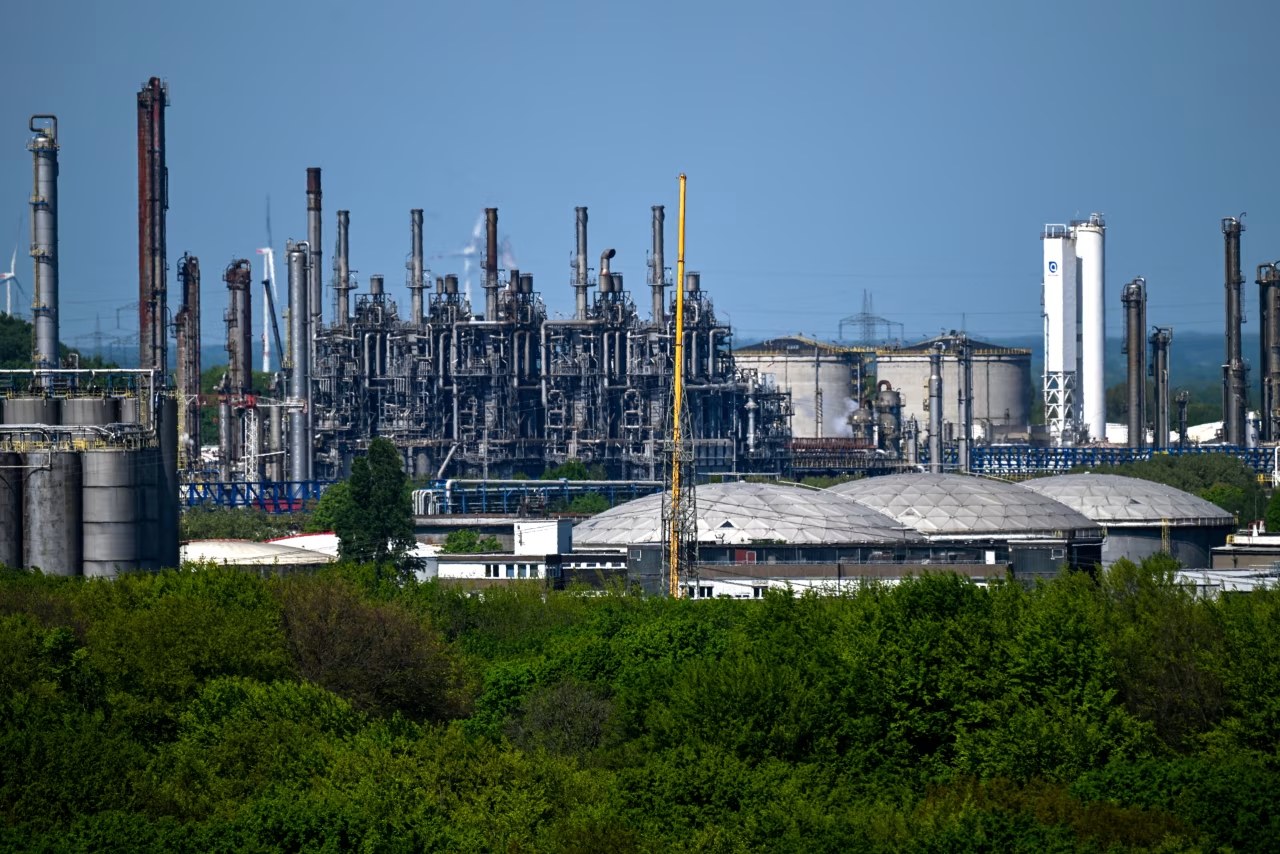
BP Sheds 105-Year-Old German Refinery to Klesch in Undisclosed Deal
- BP will transfer full ownership of the 1.2 million tonnes-per-year Gelsenkirchen refinery to Klesch Group.
- Transaction price was not disclosed, continuing BP’s recent pattern of silent exits from European downstream assets.
- The plant, opened in 1919, is Germany’s oldest operating refinery and employs roughly 600 people.
- Sale marks BP’s third European refinery divestment since 2021 as fuel demand across the region contracts.
Quiet retreat from European refining
KLESCH GROUP—London-based BP confirmed it has signed an agreement to sell its Gelsenkirchen refinery in North Rhine-Westphalia to Geneva-headquartered Klesch Group, ending a century-long presence at the 12-barrel-per-day site.
The deal, announced without financial terms, forms part of BP’s strategy to unload what chief executive Murray Auchincloss calls “non-core, capital-intensive tail assets” as the company targets $2 billion in divestment proceeds this year.
Klesch, controlled by Russian-born investor Gary Klesch, has carved out a niche buying unloved European refineries. Industry analysts say the private group can stomach volatile margins better than oil majors shackled by shareholder-return targets.
A Century of German Fuel Output Ends in Silent Handover
When Royal Dutch Shell first opened the Gelsenkirchen facility in 1919, the Ruhr Valley was the engine room of the Weimar Republic. BP inherited the plant after its 2015 acquisition of DEA’s downstream assets, but the site’s fortunes have mirrored Germany’s waning appetite for gasoline and diesel.
According to BP’s own data, the refinery’s capacity has already been trimmed from 1.6 million tonnes per year in 2010 to 1.2 million today. German federal statistics show road-fuel sales peaked in 1999 at 32 million tonnes and have fallen every year since, dropping below 20 million tonnes in 2023.
The shrinking margin trap
Wood Mackenzie refining analyst Mark Williams says simple refineries like Gelsenkirchen—lacking petrochemical integration—have been losing up to $3 on every barrel processed during 2024’s weak margin environment. “Without cracking units to swing into naphtha or propylene, these plants become stranded assets,” Williams told Bloomberg in September.
IG Bergbau, the union representing 600 workers on site, says it will seek a Works Council hearing before the transaction closes. “We want Klesch to sign a location guarantee through 2030,” district leader Oliver Hauer said in a statement released hours after BP’s announcement.
BP’s refusal to publish the sale price fuels speculation that Klesch paid a token €1 plus assumption of decommissioning liabilities. Jefferies equity analyst Giacomo Romeo estimates BP could book a post-tax loss of $200–$300 million on the disposal when it next reports quarterly earnings.
Who Is Klesch and Why Buy a Shrinking Asset?
Gary Klesch, 67, built his industrial holding company after trading metals in the 1980s. Klesch Group’s website lists steel, aluminum, and energy assets across Europe and the United States, but refining has become a specialty. The firm bought Total’s Lindsey refinery in Britain in 2019 and the Petroplus Petit-Couronne plant in France out of bankruptcy in 2013.
Unlike oil majors, Klesch can run plants at break-even or even loss-making levels to capture option value when margins rebound, says Alan Gelder, vice-president for refining at Wood Mackenzie. “Private owners also face less public pressure to decarbonize at pace,” Gelder notes.
Deal structure remains opaque
BP’s press release ran to 92 words and contained no mention of sale price, earn-outs, or environmental indemnities. People familiar with the negotiations told Reuters that Klesch will assume decommissioning obligations estimated at €400 million, suggesting the headline consideration could indeed be nominal.
Germany’s Federal Cartel Office says it will review the transaction, but analysts expect approval because Klesch’s domestic market share of refining capacity will still be below 10 %. A spokesperson for the regulator confirmed the filing arrived on 3 June and the first-phase review lasts four weeks.
If closed, Klesch intends to keep the plant operating at least through 2028, according to a letter of intent seen by Handelsblatt. That assurance may soothe local politicians who fear the Ruhr region could lose another industrial employer after the nearby Prosper-Hansteen coal mine shut in 2018.
BP’s Downstream Squeeze: How Many Plants Must Go?
BP has already sold its 110 000 barrels-per-day Lingen refinery in Germany to Miro in 2021 and divested the 200 000 bpd Rotterdam plant to a joint venture led by Kuwait Petroleum in 2022. Together with Gelsenkirchen, the company has removed roughly 500 000 bpd of European distillation capacity since 2020.
Chief financial officer Kate Thomson told investors in May that BP is targeting $2 billion of divestment cash flow in 2024, of which only $400 million had been secured by the first quarter. The Gelsenkirchen sale edges BP closer to that goal, although analysts at Barclays warn the target still looks “ambitious” with refining valuations at cyclical lows.
Strategic pivot toward renewables
BP’s 2023 strategy update pledged to cut oil and gas production by 25 % from 2019 levels by 2030 while growing renewables capacity to 50 gigawatts. Divesting aging refineries frees capital for offshore wind and hydrogen, but critics say BP is also offloading skilled workers who could help build green projects.
The company’s downstream earnings have fallen 64 % year-on-year to $1.1 billion in the first quarter, squeezed by narrower crack spreads and higher EU carbon costs. Bernstein analyst Oswald Clint estimates every 10 000 bpd of refinery capacity divested adds roughly $50 million to BP’s annual cash flow via lower sustaining capital and carbon liability.
Still, BP retains a 400 000 bpd stake in Germany via the 50 %-owned Bayernoil refinery in Bavaria, ensuring the country remains its largest European fuels market even after Gelsenkirchen changes hands.
What Does the Sale Mean for Germany’s Fuel Security?
Germany now relies on imports for more than 98 % of its crude throughput, yet domestic refineries still process 1.9 million bpd, supplying 70 % of road fuels consumed. The Gelsenkirchen plant contributes roughly 6 % of national capacity, according to the Federal Office for Economic Affairs.
Economy-ministry officials say security of supply will not be jeopardized because neighboring Netherlands and Belgium hold surplus refining capacity. However, the International Energy Agency warns that Europe’s shrinking spare capacity could amplify price spikes if Russian exports halt again or the Druzhba pipeline flow is interrupted.
Carbon costs accelerate closures
Since 2021, EU carbon allowances have traded above €80 per tonne of CO₂, adding an estimated €1.50 to the cost of processing each barrel of crude. For simple refineries like Gelsenkirchen, carbon costs now erase the typical $2 per barrel cash margin, according to Citigroup commodity analyst Alastair Syme.
German refiners also face the EU’s impending 2025 maritime emissions rules, which will require ships to use lower-sulfur fuels or install scrubbers. The change is expected to cut demand for heavy fuel oil—one of Gelsenkirchen’s key products—by 15 % within two years.
Local mayor Karin Welge says the city will set up a task force to explore repurposing parts of the 350-hectare site for green hydrogen or renewable diesel, but no investor has committed funds. “We cannot afford another industrial wasteland,” Welge told regional broadcaster WDR.
Will More Buyers Emerge for Europe’s Stranded Refineries?
With Gelsenkirchen, Klesch Group becomes the latest private player willing to gamble on a European refining rebound. But the pool of credible buyers is shallow. Morgan Stanley estimates 1.3 million bpd of EU capacity is currently up for sale, yet majors want governments to shoulder decommissioning risk.
Trading houses such as Vitol and Trafigura have bought storage terminals, not complex refineries, preferring short-cycle returns. Private equity, burned by 2015–2018 deals, now demands carbon-transition plans before deploying capital, says Credit Suisse energy head David Hewitt.
Policy makers face a dilemma
Brussels wants to cut transport CO₂ by 55 % by 2030, but abrupt refinery closures raise fuel-import dependence and price volatility. The European Commission is drafting a “strategic refining reserve” proposal that could pay plants to stay open under emergency clauses, similar to the capacity-remuneration schemes used for coal plants.
Meanwhile, BP is unlikely to stop at Gelsenkirchen. Analysts at Redburn singled out the 85 000 bpd Kerch refinery in Azerbaijan and the 70 000 bpd Cape Town plant in South Africa as the next logical exits. Both sites are older, lack petrochemical integration, and sit in countries eager to add domestic capacity.
For Gary Klesch, the bet is straightforward: buy at trough valuations, slash costs, and wait for margins to normalize above $5 per barrel. If that happens before 2028, the Gelsenkirchen deal could yield triple-digit returns, according to RBC refining strategist Biraj Borkhataria. If not, Europe will have one more rust-belt monument to the energy transition.
Frequently Asked Questions
Q: Why is BP selling the Gelsenkirchen refinery?
BP says the sale is part of a broader plan to simplify its portfolio and strengthen its balance sheet after years of downstream overcapacity in Europe.
Q: Who is Klesch Group?
Klesch is a privately held industrial conglomerate that has bought distressed European refineries before, including the 2019 acquisition of Total’s Lindsey plant in the UK.
Q: What happens to the 600 workers at the site?
Neither BP nor Klesch has disclosed employment guarantees; IG Bergbau, the German mining and chemical union, is demanding binding job-protection clauses before regulatory approval.
📰 Related Articles
- Russian ESPO Crude Sales to Asia Start Two Months Early as Hormuz Risk Persists
- U.S. Oil Warehouses Swell 6.2 Million Barrels in Biggest Weekly Build Since 2023
- Iran War Sends U.S. Pump Prices Up 27% in Four Weeks, the Fastest Spike Since Katrina
- Middle East War Blocks Key LNG Route, Sparks Asian Coal Comeback
