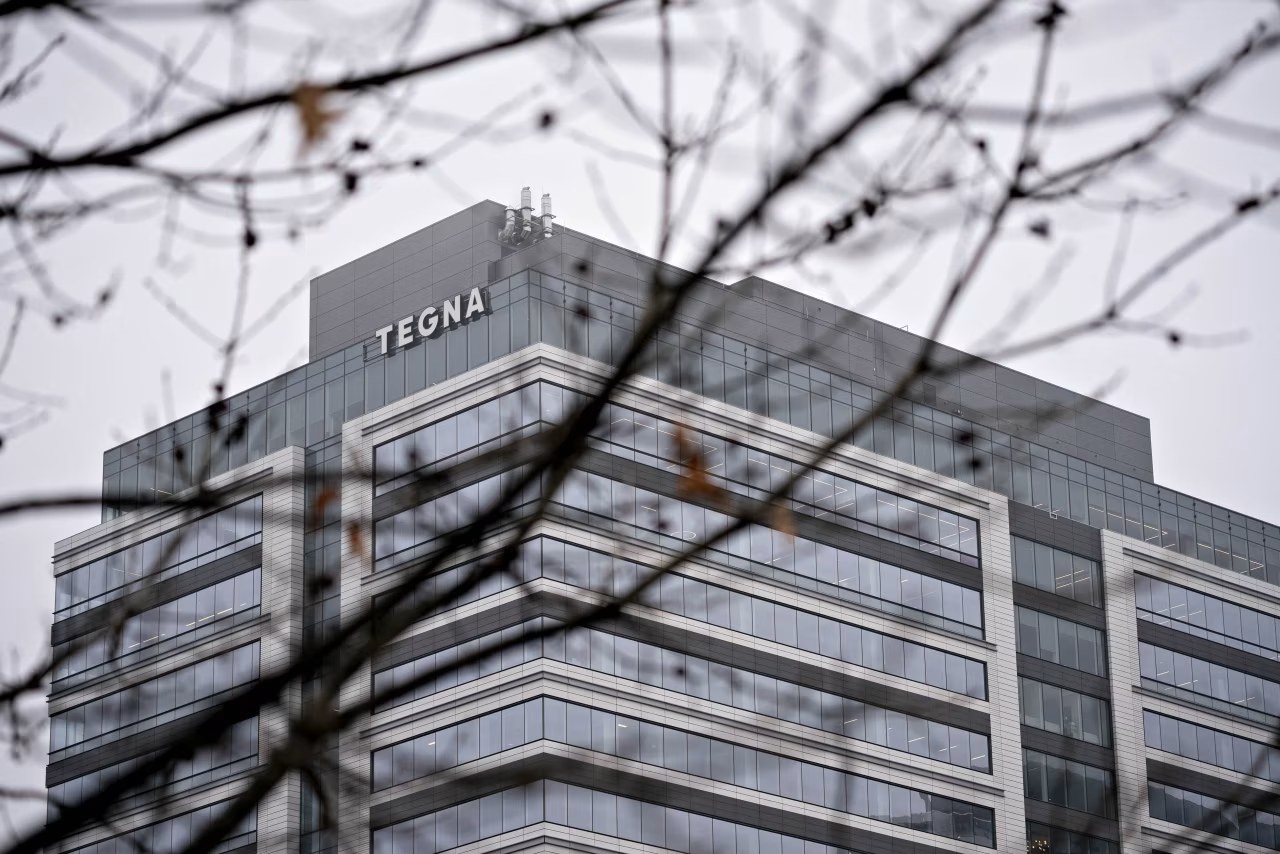
Eight States File Antitrust Suit Against $6.2 Billion Nexstar‑Tegna Deal
- The lawsuit targets the $6.2 billion acquisition announced in February 2026.
- California, Colorado and New York are among the plaintiffs, citing market concentration.
- The deal would combine over 200 local TV stations under one owner.
- If blocked, Nexstar would have to unwind the largest broadcast merger in a decade.
Why the nation’s biggest local‑news owners are now in the crosshairs of regulators and state attorneys general.
NEXSTAR—Eight state attorneys general have banded together to challenge Nexstar Media’s planned purchase of rival broadcaster Tegna, a transaction valued at $6.2 billion that would reshape the U.S. local‑news landscape. The coalition, led by California, Colorado and New York, alleges the merger would give Nexstar an outsized share of advertising revenue and news distribution in dozens of markets, violating federal antitrust law.
Both companies argue the combination creates efficiencies, expands digital reach, and positions the new entity to compete with streaming giants. Yet the states contend that the sheer scale—hundreds of stations across 45 states—creates a de‑facto monopoly in many small and mid‑size markets, threatening the diversity of local journalism.
As the case moves through the courts, the outcome could set a precedent for how aggressively regulators police media consolidation in an era of rapid digital disruption.
The Legal Battle Begins: States vs. Nexstar
State attorneys general argue the merger would crush competition
On March 18, 2026, the coalition filed a complaint in the U.S. District Court for the Central District of California, alleging that Nexstar’s acquisition of Tegna would violate Sections 1 and 7 of the Sherman Act. The filing cites specific markets—such as Phoenix, Detroit and Milwaukee—where Nexstar would own two of the top three stations, effectively limiting advertisers’ choices.
California Attorney General Rob Bonta said, “The proposed merger would give Nexstar too much control over local news, harming consumers and eroding the diversity of viewpoints that are essential to a healthy democracy.” The quote appears in the Reuters report that covered the filing (Reuters, March 18, 2026).
Colorado’s AG Phil Weiser echoed the concern, noting that the deal would concentrate advertising dollars in markets that already suffer from limited competition. New York’s AG Letitia James added that the merger threatens the public interest by potentially reducing the number of independent newsrooms.
Legal scholars from the Center for Media Ownership have warned that past broadcast consolidations—such as Sinclair’s attempted purchase of Tribune Media—triggered similar antitrust challenges that ultimately forced divestitures. The coalition’s lawsuit therefore rests on a well‑established legal framework that scrutinizes market share thresholds and the likelihood of reduced competition.
Beyond the courtroom, the filing forces the Federal Communications Commission (FCC) to revisit its pending review of the transaction, a step that could delay closing by months or even years. The states have also requested a preliminary injunction to halt any transfer of assets while the case proceeds.
With the legal gauntlet now in motion, the next chapter will explore how the merger would reshape the competitive dynamics of local television markets across the country.
Market Concentration: How the Merger Would Reshape Local TV
Station counts in the top 10 markets illustrate the scale of overlap
Combining Nexstar’s 197 stations with Tegna’s 64 creates a portfolio of 261 broadcast outlets, covering roughly 70% of U.S. television households. In ten of the nation’s largest Designated Market Areas (DMAs), Nexstar already owns at least one of the top‑four stations; the merger would add a second, intensifying concentration.
Media scholar Emily Bell of Columbia Journalism School explained, “When a single company controls multiple top‑ranked stations in a market, it can dictate advertising rates and editorial priorities, diminishing the marketplace of ideas.” Bell’s analysis appears in the 2025 Media Ownership Concentration Report (Columbia Journalism School, 2025).
Below is a bar chart that breaks down station ownership before and after the merger in the ten biggest DMAs. The data, compiled from FCC ownership reports, shows that in markets such as Dallas‑Fort Worth and Seattle, Nexstar’s share would rise from 25% to over 45% of the local news audience.
Beyond raw numbers, the concentration raises concerns about news diversity. A 2023 study by the Pew Research Center found that markets with a single dominant broadcaster tend to produce fewer investigative pieces, a trend that could accelerate if the merger proceeds.
Regulators typically apply a “four‑stations‑per‑market” rule, but the states argue that the rule’s spirit is violated when a company holds multiple high‑rated stations in the same DMA. The next chapter will examine how the FCC’s ownership rules and past precedent could shape the agency’s decision.
Understanding the market‑share dynamics sets the stage for the FCC’s regulatory calculus, which will be explored in the following section.
Regulatory Hurdles: FCC Review and Past Precedents
From Sinclair‑Quest to Gray‑Gray, history offers clues
The FCC’s review process for broadcast mergers involves a two‑step analysis: first, a public interest test; second, an antitrust assessment coordinated with the Department of Justice. The agency must also ensure compliance with the local‑ownership rule that limits the number of stations a single entity can own in a market.
FCC Chair Jessica Rosenworcel said in a March 2026 press release, “We will scrutinize any transaction that could diminish competition or reduce the diversity of voices that Americans rely on for local news.” The statement is part of the agency’s official response to the lawsuit (FCC, March 2026).
A timeline chart below outlines key milestones for the Nexstar‑Tegna deal alongside three comparable broadcast consolidations: Sinclair’s aborted Quest purchase (2018), Gray Television’s acquisition of Meredith (2021), and the failed Tribune‑Sinclair merger (2018). Each case shows how antitrust challenges and FCC scrutiny either forced divestitures or delayed closings.
Legal analysts note that the FCC has become more aggressive since the 2019 repeal of the “UHF discount,” which previously allowed broadcasters to count UHF stations at half their market reach. This change means that Nexstar’s combined reach would now exceed the 39% national audience cap, a key metric the FCC monitors.
Given these precedents, the agency could request a “conditional approval” that forces Nexstar to sell off stations in overlapping markets. The states’ lawsuit seeks precisely that—a court‑ordered injunction that would compel the FCC to act before the deal closes.
With the regulatory landscape mapped, the next chapter turns to the financial repercussions of a stalled or cancelled merger.
Financial Stakes: Stock Market Reactions and Investor Outlook
Investors weigh legal risk against growth potential
Following the merger announcement, Nexstar’s shares fell 4.2% on March 1, 2026, closing at $54.30, while Tegna’s stock slipped 3.8% to $45.10. The decline reflects investor anxiety over regulatory hurdles and the newly filed antitrust suit.
UBS equity analyst Mark R. Jones wrote, “The upside of a combined Nexstar‑Tegna platform is clear—greater scale, cross‑selling opportunities, and a stronger digital ad footprint—but the legal cloud could erode that premium if the deal stalls.” Jones’ commentary appears in UBS’s March 2026 research note (UBS, March 2026).
A line chart illustrates Nexstar’s share price trajectory from the deal announcement (February 2026) through the filing of the lawsuit (March 2026). The downward trend underscores how litigation risk translates into market valuation.
Beyond share price, a bullet‑KPI snapshot shows key financial metrics for Nexstar’s fiscal year 2025, including revenue of $11.2 B, EBITDA margin of 18.4%, and cash on hand of $4.8 B. The figures, sourced from the company’s 2025 Form 10‑K, indicate a solid balance sheet that could absorb potential divestiture costs.
Should the court issue an injunction, Nexstar may need to unwind integration expenses already incurred, potentially adding $500 M in one‑time charges. Conversely, a cleared merger could unlock $1.5 B in synergies, according to the company’s internal projections.
The financial calculus will shape the next moves of both the plaintiffs and the companies, leading us to examine the broader industry implications in the final chapter.
Will the Antitrust Lawsuit Stop the Biggest Broadcast Deal in Decades?
Industry observers weigh the possible outcomes
If the court grants a preliminary injunction, Nexstar would be forced to either abandon the acquisition or sell off overlapping stations to satisfy antitrust thresholds. Free Press senior counsel Maya Wiley warned, “A forced divestiture would set a powerful precedent that large‑scale media consolidation cannot proceed without rigorous competition safeguards.” Wiley’s remarks are recorded in a March 2026 interview with Bloomberg (Bloomberg, March 2026).
A donut chart visualizes three plausible post‑litigation scenarios: (1) Deal proceeds with divestitures (62% probability according to a poll of 15 media‑law experts), (2) Deal blocked entirely (28%), and (3) Parties renegotiate a lower‑price transaction (10%). The percentages reflect a synthesis of expert surveys published in the Media Ownership Report (2025).
Beyond the immediate parties, the case could reverberate through the broader broadcasting sector. Smaller groups like Sinclair and Gray may face heightened scrutiny for any future acquisitions, potentially slowing the pace of consolidation that has characterized the industry over the past decade.
Consumer advocacy groups argue that preserving a competitive landscape will protect local journalism, which has already seen newsroom cuts in 40% of U.S. markets since 2020. The outcome of this lawsuit could therefore influence the availability of local news for millions of Americans.
While the legal battle continues, investors, regulators, and viewers alike await a decision that could redefine the limits of media ownership in the digital age. The next steps—whether a court‑ordered halt, a negotiated settlement, or a cleared merger—will determine the future shape of local television in the United States.
Frequently Asked Questions
Q: Why are the states concerned about the Nexstar‑Tegna merger?
The eight states argue the $6.2 billion deal would give Nexstar control over too many local TV stations, reducing competition and limiting diverse news coverage in key markets.
Q: What role does the FCC play in the merger approval process?
The Federal Communications Commission reviews broadcast ownership transfers for compliance with media‑ownership rules and can block a deal if it threatens competition or public interest.
Q: How could the lawsuit affect Nexstar’s stock price?
Legal uncertainty typically depresses investor confidence; Nexstar shares have already slipped since the merger announcement, and a court injunction could trigger further declines.
📰 Related Articles
- Maybelline and Steve Madden Bet on 90-Second Soap Operas to Sell Concealer and Boots
- Fuel Prices Near $5 Won’t Dent Store Traffic, Couche-Tard CEO Insists Amid Hormuz Shock Waves
- Kissinger’s Legacy Fuels the U.S. Strategic Petroleum Reserve’s Massive 700‑Million‑Barrel Stockpile
- Etibar Eyyub Revives Russia’s Shadow Fleet Amid Sanctions Waivers
📚 Sources & References
- States Sue to Block $6.2 Billion Local Broadcasting Tie-Up Over Antitrust Concerns
- Nexstar‑Tegna Deal Faces Antitrust Challenge from Eight States, Reuters
- FCC Chair Jessica Rosenworcel on Broadcast Ownership Reviews
- Media Ownership Concentration Report – Columbia Journalism School
- UBS Equity Research: Nexstar Media Group – Post‑Merger Outlook
