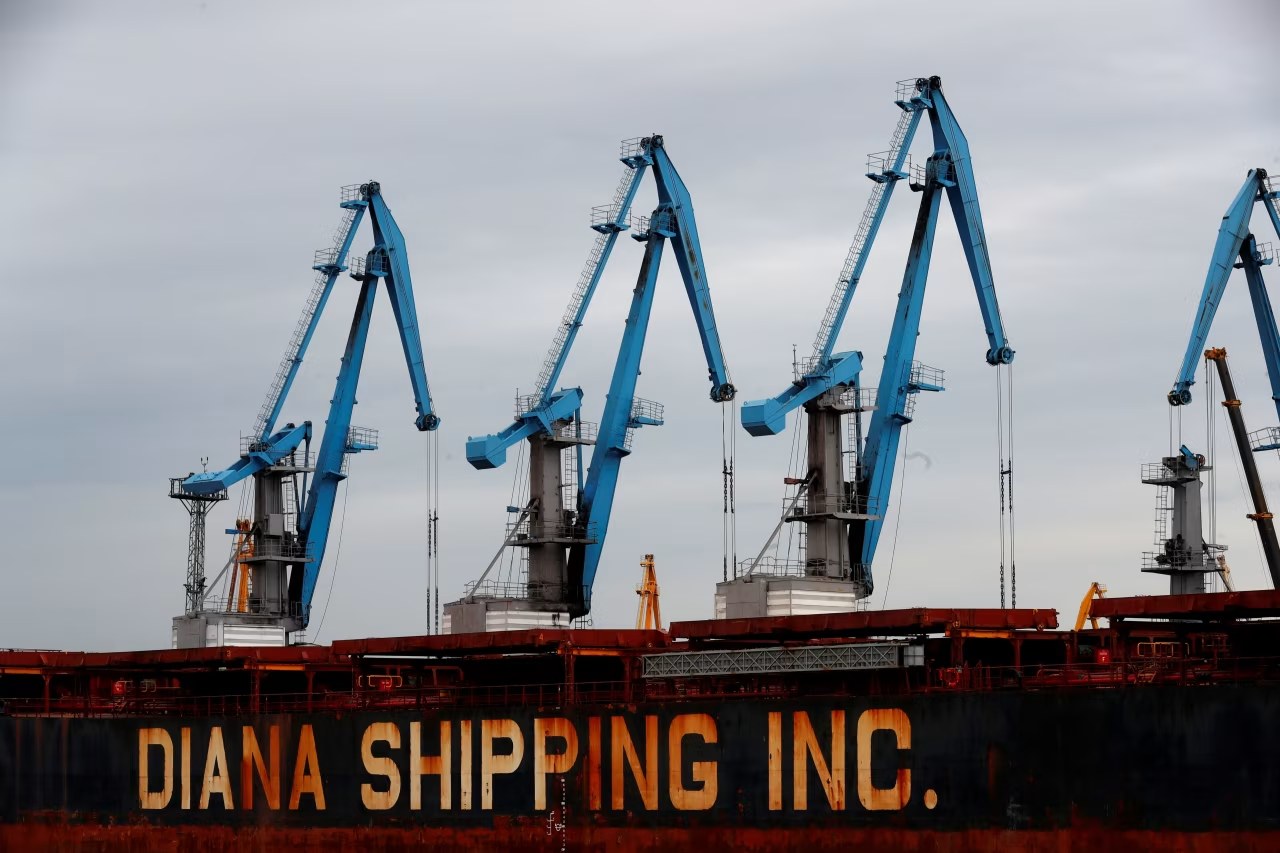
Genco Spurns $23.50-a-Share Bid From Diana Shipping, Citing 31% Premium as Inadequate
- Genco board unanimously rejected Diana Shipping’s revised cash offer of $23.50 per share.
- The proposal represented a 31% premium to Genco’s undisturbed price on 21 November.
- Diana already owns a minority stake and wants the rest of the outstanding stock.
- Board says offer materially undervalues company’s fleet and earnings outlook.
Directors see stronger standalone value as dry-bulk rates rebound
GENCO—Genco Shipping & Trading’s directors have unanimously turned down a sweetened takeover approach from rival dry-bulk operator Diana Shipping, arguing the latest $23.50-a-share cash proposal fails to reflect the company’s asset base and earnings power in a rising freight market.
The rejection, disclosed in a terse statement after market close, leaves Diana Shipping—already a minority shareholder—without a clear path to a swift consolidation that would create a 100-plus vessel conglomerate.
Under the non-binding offer tabled earlier this month, Diana had pledged to pay $23.50 for every Genco share it does not already own, a 31% premium to the stock’s last unaffected close on 21 November.
The Anatomy of a Rebuff: Why Genco’s Board Said No
People close to the negotiations told TradeWinds that Genco’s independent directors met twice in the past ten days, ultimately concluding the bid neither compensates shareholders for the modern eco-fleet nor for projected cash flow under a recovering Baltic Dry Index. Diana Shipping, which already holds 8.4% of Genco, floated the revised price after an earlier approach at $21 was rebuffed in December.
Valuation gap looms large
Using Diana’s own reference date of 21 November, the implied equity value totals roughly $985 million for the shares it does not own. Analysts at Fearnley Securities note that Genco’s current fleet of 52 bulkers—46 capesize and supramax vessels built after 2012—carries a broker-derived resale value of $1.16 billion, leaving a tangible-asset discount of about 15% to the offer.
“That disconnect is hard to ignore when asset prices for five-year-old capes have jumped 22% since September,” said senior dry-bulk analyst Erik Nicolai Stavseth. “Management clearly believes waiting twelve to eighteen months could unlock more value than the cash today.”
Beyond hard assets, Genco’s balance sheet—net debt to fleet value below 25%—and a projected $180 million free cash harvest in 2024 under forward freight agreements give directors confidence they can return capital organically. The board also worries that accepting a sub-optimal bid now could expose them to litigation from activists who remember the company’s $18-plus share buy-backs only two years ago.
Shareholder advisory firms have already flagged the offer. “At 0.67 times price-to-net-asset-value the bid sits at the bottom quartile of recent shipping take-privates,” warns Ioannis Zourdos, partner at Athens-based consultancy Petrofin. “Unless Diana raises the coupon or adds a stock component, this ends here.”
Market reaction validated the rebuff: Genco closed 2.1% lower but still above $20, signalling investors expect either a white-knight rival or a sweetened follow-up. Diana’s own stock slid 5.3% as traders priced in the prospect of a prolonged, costlier campaign.
Can Diana Sweeten the Deal Without Overstretching?
Diana Shipping’s balance-sheet capacity to raise the bid is constrained. With $955 million in cash and $1.4 billion in largely unencumbered fleet value, the Greek owner could theoretically stretch to $28 a share, but that would push leverage above 55%—a red line for banks already skittish on dry-bulk collateral values. CFO Maria Dafnakis told analysts last quarter that the company targets maximum net-debt-to-assets of 45%.
Cash pile vs borrowing headroom
One option floated by investment bank Axia is a partial scrip alternative: offering 0.45 Diana shares plus $15 cash for each Genco share. That would keep Diana’s leverage steady while letting target investors ride any post-merger synergies. Yet Genco shareholders have historically preferred pure plays, and a blended structure could deter index funds that own 38% of the free-float.
Another route is an asset-backed contingent-value right that pays out if capesize spot rates average above $25,000 for four consecutive quarters—a threshold Clarksons sees as likely in 2024 on Brazilian iron-ore exports. “The market is clearly betting Diana will be back with either more cash or a structure that captures upside,” said Natasha Boyden, shipping specialist at Cantor Fitzgerald.
Time is not on Diana’s side. Under U.S. rules governing tender offers, once a formal bid is launched the acquirer has 20 days to raise terms or walk away for at least 180 days. Failure to do so would push Diana into a proxy fight or a staggered open-market accumulation—costly in a thinly traded micro-cap where daily volume averages barely 450,000 shares.
Observers also note cultural hurdles. Genco’s management, led by CEO Apostolos Vergis, has cultivated a reputation for disciplined capital timing—buying second-hand ships at cycle troughs and selling older tonnage at peaks. Diana’s founding Simeon Palios family, while respected, runs a more opportunistic model with frequent spin-offs and special dividends. Merging two divergent philosophies without a hefty control premium could trigger talent flight at Genco, eroding the very operating synergies Diana hopes to harvest.
What a Combined Giant Would Look Like—and Why It Could Still Happen
If Diana ultimately tables a knockout bid and wins over 50% plus one share, the enlarged group would command a 109-shoulder dry-bulk armada with an average age of 9.4 years, placing it among the world’s five largest publicly listed owners after Star Bulk, Golden Ocean and Pacific Basin. Together they would control roughly 4% of the global capesize fleet and 3% of supramax/ultramax tonnage.
Synergy math versus antitrust risk
Shipping consultancy Drewry estimates annual savings of $28–$32 million from combined bunkering, insurance and procurement, worth roughly $260 million in present-value terms at an 8% discount rate. Add potential for coordinated cargo bookings on key routes such as Brazil-China and Australia-Japan, and Diana could justify paying up to $26 a share while still generating mid-teens IRR.
Yet regulators in Beijing and Brussels have shown increasing appetite to probe even modest market-share accretions in shipping. A merged Diana-Genco would need to file pre-merger notifications in China because both owners regularly call at Chinese ports and carry Vale, Rio Tinto and BHP cargoes. Approval could take six months, delaying closure into 2025 and eroding some cost-synergy momentum.
From a financing angle, Diana has already sounded out banks for a $650 million acquisition facility backed by Genco’s unencumbered vessels. Lead arrangers include DNB, Citigroup and HSBC, people familiar said, with pricing set at SOFR plus 260 basis points—attractive versus today’s 8.2% blended yield on Genco equity. Still, covenants would restrict dividend flexibility, an issue for Diana’s income-focused retail shareholder base.
Despite the rejection, arbitrage funds have built a 12% stake in Genco through total-return swaps, betting a white-knight is unlikely and Diana will return with at least $25 cash, according to Breakwave Advisors. The spread between current market and that level implies a 65% probability-weighted annualised return of 18%—juicy enough to keep merger hopes alive.
Shareholder Chessboard: Who Holds the Keys to a Deal?
Ownership data compiled by Nasdaq show that 42% of Genco’s register is held by U.S. mutual funds and ETFs, with BlackRock, Vanguard and State Street collectively commanding 28%. Their governance teams typically follow ISS and Glass Lewis recommendations, both of which have grown sceptical of bids below 1.0× book in cyclical sectors unless a competitive process proves no better price exists.
Retail base versus hedge funds
Another 18% sits with Greek shipping dynasties and retail investors who bought in during the 2021 rally; many carry tax losses and would welcome cash at $24-plus. Activist hedge funds, including Mudrick Capital and Oaktree, have accumulated 6% through swaps, pressuring the board to run a formal sale process rather than negotiate bilaterally with Diana.
“The independent committee has a fiduciary duty to canvas strategic alternatives once a credible premium emerges,” said David Peress, partner at law firm Seward & Kissel. “Failure to shop the company could invite appraisal rights litigation in the Marshall Islands, where Genco is incorporated.”
Diana’s path to victory therefore hinges on either winning over the index funds with a modest bump or convincing activists that a friendly negotiation yields speedier closure than a prolonged auction in a jittery macro climate. Proxy solicitors estimate Diana needs 55% of the outstanding minority to tender at $25 to squeeze out the rest under Marshall Islands law, implying a minimum spend of $1.05 billion including refinancing Genco’s $265 million senior notes due 2027.
The clock is ticking. Genco must file its 10-K by 15 March, and any material merger discussion would trigger disclosure under Item 5.02. Diana risks seeing its quarry court other suitors once the formal process starts, raising the final cheque or forcing it to walk. As one London-based ship-finance banker put it, “In dry bulk, six weeks feels like six months—rates could rally 30% and flip the power balance entirely.”
What Happens Next: Scenarios for the Months Ahead
Shipping dealmakers sketch three plausible paths from here. Scenario one: Diana returns within three weeks with a $25–$26 all-cash bid, secures recommendation from Genco’s independent directors after limited due-diligence, and closes by early summer. That implies a 10% bump for Genco shareholders and preserves Diana’s leverage below 50%.
Counter-bid or strategic review
Scenario two sees Genco’s board launch a formal strategic review, inviting private-equity firms and Asian owners. PE appetite is limited by freight volatility, but Japanese trading houses such as Mitsui or Marubeni could pay up for long-haul transport of Brazilian iron ore into their steel-mill networks. Analysts pencil $27–$28 as the ceiling such buyers could justify.
The third scenario is a protracted standoff: Diana walks, Genco’s stock drifts to $18–$19 on freight softness, and both parties revisit consolidation in 2025 when environmental regulations favour larger fleets able to absorb new-fuel tech costs. This outcome becomes more likely if China’s post-New Year industrial output disappoints and capesize spot rates retreat below $18,000 a day.
Regardless of the path, investors should expect heightened volatility. Options markets now price a 35% chance Genco trades outside the $19–$27 band within 90 days, up from 22% before the bid emerged. Implied volatility on at-the-money calls expiring in June has surged to 48%, signalling traders brace for news flow.
Ultimately the dry-bulk sector’s notorious cyclicality may decide the winner. If Australian cyclones or Brazilian rainfall tightens tonnage supply, rates could spike beyond $30,000 a day, making any sub-$30 bid look paltry. Conversely, a flare-up of geopolitical risk that crushes commodity demand would deflate both asset values and Diana’s appetite to pay a rich premium.
Frequently Asked Questions
Q: What price did Diana Shipping offer for Genco shares?
Diana’s revised, non-binding proposal values each Genco share at $23.50 in cash, a 31% premium over the undisturbed closing price on 21 November.
Q: Why did Genco reject the takeover bid?
Genco’s board concluded the $23.50 offer materially undervalues the company’s modern eco-fleet and projected free cash generation in a recovering dry bulk rate environment.
Q: Does Diana already own part of Genco?
Yes. Diana currently holds a minority stake and the proposal sought to acquire the remaining outstanding shares it does not already own.
