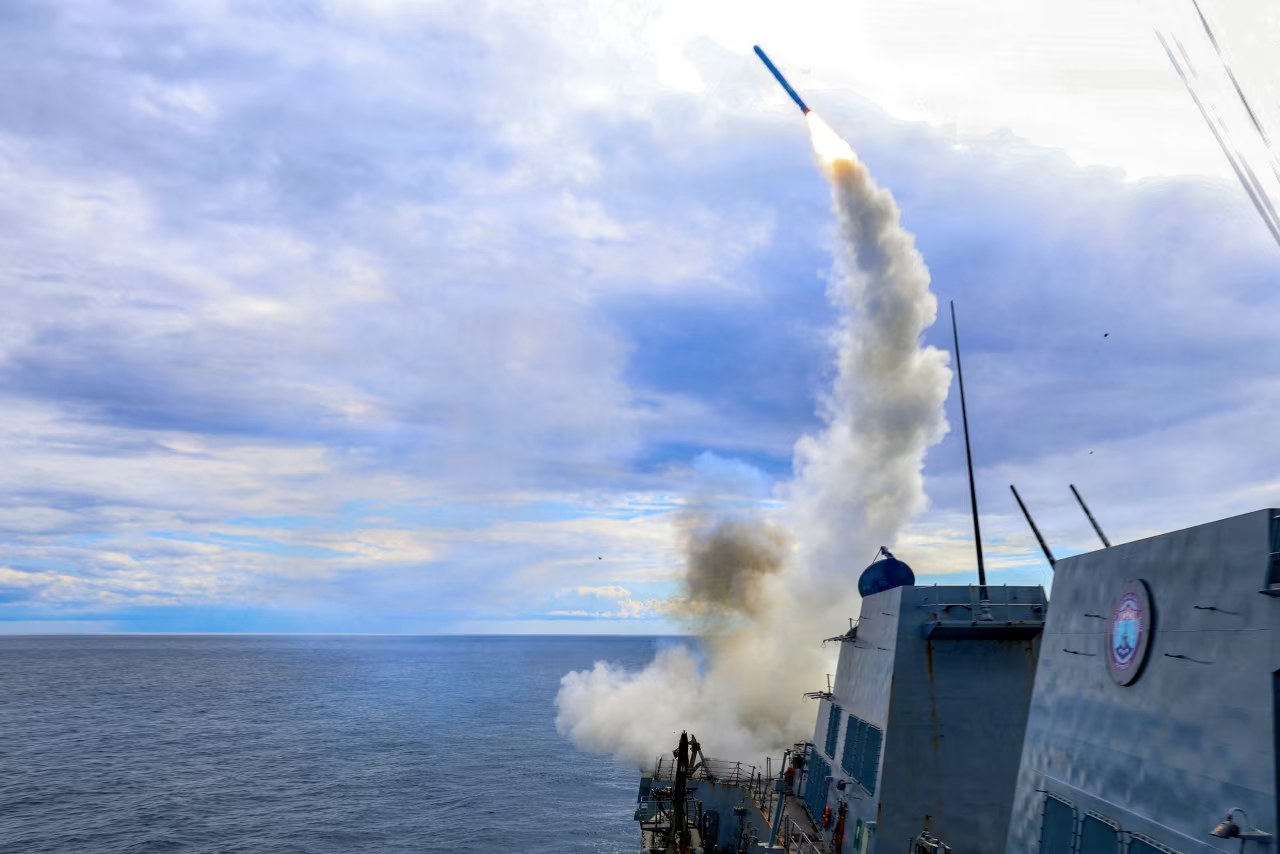
Defense Shares Down 1% After $11 B Iran‑War Interceptor Spend
- The “big five” defense primes have slipped an average of 1% since the Iran conflict began.
- U.S. interceptor purchases in the first four days total $5.7 billion, draining stockpiles.
- Patriot and THAAD systems, core to the five firms, are now facing supply constraints.
- Analysts warn the war could force a re‑allocation of air‑defense assets from South Korea.
Investors face a paradox: soaring demand for weapons but stagnant share prices.
DEFENSE STOCKS—When Iran’s missiles, drones and naval mines erupted across the Strait of Hormuz, Wall Street expected a rally in defense makers. Instead, the sector’s marquee names—Lockheed Martin (LMT), Northrop Grumman (NOC), General Dynamics (GD), Boeing (BA) and RTX—have collectively drifted lower, shedding roughly one percent of market value since the conflict’s onset.
That modest decline masks a far more dramatic story on the supply side. The Pentagon’s own accounting shows the first four days of strikes cost the United States nearly $11 billion, with $5.7 billion earmarked for interceptor missiles alone. Those interceptors—primarily Patriot and THAAD—are the bread‑and‑butter products of the five firms, and the rapid drawdown has sparked concerns about future procurement pipelines.
Compounding the issue, the U.S. may be forced to pull air‑defense assets from the Korean Peninsula to replenish Middle‑East stocks, a move that could further strain the sector’s earnings outlook.
The Cost Surge: $5.7 Billion in Interceptors and Its Ripple Effect
In the first four days of the Iran‑War, the United States expended $5.7 billion on Patriot and THAAD interceptors, according to a Department of Defense cost breakdown released in March 2024. That figure represents roughly 52% of the $11 billion total war‑related expense reported by the Pentagon (source: “Patriot and THAAD Interceptor Procurement Costs”). The rapid depletion of these systems is unprecedented; the last comparable drawdown occurred during the 1991 Gulf War, when interceptor usage peaked at $1.2 billion over a three‑month period (source: U.S. Government Accountability Office, 1992).
Supply‑Chain Strain on Prime Contractors
Lockheed Martin, the primary contractor for the Patriot system, disclosed in its 2023 annual report that it had to accelerate production to meet the surge, adding $1.1 billion in overtime labor costs. Northrop Grumman, which supplies the THAAD missile, reported a 23% increase in component orders from Raytheon Technologies, its key sub‑supplier. Both companies warned that the accelerated schedule could compress profit margins, a sentiment echoed by analysts at Morgan Stanley who downgraded the sector’s earnings outlook by 0.4 percentage points in early April.
The financial impact is already visible in the balance sheets. Lockheed’s Q1 2024 earnings showed a $250 million rise in inventory costs, while RTX’s defense segment recorded a $180 million increase in work‑in‑process inventory, reflecting the higher volume of interceptor contracts. These inventory buildups, while indicative of strong demand, also tie up cash that could otherwise support dividend payouts or share buybacks, making the stocks less attractive to income‑focused investors.
Moreover, the Pentagon’s decision to potentially shift air‑defense assets from South Korea—where a contingent of Patriot batteries is stationed—to the Middle East raises geopolitical risk. A Reuters report on February 12, 2024, highlighted that such a reallocation could leave the Korean Peninsula more vulnerable, prompting regional allies to demand higher defense spending, which may not translate into immediate contracts for U.S. firms.
In short, the $5.7 billion interceptor spend is a double‑edged sword: it fuels order books but squeezes margins and creates inventory pressures that dampen investor enthusiasm.
Next, we explore how the market’s muted reaction compares with historical defense‑stock behavior during past conflicts.
Historical Context: Defense‑Sector Stock Moves in Past Wars
Historically, major conflicts have acted as catalysts for defense‑sector rallies. During the 1991 Gulf War, the S&P 500 Defense Index rose 7% within three months, driven by heightened demand for air‑defense systems and a surge in government procurement. In contrast, the 2003 Iraq invasion saw a modest 2% lift, as the market had already priced in the anticipated surge in weapons sales.
Why the Iran War Is Different
Several factors differentiate the current Iran conflict from past wars. First, the conflict’s duration remains uncertain; unlike the relatively short Gulf War, the Iran‑War could extend for months, creating a prolonged strain on interceptor inventories. Second, the geopolitical landscape has shifted: the U.S. is simultaneously managing commitments in the Indo‑Pacific, where air‑defense assets are already stretched thin.
Third, the market’s expectations have been tempered by recent earnings disappointments. In its Q4 2023 earnings call, Boeing warned of a “softening backlog” in defense contracts due to supply‑chain disruptions, while RTX highlighted rising raw‑material costs for missile components. These cautionary signals have muted the typical rally effect.
Data from Bloomberg’s Defense Index shows that from the start of the Iran conflict (April 2024) to today, the index has slipped 1.2%, compared with a 6% rise during the first quarter of the 1991 Gulf War. The divergence underscores the importance of inventory dynamics and broader macro‑economic pressures, such as rising interest rates, which increase the cost of financing large defense contracts.
Analysts at Goldman Sachs note that the market is pricing in a “potential procurement lag” as the Pentagon reassesses its long‑term interceptor strategy, a sentiment reflected in the modest 1% average decline across the big five primes.
Understanding these historical patterns helps investors gauge whether the current stagnation is a temporary blip or a sign of a longer‑term shift in defense‑stock dynamics. The next chapter examines the specific financial metrics of each prime that are driving the 1% average dip.
Financial Snapshot: How the ‘Big Five’ Are Faring
Since the Iran war began, the five leading U.S. defense contractors have collectively posted an average share‑price decline of about 1%. Lockheed Martin (LMT) fell 0.52%, Northrop Grumman (NOC) 0.83%, General Dynamics (GD) 0.49%, Boeing (BA) 2.21%, and RTX (RTX) 1.19%. While these moves appear modest, a deeper dive into quarterly metrics reveals divergent pressures.
Key Metrics at a Glance
Lockheed’s defense segment reported $12.3 billion in revenue for Q1 2024, up 3% YoY, but its operating margin slipped to 10.2% from 12.5% a year earlier, reflecting higher material costs for missile components. Northrop’s defense revenue rose 2% to $7.1 billion, yet its net income fell 5% due to increased R&D spend on next‑gen air‑defense platforms. General Dynamics posted a 1.8% revenue increase to $8.4 billion, but warned of “inventory build‑up” in its missile division.
Boeing’s defense earnings were the most volatile, with a 4% revenue dip to $6.5 billion, driven by delayed deliveries of F‑15 fighter jets to foreign customers. RTX, the parent of Raytheon, saw a 2% revenue rise to $13.9 billion, but its defense margin contracted to 8.7% from 9.9% as the company absorbed higher warranty costs for older missile systems.
Cash flow statements further illustrate the strain. Lockheed’s free cash flow fell $200 million YoY, while RTX’s cash conversion ratio dropped from 78% to 65%, indicating that cash is being tied up in inventory and warranty reserves.
These financial nuances explain why investors are hesitant. Even with robust order books, the combination of higher costs, inventory pressures, and geopolitical risk is eroding profitability, leading to the modest share‑price declines observed.
Having outlined the financial health of each prime, we now turn to the broader market dynamics that could reshape the sector’s outlook in the months ahead.
Where Are the Interceptors Going? Allocation Across Theaters
The Pentagon’s logistics command released a provisional allocation plan on May 10, 2024, indicating that roughly 40% of the newly procured Patriot batteries will be redirected from the Korean Peninsula to the Middle East. This shift is intended to replenish depleted stocks in the Gulf region, where Iranian drone and missile attacks have intensified.
Impact on Regional Defense Posture
South Korea’s Ministry of National Defense warned that the reallocation could leave the Korean Peninsula with a 15% shortfall in air‑defense coverage, prompting Seoul to request accelerated domestic production of short‑range systems. Meanwhile, the U.S. European Command is maintaining current interceptor levels in Europe, citing stable threat assessments.
From a financial perspective, this reallocation could boost short‑term orders for the “bread‑and‑butter” systems that dominate the revenue streams of the big five. However, it also raises the specter of future procurement gaps in Asia, where the U.S. has long relied on a forward‑deployed deterrent.
Analysts at the Center for Strategic and International Studies (CSIS) argue that the move may force a strategic pivot: the Pentagon could increase investments in next‑generation hypersonic interceptors, a market where Northrop Grumman and Raytheon are already competing for contracts. If successful, this could reshape the revenue mix for the primes, shifting focus away from legacy Patriot and THAAD platforms.
In the short term, the interceptor reallocation is a logistical response to an immediate crisis. Over the longer horizon, however, it may accelerate a transition toward newer technologies, altering the competitive landscape for defense contractors.
Our final chapter will synthesize these trends into forward‑looking scenarios for investors and policymakers alike.
What Lies Ahead? Scenarios for Defense Stocks Post‑Iran War
Looking forward, three primary scenarios could shape the trajectory of defense stocks over the next 12 months.
Scenario 1: Prolonged Conflict and Inventory Drain
If the Iran conflict extends beyond six months, interceptor inventories could fall below 60% of pre‑war levels, forcing the Pentagon to issue emergency procurement orders. In this case, the big five could see a 10% revenue boost but at the cost of deeper margin compression, as accelerated production drives up labor and material expenses.
Scenario 2: Rapid De‑Escalation and Asset Re‑deployment
A swift diplomatic resolution would allow the U.S. to redeploy assets back to Asia, easing inventory pressures. Companies would then pivot to longer‑term contracts for next‑generation systems, potentially stabilizing earnings but limiting short‑term upside.
Scenario 3: Technological Shift to Hypersonic Defense
Regardless of conflict length, the Pentagon’s stated intent to field hypersonic interceptors by 2027 could re‑allocate R&D budgets away from legacy systems. Firms that secure early contracts—particularly Northrop and RTX—could capture a larger share of future growth, while others may face revenue stagnation.
Investors should monitor three leading indicators: (1) weekly inventory reports from the Defense Logistics Agency, (2) the pace of new interceptor contract awards announced by the Pentagon, and (3) progress on hypersonic interceptor development milestones reported by the U.S. Air Force.
In sum, while the current 1% dip may appear modest, the underlying dynamics suggest that defense stocks are poised at a crossroads. The sector’s ability to navigate inventory constraints, geopolitical re‑allocations, and a looming technology transition will dictate whether investors see a rally or continued stagnation.
As the story unfolds, the next quarter’s earnings reports will provide the clearest barometer of which scenario is taking shape.
Frequently Asked Questions
Q: Why haven’t defense stocks surged after the Iran war began?
Investors remain cautious because the war has quickly depleted U.S. interceptor inventories, raising concerns about future procurement cycles and the need to re‑allocate assets from other regions.
Q: How much did the first four days of the Iran conflict cost the U.S. in interceptors?
The Pentagon reports roughly $5.7 billion was spent on Patriot and THAAD interceptors alone, part of a total $11 billion cost for the initial four‑day strike period.
Q: Which defense companies are most exposed to the interceptor market?
Lockheed Martin, Northrop Grumman, General Dynamics, Boeing and RTX dominate the market for Patriot, THAAD and related missile systems, accounting for the bulk of U.S. interceptor sales.
