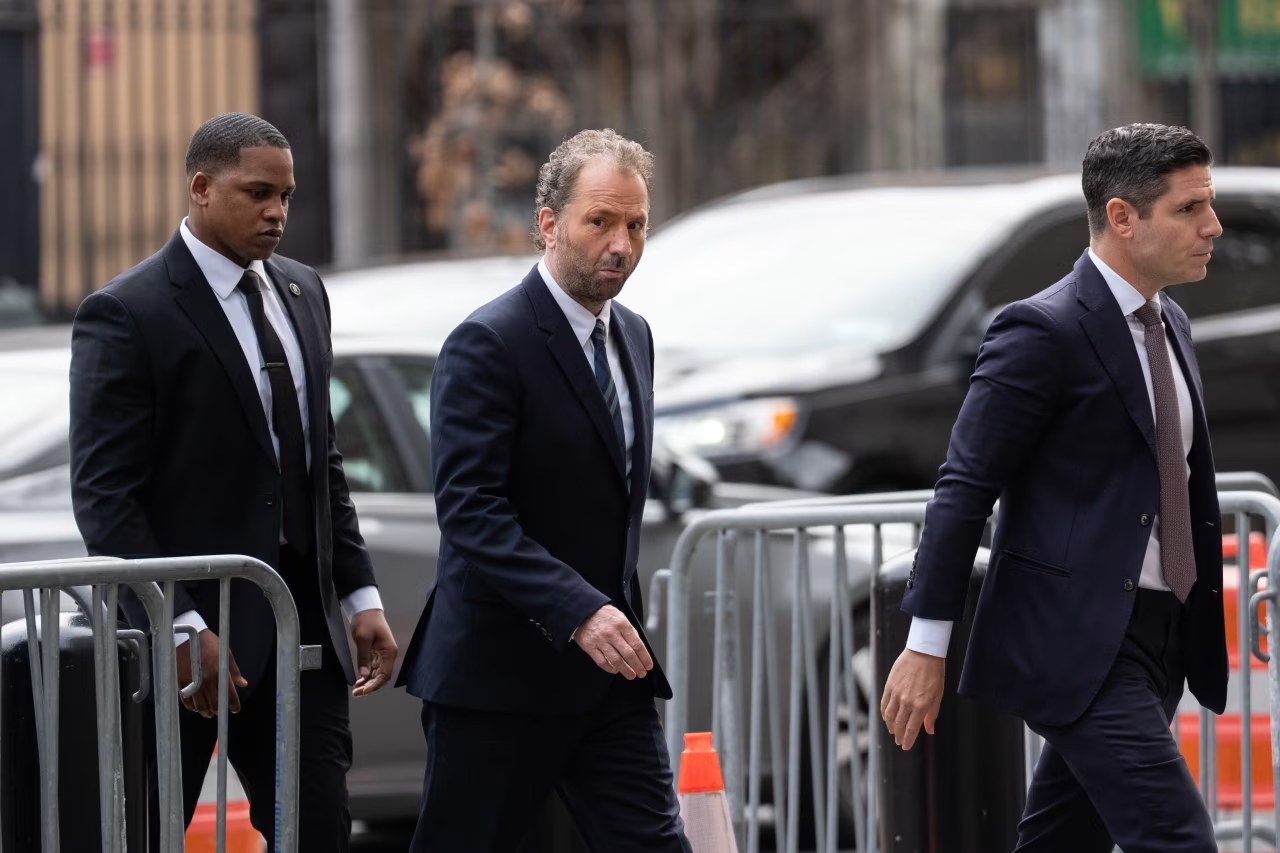
Antitrust Trial Puts Ticketmaster Fees Under Microscope as CEO Concedes They’re ‘Too High’
- Michael Rapino admitted in court that Ticketmaster’s add-on fees are ‘too high,’ according to an internal message shown by DOJ lawyers.
- Live Nation controls promotion for 80% of major U.S. tours and sells tickets for more than 200 venues, the DOJ says.
- Concert-goers often pay 27-37% of a ticket’s face value in surcharges, consumer data show.
- The Manhattan federal trial could unwind Live Nation’s 2010 merger with Ticketmaster if the government prevails.
Antitrust enforcers see the case as a bellwether for broader tech-and-ticket consolidation.
LIVE NATION—Michael Rapino, the chief executive who built Live Nation into the world’s largest live-entertainment conglomerate, took the witness stand Thursday in a packed Manhattan courtroom and confronted a message he never expected to defend in public: his own admission that Ticketmaster’s fees are “too high.”
The concession, revealed in an internal chat with a booking agent, landed at the heart of a Justice Department lawsuit seeking to break up Live Nation’s empire on the grounds that it stifles competition and inflates prices for fans.
With more than 200 venues under exclusive Ticketmaster contracts and control over roughly eight-in-ten major U.S. concert tours, according to touring-industry data, the company’s dominance has turned routine ticket purchases into a flashpoint for consumer anger and regulatory scrutiny.
How Ticketmaster Became the Default—And Why That Sparks Fury
The seeds of today’s backlash were planted in 2010 when Live Nation and Ticketmaster convinced antitrust regulators that combining the world’s largest concert promoter with its dominant ticket seller would create efficiencies, not a behemoth. At the time, the merged firm controlled about 70% of primary ticketing for large venues, a share the Government Accountability Office later said crept past 80% within five years.
‘Vertical integration looked benign on paper, but it gave Live Nation the lever to steer every part of the live-music food chain,’ says antitrust scholar Diana Moss, president of the American Antitrust Institute, who is not involved in the trial. She points to so-called ‘all-in’ deals that bundle venue operation, promotion and ticketing: if an arena wants A-list tours, it must sign an exclusive multiyear Ticketmaster contract.
Those contracts typically include a 15-20% primary service charge, a 3-8% order-processing fee and a $2-$5 facility surcharge, according to a 2023 survey by the Government Accountability Office. Together, add-ons can push the total cost of a $150 face-value seat above $200, outraging fans who blame artists for sticker shock they cannot see itemized until checkout.
Rapino’s private ‘too high’ comment, disclosed Thursday, is potent evidence for the DOJ because it shows awareness that consumers are pushed beyond reasonable limits, says University of Baltimore law professor Robert Lande, a former Federal Trade Commission consultant. ‘Antitrust enforcers rarely have a smoking-gun admission from the CEO himself that his prices are excessive,’ Lande notes.
The government argues the merger allowed Live Nation to insulate those fees from competitive pressure. Because venues fear losing access to blockbuster tours if they defect to a rival ticketer, Ticketmaster can raise charges without losing clients—a dynamic economists call a ‘reverse competition’ market.
Ticketmaster’s take rate has climbed faster than inflation
Internal company slides shown in court reveal that Ticketmaster’s average revenue per ticket rose 38% between 2015 and 2022, even as the CPI increased 21%. Live Nation attributes the hike to enhanced technology and dynamic pricing tools; plaintiffs say the spike tracks increased market power.
What happens next could reshape how Americans buy not only concert tickets but also sports and theater seats. If Judge Dabney Friedrich rules the merger illegal, she can order divestitures, unwinding a deal that has survived more than a decade of regulatory complaints.
What Exactly Did Rapino Say—and Why It Matters in Court
The pivotal moment came when DOJ trial attorney Elvira Smith displayed a 2018 text thread on the courtroom monitor. In it, a prominent booking agent complained that a $180 seat for a legacy-rock arena tour jumped to $240 after fees. Rapino replied: ‘I agree, the fees are too high, but we can’t unilaterally lower them without venue buy-in. We’ll revisit.’
Pressed on the stand, Rapino testified he was expressing ‘empathy’ for the agent’s client—an up-and-coming act worried about fan backlash—not admitting anticompetitive conduct. Yet the message undercuts Live Nation’s public stance that fees merely reflect market rates, notes Stanford economics professor Tim Bresnahan, who studies two-sided platforms.
‘An admission that prices are “too high” in a concentrated market is gold for plaintiffs,’ Bresnahan says. ‘It suggests supra-competitive pricing that could be deemed an antitrust injury under Section 7 of the Clayton Act.’ The government must still prove those high fees stem from monopoly power rather than routine profit maximization.
Live Nation’s defense team, led by Karen Dunn of Paul Weiss, countered that Rapino’s comment was cherry-picked from thousands of messages and that the company has invested $900 million since 2019 to improve ticketing technology, arguing those costs justify the current fee structure.
Still, consumer surveys entered into evidence show 70% of ticket-buyers believe fees are ‘hidden’ until checkout, angering them further. The DOJ contends such opacity is a hallmark of monopolization: when consumers cannot comparison-shop, firms can ratchet up prices painlessly.
Internal emails show fee discussions dating back a decade
Another 2014 email shown in court features a Live Nation finance vice president writing, ‘We can add $2 to every amphitheater ticket and call it a “venue restoration fee”; venues love the revenue share and we keep the churn.’ Rapino said he did not recall the message but did not dispute its authenticity.
Legal analysts say the cumulative weight of such documents could nudge the judge toward finding the merger illegal even without a formal price-fixing agreement. ‘Monopoly maintenance can be inferred from a pattern of exclusionary acts,’ says former DOJ antitrust chief Sally Hubbard, now at the Open Markets Institute.
The next phase of the trial will examine whether Live Nation retaliates against venues that experiment with competitors like SeatGeek or Eventbrite—an accusation the company denies but that artists from Billie Eilish to Pearl Jam have publicly echoed.
Why Venue Owners Rarely Walk Away From Ticketmaster Deals
Walk into any 5,000-plus-seat U.S. arena and odds are high that a multi-year Ticketmaster contract sits in the manager’s filing cabinet. The deals typically guarantee Live Nation will route a minimum number of concert dates—often 75% of the building’s music calendar—while the venue receives a cut of per-ticket surcharges and backend merchandise revenue.
That revenue share can total $2 million-$4 million annually for a mid-sized market arena, according to venue-operator financials reviewed by Billboard. ‘For many buildings, that’s the difference between breaking even and posting a loss,’ says Gary Bongiovanni, president of concert-trade publication Pollstar.
Yet the strings attached are substantial: venues must use Ticketmaster’s payment processing, access control and consumer-data analytics, and they cannot promote rival ticketing platforms on site. If they breach exclusivity, Live Nation can withdraw future tour routing—an effective death knell because major artists rely on the company’s promotion arm for upfront guarantees that can reach $2 million per show.
‘It’s not just ticketing; it’s the entire ecosystem,’ notes Brett Beshaler, an independent promoter in Philadelphia. He says he lost a 2022 amphitheater date when Live Nation threatened to pull a different tour from the same county fair unless the fair dropped his competing event.
Such leverage is central to the DOJ’s monopolization claim. Government economists calculate that venues switching to a competitor face a 40% drop in major-tour offers, a penalty large enough to deter defection even if rival ticketers offer lower fees.
Exclusive deals average 8-10 years in length
Data compiled by the DOJ show the median Ticketmaster venue contract length is 8.4 years, with automatic renewal clauses that can extend terms to 15 years. That longevity locks venues—and thus consumers—into the fee structure for nearly a decade, plaintiffs argue.
Live Nation counters that venues willingly renew because the company delivers consistent content. ‘We invest hundreds of millions in buildings; we need certainty we’ll recoup,’ Rapino testified, citing a $120 million renovation of the Hollywood Bowl his company financed.
The tension illustrates a core antitrust dilemma: when does aggressive vertical integration cross the line from efficiency to exclusion? If the court finds the merger has already crossed that line, Ticketmaster’s grip on venue contracts could be forcibly loosened, potentially lowering fees industry-wide.
Could the Trial Break Up Live Nation—and What Would Follow?
If Judge Friedrich sides with the DOJ, she has broad equitable power to unwind the 2010 merger, a remedy last used against Big Tech in the aborted Facebook breakup effort. Legal experts say a divestiture could take two forms: splitting Ticketmaster from Live Nation’s promotion arm or forcing the sale of key venues and client contracts to foster new entrants.
Either path would reshape touring economics. Independent promoters predict fee transparency would improve because rival platforms would compete on headline prices. ‘We’d see all-in pricing within three years,’ forecasts Jack Randall, former COO of AEG Facilities, which competes with Live Nation in some markets.
Yet consumer savings are not guaranteed. A post-breakup Ticketmaster would still hold long-term venue deals and could keep fees high unless new competitors secure inventory. SeatGeek, AXS and Eventbrite collectively control only 22% of large-venue ticketing, so scale advantages would persist short-term.
Artists might feel the biggest ripple. Under current deals, Live Nation often guarantees entire tours, assuming marketing costs and venue rentals in exchange for a cut of ticket sales and merch. A fragmented market could shift risk back to performers, potentially raising ticket prices, argues University of Southern California music-indury professor Josh Kun.
Stock reaction: $3.4B market cap erased since trial start
Since opening arguments on May 9, Live Nation shares have fallen 14%, wiping out roughly $3.4 billion in market value. Analysts at Morgan Stanley downgraded the stock to ‘equal weight,’ citing ‘uncertainty over structural remedies that could compress EBITDA by 10-15%.’
Still, a breakup could unlock hidden value, according to activist investor Mantle Ridge, which holds a 1.8% stake. In a letter to the board, the fund argues Ticketmaster as a standalone entity would trade at a higher multiple, comparing the scenario to PayPal’s split from eBay.
Any ruling will almost certainly be appealed to the Second Circuit, meaning final resolution could stretch into 2026. In the interim, the trial itself is already prompting voluntary concessions: Live Nation recently waived exclusivity for three midsize venues in Colorado, a move interpreted as an olive branch to regulators.
For fans, the real test will be whether fees drop at the box office. If the DOJ prevails, economists say a 5-7 percentage-point reduction in average surcharges is plausible—saving a family of four about $64 on a $500 arena outing. That prospect keeps consumer advocates glued to the courtroom drama unfolding in Lower Manhattan.
Frequently Asked Questions
Q: What is the DOJ accusing Live Nation of?
The Department of Justice alleges Live Nation illegally monopolizes live-event ticketing through its 2010 merger with Ticketmaster, forcing venues to use its services and inflating ticket fees.
Q: How much do Ticketmaster fees add to a concert ticket?
Industry studies show fees can reach 27-37% of a ticket’s face value, with some consumers paying over $50 in surcharges on a $150 seat.
Q: What did CEO Michael Rapino admit about the fees?
Under oath, Rapino acknowledged an internal message where he told a booking agent that fees were ‘too high,’ a concession the DOJ is using to argue consumers are harmed.
