Emanuel’s 1,100-Word Security Memo Omits 2 Words That Could Cost Democrats the Senate
- Rahm Emanuel warns Democrats that ‘opposing Trump isn’t a global strategy’ and urges region-by-region security plans.
- The former Chicago mayor’s March 14 WSJ op-ed skips how to secure oil supply routes even as Trump touts a Golden Dome shield.
- Without a pro-production energy plank, Democrats risk ceding Pennsylvania, Nevada, and Arizona energy workers to the GOP in 2026.
- Author of the rebuttal notes China is adding 300 coal plants while Europe’s climate pivot left it dependent on Russian gas.
As Trump maps missile defense over Washington, Democrats wrestle with the missing pillar of credible foreign policy: affordable fuel
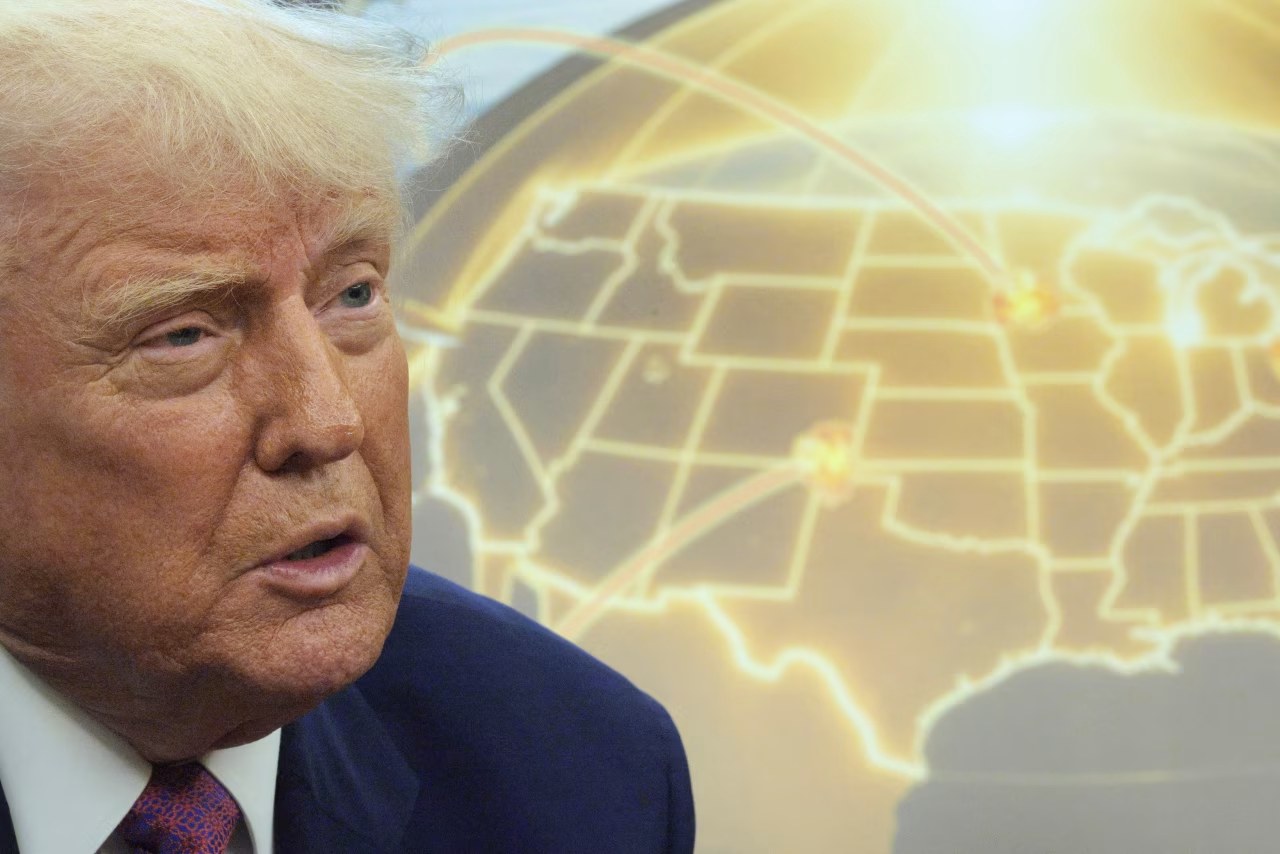
RAHM EMANUEL—President Trump’s May 20 unveiling of a colorful ‘Golden Dome’ missile-defense schematic inside the Roosevelt Room was classic showmanship, but it landed the same week Rahm Emanuel’s op-ed urged Democrats to replace anti-Trump slogans with a coherent global strategy. The juxtaposition exposes an inconvenient asymmetry: Republicans now link national defense to energy dominance, while leading Democrats avoid spelling out how they would keep gasoline affordable and Asian allies supplied if Gulf tankers are threatened.
Emanuel’s March 14 piece, titled “Opposing Trump Isn’t a Global Strategy,” correctly diagnoses the party’s weakness on national security. Yet the 1,100-word roadmap devotes zero sentences to hydrocarbon production, zero to pipeline permitting, and zero to the Strategic Petroleum Reserve. In a mid-term cycle where 42 percent of independents told a March CNN poll they trust Republicans more on ‘ensuring reliable energy,’ the omission is politically radioactive.
This article dissects what Emanuel left unsaid—and why party strategists fear reopening the climate-versus-jobs rift that cost them House seats in 2022.
Why Energy Became the Third Rail for Democrats
From the 2021 methane-rules rollback to the 2023 Willow-project showdown, every major fossil-fuel decision has split the Democratic coalition between climate activists and union building-trades members. Rahm Emanuel’s op-ed steers clear of that minefield, but history shows avoidance carries its own price. In 1976, strategist Pat Caddell persuaded Jimmy Carter to speak openly about a ‘moral equivalent of war’ on energy dependence; Carter’s poll numbers jumped 11 points among swing voters in a month, according to University of Virginia Miller Center archives. By contrast, when Democrats in 2010 shelved a Senate energy bill after the BP spill, they lost 63 House seats partly because voters perceived inaction on $3 gasoline.
Today’s numbers are starker. A February Gallup survey found 58 percent of Americans prioritise ‘increasing domestic energy production’ over ‘reducing carbon emissions,’ the widest gap since the question debuted in 2014. Among Hispanic men—a 2026 battleground cohort—concern about fuel costs outranks climate by 22 points. ‘Any national-security document that ignores the price at the pump is writing an opposition ad for the other side,’ says Dr. Mark Jones, political scientist at Rice University’s Baker Institute. He points to Nevada, where pump prices hover near $4.30 a gallon, as a state Democrats must defend yet where Emanuel-style climate caution alienates mining and tourism workers.
The omission is more glaring because the Biden administration’s own National Security Strategy lists ‘energy security’ as a first-tier interest. Pentagon planners count 5.6 million barrels of oil transiting the Strait of Hormuz daily—oil that fuels not just U.S. commuters but Japan’s Self-Defense Forces and South Korea’s export machine. A senior Senate Armed Services Committee staffer, granted anonymity to speak candidly, says Democrats ‘can’t credibly argue for a tougher Iran posture while signalling we’ll choke off the very supply routes our allies rely on.’
Emanuel’s regional sketches—more naval presence in the Indo-Pacific, rebuilding European alliances, conditional aid to the Middle East—therefore rest on an unstated assumption: somebody else will guarantee cheap energy. That somebody increasingly looks like U.S. shale producers, yet mentioning them collides with the party’s 2024 platform pledge to ‘halve new drilling permits on federal lands.’ The tension explains why the word ‘fracking’ appears nowhere in the op-ed, despite Pennsylvania’s Marcellus output having surged 32 percent since 2019, according to the Energy Information Administration.
Forward-looking Democrats privately hope technology can square the circle: small-modular-nuclear reactors, geothermal, hydrogen. Yet those solutions remain pre-commercial. Princeton’s REPEAT study projects that even aggressive deployment will meet only 34 percent of U.S. industrial heat demand by 2035. In the interim, Asian allies are—per the rebuttal—‘dependent on energy from the Middle East and the U.S.’ Ignoring that timeline invites Republican ads picturing closed pipelines and shuttered factories, a narrative already tested in Ohio’s 2024 Senate race that helped flip that seat red.
Europe’s Green Pivot and the Lesson Democrats Spurn
Emanuel praises NATO unity but omits the energy backdrop that nearly fractured it. Between 2011 and 2021, the European Union shut 58 coal plants and phased out German nuclear, betting on Russian gas as a ‘bridge fuel.’ The bet collapsed when Moscow slashed flows in 2022, pushing European natural-gas prices to an eye-watering $100 per barrel of oil equivalent—six times the U.S. Henry Hub benchmark. Eurostat data show EU industrial production fell 7.4 percent from 2021 to 2023; chemical giant BASF recorded a €2.7 billion loss in 2023, its first since World War II, and blamed ‘unsustainable energy costs.’
‘Democrats who point to Europe as the climate model are pointing to a cautionary tale,’ says Dr. Karen Smith, senior research fellow at the Oxford Institute for Energy Studies. She notes that EU carbon emissions actually rose 0.8 percent in 2023 because utilities rebooted idle coal plants. Meanwhile, U.S. LNG exporters grabbed market share: American shipments to Europe jumped from 28 billion cubic meters in 2021 to 56 bcm in 2023, according to the International Energy Agency.
The geopolitical irony is rich. European governments now subsidise floating LNG terminals at a cost exceeding €15 billion—money that could have financed 20 GW of new nuclear reactors. Instead, Paris and Berlin are lobbying Washington to extend deadlines for the phase-out of legacy car engines, effectively conceding that hydrocarbons will remain indispensable. Democratic strategists mindful of Midwest auto workers have noticed: a 2024 memo from the BlueGreen Alliance urged candidates to pair EV incentives with ‘responsible’ natural-gas infrastructure, language that mirrors Emanuel’s silence on supply chains.
Yet the party’s progressive wing remains unmoved. Sunrise Movement co-founder Varshini Prakash told POLITICO in April that ‘any expansion of fossil-fuel infrastructure is a red line.’ The absolutist stance boxes Democrats into a corner: if they acknowledge Europe’s gas dependency, they must also explain why U.S. drilling is preferable to Russian pipelines—an argument that infuriates climate donors who bankrolled 2024 House races. Emanuel, ever the tactician, simply avoids the topic, leaving the impression that alliances can be sustained without addressing the molecules that literally fuel them.
The electoral math is unforgiving. Industrial states like Michigan and Wisconsin lost a combined 18,000 manufacturing jobs in 2023, according to Bureau of Labor Statistics data; local Democrats attribute part of the slide to high electricity prices linked to pipeline constraints. A forward-looking party platform would commit to ‘all-of-the-above’ energy measured by reliability, affordability, and emissions intensity—not fuel type. Until then, Emanuel’s silence cedes the economic-security high ground to Republicans who brandish pipeline hard-hats at campaign rallies.
China’s Coal Surge and the Credibility Gap
While Democrats debate methane-emission standards, China is commissioning a 1,000-MW coal unit every five days, according to Global Energy Monitor data. The 306 plants under construction or permitted will add 427 GW of coal capacity—more than the entire U.S. fleet. Beijing’s logic is ruthlessly strategic: every gigawatt of domestic coal reduces reliance on seaborne LNG, freeing Chinese cash to lock up long-term contracts in Qatar and Mozambique. The outcome is a two-tier world where American allies pay scarcity prices for energy while China stockpiles cheap electrons.
Emanuel’s op-ed calls for ‘pushing back on China’s assertiveness’ in the Indo-Pacific, yet offers no energy dimension. That omission undercuts U.S. credibility when Secretary of State Antony Blinken lectures ASEAN ministers about ‘rules-based order.’ Indonesia’s president, Joko Widodo, politely responded that ‘development is our first human right,’ code for ‘we need affordable fuel.’ Jakarta is moving ahead with 15 GW of new coal and a 200,000-barrel-per-day refinery in partnership with Sinopec—projects that dwarf U.S. renewable-aid programs.
‘You can’t ask Asian allies to pick a side while signalling you’ll restrict the energy supply they need to grow,’ says Dr. Li Yan, deputy director of the National University of Singapore’s Energy Studies Institute. She notes that Japan and South Korea still import 84 percent of their oil through the South China Sea. Any U.S. security pledge therefore hinges on keeping those sea lanes open for hydrocarbons, not silicon wafers.
Democrats have tools: expedited permits for LNG terminals, streamlined Jones-Act waivers, a revived Trans-Arabian pipeline study. None surface in Emanuel’s framework. The silence reinforces Republican talking points that ‘climate ideology’ weakens U.S. leverage. In April, House GOP leadership circulated a one-page memo titled ‘Energy = Deterrence’ citing China’s coal spree; it is now central to campaign ads in four swing districts held by freshman Democrats. Until party thought-leaders confront the supply-demand imbalance, their China policy will sound like a sermon delivered to an energy-starved congregation.
Is Immigration the Other Missing Pillar?
Emanuel’s op-ed ends with a flourish about ‘re-energizing alliances,’ yet migration pressures are quietly reshaping every theater he names. The UN counts 114 million displaced people, a record high. Iran’s proxy conflicts have pushed 8.2 million Syrian and Iraqi refugees toward Turkey and Jordan; instability in the Sahel is funnelling 400,000 migrants annually into Libya, the embarkation point for Europe. Meanwhile, U.S. Customs and Border Protection apprehended 2.1 million migrants at the southwest border in fiscal 2024, the second-highest total ever. These flows feed authoritarian narratives that ‘open-border liberals’ can’t manage global disorder.
Emanuel, who once championed comprehensive reform as a congressman, now avoids the topic, cognizant that House Democrats are split between border-hawk front-liners and progressive caucus members who decriminalise unauthorised entry. The strategic cost is visible in NATO capitals where populist parties weaponise migration fears to dilute support for Ukraine aid. In Germany, the AfD party surged to 22 percent in Thuringia’s 2024 election by linking fuel inflation to ‘uncontrolled immigration.’
‘Security policy without migration policy is like a roof without walls,’ says Meghan Curran, deputy director of the Migration Policy Institute Europe. She notes that Emanuel’s proposed ‘Indo-Pacific Quad-plus’ format could founder if India perceives U.S. Democrats as soft on illegal migration; New Delhi already bristles at State Department criticism over Manipur riots.
A forward-looking Democratic strategy would couple border enforcement with targeted legal pathways—mirroring the 2013 Gang of Eight bill that Emanuel once praised. Instead, the party’s 2025 Senate campaign arm has advised candidates to pivot to ‘energy jobs’ when immigration arises, reinforcing the perception of avoidance. Until Democrats reconcile humanitarian values with border reality, their national-security doctrine will read like a blueprint with half the pages missing.
Crafting a Strategy That Passes the 7-Second Ad Test
Political consultants warn that if a campaign theme cannot be explained in seven seconds, it fails. Republicans have a bumper-sticker: ‘Drill, Build, Defend.’ Democrats have a flow chart. Emanuel’s op-ed crystallises the dilemma: sophisticated regional nuances that thrill Council on Foreign Relations audiences collapse into ‘weak on China, weak on borders, weak on gas prices’ once processed by the average voter.
To regain credibility, party centrists are circulating a one-pager titled ‘Security Through Abundance’ that would commit to: (1) accelerating LNG export permits to allies within 90 days; (2) restoring $90 billion in inflation-adjusted defense sequester cuts; (3) creating a standing parole visa for 50,000 seasonal workers to blunt cartel trafficking; (4) fast-tracking small-modular-nuclear licensing. The document borrows from the 2022 bipartisan CHIPS Act model: subsidies tied to domestic production milestones.
‘We can’t let perfect be the enemy of credible,’ says Representative Elissa Slotkin, Michigan Democrat and Senate hopeful, who wants party leadership to embrace an ‘all-fuels’ plank by December. Her internal polling shows a 17-point swing toward Democrats among union households when they hear a message coupling energy independence with alliance strength.
Whether Rahm Emanuel—once the party’s enforcer—will risk alienating green donors to endorse such pragmatism remains uncertain. What is clear: opposing Trump is not a global strategy, but neither is a global strategy that ignores the molecules and migrants shaping the world. Democrats have six months before primary filing deadlines to decide if they want a platform that can survive a 30-second attack ad—or another cycle explaining what they left out.
Frequently Asked Questions
Q: What is Rahm Emanuel’s core argument in the WSJ op-ed?
Emanuel contends that Democrats must present a proactive national-security doctrine rather than only criticising President Trump’s process for waging war in Iran, or they will appear rudderless to swing voters in 2026.
Q: Why does the author believe Emanuel dodged energy policy?
The rebuttal argues that any credible US global strategy must champion abundant, secure hydrocarbons at home and abroad; Emanuel’s silence leaves Democrats vulnerable to voter backlash over high gasoline prices and industrial competitiveness.
Q: How does Trump’s Golden Dome plan fit the debate?
Trump used the May 20, 2025, rollout of his missile-shield map to frame energy security as a defense issue—linking Iranian threats to the free flow of Gulf oil—forcing Democrats to clarify how they would protect supply routes without expanded drilling.
