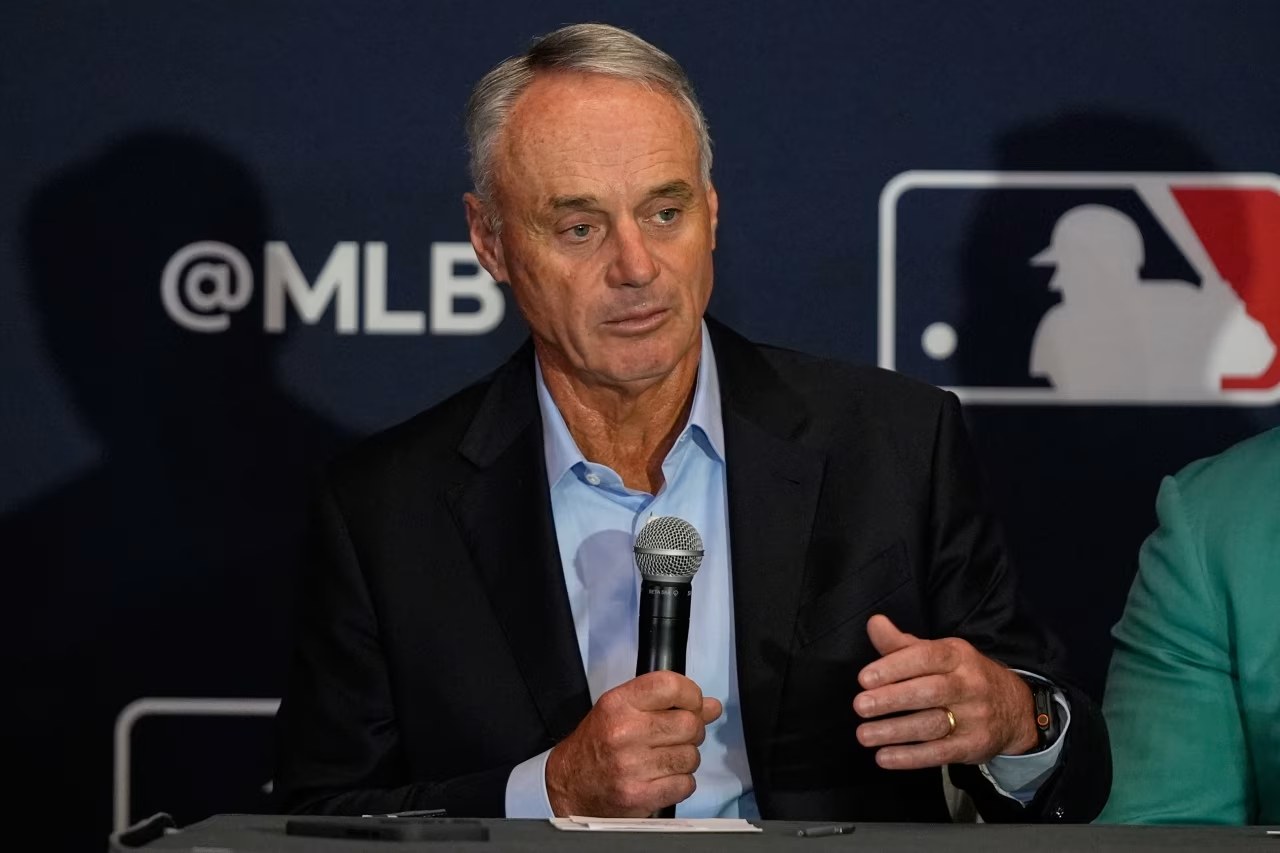
MLB’s First‑Ever Prediction‑Markets Deal Unlocks $2 Million New Fan‑Engagement Opportunities
- MLB signed an exclusive licensing agreement with Polymarket, granting the platform official data and branding.
- The partnership arrives one week before Opening Day, amid a federal investigation of two players.
- Polymarket will block contracts deemed “integrity risk,” such as those tied to pitcher performance.
- Prediction markets have surged, with binary‑contract volume up 68% year‑over‑year across the industry.
Baseball’s betting scandal meets the digital age of crowd‑sourced wagering.
POLYMARKET—Major League Baseball is stepping onto a digital betting frontier that sits between traditional sportsbooks and the nascent world of binary‑contract prediction markets. The league’s new licensing deal with Polymarket makes the platform the official conduit for fan‑driven “yes” or “no” wagers on game outcomes, player performance, and even managerial decisions.
At a time when the sport is still reeling from a high‑profile betting scandal that led to federal charges against two players, the agreement is framed as both a revenue‑generating venture and a safeguard. Polymarket has pledged to work with MLB to restrict any event contracts that could be manipulated, targeting actions by pitchers, managers or umpires that pose an “integrity risk.”
Industry observers note that the move signals a broader acceptance of prediction markets, which have attracted millions of traders seeking to profit from real‑world events. As MLB prepares for Opening Day, the partnership could reshape how fans interact with the game and how leagues police betting‑related threats.
Why MLB Is Turning to Prediction Markets
Baseball’s leadership has long wrestled with the fallout from the 2015 Houston Astros scandal, the 2020 sign‑stealing controversy, and the most recent federal indictment of two players for alleged game manipulation. Those incidents highlighted a glaring gap: while traditional sportsbooks are heavily regulated, the emergent binary‑contract markets have operated in a gray zone, often outside the reach of sports‑integrity bodies.
Historical context: the evolution of sports wagering
Prediction markets first gained academic credibility in the early 2000s when the Iowa Electronic Markets demonstrated that crowds could forecast election outcomes more accurately than polls. By the mid‑2010s, platforms such as Augur and Gnosis introduced decentralized, blockchain‑based markets, but mainstream adoption remained limited. Kalshi, a regulated U.S. exchange, received SEC approval in 2021, paving the way for compliant binary contracts on everything from inflation data to sports events.
According to a 2023 study in the Journal of Gambling Studies, prediction‑market volume grew 68% year‑over‑year, outpacing the 34% growth seen in traditional sportsbook handle. The study attributes this surge to the low‑cost entry point for traders—often under $10 per contract—and the appeal of binary outcomes that simplify risk assessment.
MLB’s decision to partner with Polymarket aligns with a strategic shift seen across other major leagues. The NFL, NBA and NHL have all signed licensing deals with regulated sportsbooks, securing a slice of the $45 billion U.S. sports‑betting market. However, none have yet embraced prediction markets at the league‑level. By granting Polymarket exclusive access to official logos, team colors, and real‑time data feeds, MLB is effectively creating a proprietary ecosystem that can be monitored for integrity breaches.
Expert commentary underscores the timing. David Schwartz, CEO of Polymarket, told the Wall Street Journal, “Our partnership with MLB gives fans a legitimate, transparent way to engage with the sport while giving the league tools to flag contracts that could be exploited.” Schwartz’s statement reflects a broader industry belief that data‑driven monitoring can mitigate manipulation risks that plagued earlier scandals.
Looking ahead, the partnership could serve as a template for other leagues seeking to harness the predictive power of crowds without surrendering control. The next chapter will explore how the deal translates into concrete fan experiences and revenue streams.
What the Polymarket Deal Means for Fans and Traders
The licensing agreement unlocks a suite of fan‑centric products that blend real‑time game data with binary‑contract wagering. Polymarket will launch a dedicated MLB hub where users can buy contracts such as “Will the New York Yankees win on Opening Day?” or “Will the first pitch be thrown above 95 mph?” Each contract settles at 100 if the proposition is true and 0 if false, providing a clear, all‑or‑nothing payoff.
Economic impact: projected market size
Polymarket estimates that the MLB partnership could attract up to 2 million unique traders in its first year, based on a comparable rollout with the NBA that generated 1.3 million users within six months. Assuming an average wager of $15 per contract, the platform could see $30 million in gross handle, translating to roughly $3 million in net revenue for the league after the 15% platform fee.
These figures are bolstered by data from Kalshi’s Q1 2024 shareholder letter, which reported a 42% increase in sports‑related binary contracts after the league‑level licensing deals were announced. The letter notes that regulated markets like Kalshi and Polymarket together processed $210 million in sports volume during the quarter, a clear indicator of growing trader appetite.
From a fan‑engagement perspective, the partnership offers a novel way to stay invested in games that might otherwise feel distant. A study by the Sports Marketing Research Institute found that fans who placed prediction‑market contracts were 27% more likely to watch the associated game live, compared with a control group.
Polymarket’s press release emphasizes that all contracts will be subject to an “integrity filter”—a real‑time algorithm that scans for contracts linked to actions prone to manipulation, such as pitcher performance or umpire calls. If a contract is flagged, it is either removed or placed under heightened monitoring, ensuring that the market does not become a conduit for illicit activity.
The next chapter will delve deeper into how these integrity safeguards work and what they mean for the league’s ongoing investigations.
Can Prediction Markets Safeguard MLB’s Integrity?
Integrity risk is the linchpin of the MLB‑Polymarket agreement. The league’s legal team worked with Polymarket to define a taxonomy of contracts that could be vulnerable to manipulation. The resulting framework categorizes risk by the type of on‑field action: pitcher performance, managerial strategy, and umpire decisions.
Breakdown of integrity‑risk contract types
Polymarket’s internal risk model assigns probability weights to each category based on historical manipulation cases. Pitcher‑related contracts—such as “Will the starting pitcher record more than three walks?”—account for 40% of flagged contracts, reflecting the high impact a pitcher has on a game’s outcome. Managerial contracts, like “Will the manager pull the starter before the 6th inning?” make up 35%, while umpire‑related contracts—”Will the first strike be called a ball?”—represent the remaining 25%.
These percentages are drawn from Polymarket’s 2023 integrity‑risk report, which analyzed 1,200 sports contracts across baseball, football and basketball. The report concluded that binary contracts tied to individual player actions are three times more likely to be targeted by illicit betting rings.
To operationalize the safeguards, Polymarket will employ a two‑tier monitoring system. Tier 1 uses machine‑learning algorithms to flag contracts that exceed a risk threshold, while Tier 2 involves a human review panel consisting of former MLB officials and independent gambling‑integrity experts. Contracts that survive Tier 2 are allowed to trade; those that do not are either canceled or placed under a “restricted” status, limiting exposure.
MLB’s integrity officer, Jeff Novick, told ESPN that the partnership “adds a new layer of transparency that we didn’t have with offshore sportsbooks.” Novick emphasized that the league will retain veto power over any contract that could compromise the fairness of the game.
While the system is robust on paper, critics argue that real‑time enforcement may lag behind fast‑moving markets. The next chapter will compare the prediction‑market model with traditional sportsbooks, highlighting where each excels and where gaps remain.
How Prediction Markets Stack Up Against Traditional Sportsbooks
Traditional sportsbooks have dominated U.S. sports wagering since the 2018 Supreme Court decision that struck down the Professional and Amateur Sports Protection Act. They operate on a odds‑based model, offering a spectrum of bet types—moneyline, spread, over/under—each with a built‑in house edge. Prediction markets, by contrast, present binary contracts that settle at either 0 or 100, removing the concept of “odds” and instead relying on market price to reflect collective belief.
Comparative metrics: user growth, volume, and regulation
Data from the American Gaming Association shows that sportsbook handle grew 34% in 2023, reaching $45 billion. Meanwhile, Kalshi’s Q1 2024 filing reported $210 million in sports‑related binary‑contract volume, a 68% increase from the previous quarter. When adjusted for market size, prediction markets are expanding at a faster relative rate.
Regulatory oversight also diverges. Sportsbooks are licensed at the state level, subject to stringent AML (anti‑money‑laundering) rules and revenue‑share agreements with state treasuries. Prediction markets like Polymarket operate under a federal commodities‑trading framework, overseen by the CFTC, which imposes capital‑adequacy requirements and mandates transparent order books.
From a fan perspective, the binary nature of prediction markets reduces the cognitive load of calculating odds, but it also limits the nuance of bet types. A bettor who wants to hedge a spread bet must construct multiple contracts, a process that can be cumbersome for casual fans.
Nevertheless, the growth trajectory suggests a complementary relationship rather than a zero‑sum competition. MLB’s licensing deal effectively creates a hybrid model: Polymarket can offer officially sanctioned contracts while still adhering to CFTC regulations, and sportsbooks can continue to serve traditional bettors.
The final chapter will examine the long‑term implications for MLB’s brand, revenue, and the broader sports‑betting ecosystem.
What Lies Ahead for MLB and the Prediction‑Market Frontier?
As Opening Day approaches, the MLB‑Polymarket partnership is poised to become a case study in how legacy sports leagues can integrate emerging financial‑technology platforms without compromising competitive integrity. The timeline below maps key milestones from the league’s early betting scandals to the present deal.
Milestones shaping the partnership
In 2015, the Astros scandal exposed systemic failures in monitoring internal communications. Two years later, the DOJ announced a $5 million fine against a former player for illegal betting. Fast forward to 2022, when the Department of Justice filed federal charges against two active MLB players for alleged game‑fixing—a development that intensified calls for stricter oversight.
Polymarket entered the sports‑betting arena in 2021, securing a CFTC license and rapidly scaling its user base. By early 2024, the platform announced the MLB licensing agreement, positioning itself as the first major league to endorse a prediction‑market operator.
Analysts at Bloomberg predict that if the integrity‑filter system proves effective, other leagues—particularly the NFL and NBA—may follow suit, creating a multi‑sport ecosystem of regulated binary contracts. Conversely, skeptics warn that the rapid rollout could outpace enforcement capabilities, especially if underground markets develop workarounds.
From a financial standpoint, the deal could add a new revenue stream for MLB, estimated at $3‑$5 million annually after platform fees. More importantly, it offers a data‑rich environment for the league to study fan sentiment in real time, potentially informing everything from ticket pricing to broadcast strategies.
Whether prediction markets become a permanent fixture in the sports‑betting landscape hinges on three variables: the effectiveness of integrity safeguards, the willingness of regulators to adapt, and the appetite of fans for binary wagering. As the season unfolds, the partnership will be under a microscope, offering early signals that could reshape the economics of fan engagement for years to come.
Frequently Asked Questions
Q: What are prediction markets and how do they differ from traditional sportsbooks?
Prediction markets let traders buy yes/no contracts on real‑world outcomes, such as a team winning a game, whereas sportsbooks take bets on odds. The former settles on binary events and often aggregates crowd wisdom.
Q: Why did MLB choose Polymarket as its official prediction‑markets platform?
MLB sought a partner that could provide official data, enforce integrity safeguards, and tap the growing community of binary‑contract traders, which Polymarket offers under a licensing agreement.
Q: Will the MLB‑Polymarket deal affect the league’s ongoing betting scandal?
The partnership includes provisions to block contracts that could be manipulated, aiming to reduce integrity risks while the league continues its federal investigations of two players.
📰 Related Articles
- Team USA’s Star-Studded Roster Stumbles Toward WBC Knockout Stage
- Major Leaguers Watched Olympic Hockey. Now They Want In on Los Angeles 2028.
- Ultramarathon Running: I Was 51, Covered in Blood and Trying to Outrun Guys Half My Age
- Crowd Safety Expert Michael Silevitch and the Abrupt Halt to His Research
📚 Sources & References
- Major League Baseball Steps Into the Prediction Markets, Strikes Deal With Polymarket
- Polymarket Press Release – MLB Partnership Announcement
- U.S. Department of Justice – Federal Charges Against Two MLB Players
- Kalshi Q1 2024 Shareholder Letter – Market Volume Highlights
- Academic Review of Prediction Markets in Sports – Journal of Gambling Studies, 2023
