IEA Orders 400-Million-Barrel Reserve Release and Tells 1 Billion Commuters to Fly Less, Share Rides and Work Remotely
- International Energy Agency asks households and firms to adopt immediate demand curbs including tele-work and carpooling.
- Member countries approved a 400-million-barrel emergency draw, largest since the Agency’s founding.
- IEA says behavioural changes could cut global oil demand 6 % within four months, cushioning price shocks.
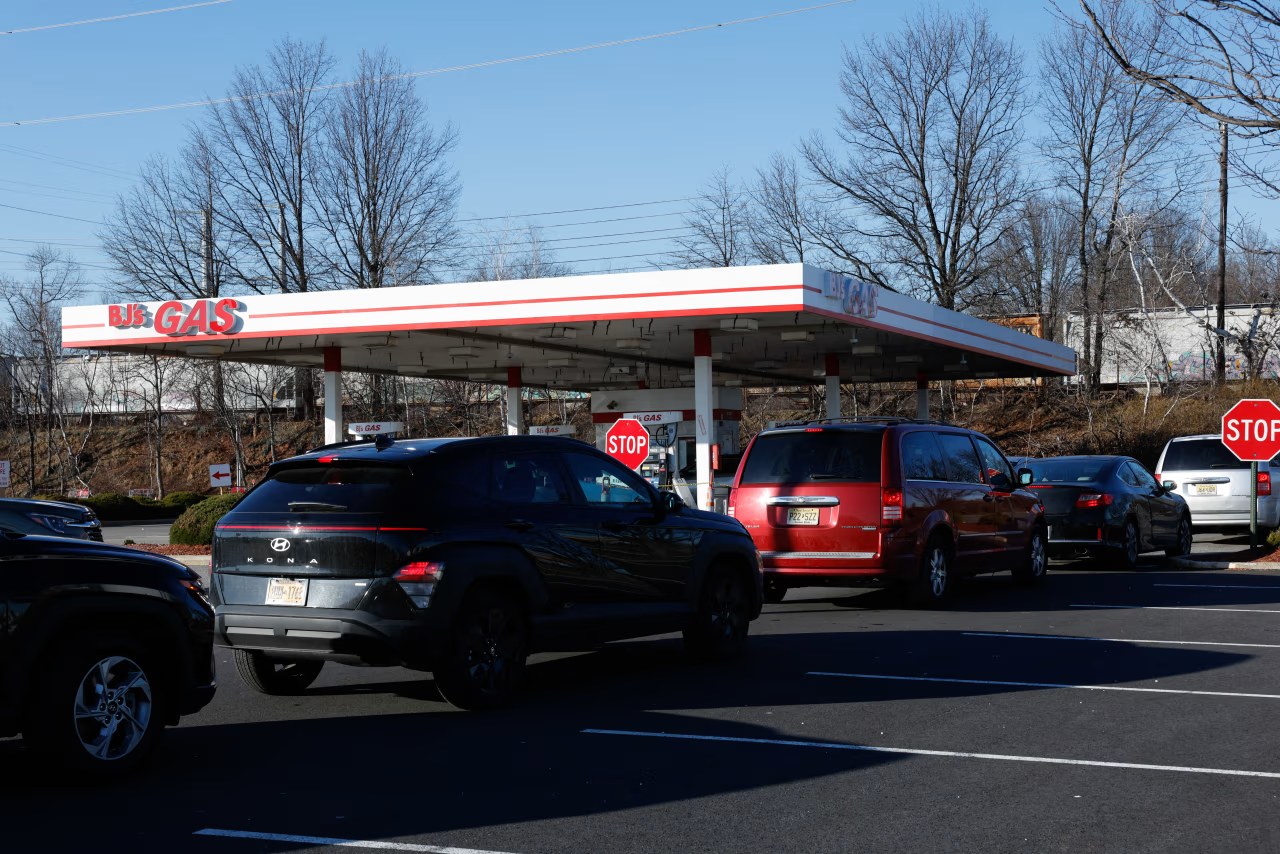
- Gasoline prices in the U.S. have surged above $4 per gallon in seven states this week.
Consumer actions seen as critical buffer while supply restocks
NEW YORK—Paris—The International Energy Agency on Wednesday urged one billion daily commuters to fly less, share rides and resume pandemic-era remote work, warning that only simultaneous supply and demand action can tame the fastest oil-price rally since 2008. The call accompanies a record 400-million-barrel release from government stockpiles, an amount equal to four days of global consumption.
“Every kilometre not driven and every seat filled counts,” IEA Executive Director Fatih Birol told reporters, estimating that behavioural measures could strip 6 % from world demand—roughly six million barrels per day—within four months. The agency’s 31 member states, which include the United States, Germany and Japan, endorsed the plan after Brent crude jumped 30 % in three weeks to $115 a barrel.
The recommendations mark a rare moment when a supply-side body puts voluntary conservation on par with strategic stock draws. Analysts say the shift reflects both limited spare production capacity and the political limits of further OPEC pleas. U.S. retail gasoline now averages $4.17, the highest nominal price since 2012, and California drivers paid $5.45 on Monday, according to AAA.
The 400-Million-Barrel Gambit: Anatomy of the Largest Stock Release in IEA History
Never in 48 years had the International Energy Agency tapped its members’ tanks on this scale. The 400-million-barrel figure, agreed by energy ministers during a hastily convened video call, eclipses the 60-million-barrel release after Libya’s 2011 civil war and the 120-million-barrel draw during the 1991 Gulf War. Together, the U.S. will contribute 240 million barrels, Europe 100 million and Asia-Pacific 60 million, with deliveries staggered over the next six months.
Why such a large volume now?
Global commercial inventories have fallen for six consecutive quarters to 2.6 billion barrels, the lowest since 2004, according to IEA data. Meanwhile, Russia’s invasion of Ukraine removed roughly one million barrels per day of seaborne crude from the market and threatens up to three million more if European sanctions tighten. With OPEC+ spare capacity estimated at just 2.3 million b/d—mostly in Saudi Arabia and the UAE—IEA modellers concluded that only a simultaneous demand drop could prevent triple-digit prices from derailing the post-pandemic recovery.
“The release is designed to bridge a supply gap, not subsidise low prices,” said Kevin Book, managing director at ClearView Energy Partners. Book calculates that every 100 million barrels injected into the market knocks $7–$9 off Brent futures in the first month, but the effect fades unless accompanied by demand restraint. The agency’s own 2021 report found that tele-work policies adopted during Covid-19 cut OECD gasoline consumption 4.5 % in April 2020, a level of curtailment now being explicitly sought again.
Historical precedent bolsters the strategy. During the 1979 Iranian revolution, Washington ordered federal agencies to reduce vehicle fleets 20 % and encouraged car-free Sundays; U.S. gasoline demand fell 11 % within six months and prices plateaued. Yet the current plan faces a sterner test: today’s global economy is 60 % more oil-intensive in aviation and petrochemicals than four decades ago, meaning behavioural savings must scale faster.
The market reaction so far is cautious. Brent futures dipped $2.40 on the announcement but still trade 25 % above January levels. Traders note that the first 60 million barrels will not reach refineries until late May, leaving the near-term balance tight. Forward curves remain in steep backwardation, a signal that prompt barrels command a premium. If member states deliver on schedule and consumers heed the conservation plea, the IEA estimates prices could retreat 15 % by the fourth quarter.
Remote Work Redux: Can Keyboards Replace Crude at Scale?
The IEA’s plea revives a policy that slashed fuel use during the pandemic. In April 2020, half of OECD workers logged in from home, erasing 5.2 million b/d of petroleum demand, according to Stanford economist Nicholas Bloom. The agency now wants firms to reinstate at least three remote days per week for 25 % of eligible staff, a move it says would cut commuting fuel 1.5 million b/d in the United States alone.
Which sectors respond fastest?
Tech and finance lead adoption: Google, Apple and JPMorgan already allow two-day hybrid schedules. A permanent three-day rule at those three firms affects 540,000 commuters who drive an average 28 miles round-trip. Multiplying by fleet efficiency data from the U.S. EPA, the switch saves 42,000 b/d—more than the daily output of Alaska’s North Slope. European banks are moving too; HSBC told 85,000 U.K. staff they may work remotely indefinitely, trimming corporate travel budgets 30 %.
Resistance remains in manufacturing and retail, where only 8 % of tasks can be performed remotely, Brookings finds. Yet the IEA argues that even partial adoption matters because transport accounts for 60 % of OECD oil demand. A 2021 MIT study found that each remote workday cuts personal gasoline consumption 20 %, while carpooling or transit on remaining office days amplifies savings. “The aggregate effect is non-linear,” said MIT energy professor Jessika Trancik. “If one household works from home, one parking space frees up; if ten do, companies can close whole floors and reduce HVAC energy.”
Policy design will decide uptake. The Netherlands offers tax credits worth €2 per remote day, while California’s proposed Senate Bill 260 mandates state agencies to identify 30 % of positions eligible for tele-work within 90 days. The IEA wants G-7 members to adopt similar targets within a month, arguing that behavioural incentives are faster to deploy than infrastructure upgrades. Early movers see upside: insurer Nationwide says its permanent remote model has saved $80 million annually in real-estate costs while cutting employee fuel use 40 %.
Critics warn equity gaps could widen. Only 37 % of U.S. workers hold jobs compatible with remote work, and they earn 58 % more than in-person roles on average, according to the Federal Reserve Bank of St. Louis. Without targeted support, regressive impacts—higher energy bills for low-income households still commuting—could emerge. The agency recommends pairing conservation campaigns with direct rebates funded by emergency stock-sale proceeds, a mechanism last used in Sweden during the 1970s oil embargo.
Carpooling Economics: Can Sharing a Ride Offset $5 Gas?
U.S. average vehicle occupancy has languished at 1.6 passengers for two decades, creating a vast latent buffer against fuel shocks. The IEA wants states to raise occupancy to 2.0 on commuter routes, a shift that would eliminate 1.2 million b/d of gasoline demand—equal to the total output of the Permian Basin growth last year. At $4.50 per gallon, a two-person carpool splits a 40-mile commute cost of $9.20, saving each rider $1,200 annually.
What policies scale carpooling quickly?
High-occupancy vehicle (HOV) lanes remain the most effective nudge. Washington State’s I-405 saw average occupancy jump from 1.4 to 1.9 within 18 months of converting an existing lane to HOV-3, according to DOT data. Dynamic pricing on solo drivers during peak hours amplified the effect, cutting corridor fuel use 14 %. The IEA recommends that federal highway funds be contingent on metro areas adopting HOV-2 within 90 days, a legislative lever last proposed in the 2015 FAST Act but dropped amid car-industry lobbying.
Corporate ride-matching apps lower search friction. Microsoft’s internal platform, Ride, has matched 23,000 employees since 2020, raising average occupancy on its Redmond campus to 2.3 and saving an estimated 1.1 million gallons of gasoline. The company subsidises parking for carpools at twice the solo-driver rate, a policy the IEA wants codified into ESG disclosure rules. “Small incentives flip the default,” said Microsoft mobility director Katie Ross. “When we raised the parking fee for single occupancy from $3 to $7, carpooling doubled in six weeks.”
Behavioural science offers further tools. Stanford researchers found that simply showing drivers their percentile rank in vehicle occupancy relative to neighbours raised carpool rates 8 %. Push notifications timed to Friday evenings—when commuters plan the following week—proved twice as effective as Monday messages. The IEA suggests that public agencies replicate these nudges via SMS alerts linked to fuel-price spikes, funded by a fraction of the gasoline tax revenue that rises with prices.
Equity considerations again surface. Lower-income workers often hold shift-based jobs incompatible with ride-sharing schedules. Los Angeles Metro’s van-pool program subsidises 70 % of lease costs for groups of five or more, a model the IEA wants scaled nationally. Early data show each subsidised van removes an average 3.2 single-occupancy cars from the 405 corridor, generating $4.30 in congestion and pollution savings for every public dollar spent.
Skies in the Crosshairs: Why Aviation Is the IEA’s Next Target
Jet fuel accounts for just 8 % of global oil use, but it is the fastest-growing segment and the hardest to decarbonise. The IEA is asking consumers to eliminate one in five flights, a cut that would save 1.4 million b/d—more than the daily output of Qatar. Business travel remains the low-hanging fruit: McKinsey estimates 65 % of corporate trips never return post-pandemic, yet recent rebounds show leisure demand crowding runways.
Which routes face pressure?
Trans-Atlantic and intra-EU flights under 500 miles emit 30 % more CO₂ per passenger than rail, according to Eurocontrol. France last year banned domestic routes where train travel under 2.5 hours exists; the IEA wants Germany and Spain to follow, arguing that oil-price volatility strengthens the economic case. Short-haul cuts also free kerosene for long-haul sectors where no scalable alternative fuel yet exists. Each grounded 150-seat A320 from London to Amsterdam saves 5.3 barrels of jet fuel, enough to power a 777 from New York to London.
Corporate pledges are accelerating. Deloitte’s 2021 travel freeze cut 120,000 internal flights, saving 60,000 barrels of jet fuel. The IEA wants Fortune 500 firms to adopt internal carbon prices above $100 per ton—roughly 25 cents per gallon of jet—to internalise the oil-price risk. Airlines themselves are nudging passengers: Lufthansa’s “Green Fare” defaults to rail for connections under 300 km unless the traveller opts out, a choice-architecture tactic that raised rail share 12 % in six months.
Consumer apps add friction to booking. Sweden’s “Flygfritt” campaign signed 100,000 pledgers who promise to avoid one leisure flight per year; researchers at Chalmers University linked the pledge to a 9 % drop in domestic passenger counts. The IEA recommends that booking platforms display five-year fuel-price forecasts alongside ticket prices, a transparency measure modelled on cigarette health warnings. Early trials by Skyscanner showed a 4 % reduction in clicks on routes where fuel-price risk warnings appeared.
Yet rebound effects loom. Global jet-fuel demand in February hit 5.2 million b/d, only 12 % below 2019 levels, despite persistent business-travel gaps. IEA modelling shows that without policy intervention, aviation oil use will exceed pre-Covid levels by 2024, erasing savings from conservation elsewhere. The agency therefore wants governments to tie airline bail-out packages to capacity caps, a condition Canada imposed on Air Canada in 2020 but sunset after 18 months.
Can Behaviour Stick? Lessons from the 1970s and 2020
History offers a sobering guide: emergency conservation campaigns typically fade once prices retreat. After the 1973 embargo, U.S. gasoline demand fell 6 % within a year; by 1978 it had rebounded above pre-crisis levels. The pattern repeated in 2008 when $4 gasoline spurred tele-work and SUV sales collapsed—only for pickups to hit record highs in 2016. The IEA insists this time is different because climate regulations and ESG investing create lasting incentives, yet behavioural economists warn that price is a fickle motivator.
What makes habits endure?
University College London researchers found that new behaviours become automatic after 66 days on average. Pandemic work-from-home lasted 18 months for many knowledge workers, long enough to reset baseline expectations. Surveys by Pew show 61 % of U.S. employees who worked remotely during Covid want to continue, compared with 20 % pre-2020. The IEA wants governments to lock in gains by making remote work the legal default unless employers justify on-site presence, a policy Portugal enacted in 2021.
Social norms matter too. During Britain’s “Make Do and Mend” campaign of 1942, public shaming of fuel wasters cut household kerosene use 30 % even after rationing relaxed. The IEA’s public-awareness blitz features influencers cycling to work and CEOs Zooming into Davis, a tactic borrowed from Sweden’s “We Call It Care” anti-flying campaign that halved domestic passenger growth between 2018 and 2021. “The key is to make conservation identity-enhancing, not sacrificial,” said Hal Hershfield, professor of marketing at UCLA.
Technology infrastructure also determines persistence. Cities that added temporary bike lanes during Covid saw cycling rates stay 50 % above pre-pandemic levels if lanes were made permanent, a University of Lisbon study found. The IEA wants 5 % of stimulus funds devoted to cycling and car-pool lanes, arguing that sunk infrastructure costs anchor behaviour. Denver’s voter-approved 2021 tax package earmarks $35 million for protected lanes, projected to cut vehicle miles travelled 4 % in targeted corridors.
Yet rebound risk is real. IMF research shows every $10 drop in Brent adds 0.3 % to global oil demand within 12 months through income effects. Without complementary carbon pricing, behavioural gains erode. The IEA therefore recommends that governments pre-commit to maintaining fuel taxes at 40 % of retail price even if crude falls, a rule France adopted in 2014 and credited with keeping diesel demand flat while GDP grew 8 %.
Frequently Asked Questions
Q: Why is the IEA urging people to work from home?
Remote work cuts gasoline demand by 3–5 % on weekdays, according to IEA modelling, freeing barrels for power generation and aviation where no quick substitute exists.
Q: How big was the latest IEA oil release?
Member countries agreed to draw 400 million barrels—the largest coordinated stock draw since the Agency’s founding in 1974—equal to roughly four days of global consumption.
Q: Does carpooling really lower fuel use?
U.S. DOT data show two-person rides cut per-mile gasoline use 50 %; scaling average vehicle occupancy from 1.6 to 2.0 would trim U.S. oil demand 1.2 million b/d.
📰 Related Articles
- Eni Unveils €1.5 Billion Share Buyback Amid €1 Billion Capital Raise
- Iranian Missile Strike Forces Shell to Shut Down Qatar’s Pearl GTL Plant
- QatarEnergy Reports Ras Laffan Damage After Second Iranian Strike, Oil Surges Past $113
- Saudi Oil Price Spike Could Surpass $180 per Barrel if Energy Shock Lingers Past April
