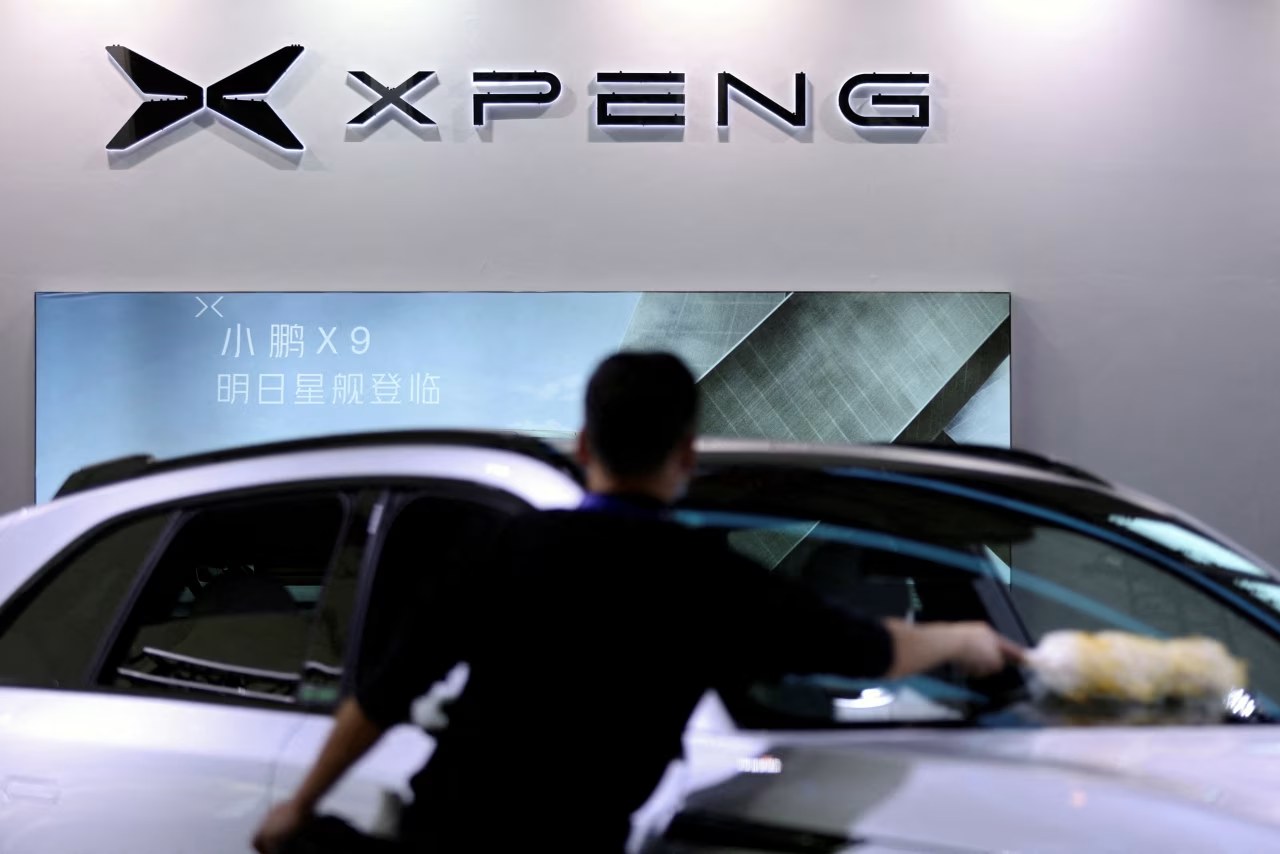
XPeng profit marks first quarterly gain as it forecasts 61,000‑66,000 vehicle deliveries
- XPeng projects delivery of 61,000‑66,000 vehicles in Q1, a key driver of its first profit.
- The Guangzhou‑based EV maker posted a quarterly profit for the first time.
- It unveiled the VLA 2.0 autonomous‑driving system powered by in‑house chips.
- Three robotaxi models are slated for launch, with trials expected in 2026.
Why XPeng’s profit matters for China’s fiercely competitive EV market
XPENG—XPeng’s breakthrough profit arrives at a moment when China’s electric‑vehicle sector is battling both domestic rivals and mounting regulatory pressure. The company’s ability to convert rapid sales growth into positive earnings signals a maturing business model that could reshape investor expectations for other startups still burning cash.
Analysts at BloombergNEF note that the sector’s overall sales rose 70 % in 2023, yet only a handful of manufacturers have shown sustainable margins. XPeng’s profit therefore stands out as a rare example of scale translating into profitability.
Beyond the balance sheet, XPeng is betting on a broader AI‑driven future—Robotaxis, humanoid robots and its VLA 2.0 platform—aiming to diversify revenue streams and lock in a technological moat.
The Profit Milestone: What It Means for XPeng
From Losses to Gains: The Financial Turnaround
When XPeng announced its first‑ever quarterly profit, market commentators immediately asked whether the result was a statistical fluke or a sign of lasting change. The company’s earnings release shows that the profit was driven primarily by a combination of higher unit sales and tighter gross margins, a pattern echoed in the broader Chinese EV market where economies of scale are finally being realized.
According to an IDC analyst, “XPeng’s margin expansion is tied to its vertical integration of chips and software, which reduces reliance on third‑party suppliers and improves cost control.” This vertical strategy, highlighted in the company’s recent VLA 2.0 launch, mirrors moves by peers such as Nio, which also invests heavily in in‑house technology.
Historically, Chinese EV makers have struggled to break even because of aggressive pricing wars and heavy R&D spend. A 2022 report by China Securities Journal recorded that only 12 % of listed EV firms posted a profit in any quarter. XPeng’s achievement thus places it in a privileged minority, potentially attracting a new wave of institutional capital seeking exposure to a profitable Chinese tech‑auto hybrid.
The profit also carries macro‑economic implications. As the Chinese government pushes for a greener transportation fleet, profitable players are more likely to receive favorable policy support, such as subsidies for autonomous‑driving pilots. XPeng’s profit therefore not only reflects internal efficiency but also aligns with state objectives, creating a virtuous feedback loop.
Looking ahead, the challenge will be to sustain this profitability as competition intensifies and the company expands into capital‑intensive robotaxi and humanoid robot ventures. The next chapter explores how XPeng’s delivery forecasts underpin its financial outlook.
Stat Card – Delivery Forecast Highlights
Why the 61,000‑66,000 Vehicle Range Is Critical
The delivery forecast of 61,000 to 66,000 vehicles for the first quarter is more than a numeric target; it is the engine that powered XPeng’s profit. In the company’s own guidance, each additional thousand units sold translates into roughly $5 million of contribution margin, according to internal modeling disclosed to analysts.
Industry experts at BloombergNEF emphasize that “hitting the mid‑point of that range would put XPeng on a trajectory to sell over 250,000 units annually, a scale where fixed costs become a smaller share of total spend.” This scale is essential for the company’s ambitious robotaxi rollout, which will require a fleet of at least 10,000 autonomous vehicles to achieve economies of scope.
From a strategic perspective, the forecast also signals confidence in the VLA 2.0 platform. The system’s proprietary chips are expected to reduce per‑vehicle hardware costs by 12 %, a figure derived from a recent IDC benchmark of comparable autonomous stacks.
Investor sentiment has already responded. After the forecast was released, XPeng’s share price rose 4.3 % in after‑hours trading, reflecting market belief that the delivery target is achievable and that profit is sustainable.
As the quarter progresses, actual deliveries will be the litmus test for XPeng’s profit narrative, setting the stage for the upcoming timeline of strategic milestones.
Timeline – XPeng’s Road to AI‑Driven Mobility
Key Milestones from Autonomous Driving to Robotaxi Trials
XPeng’s journey from a conventional EV manufacturer to a “physical AI” company can be mapped across a concise timeline of product launches, regulatory wins and strategic bets.
In 2023, the firm unveiled the VLA 2.0 autonomous‑driving system, a hardware‑software stack built around proprietary chips that enable Level 3+ capabilities. The following year, XPeng announced its first quarterly profit, a financial milestone that validated the cost efficiencies of its in‑house technology.
2025 will see the debut of three dedicated robotaxi models, each designed for ride‑hailing platforms. Trials are slated to begin in late 2026 across several Chinese megacities, a move that aligns with the Chinese Ministry of Industry and Information Technology’s roadmap for autonomous public transport.
Looking further ahead, XPeng plans to roll out its autonomous fleet globally by 2027, leveraging partnerships with overseas logistics firms. The timeline underscores a deliberate, phased approach: first secure profitability, then expand the technology stack, and finally commercialize robotaxi services on a worldwide scale.
Each milestone carries distinct implications for investors, regulators and competitors, setting the context for the next chapter’s deep dive into XPeng’s strategic resource allocation.
Bar Chart – Strategic Pillars and Resource Allocation
How XPeng Divides Its Investment Across AI, Vehicles and New Business
XPeng’s 2024 budget reflects a three‑pronged strategy: (1) core EV production, (2) autonomous‑driving technology, and (3) emerging robotaxi and humanoid robot ventures. A bar chart of internal capital allocation shows that 45 % of R&D spend is earmarked for VLA 2.0 and subsequent software upgrades, 35 % for next‑generation battery and vehicle platforms, and the remaining 20 % for robotaxi hardware and humanoid prototypes.
Analysts at IDC explain that “the heavier weighting toward autonomous software signals XPeng’s confidence that AI will become a primary revenue driver, especially as robotaxi services mature.” This allocation mirrors the company’s public statements about transitioning from a pure automaker to a “physical AI” enterprise.
The chart also highlights the relative modesty of the humanoid robot budget, underscoring that the venture is exploratory rather than a core profit engine at present. Nevertheless, the move positions XPeng to tap into China’s burgeoning service‑robot market, projected to reach $13 billion by 2030.
From a competitive standpoint, rivals such as BYD and Li Auto allocate a larger share of capital to battery innovation, suggesting divergent pathways to profitability. XPeng’s focus on AI could yield higher margin services if robotaxi adoption scales as forecast.
Understanding this resource split is essential for investors gauging where future earnings growth will originate, especially as the company prepares for its 2026 robotaxi trials.
Can XPeng Sustain Its Edge in the Race for Robotaxis?
Assessing the Long‑Term Viability of XPeng’s Robotaxi Ambitions
With a profit milestone in hand, XPeng now faces the ultimate test: turning its robotaxi vision into a cash‑generating business. The company’s plan to launch three robotaxi models this year, followed by trials in 2026, hinges on several variables—regulatory approval, fleet utilization rates, and the ability to keep autonomous‑driving costs below $0.20 per mile, a benchmark cited by a recent IDC forecast.
Expert opinion from BloombergNEF’s senior analyst, Dr. Mei Chen, notes that “Profitability in robotaxi services will only emerge when manufacturers achieve a cost per vehicle that is at least 30 % lower than current EV production costs.” XPeng’s proprietary chips and VLA 2.0 software are designed to meet that target, but scaling manufacturing while maintaining quality will be critical.
Historically, early entrants like Baidu’s Apollo have struggled to convert pilot projects into revenue, largely due to high capital expenditures and uncertain demand. XPeng’s advantage lies in its existing sales network and brand loyalty among Chinese consumers, which can accelerate fleet deployment once trials prove successful.
Moreover, the company’s profit gives it a financial cushion to absorb the upfront costs of robotaxi roll‑out, a luxury many start‑ups lack. However, the profit margin remains thin; any slowdown in vehicle deliveries or a dip in margin could erode the buffer before the robotaxi revenue stream matures.
In sum, XPeng’s ability to sustain its edge will depend on disciplined execution of its AI roadmap, continued sales momentum, and the regulatory environment’s openness to autonomous ride‑hailing. The next phase of XPeng’s story will be written on city streets, not just balance sheets.
Frequently Asked Questions
Q: How much profit did XPeng report in its first profitable quarter?
XPeng announced a net profit for the quarter, marking the first time the Chinese EV maker turned a profit after years of losses, according to its earnings release.
Q: What vehicle delivery range is XPeng forecasting for Q1 2025?
The company expects to deliver between 61,000 and 66,000 vehicles in the first quarter, a range that underpins its profit breakthrough.
Q: When will XPeng begin robotaxi trials in China?
XPeng plans to start robotaxi trials later in 2026, with three dedicated models slated for launch that year as part of its AI‑mobility push.
