Inwit Shares Collapse 26%, Erasing €1.1B in Value After 6,000-Tower Rival Emerges
- Inwit stock plunged as much as 26% in early European trading after Swisscom and Telecom Italia unveiled plans for a 6,000-site tower joint venture.
- The selloff erased all year-to-date gains for the Italian mast operator and lopped roughly €1.1 billion off its market capitalisation.
- Swisscom’s Fastweb unit and Vodafone will co-develop the sites alongside Telecom Italia, creating a new infrastructure powerhouse in Italy.
- Broader European telecom shares were already under pressure from Middle-East tensions, amplifying Inwit’s losses.
A single press release rewrote Italy’s tower map before lunchtime
INWIT—Milan traders had barely finished their cappuccinos when Inwit’s shares went into free-fall. By 10:30 a.m. the stock was down 26%, wiping €1.1 billion off the company’s value and reversing a cautious rally that had delivered 8% gains since January.
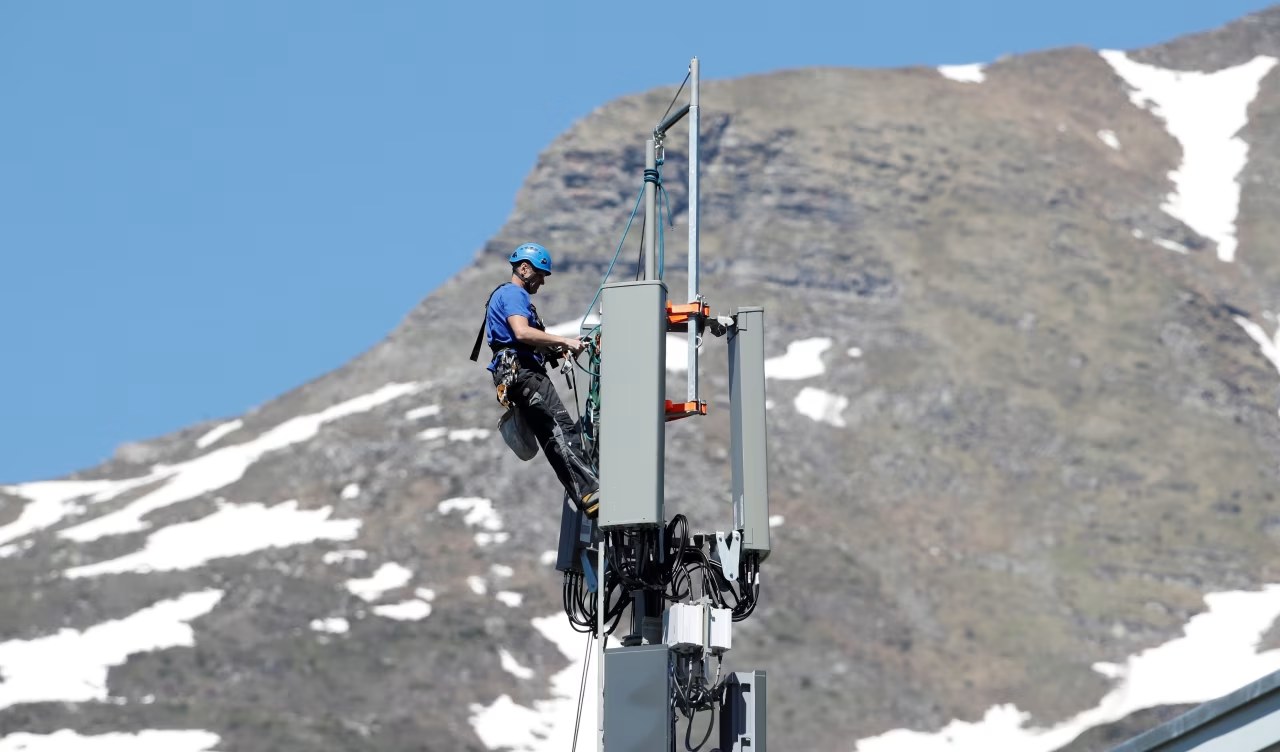
The trigger: Swisscom and Telecom Italia (TIM) announced they will pool resources to build and operate up to 6,000 new mobile towers across Italy, a move that threatens to break Inwit’s stranglehold on the country’s passive infrastructure market.
Swisscom’s domestic broadband arm Fastweb and Vodafone Italia are also part of the consortium, giving the venture immediate scale and spectrum depth. Investors responded by dumping Inwit stock in record volume, pushing the shares to their lowest level since December 2023.
From Monopoly to Meltdown: How Fast a Moat Can Vanish
Until Thursday morning, Inwit owned roughly 45% of Italy’s 34,000-plus telecom towers, a share it cemented through the 2020 merger of Telecom Italia’s captive towers with rival infrastructure group Rai Way. That dominant footprint underpinned predictable lease revenues from every major carrier, allowing Inwit to command premium pricing and 99% tenancy ratios.
A 6,000-site challenger rewires the competitive map overnight
The Swisscom–TIM venture will not emerge overnight—it must still secure municipal permits, navigate Italy’s Byzantine construction codes and raise an estimated €800 million in project finance. Yet the mere announcement ruptured Inwit’s scarcity premium. ‘Markets price disruption risk in real time,’ notes London-based telecom analyst Chiara Caliari at Redburn Atlantic. ‘Even a 10% slice of future site supply can reset lease-price benchmarks across the country.’
Inwit’s enterprise value-to-Ebitda multiple compressed from 12.5× to 9.3× in four hours of trading, according to Bloomberg data, the steepest de-rating in European towers since Cellnex slid 18% in 2022 after losing a Spanish 5G contract. The speed underscores how quickly capital flees once investors sense a duopoly could become a three-way race.
The joint venture also exploits a regulatory loophole: Italian law allows carriers to self-build masts inside industrial parks without the local-heritage restrictions that often hamstring independent tower companies. Swisscom and TIM can therefore cherry-pick the highest-traffic urban corridors, eroding Inwit’s most lucrative sites first.
Looking forward, analysts at Mediobanca expect Italy will need 8,000–10,000 additional macro towers to hit 2030 5G coverage targets. If Swisscom’s consortium captures 60% of that growth, Inwit’s once-impenetrable moat could shrink to a minority stake in its own market.
Who Really Holds the Cards in the New Tower Consortium?
Ownership of the new vehicle is still being negotiated, but people close to the talks say Swisscom will hold 51% through its wholly-owned Italian broadband subsidiary Fastweb, while Telecom Italia retains 49%. Vodafone Italia, the third partner, will contribute selected existing sites and long-term master-service agreements rather than equity, effectively leasing space instead of owning hard assets.
Fastweb’s fibre depth gives the venture a unique edge
Fastweb already controls 4.2 million kilometres of fibre backbone across Italy, letting the new tower firm backhaul traffic at marginal cost instead of paying third-party fibre rates that can reach €70 per metre per year. Bernstein analyst Ulrich Rathe estimates the saving adds €1,300 per month to tower-level Ebitda, enough to undercut Inwit’s rent card by 15% and still beat cost-of-capital hurdles.
Swisscom brings balance-sheet muscle: the Bern-based carrier generated CHF 11.4 billion in free cash flow over the past three years, dwarfing Telecom Italia’s €700 million. That firepower allows the joint venture to self-fund the €800 million build-out without raising expensive project debt at today’s 6%–7% European yields.
For Telecom Italia, the move is defensive. The operator is saddled with €21 billion of net debt and faces €4 billion in bond maturities before 2027. By contributing 2,500 of its own ageing towers into the venture, TIM monetises non-core assets while securing modern low-latency infrastructure needed for 5G stand-alone services.
Swisscom’s motivation is expansionist. Italy is the largest European market where the Swiss incumbent lacks scale; the tower play gives it passive infrastructure that can also host enterprise private-5G networks for Italy’s manufacturing belt in Lombardy and Veneto.
The wildcard is Vodafone. The British group has been shedding tower assets across Europe, but its Italian arm remains strategically important because it owns 800 MHz spectrum ideal for rural coverage. By signing 20-year anchor-tenant contracts with the new venture, Vodafone secures site access without pouring fresh capital into hard assets—exactly the kind of ‘asset-light’ model CEO Margherita Della Valle has championed since 2023.
What Does 6,000 Sites Mean for Italy’s 5G Roll-Out Race?
Italy has roughly 34,000 macro towers today, but government regulator AGCOM estimates the country needs another 8,000–10,000 to deliver promised gigabit speeds to 80% of the population by 2030. The Swisscom–TIM venture’s 6,000 sites would close 60% of that gap in one stroke, accelerating coverage timelines for industrial ports in Genoa and tourist corridors along the Amalfi coast.
Regional gaps, not cities, are the prize
Most of Italy’s underserved municipalities are hilltop villages in Abruzzo and Basilicata where ARPU is low but state subsidies are generous. Rome’s €4 billion BUL 5G programme reimburses operators up to 70% of construction cost for ‘digital divide’ sites, turning low-margin rural towers into government-backed annuities. Swisscom executives quietly told Milan investors the joint venture will target precisely these subsidised clusters first, harvesting public money before Inwit can react.
The build-out also plays into Europe’s push for open-RAN networks. Because the new sites are greenfield, they can be engineered for vendor-neutral radios from day one, letting TIM swap Nokia or Ericsson gear without climbing fees that legacy towers impose. Paolo Pescatore at PP Foresight argues this ‘future-proof’ design could shave 30% off total-cost-of-ownership over a fifteen-year lease, a compelling pitch when Inwit’s legacy steel still needs retrofitting for heavy 5G antennas.
Timing matters. Italy’s 5G spectrum licences carry use-it-or-lose-it coverage milestones: carriers must activate 40% of assigned rural sectors by 2026 or face €170 million in fines. The Swisscom-led consortium promises first sites on air by Q3 2025, giving TIM and Vodafone a compliance cushion and bargaining leverage when renegotiating rooftop rents with Inwit in urban cores.
Can Inwit Fight Back or Is the Damage Already Done?
Chief executive Stefano Siragusa has two levers: price and politics. On price, Inwit could offer anchor tenants 10-year leases indexed to inflation rather than the traditional 3% annual escalator, saving carriers €25,000 per site over a decade. Yet margin dilution would be severe: every percentage-point reduction in lease rates cuts group Ebitda by €14 million, according to Morgan Stanley estimates.
Political alliances may matter more than economics
Inwit still enjoys close ties with Italy’s Ministry of Economic Development through former TIM executives now serving as advisers. Rome has broad discretionary power over construction permits and can delay Swisscom’s roll-out via environmental-impact appeals that last 18–24 months. Siragusa has quietly lobbied for ‘strategic-asset’ designation that would subject foreign-led infrastructure to golden-share vetoes, a tactic used in 2021 to slow CK Hutchison’s bid for Vodafone Italia.
The company could also accelerate its fibre-to-the-tower programme, marketing 10 Gbps backhaul to enterprise customers who need private networks. Inwit owns 2,300 street cabinets already connected to fibre rings; overlaying small-cell 5G antennas on those nodes could generate incremental Ebitda margins above 60%, offsetting macro-site losses.
Asset rotation is a third option. Inwit has hired Rothschild to explore sale-and-leaseback of 1,500 towers to Spanish infrastructure group Cellnex, potentially raising €400 million to fund a share-buy-back that props up the equity price. But Cellnex is demanding a 5% initial yield, well above Inwit’s 3.8% average cost of debt, making the transaction accretive only if the buy-back retires shares trading below 7× Ebitda.
Investors remain sceptical. Short interest on Inwit’s free float rose to 8.4% on Friday, the highest since 2020, according to Markit data. Unless Siragusa unveils a credible counter-strategy before Q3 results, analysts at Berenberg warn the stock could retest €1.20, a level not seen since the pandemic crash.
What Are Global Tower Giants Watching From the Sidelines?
The Italian shake-up reverberates through boardrooms in Barcelona, Paris and New York. Cellnex, Europe’s largest tower company, saw its own shares dip 4% on contagion fears, then recover after analysts flagged potential acquisition targets among smaller Italian operators. American Tower, which exited Italy in 2016, is reconsidering a comeback, encouraged by Rome’s new tax credits for digital infrastructure.
Valuation multiples are resetting sector-wide
Before the Swisscom–TIM news, European towers traded at 18–20× forward Ebitda. Inwit’s slump drags the peer average to 15×, creating a buyer’s market for assets with secure tenancy. KKR’s infrastructure arm has already approached F2i-controlled Ei Towers, owner of 9,000 broadcast sites, about a €2.5 billion take-private, according to bankers familiar with the matter.
Meanwhile, sovereign-wealth funds from Norway and Qatar are circling Wind Tre’s 8,000 towers, currently leased to INWIT but up for renewal in 2026. If Wind Tre opts to migrate sites to the Swisscom-led venture, Inwit could lose 12% of its tenancy base in one swipe, accelerating the downward spiral.
Regulators are watching too. EU antitrust chief Margrethe Vestager has opened a preliminary review into whether national tower joint ventures reduce competition for site access. A formal probe could delay construction permits and indirectly help Inwit claw back bargaining power.
Bottom line: Italy’s tower market is morphing from a cosy duopoly into a multi-player battlefield. For investors, the era of bullet-proof 20-year leases and double-digit Ebitda growth is over; from here on, execution risk, politics and price wars will dictate winners and losers.
Frequently Asked Questions
Q: Why did Inwit shares crash 26%?
Investors dumped Inwit stock after Swisscom and Telecom Italia announced a 6,000-site tower joint venture, signalling fresh competition for the Italian mast market and threatening Inwit’s dominant position.
Q: How many towers will the new Swisscom–TIM venture build?
The partners plan to develop and operate up to 6,000 new mobile tower sites across Italy, directly challenging Inwit’s existing footprint.
Q: What does this mean for Inwit’s market value?
The one-day rout wiped roughly €1.1 billion off Inwit’s market capitalisation, erasing all 2024 gains and leaving the stock at its lowest level since late 2023.
