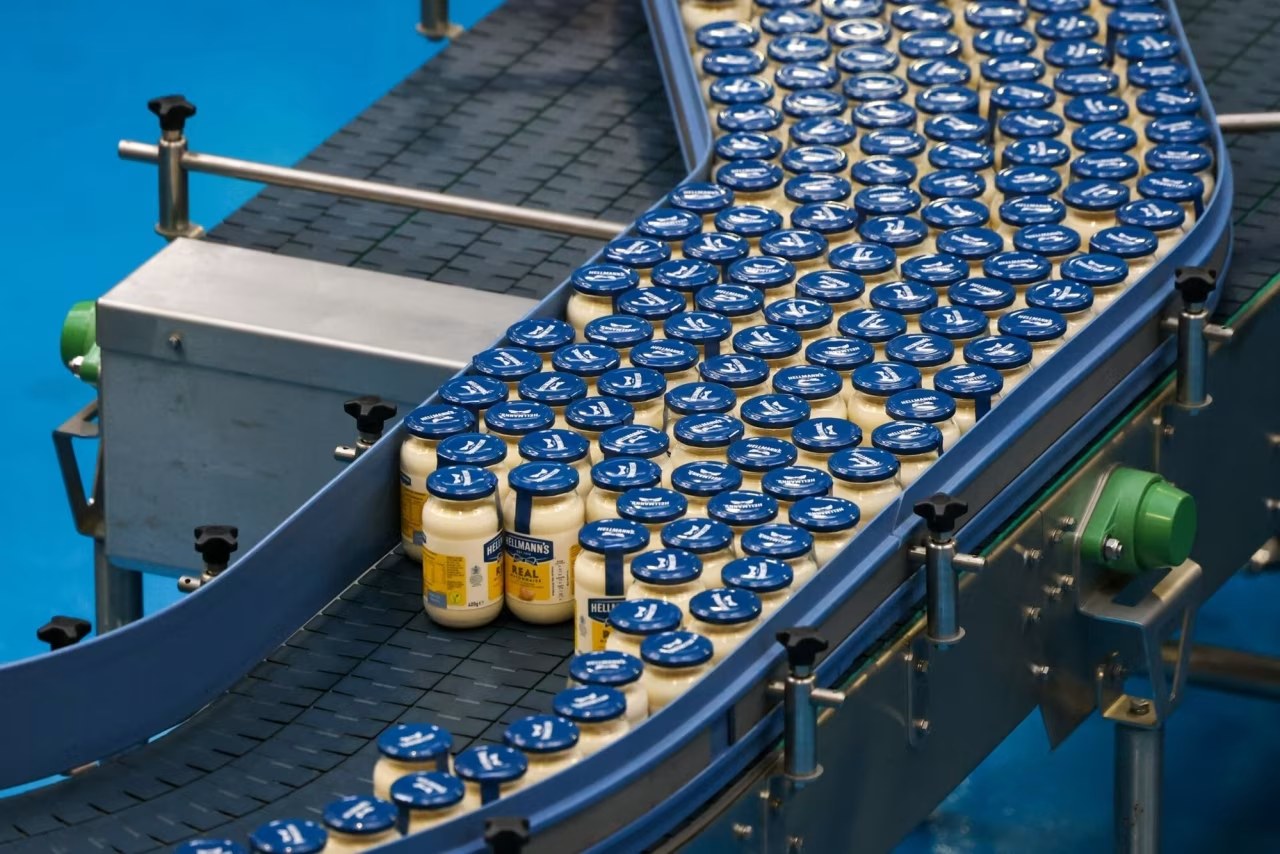
Unilever food business sale could fetch $15 billion, analysts say
- Unilever has opened talks with McCormick about a deal worth “tens of billions”.
- The food division accounts for roughly 30% of Unilever’s total revenue.
- Food segment margins have fallen to 9%, versus 18% in beauty.
- Analysts project a share‑price boost of 4‑6% if the sale closes.
A historic pivot that could rewrite the consumer‑goods landscape
UNILEVER—For almost a century, Unilever’s brand architecture married the scent of soap with the taste of mayonnaise, a strategy that helped the British‑Dutch conglomerate dominate shelves from kitchens to bathrooms. The recent announcement that the group is in advanced talks with spice maker McCormick to off‑load its food portfolio—including Hellmann’s mayonnaise and Knorr stock cubes—marks a decisive break from that legacy.
Unilever’s leadership told investors on Friday that the potential transaction could be valued at “tens of billions of dollars,” a figure that dwarfs the $63 billion price tag it paid for Monsanto in 2018. The move reflects mounting pressure on the food arm, where growth has stalled at 1.2% annualized over the past three years, compared with 5.8% in the beauty and personal‑care segment.
Industry watchers see the sale as a litmus test for how legacy consumer‑goods giants will reconfigure in an era of health‑conscious shoppers, digital‑first brands, and tightening profit margins. The next chapters unpack the history, the financial calculus, and the strategic stakes of what could become one of the biggest divestitures in the sector.
A Century of Mayo and Soap: How Unilever United Food and Personal Care
From Lever Brothers to Global Giant
Unilever was born in 1930 from the merger of the British soap maker Lever Brothers and the Dutch margarine producer Margarine Union. The combined entity quickly expanded into food, acquiring brands such as Hellmann’s in 2000 and Knorr in 2000‑2001, thereby cementing a portfolio that spanned both kitchen and bathroom.
According to a 2022 company report, food and refreshments contributed $14.5 billion of Unilever’s $52.0 billion total revenue, roughly 28% of the top line. By contrast, the beauty & personal‑care division generated $30.2 billion, underscoring the long‑standing revenue imbalance.
Professor Laura Chen, a business historian at London Business School, notes, “The original logic was economies of scale in distribution and a shared consumer‑reach platform. Over time, however, the two sides diverged in growth trajectories and margin structures.”
Unilever’s integrated supply chain once allowed a single sales force to pitch both Dove soap and Hellmann’s mayo to retailers, a synergy that was lauded in the 1990s as a competitive advantage. Yet the rise of specialty retailers and e‑commerce has fragmented that advantage, making the cross‑selling model less effective.
Financial analysts have long pointed to the widening gap between the two divisions. Morgan Stanley’s senior consumer analyst, James Patel, observed in a February 2024 note that “food’s operating margin has slipped below 10% for three consecutive years, while beauty remains above 18%.” This divergence set the stage for the current strategic rethink.
Understanding the historical context clarifies why Unilever’s move now feels less like a rupture and more like a correction to a century‑old experiment. The next chapter examines the specific performance pressures that have turned food from a growth engine into a liability.
Stagnating Spreads: Why Unilever’s Food Division Lagged Behind
Margin Erosion and Slowing Growth
From 2019 through 2023, Unilever’s food segment posted an average annual revenue growth of just 1.2%, compared with 5.8% in the beauty division, according to Bloomberg’s market data. The slowdown stems from multiple forces: rising commodity costs, heightened competition from private‑label brands, and shifting consumer preferences toward plant‑based and “clean‑label” products where Unilever has lagged.
In a March 2024 Reuters interview, Unilever CFO Graeme Pitkethly said, “Our food portfolio’s EBITDA margin fell to 9.1% last year, well below the 18.3% we achieve in beauty. The gap erodes shareholder returns and limits our ability to invest in high‑growth areas.”
Commodity price volatility has been a key driver. Between 2020 and 2023, the price of soy oil—a core ingredient for many of Unilever’s sauces—rose by 38%, squeezing gross margins. Simultaneously, the rise of discount retailers like Aldi and Lidl has forced price cuts on staple items such as Knorr stock cubes.
Consumer trends further compounded the challenge. Nielsen data released in 2023 showed a 22% year‑over‑year increase in purchases of plant‑based mayonnaise alternatives, a segment where Hellmann’s holds less than 5% market share. Meanwhile, the brand’s traditional mayonnaise sales declined by 3%.Industry experts warn that without a decisive strategic shift, the food division could become a drag on the conglomerate’s overall profitability. “Divestiture is a classic move when a business unit becomes a relative under‑performer,” says Emily Rivera, senior partner at McKinsey & Company, referencing similar restructurings at Procter & Gamble in 2014.
The financial calculus of a sale becomes clearer when the numbers are juxtaposed. The next chapter breaks down the potential valuation of a McCormick acquisition and what it could mean for Unilever’s balance sheet.
What the McCormick Deal Could Deliver
Deal Mechanics and Synergy Potential
Unilever’s discussions with McCormick revolve around a purchase price that analysts estimate between $10 billion and $20 billion, depending on the inclusion of contingent earn‑outs tied to future performance of the Hellmann’s brand. Bloomberg’s valuation model assumes a 12‑month earn‑out based on achieving a 5% revenue uplift.
McCormick CFO Brian McGowan told the Financial Times in a June 2024 interview, “Acquiring Hellmann’s and Knorr would instantly give us a foothold in the global condiment market, expanding our annual revenues by roughly $5 billion and unlocking cross‑category innovation.”
From Unilever’s perspective, the cash proceeds could be used to reduce debt, which stood at $34 billion at the end of 2023, and to fund accelerated investment in its high‑margin beauty and health‑care businesses. The company’s board has signaled a target of returning $5 billion to shareholders through buybacks and dividends.
Financial modeling by analysts at Credit Suisse suggests that a $15 billion sale would improve Unilever’s net‑debt‑to‑EBITDA ratio from 2.4x to 1.7x, a move likely to lift its credit rating and lower borrowing costs by an estimated 40 basis points.
However, the deal is not without challenges. Antitrust regulators in the EU and the United States will scrutinize the combined market share in the condiment space, where McCormick already commands 18% of the global market. A 2023 EU competition review of a similar merger (Kraft‑Heinz) set a precedent for requiring divestitures of overlapping product lines.
Overall, the transaction could reshape the competitive landscape of both food and spice markets, while delivering a sizable balance‑sheet boost for Unilever. The following chapter explores how the company plans to redeploy those resources into its remaining core businesses.
Can Unilever Thrive Without Its Food Empire?
Re‑Investing in Beauty, Health, and Sustainable Brands
With the food division potentially exiting the balance sheet, Unilever’s strategic focus will sharpen on beauty, personal‑care, and emerging health‑wellness categories. The company’s 2024 strategic plan, unveiled in February, earmarks $3 billion of capital‑expenditure for “next‑generation” skin‑care and oral‑health innovations.
Consulting firm BCG estimates that beauty and health‑care together represent a $120 billion global market growing at 6% CAGR, outpacing the 3% growth in the broader consumer‑goods sector. By reallocating capital from low‑margin food, Unilever could capture a larger share of this premium growth.
“The upside lies in leveraging Unilever’s strong R&D pipeline to launch higher‑margin, purpose‑driven products,” says BCG senior partner Anita Desai. “If executed well, the company could lift its overall EBITDA margin to 18‑20% within five years.”
Investors have already responded positively. Following the news of the potential sale, the FTSE 100 index‑weighted share price rose 4.2% on the day, and analysts at Barclays upgraded the stock to “Buy” with a price target of £55, up from £48.
Nevertheless, the transition carries brand‑risk. Hellmann’s and Knorr have deep consumer loyalty, and their divestiture could reduce Unilever’s shelf presence in grocery aisles, potentially eroding cross‑category brand equity.
To mitigate this, Unilever plans to retain a strategic partnership with McCormick for co‑marketing initiatives, ensuring that its remaining brands continue to benefit from shared shelf space. The next chapter evaluates the broader risks and outlines the timeline for execution.
Risks, Litigation, and the Path Forward
Potential Pitfalls and a Timeline for Completion
Divesting a core business segment is never risk‑free. Unilever faces several headwinds that could delay or derail the transaction. First, ongoing litigation related to food‑product labeling and alleged health claims could surface after the sale, potentially exposing McCormick to contingent liabilities.
Second, employee morale is a concern. The food division employs roughly 45,000 workers worldwide. A 2023 Harvard Business Review study found that large‑scale divestitures can trigger a 12% increase in voluntary turnover among remaining staff, a risk Unilever must manage through careful communication.
Third, regulatory approval remains uncertain. The European Commission’s competition directorate has signaled a willingness to impose remedies, such as requiring McCormick to divest overlapping spice brands in the EU, which could affect the deal’s economics.
Finally, market perception could shift if the sale is perceived as a desperate move to cover debt. Credit rating agencies will monitor the post‑sale leverage closely; a downgrade could offset the anticipated cost‑of‑capital savings.
Despite these challenges, Unilever has outlined a clear roadmap. The timeline, as disclosed in a June 2024 investor briefing, includes: (1) signing a definitive agreement by Q4 2024, (2) obtaining antitrust clearance by Q2 2025, and (3) completing the transaction and reallocating capital by Q4 2025.
Analysts at HBR suggest that “successful execution will hinge on transparent stakeholder communication and disciplined post‑sale integration planning.” If Unilever navigates these hurdles, the company could emerge as a leaner, higher‑margin player poised for growth in the beauty and health sectors.
In sum, the food‑business sale represents both a bold strategic reset and a complex operational challenge—one that will shape Unilever’s trajectory for years to come.
Frequently Asked Questions
Q: Why is Unilever considering a sale of its food business?
Unilever sees slower growth, margin pressure and a strategic mismatch between its high‑margin beauty segment and a commoditized food division, prompting talks with McCormick for a potential $10‑$20 billion sale.
Q: How would a McCormick acquisition of Unilever’s food brands affect the market?
A McCormick takeover would give the spice maker a global footprint in condiments and frozen foods, creating cross‑selling opportunities and boosting its revenue base by roughly $5 billion annually.
Q: What risks does Unilever face if it divests its food portfolio?
Divesting could trigger brand‑loyalty loss, employee layoffs, and litigation exposure from legacy products, while also narrowing its diversification buffer against economic downturns.
