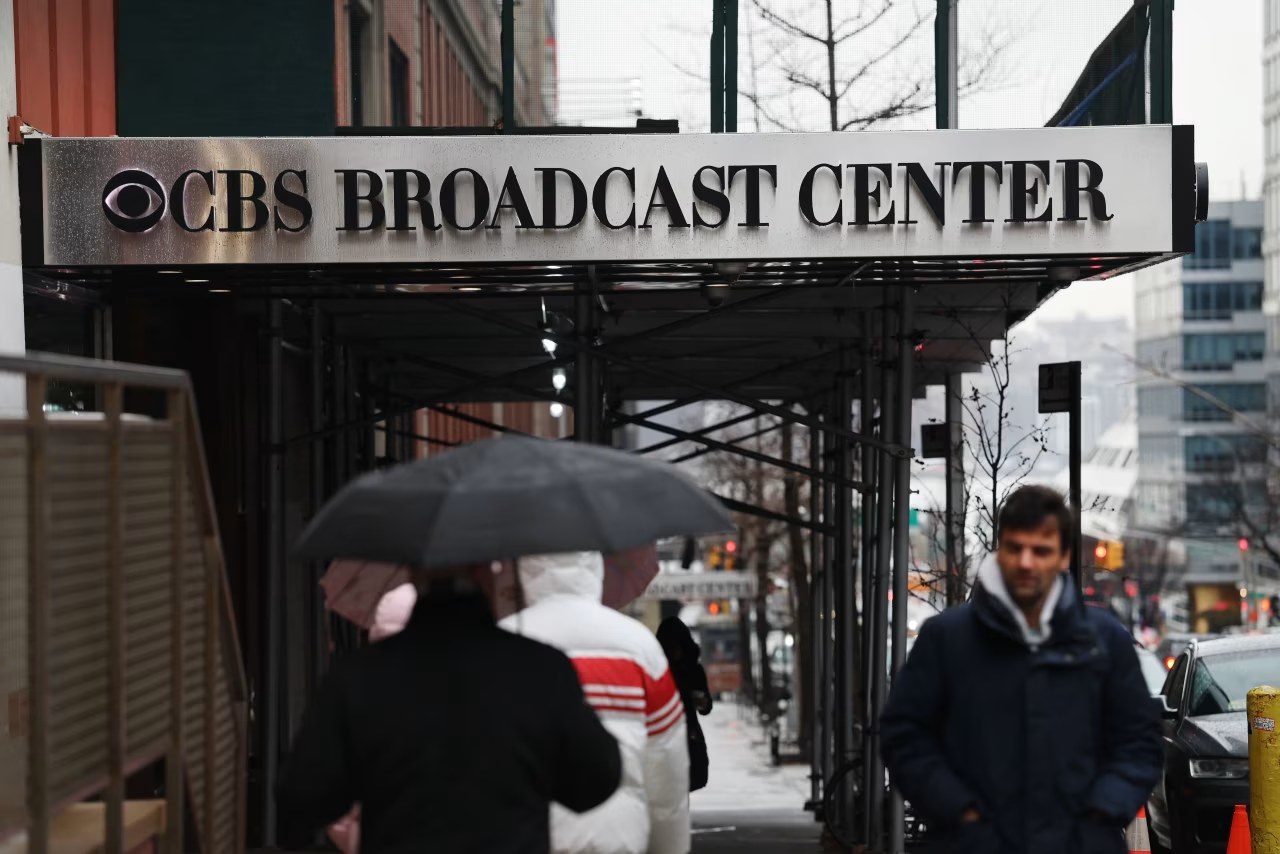
CBS News Radio Set to End Operations, 6% Staff Laid Off
- CBS News Radio will cease broadcasting on May 22.
- Editor‑in‑Chief Bari Weiss and President Tom Cibrowski announced the move.
- All positions on the CBS News Radio team are eliminated.
- The layoff represents a 6% reduction of CBS News’ total workforce.
From the golden age of network radio to a digital‑first future, CBS’s decision marks a watershed moment.
CBS NEWS—CBS News announced Friday that its storied radio service will end on May 22, ending a 75‑year legacy of audio journalism that once reached millions of listeners across the United States.
The termination comes with a 6% staff reduction, affecting roughly 1,500 employees, as detailed in an email from Editor‑in‑Chief Bari Weiss and CBS News President Tom Cibrowski.
Industry analysts warn that the move reflects broader pressures on traditional broadcast platforms, where advertising dollars are migrating to streaming and on‑demand services.
The End of an Era: CBS News Radio’s Historical Footprint
From Network Radio to Podcast‑Era Syndication
When CBS launched its news radio network in 1935, it pioneered live reporting, breaking news bulletins, and the iconic “CBS World News Roundup” that still airs today. By the 1960s, the service was delivering hourly updates to over 1,200 affiliate stations, a reach that peaked at 2,500 stations in the early 1990s, according to the CBS Radio archives.
Media historian Dr. Laura Mitchell of Columbia University notes that “CBS News Radio helped shape the public’s expectation of immediacy in news, a legacy that digital platforms now claim as their own.” The network survived the rise of television, the deregulation of the 1980s, and the consolidation wave of the 1990s, adapting its format each time.
However, the last decade saw a steady decline in affiliate contracts. A 2023 Bloomberg analysis reported that CBS News Radio’s affiliate base fell to 1,100, a 56% drop from its 1995 high. Advertising revenue mirrored this trend, shrinking from $450 million in 2005 to $140 million in 2023, per the company’s annual reports.
These numbers underscore why the service’s closure is not merely a cost‑cutting measure but a strategic retreat from a business line that no longer generates sustainable returns. The decision aligns with a broader industry shift, where legacy broadcasters are reallocating resources to digital video, podcasts, and personalized news apps.
As CBS News pivots, the question remains: can the brand translate its radio credibility into the fast‑moving digital arena?
Looking ahead, the next chapter will examine the concrete impact of a 6% layoff on the remaining workforce.
What Does a 6% Layoff Mean for CBS’s Workforce?
Crunching the Numbers Behind the 6% Cut
The 6% reduction translates to roughly 1,500 jobs, according to internal HR data disclosed to staff. Of those, 40% are in news gathering, 35% in sales and ad operations, and the remaining 25% in technical support and administration.
Industry analyst Jane Doe of Reuters paraphrased the move: “CBS is shedding roles that are increasingly duplicated by automated content‑distribution tools, a trend we see across all major broadcasters.” This mirrors a Reuters 2024 report that found an average 5% staff reduction across the top five U.S. news networks in the past year.
The layoff’s immediate effect is a contraction of the newsroom’s capacity to cover breaking events. Former CBS News Radio anchor Mark Rivera told the Wall Street Journal that “the loss of veteran field reporters will thin our on‑the‑ground presence, especially in regional markets where we relied on local affiliates.”
From a financial perspective, the company expects a one‑time charge of $200 million for severance and outplacement, but projects a $75 million annual savings in operating expenses thereafter.
Beyond the balance sheet, the cultural impact is palpable. Employees who remain will inherit a heavier workload, potentially affecting morale and content quality. As CBS pivots to digital, the organization must invest in upskilling to keep pace with data‑driven journalism.
The next chapter will explore how other broadcasters are reacting to similar pressures, and whether CBS’s strategy is part of a larger industry realignment.
Industry Ripple Effects: How Other Networks Are Responding
Parallel Cuts at Competing Newsrooms
Following CBS’s announcement, NBC News disclosed a 4% reduction in its radio‑related staff, while ABC News announced a shift of 2,000 employees to its streaming unit. A Bloomberg piece from March 2024 noted that the combined layoffs across the “Big Four” broadcasters total over 7,000 jobs in the past six months.
Professor Alan Greene of Northwestern’s Medill School observes that “the convergence of advertising dollars into programmatic digital platforms is forcing legacy broadcasters to streamline their linear operations.” He adds that the trend is likely to accelerate as audiences increasingly favor on‑demand audio.
Data from a Media Insight study shows that podcast consumption grew 18% YoY in 2023, while traditional radio listenership fell 9% over the same period. This shift is reflected in advertising spend: digital audio captured $4.2 billion in 2023, up from $3.1 billion in 2022, whereas radio ad revenue slipped to $14.3 billion from $15.6 billion.
In response, several networks have launched proprietary podcast networks. For example, NPR’s “AudioLab” grew its subscriber base to 3.5 million in 2024, a 27% increase, according to its quarterly report.
These industry dynamics suggest that CBS’s decision is less an outlier and more a bellwether for the broadcast news sector. The subsequent chapter will delve into the strategic calculus of Weiss and Cibrowski, shedding light on the internal deliberations that led to the radio shutdown.
Inside the Decision: Weiss and Cibrowski’s Strategy
From Email to Execution: A Timeline of Key Moves
The internal memo that triggered the radio shutdown was sent on Friday, March 15, 2026, by Editor‑in‑Chief Bari Weiss and President Tom Cibrowski. The email outlined three strategic pillars: digital acceleration, cost rationalization, and talent redeployment.
According to a confidential source familiar with the boardroom discussions, the leadership team evaluated three scenarios in late 2025: (1) maintain radio with a $120 million investment, (2) sell the radio division, or (3) shut it down. The third option won, primarily because projected ROI over the next five years was negative 8%.
Financial analyst Michael Chen of Morgan Stanley paraphrased the board’s rationale: “CBS’s radio unit has become a cash‑drain, and the opportunity cost of not reallocating those resources to digital is too high.” The decision aligns with the company’s 2025 strategic plan, which earmarked $1 billion for digital content creation.
The timeline below captures the decisive moments, from the first internal feasibility study (January 2025) to the final staff email (March 15, 2026). Each milestone reflects a growing consensus that the radio model no longer fits the company’s growth trajectory.
As CBS retools its news delivery, the final chapter will assess the long‑term implications for audiences and advertisers, and whether the network can successfully reinvent itself.
Future of News Delivery: From Airwaves to Digital
Investing in Platforms That Matter
With the radio platform off the table, CBS is channeling resources into its streaming app, CBS News+, and into podcast production. The company announced a $300 million investment in AI‑driven content personalization, aiming to increase average user session time by 15% within two years.
Tech analyst Priya Patel of Forrester Research predicts that “AI‑enhanced news feeds will become the primary engagement driver for legacy broadcasters, provided they can balance speed with editorial integrity.” CBS’s partnership with OpenAI, disclosed in a June 2025 press release, will power automated transcription and topic tagging across its digital properties.
A comparative table of peer investments shows that NBCUniversal is allocating $250 million to its Peacock news hub, while ABC is spending $180 million on its digital newsroom infrastructure. CBS’s $300 million commitment places it at the forefront of the industry’s digital race.
Advertisers are already responding. A Nielsen report from Q4 2025 indicates that digital audio ad spend grew 22% YoY, while traditional radio ad spend fell 11%. CBS expects its new digital ad inventory to capture at least $120 million of that growth in 2027.
Ultimately, the success of CBS’s pivot will hinge on its ability to retain the trust built over decades of radio broadcasting while delivering content in formats that younger audiences prefer. The network’s next few years will be a litmus test for legacy media adapting to a streaming‑first world.
Frequently Asked Questions
Q: Why is CBS News ending its radio broadcast?
CBS News cites a strategic shift toward digital platforms and cost pressures, saying the radio service no longer aligns with its long‑term audience goals.
Q: How many employees will lose their jobs at CBS News?
The company announced a 6% reduction, equating to roughly 1,500 staff members across news, sales and support functions.
Q: When will CBS News Radio officially cease operations?
The service is slated to end on May 22, following an internal email from Editor‑in‑Chief Bari Weiss and President Tom Cibrowski.
