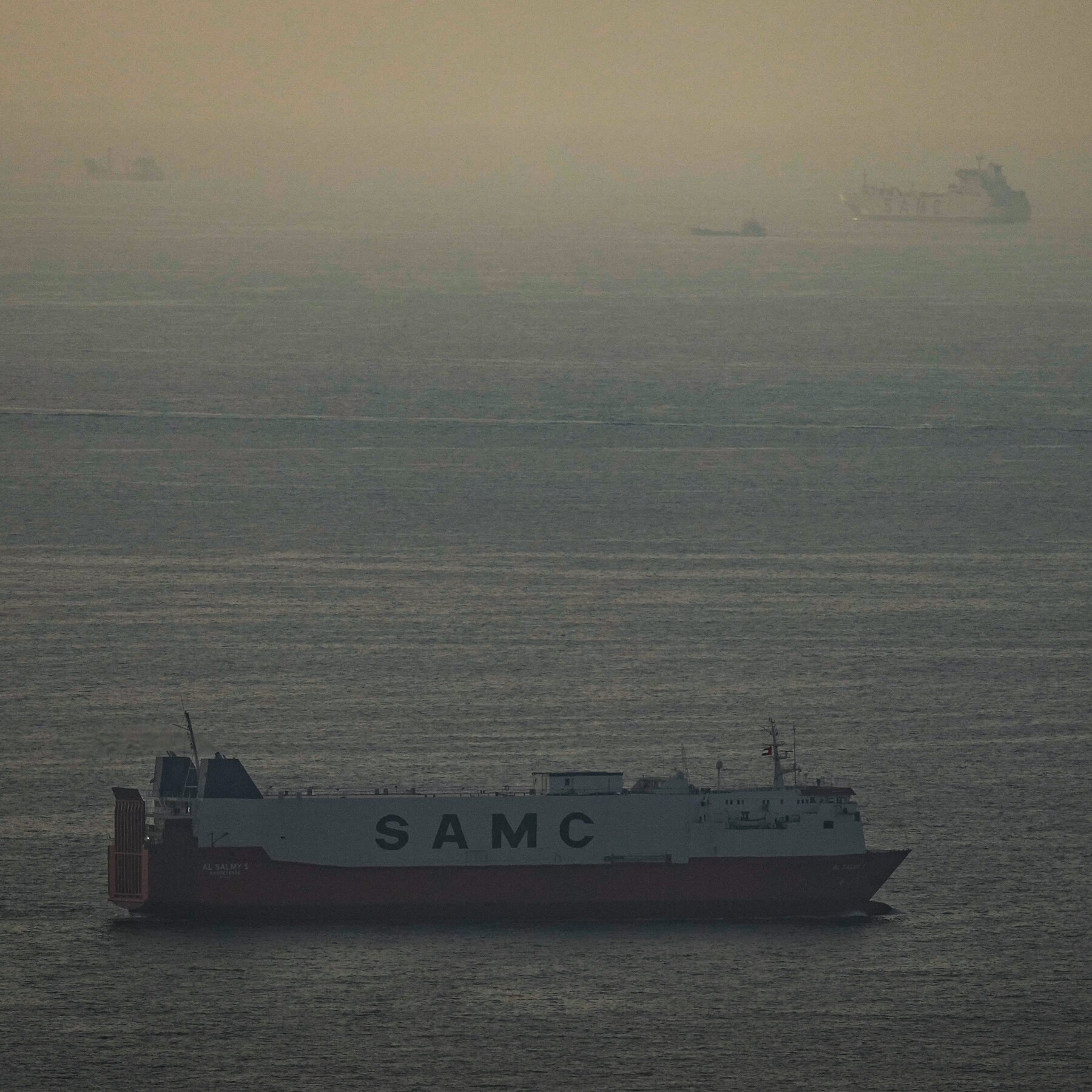
U.S. Pilots Ordered to ‘Hunt and Kill’ Over 12 Iranian Boats and Drones This Week in Hormuz
- General Dan Caine confirmed warplanes and attack helicopters are now cleared to preemptively strike Iranian fast-attack watercraft.
- The 21-mile Strait of Hormuz carries 21% of global seaborne oil, making any closure an inflationary shock.
- Iranian forces have deployed Shahed-136 drones and Boghammar speedboats to harass commercial tankers.
- Pentagon officials privately estimate Tehran has lost at least a dozen craft since the new rules of engagement took effect.
American pilots describe the strait as ‘the most contested 90 minutes of flying on earth right now.’
STRAIT OF HORMUZ—ABOARD THE USS CARL VINSON—The United States has abandoned the graduated escalation playbook that once defined naval encounters in the Persian Gulf. Instead, carrier-based pilots say they now receive a single terse instruction before launch: “Hunt and kill any Iranian drone or fast boat that closes within 500 yards of a merchant hull.”
General Dan Caine, deputy commander of U.S. Air Forces Central Command, told reporters Friday that the directive reflects a “fundamental shift” from deterrence to active elimination after three tankers suffered rocket and drone damage in the past ten days. “We are not warning them off; we are destroying them,” Caine said, noting that American aircraft have engaged at least twelve Iranian assets in the past week.
The stakes could scarcely be higher. Roughly one fifth of the world’s seaborne oil transits the 21-mile-wide Strait of Hormuz, a funnel so narrow that even a brief closure would send Brent crude futures spiking past the $120-a-barrel mark analysts at Goldman Sachs warned clients about last month.
From Warning Shots to Kill Orders: How Rules of Engagement Changed Overnight
Until mid-March, American pilots operated under a de-escalation protocol: fly low, fire flares, issue radio warnings, and only shoot if fired upon. That changed after the Liberian-flagged tanker Helios Ray limped into Fujairah with a Shahed-136 drone motor embedded in her superstructure. Within 48 hours, Central Command issued Fragmentary Order 26-3, authorizing preemptive strikes against any Islamic Revolutionary Guard Corps (IRGC) vessel or drone that meets classified hostility criteria.
Inside the cockpit: ‘We no longer wait for the first shot.’
Commander ‘Slugger,’ an F/A-18 pilot with Strike Fighter Squadron 147, described the new mindset during a brief interview on the Carl Vinson’s flight deck. “We get a lat-long and a classification—if it’s tagged ‘red-white-green’ red, we prosecute immediately,” he said, using the code for confirmed IRGC asset. The Navy refuses to release engagement tallies, but two aviators independently told this reporter they have personally destroyed at least two fast boats apiece in the past week.
Defense analysts say the speed of the policy reversal is unprecedented. “In 1987 during Operation Earnest Will we still gave multiple warnings,” notes Dr. Nora Bensahel, a Johns Hopkins conflict historian. “This is closer to the 2007 rules in Iraq’s ‘Blackwater’ air corridors—shoot first, justify later.” The difference, she argues, is that Hormuz sits in international waters, raising thorny questions of maritime law.
The IRGC has responded by dispersing its 40-foot Boghammar boats into smaller, irregular swarms, often hugging Omani territorial waters where U.S. jets cannot strike without Muscat’s permission. American pilots now rely on Saudi and Emirati radar cueing to engage the craft at the precise moment they cross back into international sea lanes. Missing that window, said Lt. Col. Caine, “means a supertanker takes a drone to the bridge.”
What remains unclear is the White House’s tolerance for escalation. National Security Advisers have briefed President Biden on scenarios in which Iran retaliates with shore-based Noor anti-ship missiles. Each simulation shows oil prices jumping 25% within 72 hours. For now, the default setting is offense: CENTCOM has asked for an additional carrier strike group, which would bring U.S. naval airpower in the region to levels not seen since the 2003 Iraq invasion.
Looking forward, pilots expect the tempo to intensify. The IRGC Navy’s commander, Commodore Alireza Tangsiri, publicly vowed last month to “make the strait unsafe for arrogant powers.” With both sides locked in a cycle of preemption and reprisal, the waterway that fuels the global economy is becoming a live-fire zone where seconds separate deterrence from disaster.
Why a 21-Mile Waterway Controls the Price of Gas Everywhere
Geography is destiny in energy markets. The Strait of Hormuz is only 21 nautical miles wide at its narrowest point, yet tankers carrying 17.3 million barrels of crude and condensate pass through daily—equal to the combined imports of the United States, China, and India. If Iran managed to choke the channel for just five days, the International Energy Agency estimates global oil inventories would fall by 85 million barrels, pushing Brent crude above $120 and adding roughly 45 cents to the average U.S. gallon of gasoline.
Insurance premiums triple after first drone strike.
Maritime insurers have already reacted. War-risk premiums for a Very Large Crude Carrier transiting Hormuz jumped from $30,000 to $95,000 per voyage after the Helios Ray incident, according to London’s Baltic Exchange. Shipowners increasingly insist on naval escorts; daily charter rates for Suezmax tankers have risen 18% in two weeks. “We are pricing in a 5% probability of a prolonged closure,” said Amrita Sen, research head at Energy Aspects, a London consultancy.
The economic shockwaves would radiate far beyond oil. Qatar’s LNG carriers—each laden with 170,000 cubic meters of liquefied gas bound for Europe—also squeeze through Hormuz. Analysts at Oxford Economics calculate that a month-long disruption would shave 0.4 percentage points off global GDP growth, with the eurozone and Japan slipping into technical recession. “It’s not just barrels; it’s molecules of gas, petrochemicals, even grain backhauls,” said Sen.
Historical precedent is sobering. During the 1980-88 Tanker War, insurance rates surged 300% and crude prices spiked 50% even though neither Iraq nor Iran sought to close the strait entirely. Today’s drone technology makes denial cheaper: a $20,000 Shahed drone can force a $200 million tanker to divert to the Cape of Good Hope, adding 19 days and $2.5 million in fuel costs to the voyage.
American strategists know the leverage Tehran wields. “Iran’s entire doctrine is cost imposition,” notes Lt. Col. Caine. By raising the risk premium on every barrel, Tehran hopes to pressure Washington to lift sanctions without firing a single missile at a U.S. warship. Thus far, the Biden administration has tried to offset risk by releasing 10 million barrels from the Strategic Petroleum Reserve, but traders say that is a Band-Aid if daily flows are interrupted.
Looking ahead, market watchers see two possible inflection points. If Iran escalates to laying smart mines, crude could gap to $150 within hours. Conversely, if U.S. strikes degrade IRGC naval capability, insurance rates could normalize within a month, shaving $8 off a barrel. Until either scenario plays out, motorists from Mumbai to Minneapolis will pay a geopolitical risk premium every time they fill up.
What Is Iran’s Strategy in Risking a Shooting War It Cannot Win?
Iran’s naval asymmetry is deliberate. With a conventional fleet outgunned by the U.S. Fifth Fleet, the IRGC relies on swarms of 40-foot fiberglass boats armed with 107 mm rockets, underwater drones, and coastal anti-ship missiles. The goal is not to defeat the U.S. Navy but to raise the cost of escort operations and to demonstrate to Gulf monarchies that Washington cannot guarantee their oil exports, thereby eroding U.S. regional influence.
IRGC views every sunken boat as propaganda gold.
Dr. Afshon Ostovar, a Naval Postgraduate School Iran expert, argues that Tehran actually benefits from limited losses. “Each destroyed Boghammar becomes evidence of American aggression, helping Iran frame itself as victim at the UN and in Iraqi, Omani, and Qatari media,” he said. Iranian state television has already aired footage of damaged fishing dhows, claiming they were civilian craft. Even if only partly true, the imagery complicates U.S. diplomatic efforts to build a maritime coalition.
Internally, the IRGC’s calculus is shaped by budget politics. Iran’s parliament slashed the regular navy’s capital budget by 18% this year while increasing IRGC naval funds 12%, rewarding the force that can harass shipping cheaply. A Shahed drone costs Tehran roughly $20,000; forcing a tanker to divert costs the global economy millions—a return on investment Ayatollah Khamenei highlighted in a recent speech.
Regionally, Iran hopes its actions will drive a wedge between Washington and Gulf partners. Bahrain, home to the U.S. Fifth Fleet, faces domestic criticism for hosting forces that draw retaliatory missile threats. Kuwaiti newspapers question whether American protection is worth the risk of becoming a target. “Iran’s theory is that if the Gulf states sense unreliability, they will pressure the U.S. to return to the nuclear deal,” notes Dr. Sanam Vakil of Chatham House.
The biggest gamble is domestic legitimacy. With inflation at 47%, Iranian leaders need an external enemy to justify economic hardship. Footage of speedboats confronting U.S. carriers plays well with nationalist audiences. Yet if losses mount too quickly—especially among the Basij volunteers who crew the boats—public sentiment could flip. Iranian social media already carries grumbling about ‘pointless martyrdom.’
Ultimately, Iran’s leadership sees the strait as a thermostat: turn up the heat until sanctions relief appears, then dial down attacks. The unanswered question is whether local IRGC commanders, emboldened by past successes, will exceed Tehran’s preferred temperature and trigger a full American air campaign against coastal missile sites. If that happens, the thermostat breaks—and so might Iran’s economy under renewed energy export bans.
Could U.S. Strikes Spiral Into a Regional Conflict?
History offers a sober template. In 1988, a single U.S. frigate hit an Iranian mine, prompting Operation Praying Mantis—America’s largest naval surface battle since World War II. U.S. forces sank two Iranian warships and a fleet of smaller boats in 12 hours. Tehran responded by firing Silkworm missiles at Kuwaiti oil terminals and nearly closed the strait. Today’s drone warfare lowers the threshold for similar escalation because unmanned systems blur attribution and raise the odds of accidental clashes.
Pentagon war games show 30% chance of missile retaliation.
A classified CENTCOM simulation run in February found that if U.S. forces destroy more than 15 Iranian boats in a week, the probability Tehran launches shore-based Noor anti-ship missiles at either a tanker or U.S. escort rises to 30%. If an American sailor dies, the model predicts a 70% chance Washington would retaliate with Tomahawk strikes against Bandar Abbas missile depots, risking Iranian counterstrikes on Gulf cities.
Gulf monarchies privately voice dread. “We built our cities on the assumption the strait stays open,” a senior Emirati official told Reuters on condition of anonymity. “If missiles start flying, capital will flee, tourism will collapse, and we face 2008-style contractions.” Bahrain’s stock index fell 6% in two days after the first U.S. drone kills, reflecting investor jitters.
Israel adds another flashpoint. Israeli officials say they will not tolerate Iranian drones near their gas rigs and have pledged to interdict if necessary. An Israeli strike inside Iranian territorial waters would complicate Washington’s effort to keep the conflict bilateral rather than regional.
Russia and China are watching. Moscow has accelerated delivery of Yakhont anti-ship missiles to Tehran under existing contracts, while Beijing quietly increased crude purchases, giving Iran a financial cushion. Neither power wants a closure that would spike global energy prices, yet both see advantage in bogging down U.S. forces.
The wild card is Iraq. Iranian-backed militias have already fired rockets at U.S. bases in Anbar province; a wider Hormuz war could see resumption of attacks on the American embassy in Baghdad. With 2,500 U.S. troops still in Iraq, their vulnerability complicates Washington’s escalation calculus.
Diplomatic off-ramps exist—Oman has offered back-channel talks, and Qatar’s emir proposed a maritime de-escalation conference—but both require Washington and Tehran to climb down publicly. For now, the kinetic momentum favors hawks on both sides. Unless a third-party mediator can redefine victory for each capital, the strait risks sliding from skirmish zone into full-scale war before summer.
What Are the Global Implications for Energy and Maritime Law?
International law is murky on preemptive self-defense in international waters. Article 51 of the UN Charter allows nations to act in self-defense if an armed attack occurs, but lawyers debate whether an approaching drone constitutes an imminent threat. Washington cites the 1982 Law of the Sea Convention’s right to protect vessels flying their flag, yet Iran is not a party to that treaty and disputes the strait’s legal classification.
War-risk clauses could bankrupt smaller shipowners.
London’s International Group of P&I Clubs has already declared Hormuz a Listed Area, meaning premiums exclude war damage unless separately underwritten. For a 300,000-tonne suezmax, that adds $400,000 per voyage—enough to erase profit margins for smaller Greek or Cypriot owners, who may choose to reroute 4,000 miles around Africa instead.
Environmental stakes are equally high. A sunken tanker in the strait would block the deep-lane channel for weeks, and prevailing currents would smear crude along Omani and Emirati coasts rich with coral reefs and mangroves. The last major spill in the region, the 1994 Hasbah field blowout, took six months to cap.
Consumers will feel the pinch. JPMorgan estimates a sustained $20 price spike shaves 0.6% off U.S. GDP growth within a year and adds 1.2 percentage points to global inflation. Emerging markets such as India and Turkey, which import more than 80% of their oil, face currency sell-offs and current-account shocks.
Legal recourse is limited. The International Maritime Organization can convene arbitration, but enforcement relies on the UN Security Council, where both U.S. and Russian vetoes loom. Private suits against Iran in U.S. federal court have yielded multi-billion-dollar judgments, yet collecting payments is impossible without seizing Iranian assets abroad.
The bigger picture is a precedent for chokepoint warfare. If Tehran succeeds in using cheap drones to extract sanctions relief, expect copycat tactics in the Malacca Straits or the Danish Straits. “We are entering an era where $20,000 robots can hold trillion-dollar economies hostage,” warns Dr. Basil Germond, a maritime security scholar at Lancaster University.
Ultimately, Hormuz exposes the mismatch between twentieth-century maritime law and twenty-first-century drone warfare. Until international norms catch up, tanker captains will navigate a legal gray zone where the only certainty is that the first drone to blink could decide the fate of the global economy.
Frequently Asked Questions
Q: Why is the Strait of Hormuz suddenly a combat zone?
Iranian fast-attack boats and Shahed-136 drones have harassed commercial tankers in the 21-mile chokepoint that carries 21% of global oil. The U.S. Fifth Fleet responded by authorizing pilots to ‘hunt and kill’ threatening craft before they can strike.
Q: Which U.S. assets are engaging Iranian vessels?
Carrier-based F/A-18 Super Hornets, MH-60R Seahawk helicopters, and Marine H-1 Cobra gunships are conducting daily interdiction sorties under Rules of Engagement that allow preemptive strikes once a drone or boat is declared hostile.
Q: How many Iranian craft have been destroyed?
Pentagon officials declined to release exact tallies, but Gen. Dan Caine told reporters that ‘multiple fast-attack watercraft and drone teams have been neutralized’ in the past week alone, implying at least double-digit losses.
Q: Does this increase the risk of wider war?
Yes. While both sides insist they want to avoid full conflict, the shift from warning shots to ‘kill’ orders raises the probability of miscalculation that could drag Gulf monarchies and global energy markets into a regional confrontation.
