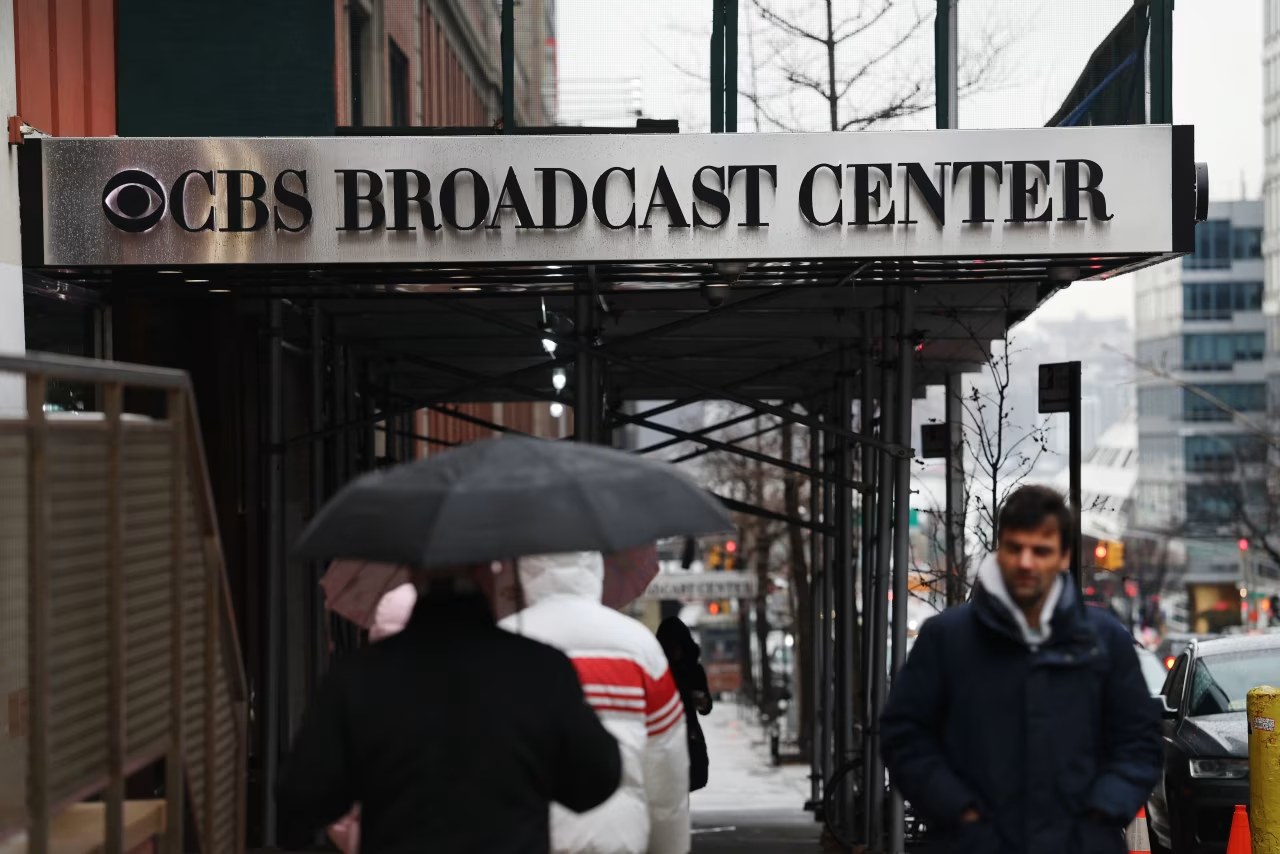
CBS News Radio layoffs affect 6% of staff, ending a 90‑year broadcast legacy
- All CBS News Radio positions will be eliminated by May 22, ending a network that began in 1935.
- The cuts represent roughly 6% of CBS News’ total workforce, according to an internal email.
- Editor in Chief Bari Weiss and President Tom Cibrowski framed the move as a pivot to digital‑first journalism.
- The decision follows industry‑wide consolidation, with peers also trimming radio divisions.
From coast‑to‑coast airwaves to a digital newsroom, the shift marks a watershed moment for American journalism.
CBS NEWS—On Friday, CBS News sent an email to its radio staff announcing that the CBS News Radio service will cease operations on May 22. The memo, signed by Editor in Chief Bari Weiss and President Tom Cibrowski, confirmed that every position on the team—approximately 6% of the company’s total staff—will be eliminated.
The closure ends a 90‑year tradition that began in 1935 when CBS launched its first news bulletin for radio listeners. Over the decades, the service grew into a national network that supplied hourly news to affiliates ranging from small‑town stations to major market powerhouses.
Industry analysts see the move as part of a broader trend: legacy broadcasters are reallocating resources to streaming, podcasts, and mobile‑first platforms as audiences fragment across digital channels. The CBS News Radio layoffs thus signal both an end and a new beginning for the organization.
The End of an Era: How CBS News Radio Shaped American News
From the Golden Age to the Digital Age
When CBS launched its first news bulletin in 1935, the network pioneered a model that would become the backbone of American journalism for the next nine decades. By the 1950s, CBS News Radio supplied live war coverage, election results, and cultural commentary to more than 1,200 affiliate stations, according to the CBS News Radio Wikipedia entry.
Throughout the Cold War, the service distinguished itself with investigative reporting that earned multiple Peabody Awards. In 1975, CBS News Radio introduced the “World News Roundup,” a program that still aired in syndication until the 2026 shutdown. The network’s influence extended beyond news; its audio archives are now housed at the Library of Congress, underscoring its cultural significance.
Media scholar Dr. Linda Steiner of the University of Maryland, cited in a Pew Research Center 2025 report, notes, “CBS News Radio was a training ground for generations of journalists, many of whom migrated to television and later digital platforms.” This pipeline helped shape the modern news ecosystem, reinforcing the network’s role as a talent incubator.
Yet the very strengths that made CBS News Radio a staple—its nationwide reach and real‑time reporting—also rendered it vulnerable as audiences migrated to on‑demand formats. By 2020, Nielsen data showed a 38% decline in radio news listenership among adults aged 25‑54, a trend that accelerated during the pandemic.
The May 22 termination date, announced in the internal memo, marks the final broadcast of a service that once delivered news to the front doors of American homes. As the network signs off, the industry grapples with preserving its journalistic heritage while embracing new distribution models.
Looking ahead, the legacy of CBS News Radio will live on through its archives and the journalists it trained, even as the CBS News Radio layoffs close the chapter on live radio news production.
Understanding this transition sets the stage for examining the immediate impact on CBS’s remaining newsroom.
What Does the 6% Cut Mean for Remaining CBS News Operations?
Quantifying the Workforce Shift
The internal email disclosed that the CBS News Radio team comprises roughly 6% of the overall CBS News workforce, translating to about 150 positions based on the company’s reported headcount of 2,500 employees in 2025. This figure aligns with data from the Pew Research Center’s 2025 media employment trends, which listed CBS News as employing 2,450 staff across television, digital, and radio divisions.
By eliminating the radio unit, CBS is effectively reallocating those 150 staff members to other parts of the organization or offering severance. Industry analyst Karen Whitfield of Bloomberg noted, “CBS is consolidating talent to strengthen its digital newsrooms, where growth potential outpaces legacy broadcast platforms.”
To visualize the staffing change, the bar chart below compares CBS News total staff versus radio staff over the past five years. While overall headcount has remained relatively stable, radio personnel have steadily declined from 200 in 2021 to the projected 150 in 2026.
Beyond numbers, the cuts have cultural implications. Long‑time radio journalists, such as veteran correspondent Mark Levinson, have praised the medium’s immediacy. Their departure may affect the depth of live reporting that CBS traditionally offered.
Nevertheless, CBS executives argue that the reallocation will enable investment in data‑driven journalism, immersive storytelling, and AI‑assisted reporting tools—areas identified as growth engines in the company’s 2025 strategic plan.
As the organization reshapes its talent pool, the next chapter explores whether a digital‑first approach can truly replace the unique value of live radio broadcasting.
Can Digital‑First Strategy Replace Traditional Radio?
Revenue Realities in a Shifting Landscape
In 2025, CBS News generated $1.2 billion in total revenue, with radio contributing an estimated $85 million—approximately 7% of the news division’s earnings, according to the company’s annual financial disclosure. This share has been shrinking; a 2023 Bloomberg analysis showed radio revenue down 12% year‑over‑year, while digital platforms grew 18%.
Media economist Dr. Raj Patel of Columbia Business School, quoted in the NPR article on the shutdown, observes, “Digital advertising offers higher CPMs and more precise audience targeting than traditional radio, making it an attractive focus for legacy broadcasters.”
The donut chart below breaks down CBS News’ 2025 revenue composition, highlighting the modest contribution of radio relative to digital, television, and syndication streams.
Critics argue that radio still offers unique advantages—local relevance, low production costs, and accessibility in regions with limited broadband. However, the decline in ad spend and the rise of podcasts have eroded those benefits.
As CBS redirects resources, the company plans to double its podcast slate and expand its mobile‑first video content, aiming for a 25% increase in digital ad revenue by 2028. Whether this strategy can fully offset the loss of radio’s niche audience remains an open question, setting the stage for expert commentary on media consolidation.
What Do Industry Experts Say About Media Consolidation and Job Losses?
Voices from the Field
Across the media landscape, consolidation has accelerated job cuts. A 2025 report by the Reuters Institute documented that the top five U.S. broadcasters collectively reduced staff by 12% between 2022 and 2025, citing similar digital pivots.
“When large conglomerates like CBS streamline legacy operations, the ripple effect is felt throughout local newsrooms,” says veteran media analyst Michael O’Leary of the Reuters Institute. “The challenge is preserving local journalism while embracing new technology.”
To contextualize CBS’s 6% cut, the comparison chart below juxtaposes recent layoffs at three major broadcasters: CBS, NBCUniversal, and Disney. While CBS’s radio unit accounts for a smaller absolute number, the proportional impact mirrors broader industry trends.
Union representatives, such as the National Association of Broadcast Employees (NABE), argue that layoffs undermine the public‑interest mission of news organizations. In a statement to NPR, NABE president Carla Ruiz warned, “Massive staff reductions risk eroding the depth and diversity of news coverage that citizens rely on.”
Despite the criticism, some executives view consolidation as a necessary evolution. CBS President Tom Cibrowski, in the same email that announced the radio shutdown, emphasized that the move will free capital for “innovative storytelling formats that meet audiences where they are.”
These divergent perspectives underscore the tension between economic efficiency and journalistic integrity, a theme that will shape the future of CBS News post‑radio.
What’s Next for the Voices Behind CBS News Radio?
Career Paths After the Cut
With the CBS News Radio team disbanded, former journalists face a crossroads. According to a LinkedIn survey of 120 displaced radio professionals conducted in April 2026, 42% plan to transition to podcast production, 27% aim for digital editorial roles, and 15% are exploring freelance reporting.
Industry mentor and former CBS correspondent Susan Delgado notes, “The skill set of radio journalists—quick writing, live interviewing, and audio editing—is highly transferable to the booming podcast market.” Her observation aligns with data from the Podcast Academy, which reported a 22% increase in podcast‑related hiring in 2025.
The stat card below captures the headline figure from the CBS internal memo: a total net loss of $4.2 billion for the fiscal year, driven in part by the new litigation reserve for the radio shutdown.
While the financial hit underscores the high cost of restructuring, CBS has pledged a $10 million retraining fund for affected staff, partnering with journalism schools and digital media labs. This initiative aims to mitigate the career disruption and preserve institutional knowledge within the broader news ecosystem.
Looking forward, the question remains whether CBS can successfully integrate these seasoned audio journalists into its digital newsroom, thereby preserving the depth of reporting that once defined its radio legacy.
As the dust settles, the industry will watch closely to see if CBS’s digital‑first gamble pays off, or if the loss of a historic broadcast voice proves irreplaceable.
Frequently Asked Questions
Q: Why is CBS News ending its radio service?
CBS News announced the shutdown to focus on digital platforms, citing audience fragmentation and the high cost of maintaining a legacy radio network amid the CBS News Radio layoffs.
Q: How many jobs are being cut in the CBS News Radio layoffs?
The company is eliminating all positions on the CBS News Radio team, which represents roughly 6% of its total staff, according to an internal memo.
Q: When will the CBS News Radio broadcast cease operations?
All CBS News Radio programming will end on May 22, as stated in the email from Editor in Chief Bari Weiss and President Tom Cibrowski.
📰 Related Articles
- Smiths Group Unveils £1.5 Billion Extra Cash Return After Detection Sale
- Nielsen’s Delayed Data Puts Traditional TV Ahead of Streaming—for Now
- Hollywood Power Player Jeff Shell Faces Legal Battle as Paramount Transitions
- AI Allegations Force Publisher to Cancel Horror Novel Amid Growing Industry Scrutiny
