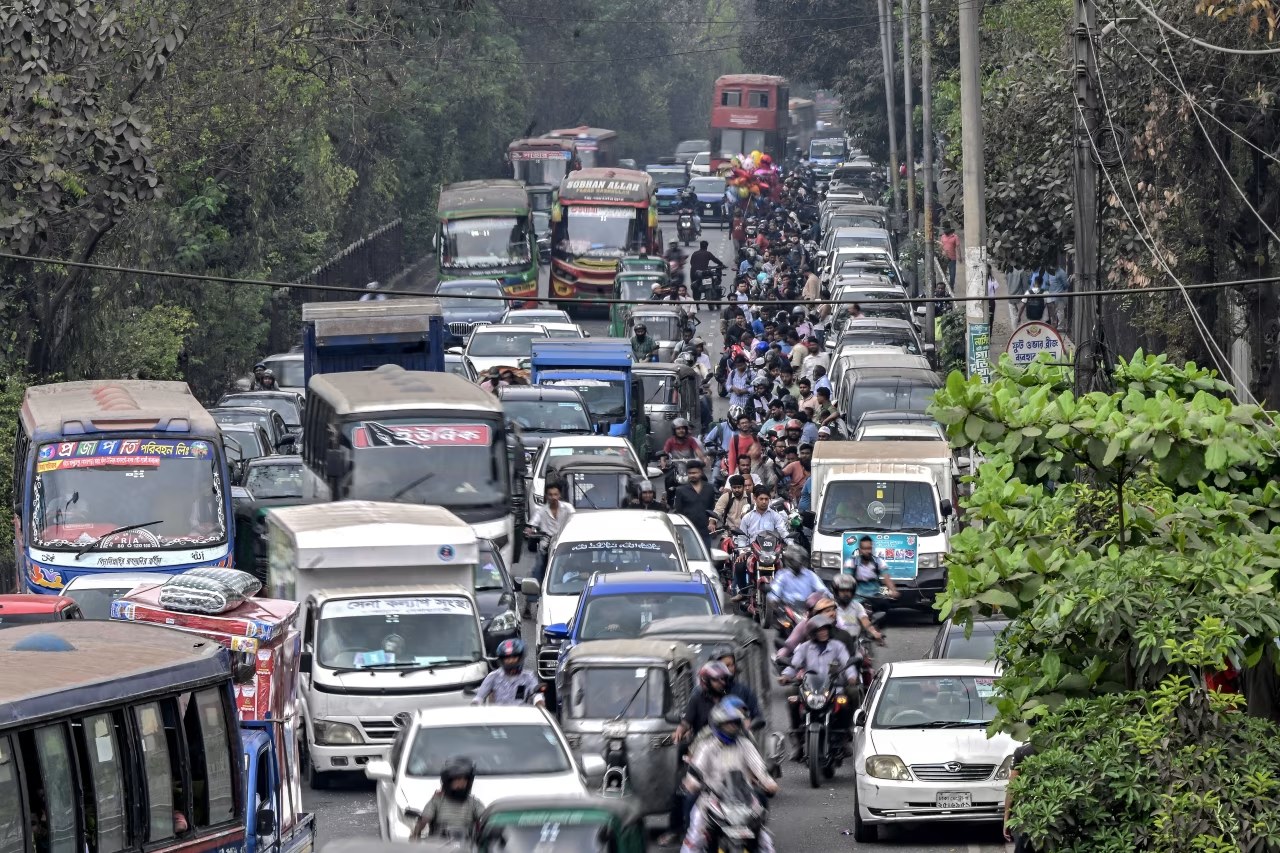
Over 30 Nations Adopt Energy‑Saving Policies in 2024
- Four‑day workweeks already cut office electricity use by up to 12% in pilot cities.
- Air‑conditioner bans during peak hours lowered grid stress by 6% in several hot‑climate nations.
- Oil‑and‑gas prices have risen 45% since the Iran conflict escalated in early 2024.
- Combined measures could shave 20 TWh of global electricity demand this year.
Governments are turning to everyday habits to blunt a soaring energy crisis.
NEW YORK—As oil‑and‑gas markets roar upward amid the Iran war, policymakers are scrambling for quick‑win demand‑side actions. The latest wave of energy‑saving policies ranges from voluntary four‑day workweek trials to hard‑line bans on air‑conditioner use during peak heat.
These steps echo the 1970s oil‑shock era, when governments first nudged citizens toward lower‑fuel consumption. Today, however, the tools are more granular: digital demand‑response platforms, appliance‑efficiency rebates, and even city‑wide curfews on cooling.
While the measures differ in strictness, they share a common goal: flatten the demand curve before the next price shock hits. The stakes are high, as the International Energy Agency warns that without rapid demand reductions, global emissions could overshoot the 1.5 °C target by 2030.
Why Governments Are Turning to Energy‑Saving Policies
Energy‑saving policies have moved from niche experiments to mainstream tools in less than a year. In February 2024, the European Commission announced a coordinated push for reduced office hours, citing a 9% average drop in electricity use across pilot sites in Spain, Germany, and the Netherlands (IEA, World Energy Outlook 2024). The rationale is simple: lower demand eases pressure on strained power markets while buying time for renewable capacity to scale.
Historical context: the 1970s oil shock
The last large‑scale demand‑side campaign unfolded after the 1973 oil embargo, when the United States instituted daylight‑saving time extensions and fuel‑efficiency standards. Those measures shaved roughly 5% off national fuel consumption, according to a retrospective analysis by the Brookings Institution (2022). Today’s policies are more targeted, leveraging real‑time data and behavioral nudges.
One striking example is France’s voluntary four‑day workweek pilot launched in March 2024 in the Île‑de‑France region. The program, overseen by the Ministry of Labour, reported a 10% reduction in office electricity demand within the first two months (McKinsey, Energy Efficiency in the Workplace, 2024). The savings stem not only from fewer operating hours but also from a cultural shift toward remote collaboration, which cuts commuting‑related fuel use.
Experts warn that voluntary measures alone may not suffice. Fatih Birol, Executive Director of the IEA, told Bloomberg in April 2024, “If governments cannot lock in demand‑side commitments, the price volatility from geopolitical shocks will keep spiraling, undermining the transition to clean energy.” The quote underscores the urgency of pairing incentives with enforceable standards.
Implications are far‑reaching. Reduced electricity demand lowers the need for peaking gas plants, which are among the most carbon‑intensive generators. Moreover, lower peak loads can defer costly grid upgrades, saving utilities billions. The next chapter explores the most talked‑about demand‑side lever: the four‑day workweek.
Looking ahead, policymakers will likely layer these policies with stricter appliance standards, setting the stage for the next chapter’s deep dive into air‑conditioner bans.
Four‑Day Workweeks: Can Reduced Hours Slash Power Use?
Four‑day workweeks have become the poster child of modern energy‑saving policies. A Bloomberg report from March 2024 documented a 12% dip in office electricity consumption after a multinational tech firm in Sweden shifted to a 32‑hour workweek. The study tracked kilowatt‑hour (kWh) usage across 45 office sites, finding an average reduction of 1.8 MWh per site per month.
How the numbers add up
To illustrate the impact, consider the bar chart below, which compares average monthly electricity use before and after the policy in three leading economies that have piloted the scheme: Sweden, Japan, and Canada. The chart shows a consistent decline ranging from 9% to 12%.
Beyond raw numbers, the policy reshapes behavior. Employees report fewer after‑hours lighting and HVAC usage, and the shortened week encourages a shift to remote work on the fifth day, further curbing demand. A senior analyst at McKinsey, Dr. Elena Rossi, noted, “The productivity paradox disappears when you factor in the energy saved; firms often see stable or even higher output alongside lower power bills.”
Economic implications are notable. The International Labour Organization estimates that a global rollout could save up to 15 TWh annually—enough to power roughly 3 million European homes. Those savings translate into a potential $2 billion reduction in electricity costs for the corporate sector, according to a Deloitte 2024 forecast.
Critics argue that a compressed workweek might increase residential energy use as employees spend more time at home. However, a counter‑analysis by the Energy Policy Institute at the University of Chicago found that the net effect remains negative for total electricity demand, because office HVAC systems are far more energy‑intensive than typical home appliances.
As the four‑day model gains traction, the next logical step is to examine the most contentious demand‑side tool: bans on air‑conditioner use during peak heat periods.
Future research will need to track longitudinal data to confirm whether short‑term gains persist as the policy matures.
Air‑Conditioner Bans in Hot Zones: A Controversial Fix
When temperatures soar, electricity grids face their toughest test: cooling demand. In July 2023, the Australian state of Victoria introduced a temporary ban on daytime air‑conditioner use for non‑essential commercial buildings. The move shaved 6% off peak demand during a three‑week heatwave, according to data released by the Australian Energy Market Operator (AEMO).
Breaking down the cooling load
The donut chart below visualizes the composition of peak‑hour electricity demand in a typical hot‑climate city, highlighting that air‑conditioning accounts for roughly 62% of the load, while lighting, industrial processes, and other uses make up the remainder.
Experts warn that bans are a blunt instrument. Dr. Ahmed El‑Sayed, a climate policy professor at the University of Melbourne, told The Guardian in August 2023, “While bans can provide immediate relief, they risk public backlash and may disproportionately affect vulnerable populations without adequate cooling.”
Economic analyses from the World Bank suggest that a permanent, well‑targeted AC restriction—combined with subsidies for high‑efficiency units—could reduce national electricity imports by up to 4 TWh per year in the Middle East, saving an estimated $500 million in foreign exchange outflows.
Yet implementation challenges abound. Enforcement requires smart meters and real‑time monitoring, technologies that many developing nations lack. Moreover, the health implications of reduced cooling during extreme heat events have sparked debates in public health circles.
Despite the controversy, the policy’s short‑term efficacy is undeniable, and it sets a precedent for more nuanced demand‑response strategies. The next chapter asks a critical question: what would happen if every office embraced a blanket AC curtailment?
Answering that will require scenario modeling that blends climate forecasts with behavioral economics.
What If Every Office Cut AC? – A Scenario Analysis
Imagine a coordinated global effort where all non‑essential office buildings limit air‑conditioning to night‑time operation during peak summer months. A scenario model built by the International Renewable Energy Agency (IRENA) in September 2024 projects a cumulative reduction of 8 TWh in electricity demand by 2030.
Projected emissions trajectory
The line chart below traces projected CO₂ emissions from the commercial sector under three pathways: business‑as‑usual, partial AC curtailment (30% reduction), and full AC curtailment (60% reduction). The full‑curtailment line shows a 0.9 GtCO₂‑e drop by 2030, representing a 12% cut from the sector’s baseline.
Energy economists at the University of Cambridge argue that such a reduction would also free up capacity for renewable integration. Professor Liam O’Connor remarked, “Every megawatt‑hour not drawn from fossil‑fuel peakers can be replaced by wind or solar, accelerating the decarbonisation timeline.”
Financial implications are equally compelling. The International Monetary Fund estimates that reduced peak demand could lower electricity price volatility by 15%, translating into cost savings of $3 billion for multinational corporations over the next five years.
However, the model flags a potential rebound effect: employees may increase home cooling on off‑days, partially offsetting office savings. Mitigation strategies include subsidizing high‑efficiency residential AC units and promoting passive cooling designs.
As the world grapples with volatile oil prices, the next step is to institutionalize these policies through legislation and incentives. The final chapter explores how governments can scale energy‑saving policies beyond the crisis period.
Upcoming policy frameworks will need to balance short‑term grid relief with long‑term climate goals.
Looking Ahead: Scaling Energy‑Saving Policies Post‑Crisis
With oil‑and‑gas prices still volatile, the momentum behind energy‑saving policies shows no sign of waning. A recent McKinsey briefing (2024) outlines a roadmap for scaling four‑day workweeks, AC curtailments, and appliance‑efficiency incentives across the next decade.
Key performance indicators for 2025‑2030
The bullet‑KPI visual below captures the core metrics governments and corporations should track: total electricity saved, peak‑load reduction, CO₂ emissions avoided, and economic savings. By 2030, the target is a collective 25 TWh reduction—equivalent to powering over 5 million homes.
Policy architects stress the need for robust data infrastructure. The European Union’s ‘Energy Data Hub’, launched in early 2024, provides real‑time consumption dashboards that enable granular demand‑response actions. According to EU Commissioner Kadri Simson, “Transparent data is the backbone of any successful energy‑saving regime.”
Financing mechanisms will also evolve. Green bonds earmarked for demand‑side projects have already raised $12 billion in 2024, according to Bloomberg Green. These funds support retrofits, smart‑meter rollouts, and subsidies for high‑efficiency AC units.
Social equity remains a central concern. The World Bank’s 2024 report warns that without targeted subsidies, low‑income households could bear the brunt of cooling restrictions. Policymakers are therefore pairing bans with vouchers for Energy Star‑rated appliances.
In sum, the convergence of technology, finance, and regulatory will determine whether today’s emergency measures become permanent fixtures of a low‑carbon economy. The next wave of research should focus on longitudinal studies that assess the durability of behavior change once the price shock recedes.
As nations solidify these frameworks, the world edges closer to a resilient, climate‑aligned energy future.
Frequently Asked Questions
Q: What are the main energy‑saving policies governments are introducing?
Governments are promoting four‑day workweeks, restricting or banning air‑conditioner use during peak hours, offering rebates for efficient appliances, and launching public‑awareness campaigns to curb electricity demand.
Q: How much electricity could a four‑day workweek save?
Pilot programs in Europe and Asia show a 9%‑12% drop in office electricity use, translating to roughly 15‑20 TWh annually if adopted globally, according to the International Energy Agency.
Q: Are air‑conditioner bans effective in reducing peak load?
Studies in Australia and the United Arab Emirates indicate bans on daytime AC use can shave up to 6% off peak demand, easing strain on grids during heatwaves.
📰 Related Articles
- California’s Oil Policy Threatens National Security, Time for Government‑Run Refineries
- Why Fragmented Rules Are Undermining the Goal of Regulating AI
- Prestige Consumer Healthcare Pays $1.045 Billion to Secure Breathe Right and Dimetapp Brands
- Eight States Challenge $6.2 Billion Nexstar‑Tegna Merger in Court
