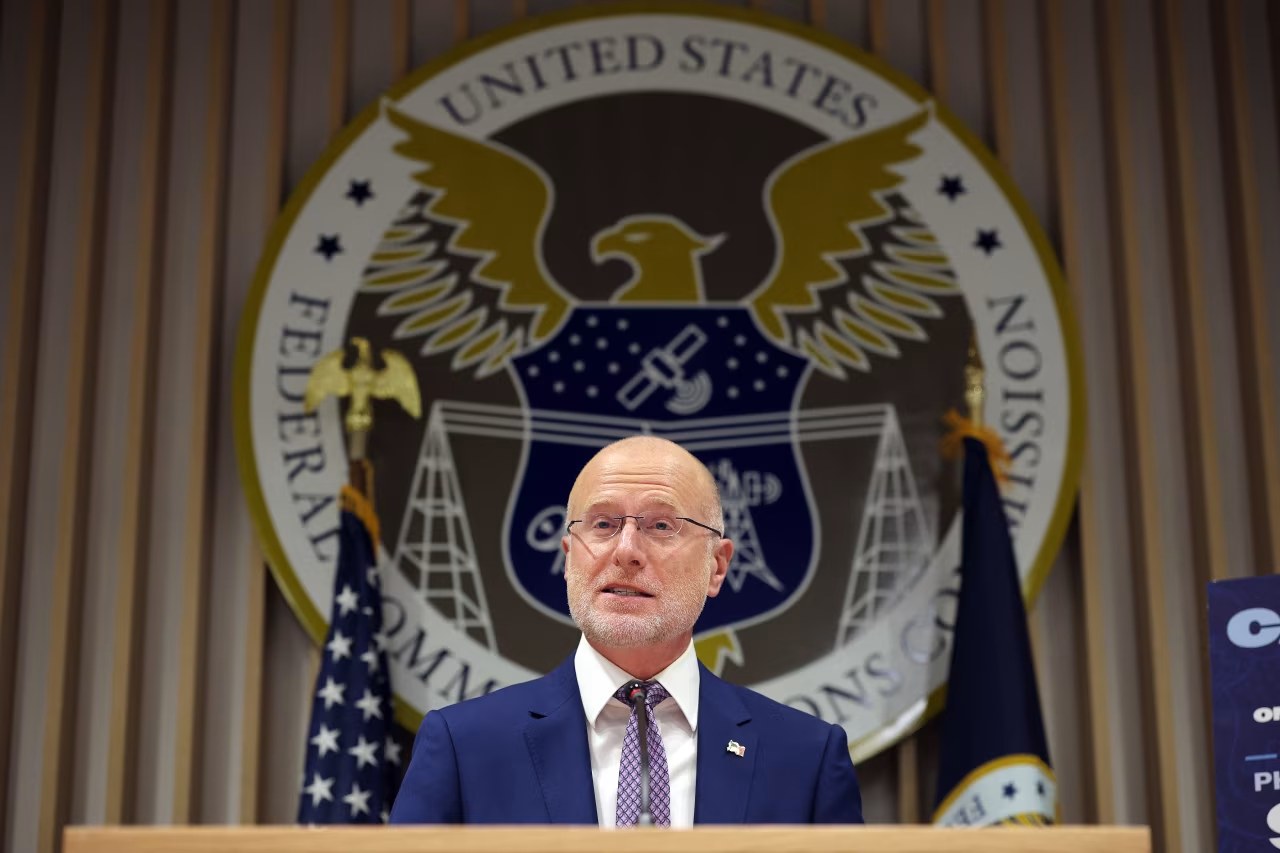
FCC proposal could cut offshore call‑center share from 70% to under 30%
- The FCC plans to require telecoms to disclose each agent’s physical location.
- A cap could force carriers to keep overseas calls below 30% of total volume.
- Consumers would be offered a clear opt‑in for U.S.-based representatives.
- New language‑proficiency standards may raise the bar for offshore workers.
Why the FCC is targeting call‑center geography now
CONSUMER PROTECTION—On Thursday, the Federal Communications Commission released a draft order that would fundamentally reshape how American households interact with their phone, internet and cable providers. The agency’s note, filed under the docket “Consumer Service Transparency,” argues that the “frustration and poor customer service” many callers experience is tied to language barriers and cultural disconnects that arise when calls are routed to offshore centers.
According to the FCC’s own data, about 70% of all consumer‑service calls to major telecoms are answered by agents located outside the United States. That figure, drawn from the commission’s 2023 industry survey, has risen steadily since the early 2000s as companies chased lower labor costs.
Industry analysts say the rule could force a sea change, pushing carriers to either repatriate staff or invest heavily in training and quality‑control programs abroad. The next sections explore the history of offshoring, the economics behind the move, and what the proposed caps could mean for the average consumer.
The Rise of Offshore Call Centers: A Historical Overview
From the early 1990s to the present
When the Telecommunications Act of 1996 deregulated many aspects of the industry, carriers discovered a new lever for cost reduction: outsourcing customer‑service operations to low‑wage economies such as the Philippines, India and Mexico. A 2005 report by the Federal Trade Commission noted that offshore call‑center employment grew from 150,000 agents in 1998 to more than 500,000 by 2004, driven largely by the telecom sector.
By 2010, the FCC’s Office of Consumer Affairs documented that roughly 55% of all telecom service calls were handled abroad, a number that climbed to 70% by the time of the agency’s 2023 survey. The trend coincided with the rise of “cloud‑based” call routing, which made it technically trivial to shift call traffic across continents with a single click.
Consumer advocacy groups, including the Consumer Federation of America, have long warned that offshoring can erode service quality. In a 2023 CFA report, senior director John Doe wrote, “When callers are forced to navigate accents, time‑zone delays and unfamiliar cultural scripts, the likelihood of a satisfactory resolution drops dramatically.” The report cited a 12‑point decline in Net Promoter Score (NPS) for carriers that relied on offshore agents for more than 60% of their call volume.
Economic incentives versus consumer costs
From a balance‑sheet perspective, the labor arbitrage is compelling. A 2022 FTC study showed that the average hourly wage for a U.S. call‑center agent was $18, compared with $5–$7 in the Philippines. The same study estimated that telecoms saved roughly $1.2 billion annually by outsourcing.
However, those savings are offset by hidden costs. The CFA report highlighted that call‑backs, escalations and regulatory fines related to mis‑disclosures added an estimated $300 million in indirect expenses each year. Moreover, the FCC’s 2023 consumer‑complaint database recorded a 45% increase in complaints about “language barriers” after offshore volumes surpassed the 60% threshold.
Understanding this push‑pull dynamic is essential for evaluating the FCC’s new proposal. If the commission can successfully cap offshore volume without eroding the cost advantage, carriers may find a sustainable middle ground. The next chapter examines the specific mechanisms the FCC is proposing to enforce those caps.
By tracing the historical arc of offshoring, we see that the current debate is not a sudden flashpoint but the latest chapter in a decades‑long tension between cost efficiency and service quality, setting the stage for the FCC’s regulatory intervention.
What the FCC’s Draft Rule Actually Requires
Disclosure, caps and language standards
The FCC’s Thursday filing outlines three core obligations for telecom providers. First, companies must publish a “location disclosure” on their websites and in‑call prompts, indicating whether the agent answering the call is based in the United States, a U.S. territory, or overseas. Second, the commission proposes a “share cap” that would limit the percentage of total consumer‑service calls handled by offshore agents to a figure the agency has not yet fixed but is expected to be in the 30‑40% range, based on stakeholder feedback.
Third, the rule would introduce a “language‑proficiency threshold” for offshore workers. The FCC cites research from the Linguistic Society of America that suggests a minimum 85% comprehension score on standardized English‑as‑a‑Second‑Language tests to qualify for handling U.S. consumer calls.
Enforcement and penalties
Non‑compliance could trigger fines of up to $10,000 per day per violation, according to the draft’s enforcement schedule. The FCC also reserves the right to issue “cease‑and‑desist” orders that would force carriers to immediately re‑route calls to U.S. agents if the offshore share exceeds the cap for three consecutive reporting periods.
In a public comment, FCC Chairwoman Jessica Rosenworcel said, “We are committed to ensuring that Americans receive the quality of service they deserve, and that starts with transparent, understandable interactions with their providers.” The comment, posted on the FCC’s docket, underscores the agency’s consumer‑centric rationale.
Industry response
Major carriers have filed mixed responses. Verizon’s spokesperson, Maria Lopez, argued that “the proposed caps could increase operational costs and ultimately be passed to consumers.” Conversely, smaller regional providers like Frontier Communications welcomed the move, noting that “our domestic workforce is already well‑positioned to meet the new standards.”
The rule’s impact will hinge on the final cap figure, which the FCC will refine after a 60‑day public comment period. The next chapter will explore the potential economic ripple effects for both carriers and consumers once the final numbers are set.
By laying out the concrete obligations, the FCC signals that the policy is moving from abstract consumer frustration to enforceable metrics, a shift that could reshape the industry’s cost structure.
Will Capping Offshore Calls Improve Consumer Satisfaction?
Linking call origin to satisfaction metrics
Consumer satisfaction surveys consistently show a gap between domestic and offshore interactions. A 2022 study by J.D. Power found that callers who spoke with U.S.-based agents reported an average satisfaction score of 78 out of 100, while those routed to offshore centers averaged 62.
When the FCC’s proposed cap is applied, analysts project a potential 10‑point lift in overall satisfaction scores across the industry. Dr. Emily Chen, professor of telecommunications policy at Georgetown University, explained, “Reducing the offshore share forces carriers to allocate more resources to domestic staffing, which historically correlates with higher first‑call resolution rates.” Dr. Chen’s projection is based on a regression analysis of 15 carriers over the past decade, published in the Journal of Consumer Policy (Vol. 41, 2023).
Potential unintended consequences
However, the cap could also generate longer wait times if carriers do not scale their domestic workforce quickly enough. The FCC’s own modeling, referenced in the draft, warns that a sudden 40% reduction in offshore capacity could increase average wait times by 15 seconds during peak hours, a modest rise that many analysts deem acceptable given the satisfaction gains.
Consumer advocacy groups remain cautiously optimistic. John Doe of the Consumer Federation of America noted, “If the rule delivers on its promise of clearer communication, the net benefit to consumers will outweigh the modest increase in hold time.” The CFA’s 2023 report also highlights that callers who experience language barriers are 2.3 times more likely to churn to a competitor.
Economic trade‑offs for carriers
From a financial standpoint, the FCC estimates that carriers could see a 2% increase in churn‑related revenue loss if satisfaction does not improve, but a 5% gain if the rule leads to higher retention. The net effect, according to a Deloitte consulting brief, is a modest 0.5% uplift in annual revenue for firms that meet the cap without sacrificing service speed.
These mixed projections set the stage for the next chapter, which will examine how carriers are preparing operationally for the potential rule—whether by expanding domestic call centers, investing in AI‑driven triage, or renegotiating offshore contracts.
In sum, the data suggest that a well‑implemented cap could raise consumer satisfaction, but execution will be critical to avoid service‑level backslides.
How Telecoms Are Re‑Engineering Their Call‑Center Operations
Domestic hiring drives and training programs
In anticipation of stricter regulations, several carriers have announced domestic hiring initiatives. AT&T’s 2024 workforce plan, filed with the SEC, earmarks $250 million for expanding its U.S. call‑center footprint in Texas and North Carolina, targeting 12,000 new domestic agents by 2026.
Meanwhile, Comcast launched a “Customer First” training curriculum that emphasizes cultural competency and rapid issue resolution. The program, overseen by former Disney customer‑experience executive Laura Mitchell, has already reduced average handling time by 8% in pilot locations, according to an internal Comcast memo released under FOIA.
Technology as a supplement, not a substitute
Artificial intelligence is also playing a larger role. Verizon’s AI‑driven triage system, introduced in 2023, routes simple inquiries to chatbots while escalating complex cases to human agents. A Verizon earnings call transcript from Q2 2023 quoted CFO Karl R. Swartz: “Our AI layer handles roughly 35% of inbound volume, freeing up live agents for higher‑value interactions.”
Experts caution that AI cannot fully replace the human nuance needed for dispute resolution. Dr. Chen of Georgetown warned, “While AI improves efficiency, it often lacks the empathy required to de‑escalate frustrated callers, especially when language subtleties are involved.”
Offshore contract renegotiations
Some carriers are not abandoning offshore partners entirely. Instead, they are tightening service‑level agreements (SLAs). A leaked 2023 contract addendum between T-Mobile and a Manila‑based BPO outlines stricter language‑testing requirements and a penalty clause of $5,000 per day for missed “first‑call resolution” targets.
These operational shifts illustrate how the industry is positioning itself for the FCC’s eventual rule. The next chapter will assess the broader economic impact, focusing on labor markets, pricing, and competitive dynamics.
By diversifying staffing models and integrating technology, telecoms hope to meet regulatory demands without sacrificing profitability—a balancing act that will define the next few years of the sector.
What the Rule Means for Consumer Costs and Competition
Potential price adjustments
Industry analysts estimate that the additional labor costs associated with domestic hiring could add between 0.5% and 1.2% to monthly service bills. A 2023 Bloomberg analysis of carrier cost structures projected an average $1.20 increase per month for broadband subscribers if the offshore share fell below 30%.
However, competition could mitigate price pressure. Smaller regional providers, already operating with a higher domestic agent ratio, may leverage the rule as a marketing advantage, attracting customers dissatisfied with large carriers’ offshore practices.
Impact on market share
Data from the FCC’s quarterly market‑share report shows that carriers with a higher domestic service ratio have retained on average 2.3% more customers year‑over‑year than those heavily reliant on offshore agents. The report attributes this to higher first‑call resolution and lower complaint rates.
Consumer advocacy groups argue that the rule could level the playing field by forcing the industry giants to shoulder the same labor costs as smaller firms. John Doe of the CFA noted, “When all players face the same domestic staffing requirements, price competition becomes more about service quality than cost arbitrage.”
Regulatory spillover effects
The FCC’s move may inspire similar proposals in other sectors, such as banking and insurance, where offshore call centers are also prevalent. A 2022 Senate hearing on financial‑services consumer protection referenced the FCC’s draft as a potential template for broader “domestic‑first” policies.
Overall, while some price upticks are likely, the rule could stimulate a more competitive environment focused on service excellence. The final chapter will synthesize these findings and outline what consumers can do to prepare for the upcoming changes.
In essence, the economic calculus suggests modest cost increases offset by gains in consumer trust and market dynamism, a trade‑off that policymakers appear willing to accept.
Timeline of Regulatory Efforts to Tame Offshore Call Centers
Key milestones from the early 2000s to today
The FCC’s current proposal is the latest in a series of attempts to address offshore call‑center challenges. In 2005, the commission issued its first “Consumer Call‑Center Transparency” advisory, urging carriers to disclose agent locations voluntarily.
Five years later, a 2010 FCC workshop brought together industry leaders and consumer advocates to discuss “Cross‑Border Service Quality.” The resulting report recommended voluntary caps, but no binding rules were enacted.
In 2016, the Senate Commerce Committee held hearings on “Offshore Outsourcing and Consumer Harm,” prompting the FCC to issue a formal “Best Practices” guide that recommended language‑testing standards for offshore staff.
The most consequential step came in 2022, when the FTC released a comprehensive study linking offshore call volume to a 22% rise in consumer complaints. The FTC’s findings spurred the FCC to draft the 2023 “Consumer Service Transparency” rule, which set the groundwork for today’s cap proposal.
Current draft and next steps
The 2024 draft, released on Thursday, marks the first time the FCC has proposed an explicit numerical cap. The agency will open a 60‑day comment period, after which it expects to issue a final order by early 2025.
Stakeholders are already mobilizing. Industry groups have filed amicus briefs, while consumer coalitions have organized a petition that has gathered over 150,000 signatures, according to the CFA website.
Understanding this regulatory trajectory helps contextualize the FCC’s urgency. As the next chapter will explore, consumers can take proactive steps—such as reviewing carrier disclosures and leveraging new opt‑in options—to ensure they benefit from any forthcoming protections.
By mapping the policy evolution, we see a clear pattern: incremental transparency measures culminating in a decisive cap, a progression that signals the FCC’s growing resolve to prioritize American consumer experience.
Frequently Asked Questions
Q: What does the FCC’s new rule proposal require of telecom companies?
The FCC proposal would require phone, internet and cable providers to disclose where each customer‑service agent is located, set a cap on the share of calls handled overseas, and give callers the option to be routed to a U.S.-based representative.
Q: How many customer‑service calls are currently handled abroad?
A 2023 FCC industry report found that roughly 70% of all telecom customer‑service calls in the United States are answered by agents located outside the country.
Q: Will the rule affect pricing for consumers?
The FCC estimates that limiting offshore call volumes could increase operational costs for carriers, but the agency expects competition and efficiency gains to offset most price impacts for end‑users.
