Trump Regulator Invites 7 Crypto Giants to Seek U.S. Bank Charters
- Acting Comptroller Jonathan Gould has formally invited Ripple, Crypto.com and other crypto firms to apply for national bank charters.
- The policy reversal threatens to open the Fed’s payment rails to digital-asset firms that banks say operate outside strict capital rules.
- Trade groups including the American Bankers Association warn the move could create a two-tier regulatory regime and heighten systemic risk.
- Gould argues embracing innovation is essential to keep the U.S. banking system globally competitive.
Can fintechs that custody bitcoin meet the same safety-and-soundness standards as JPMorgan?
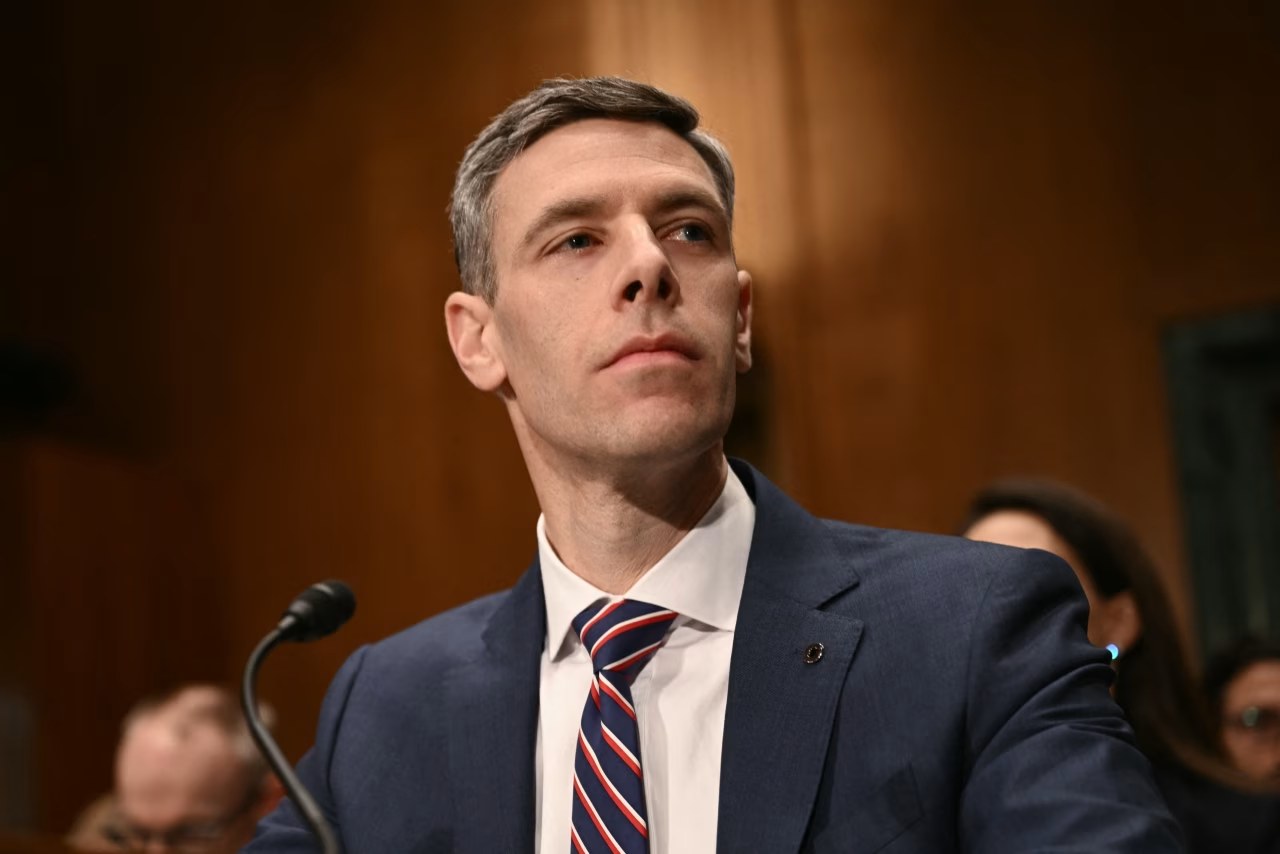
JONATHAN GOULD—Washington—In a quiet but seismic shift, the Trump-appointed Acting Comptroller of the Currency has signaled that cryptocurrency exchanges are welcome inside the federally-regulated banking system. Jonathan Gould, who has run the Office of the Comptroller of the Currency since early 2025, told industry executives last month that firms such as Ripple and Crypto.com may seek national bank charters, according to two people who attended the closed-door session.
The pronouncement marks a U-turn from the Biden-era posture that left crypto firms navigating a patchwork of state money-transmitter licenses. By dangling the prestige—and payment utility—of a national charter, Gould is effectively offering crypto platforms the same privileges long reserved for traditional depositories, while subjecting them to consolidated federal supervision.
Banking trade groups, already smarting from years of fintech encroachment, say the plan risks diluting century-old guardrails. “A crypto platform that can tap the Federal Reserve’s discount window but sidesteps Community Reinvestment Act exams is not competing on a level field,” one senior bank lobbyist told colleagues in an e-mail reviewed by this publication.
Inside the OCC’s Crypto Invitation List
The Office of the Comptroller of the Currency has never published an official roster of invitees, but conversations with five people directly involved reveal at least seven firms have been encouraged to file applications: Ripple, Crypto.com, Paxos, Circle, Gemini, BitGo and payment-processor Stripe. Each handles dollar-pegged stablecoins or custody services the OCC now classifies as “traditional banking activities,” a phrase Gould used in a March 27 speech to the Institute of International Bankers.
Why the OCC sees custody as a banking primitive
Under the 1863 National Bank Act, holding assets for others is a core banking power. In interpretive letters from 2020 and 2021, the OCC clarified that safeguarding cryptographic keys is the digital equivalent of holding gold in a vault. Gould, then senior deputy comptroller, helped draft those opinions and is now implementing them at scale. “The statute doesn’t mention vaults made of steel or code; it mentions safekeeping,” he told attendees, according to a transcript reviewed by this publication.
Banking attorneys say the framing is clever but not uncontested. “Stretching an 1863 statute to cover cold-storage wallets is novel,” said Karen Solomon, a partner at Orrick and former OCC chief counsel. “Courts will eventually decide whether a smart-contract multisig arrangement is the legal equivalent of a vault teller.”
Still, the invitation alone has moved markets. Shares of crypto-adjacent Silvergate Capital, which already holds a California state charter, jumped 14 % the day after Gould’s remarks, while the KBW Nasdaq Bank Index dipped 2 %, underperforming the broader market.
The real prize is direct access to FedWire and the settlement finality that comes with master accounts. Currently, crypto firms rely on partner banks such as Cross River or Signature Bridge, adding latency and counter-party risk. A national charter would let them settle dollar transactions in real time, a service JPMorgan provides to Apple Card but denies to crypto clients.
Yet the OCC has not clarified how anti-money-laundering obligations would apply to decentralized tokens that move without intermediaries. “If a validator in Kazakhstan processes a $100 million USDC transfer, who files the SAR?” asked one regional bank compliance officer, referring to suspicious-activity reports mandated under the Bank Secrecy Act. The question remains unanswered in public guidance.
Bottom line: Gould’s olive branch is conditional. Applicants must still meet leverage-ratio requirements, craft resolution-plan living wills and pass the Fed’s so-called “qualitative objection” hurdle—none of which have been tested on a crypto-native balance sheet heavy with volatile tokens.
How the Banking Lobby Is Fighting Back
Within 48 hours of Gould’s closed-door remarks, the American Bankers Association circulated a six-page briefing note to Capitol Hill staffers arguing that crypto charters pose “unquantifiable systemic risk” and urging lawmakers to invoke the Congressional Review Act if the OCC finalizes guidance. The memo, obtained by this publication, warns that digital-asset platforms could accumulate deposits without facing the same capital buffers, exam frequency or consumer-compliance scrutiny as insured banks.
ABA’s legislative playbook
The trade group wants the Senate Banking Committee to attach a rider to the upcoming FAA reauthorization that would bar the OCC from issuing charters to firms whose primary activity is “crypto-asset custody or stablecoin issuance” unless the FDIC and Fed concur. Such language would effectively reinstate the multi-agency veto that prevailed under former Acting Comptroller Michael Hsu, who slowed crypto approvals after 2022.
Independent community banks are even more strident. “We’re talking about firms that settled with OFAC for sanctions violations last year,” said Robert Fisher, president of the Ohio Bankers League, referring to crypto exchange Bittrex’s $29 million fine. “Now they want deposit insurance? It’s an insult to every CRA-rated bank that lent during the pandemic.”
Data support some of their claims. A 2023 FFIEC report found that nationally-chartered crypto-lending platform Anchorage Digital had 37 consumer complaints per billion in assets versus a median of 3 for traditional banks. Meanwhile, traditional banks point to the collapse of crypto-focused Silvergate and Signature as evidence that digital-asset funding models are inherently unstable.
Yet the politics are fracturing along ideological, not regional, lines. Republican senators Cynthia Lummis and Ted Cruz have praised Gould’s outreach, while progressive Democrats including Senator Sherrod Brown remain skeptical. “We can’t let the OCC create a shadow banking system with no backstop,” Brown said in a statement.
The OCC’s own financial-stress test, disclosed in a footnote to Gould’s speech, projects that a combined crypto-bank sector with $100 billion in assets would need $9 billion in additional capital to withstand a 2022-style Terra-Luna style run—roughly a 9 % buffer, double the Basel minimum. Critics say the estimate is too low because it assumes Fed swap lines would remain open, an assumption untested for crypto counterparties.
Forward-looking: House Financial Services Chair Patrick McHenry has scheduled a hearing titled “Innovation or Instability: Evaluating the OCC’s Crypto Charter Agenda” for next month, setting up a partisan showdown that could derail applications already in the queue.
What a National Charter Would Actually Cost Crypto Firms
Winning a national charter is not a regulatory free pass. Under 12 C.F.R. Part 5, applicants must inject Tier 1 leverage capital of at least 8 % of average total assets—double the statutory minimum for well-capitalized banks—because the OCC labels crypto activities “higher-risk.” For a firm like Circle, which holds $33 billion in USDC reserves, that implies a $2.6 billion equity cushion, a ten-fold increase over its current $260 million disclosed capital.
Hidden compliance costs
Add in FDIC assessments, OCC examination fees, Bank Secrecy Act software and mandatory resolution-plan legal work, and the annual compliance tab can reach $180 million for a $50 billion-asset bank, according to Deloitte estimates shared with clients and reviewed by this publication. That is roughly 3.5 % of operating expense, compared with 1.2 % for a traditional regional bank of similar size.
Then there is the Durbin amendment. Once a crypto firm exceeds $10 billion in assets, its debit-card interchange revenue gets capped at 21 cents plus 0.05 % per transaction—slashing a key revenue stream that currently subsidizes zero-fee trading on platforms like Crypto.com. Internal forecasts prepared by one applicant show the cap would erase $340 million in annual revenue, forcing either higher trading fees or reduced staking rewards.
Still, the charter unlocks two lucrative benefits: access to the Fed’s master account eliminates the need for correspondent banks that currently charge 10–15 basis points per dollar settled, and the ability to issue negotiable CDs could lower funding costs by 80 basis points relative to offshore dollar commercial paper. For a firm settling $20 billion daily, the savings could top $200 million a year—outweighing compliance outlays.
Capital markets are already pricing in the shift. Spreads on Circle’s private credit facility tightened 35 basis points after Gould’s speech, while Crypto.com’s recent $400 million convertible note priced at 150 basis points over Treasuries, tighter than the 200 bps talk before charter rumors surfaced.
Bottom line: Charter economics work only for firms with massive payment volumes or diversified revenue. Smaller startups may find the regulatory burden prohibitive, accelerating consolidation around a handful of crypto-bank behemoths.
Could the Next Administration Reverse Course?
Unlike legislation, charter approvals are adjudicative decisions that can be rescinded only through due-process hearings. Still, a new comptroller could simply stop accepting applications, effectively freezing the pipeline. Historical precedent exists: in 1994, then-Comptroller Eugene Ludwig halted new trust-bank charters for non-financial firms after Congress raised concerns about Walmart obtaining a banking license.
Legal durability of crypto approvals
Once a charter is granted, the OCC must show “unsafe or unsound practices” to revoke it—a high bar that requires notice, hearing and appellate review. That means any crypto bank chartered under Gould would likely survive at least one presidential term, even if a progressive successor wanted to clamp down.
Yet capital-market documents show applicants are hedging. Circle’s draft prospectus contains a risk factor titled “Potential Regulatory Reversals,” warning that a future administration could impose “materially different capital or activity restrictions” post-charter. Translation: new rules could still cripple economics even if the license survives.
Congress could also intervene. A statute amending the National Bank Act to exclude “digital-asset custody” from permissible banking activities would override the OCC, but such a bill would need 60 Senate votes to defeat a filibuster—unlikely unless another crypto crash rattles consumers.
Market signals are mixed. Prediction-market contracts on Polymarket imply a 58 % probability that the OCC will approve at least one crypto charter before Inauguration Day 2029, down from 72 % the day Gould spoke—reflecting election uncertainty rather than legal doubts.
Bottom line: Crypto firms racing for a charter are betting that regulatory goodwill lasts longer than headlines. History suggests once a foot is in the federal door, it is hard to slam shut—provided balance sheets stay resilient through the next electoral cycle.
Frequently Asked Questions
Q: What authority does the Office of the Comptroller of the Currency have over crypto firms?
The OCC alone can grant nationally-chartered bank status, giving crypto platforms access to Fed payments, FDIC-insured deposits and pre-emptive power over state licensing. Jonathan Gould’s policy shift treats crypto custody and stablecoin issuance as traditional banking activities.
Q: Why do existing banks oppose crypto charters?
Banking trade groups argue crypto lenders would skirt Basel capital rules, Bank Secrecy Act exams and Community Reinvestment Act obligations, creating an uneven playing field while taxpayers implicitly back-stop the payments system.
Q: Which crypto companies have already applied?
Ripple and Crypto.com confirmed they submitted preliminary charter proposals under Gould’s invitation; at least five other payment-tech firms are in informal talks, according to people familiar with the applications.
