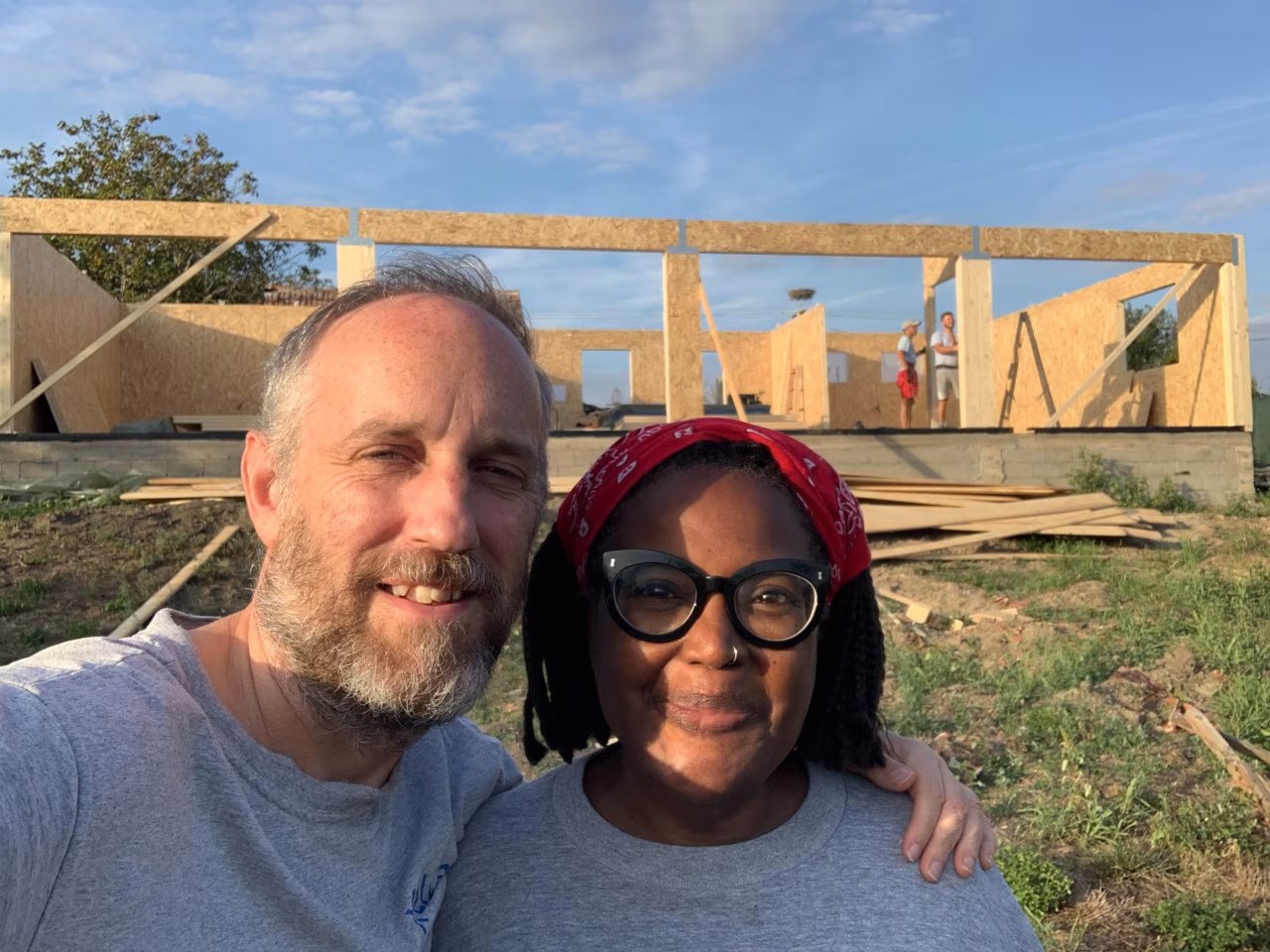
After 3,650 Days on the Road, One Couple Plants Bricks in Rural Serbia
- Ten years of nonstop travel across 60+ countries ended when the couple signed a deed on a weed-covered plot near the Romanian border.
- Remote writing and editing funded the decade, averaging $1,200 a month in Latin America and Southeast Asia.
- Local masons now pour foundations for a 140-square-meter home designed to stay cool without air-conditioning.
- The shift mirrors a broader nomad fatigue: Google searches for “stop traveling” have doubled since 2020.
From backpacks to blueprints: how the open road finally pointed home
SERBIA—For ten years every sunrise carried a question—train to Tirana or ferry to Crete? Yet when the pandemic grounded flights and the writer’s father died, the couple felt gravity for the first time. They chose Serbia, a country neither had visited before, because land was cheap, visas were simple, and villagers greeted strangers with slivovitz instead of suspicion.
The decision reverses a lifestyle that once seemed bulletproof: work from a laptop, rent-free house-sits, winter in Vietnam, summer in Albania. Now they budget for concrete, not carry-on weight limits, and argue over window frames instead of border crossings.
They are not alone. Interpol data show 1.2 million western passport holders spent more than 180 days abroad in 2023, up from 340,000 in 2013, but growth has flattened year-over-year for the first time since 2010. The road, it seems, has speed bumps.
The Seductive Math of Perpetual Motion
The couple’s decade on the road was underwritten by a simple equation: earn in dollars, spend in colones or dong. In 2014 they left New York with two carry-ons and a $14,000 cushion from selling furniture. Within six months their monthly burn rate fell to $1,200—half paid to a house-sit in Costa Rica that included two dogs and a pickup. By 2017 they had circled the globe twice without signing a lease.
Remote editing contracts brought $4,000 to $6,000 a month, more than triple their daily spend in Georgia or Guatemala. The surplus bought freedom: a last-minute flight to the Maldives when Airbnb prices crashed, or a week in Lisbon between house-sits. Genie tracked every expense in a color-coded spreadsheet; the only red cells were annual travel-insurance premiums.
Yet the math changed after 2019. Short-term rentals in Mexico and Portugal jumped 40% as platforms pivoted to weekenders, not monthly stays. Border runs grew tense—Thailand cracked down on back-to-back tourist visas. By 2021 their average nightly cost hit $38, eroding the cushion that once felt bulletproof. The dream was still breathing, but it had started to wheeze.
When the spreadsheet turns red
Financial planners at Harris SBS who specialize in location-independent clients report that most long-term nomads face a cost cliff around year seven. “Visa fees, insurance, and bounced bookings compound faster than inflation,” says certified planner Laila Ross. “Without a home base, you’re always paying peak prices.” The Austins felt the cliff in Ecuador when a last-minute cancellation left them shelling out $110 a night for a Quito hotel during Carnival.
They realized perpetual motion carried a hidden premium: the absence of local knowledge. Friends in Belgrade paid a third for utilities because they knew which paperwork waived foreigner surcharges. Nomads never stay long enough to learn the loopholes.
The couple’s pivot to Serbia was therefore both emotional and economic. A 500-square-meter lot cost €7,000, less than a year of hostel dorms. Construction labor runs €15 an hour, half the price in Portugal. By opting out of motion, they re-inflated the margin that travel had slowly bled away.
Tomorrow’s chapter will show how they chose the exact spot on a Balkan map littered with villages shrinking faster than EU subsidies can prop them up.
Why Serbia Became the Pin on the Map
They never planned on Serbia. The shortlist started with Mexico’s Lake Chapala and Portugal’s Castelo Branco—both teeming with expat forums and direct flights. Yet property prices in those hubs had doubled since 2018. A half-hectare in central Portugal listed at €35,000 five years ago now commands €90,000 if water rights are included. Serbia felt like a typo until they saw the numbers.
Land in the village of Koviljevo, 90 minutes northeast of Belgrade, sold for €3.50 per square meter in 2022, unchanged since 2014. The region’s population has fallen 28% since 2002, so councils waive building permits for returning diaspora within 30 days instead of the usual six months. More importantly, Serbia offers a one-year residence certificate on proof of remote income above €1,000 a month—well below the couple’s average.
They flew to Belgrade in March 2022, rented a €19-a-night studio, and hired a local fixer, Milena Jovic, who had helped 40 foreign buyers in the previous year. In one week they toured six plots, met a mason who quoted €380 per square meter for a turnkey build, and drank šljivovica with future neighbors who promised fresh eggs. On the seventh day they signed a purchase contract in the municipal office, paying €7,000 cash plus €300 in notary fees.
The geopolitical wildcard—Serbia’s refusal to sanction Russia—actually lowered their risk. Construction timber, ironically imported from Belarus, costs 18% less than in Montenegro because customs lanes stay open. “We’re not making a political statement,” Genie says. “We’re just following the math that lets us stop moving.”
A village that trades in trust, not credit
Demographer Goran Basic at Belgrade’s Institute of Social Sciences calls Koviljevo a textbook example of “managed decline.” The elementary school has eight students; the bakery accepts IOUs. Foreign arrivals willing to plant roots are greeted as lifelines, not invaders. Within a month the couple was invited to slava, the Orthodox family saint day, where they toasted with plum brandge poured from a three-liter jar.
Trust translates into savings. Neighbors lend tools, so the couple skipped buying a €400 cement mixer. A retired electrician rewired their temporary cabin for the cost of two pizzas and a six-pack. The cumulative discount knocks roughly €12,000 off the total build, according to Jovic’s spreadsheets.
Serbia also sits at the crossroads of the Balkans, meaning the travel itch can still be scratched. A FlixBus to Vienna costs €22; low-cost flights from Belgrade reach 62 European cities. They may have left the road, but the road never fully left them.
Next, we dive into the emotional ledger: what a decade of goodbyes does to memory, friendship, and identity.
The Hidden Cost of Permanent Goodbye
For ten years the couple’s calendar was a string of farewells: goodbye to hostel friends in Bogotá, goodbye to house-sit pets in Perth, goodbye to the Spanish tutor who refused payment because lessons ended in laughter. Psychologists call this “perpetual ambiguous loss”—relationships that never reach closure because the context evaporates overnight.
Research from the University of Queensland tracking 500 long-term travelers shows that after year five, 62% report chronic loneliness, despite daily social-media check-ins. The brain keeps a ledger of unfinished micro-bonds, raising cortisol levels every time WhatsApp groups go quiet. Genie felt it acutely in 2021 when she realized she could recall 47 café passwords but only four birthdays of friends still alive.
The writer’s coping mechanism was storytelling—each article filed from the road doubled as a postcard to people left behind. Yet the stories themselves became a form of goodbye, cementing memories in past tense. By the time they reached Thessaloniki in late 2022, he noticed he was already mentally drafting the farewell paragraph while the taxi to the Airbnb was still idling.
Building in Serbia therefore represents a neurological U-turn. Bricks, unlike backpacks, accrue history. A wall once raised will outlast the builder, giving memory a shelf life longer than a Snapchat story. “We wanted objects that age with us,” Genie says, “not objects we outrun.”
When every sunset is a curtain call
Dr. Rachael Wooten, a psychologist who consults for relocation firms, notes that long-term nomads often develop “scenery fatigue,” a condition where new vistas stop triggering dopamine. The brain, wired to seek novelty, begins to discount stunning sunsets as background noise. Couples report bickering over which beach is least boring, a paradox that hastens the decision to settle.
The Austins experienced scenery fatigue on a ferry between Indonesian islands. Surrounded by postcard perfection, they spent the three-hour ride comparing laptop screen brightness. That moment, Genie says, was the first honest whisper that the road might be ending.
Choosing Serbia is therefore also a psychological anchor. Seasons are sharp; winters force communal huddling in kafanas where the same fiddler plays every Friday. Repetition, once the enemy, becomes the antidote to loneliness. The couple now mark every wall rise with a photo dated in chalk, a ritual that converts time into visible progression rather than mileage.
The next chapter examines how they will fund the mortgage once the travel stories run dry.
From Passport Stamps to Pay Stubs: Can the Freelance Income Survive a Mortgage?
The couple’s construction budget sits at €65,000, of which they aim to pay 60% in cash and finance the rest through a Serbian dinar-denominated loan at 5.9% fixed for ten years. Local banks historically shun foreigners, but Serbia’s Law on Housing adopted in 2020 allows any resident with a tax number to apply for construction credit. The catch: the monthly payment cannot exceed 35% of verified income, and only Serbian-sourced income counts after year one.
To bridge the gap, the writer locked a two-year remote-editing contract with a New York publisher at $4,500 a month, funneled through a Delaware LLC. Serbian tax treaties let him claim foreign-earned income exclusion up to Serbia’s average salary threshold, roughly €900 a month, while the rest is taxed at 15%. The net effective rate lands around 11%, lower than Croatia or Spain.
Genie diversified into Croatian-language copy-editing for EU-funded websites, capitalizing on Serbia’s bilingual talent pool. She bills €35 an hour through a Belgrade agency that handles VAT, adding a projected €900 monthly. Combined, their verified local income exceeds the €1,320 threshold required by the bank, clearing the path for a €26,000 mortgage that costs €286 a month.
They also built a buffer: six months of expenses sit in a high-yield euro account at 3.2%, beating Serbia’s inflation of 12%. The strategy mirrors advice from Belgrade financial advisor Vladimir Maric: “Anchor your liabilities in dinars, your assets in euros, and your freelance contracts in dollars.”
Freelance contracts meet Balkan bureaucracy
Serbia’s central bank insists that all foreign-currency invoices be converted through licensed exchanges, creating a 1.2% haircut on every dollar wired in. Over a year that fee equals a month’s groceries, so the couple route large transfers via TransferWise, then convert in bulk on days when the interbank rate spikes. Timing the dips saved €312 last year—small, but enough to fund the hardwood floor they once considered too pricey.
They also joined Serbia’s sole freelancers’ union, which lobbies for flat-rate social contributions capped at €150 a month, far below the 35% payroll bite that salaried locals face. The membership card shaved €53 off their monthly tax bill, validating Maric’s mantra: “In the Balkans, networks beat net worth.”
Still, the bigger test looms once the house is finished and the novelty of staying still wears off. Will the lure of assignment calls from Patagonia outweigh the comfort of a fixed address?
The following chapter confronts that tension head-on.
Will the Road Call Again?
Construction crews break for rakija at 10 a.m., but by noon the walls are ten centimeters higher, a tempo the couple calls “Balkan time with German results.” Watching the house rise, they feel the same anticipatory flutter once reserved for plane departures, yet the emotion is laced with a foreign ingredient: finality. A notary will hand them keys, not a hostel receptionist.
Still, veteran nomads warn of relapse. Blogger Nora Dunn, who quit the road in 2015 after 12 years, admits she books a one-way ticket within six months of every attempt to settle. “The addiction isn’t travel; it’s reinvention,” she writes. The Austins counter with a contract they drafted together: no international travel for 18 months after move-in, except one work trip each, paid by clients, not savings.
To scratch the itch, they plan micro-adventures—hiking the 100-km Sultans Trail that starts at their back gate, or house-swapping with a Zagreb designer for a month. Psychologist Wooten calls this “bounded wandering,” a compromise that lets the brain taste novelty without severing social roots.
Their bigger insurance policy is purpose. They reserved the ground floor for a residency program offering fellow nomads free room in exchange for documenting local crafts. The first applicant, a Canadian videographer, arrives next spring to film beekeepers producing frankincense honey. If the road can come to them, maybe they won’t need to chase it.
When wanderlust becomes wonder-roots
Serbia’s diaspora ministry estimates that 2,800 foreigners obtained residency in 2023 citing remote work, up from 900 in 2020. Nearly 60% stay beyond two years, a retention rate higher than Portugal’s famed D7 visa. Officials credit low living costs and fast fiber internet; sociologists point to the human need for witness. Roots grow deeper when neighbors notice your haircut and comment on your garden, something that never happened in 300-person hostel dorms.
The Austins already feel the tug. Last month the village priest asked the writer to draft a grant proposal for roof repairs. Genie teaches English to the baker’s daughter, payment in fresh burek. These small dependencies weave them into a narrative larger than their own itinerary, something a decade of motion never granted.
Will it last? Dunn, who finally bought a farmhouse in Ontario, offers a litmus test: “If you still enjoy grocery shopping after a year, you’re home.” The couple shopped in six stores across four countries last month; this week they argued over which Serbian supermarket stocks better paprika. The quarrel felt trivial, and weirdly comforting.
The final chapter reflects on what ten years of circles on a map taught them about straight lines.
What a Decade of Circles Teaches About Straight Lines
On the night before they broke ground, the couple spread every passport across the rental kitchen table like tarot cards. Together the booklets contain 178 stamps, 14 visa rejections, and three replacement pages for countries that no longer exist. The writer realized the stamps formed a constellation, not a line; they kept returning to hubs—Medellín, Luang Prabang, Thessaloniki—drawn by people, not sights.
Anthropologists call this pattern “spiral return,” the tendency of long-term travelers to orbit the same latitudes once friendships take root. The house in Serbia sits at one such spiral’s center, a geographic average of all the places they missed when elsewhere. GPS coordinates punched into a mapping app show the village is within a two-hour flight of 50% of their closest friends, an accidental but telling clustering.
The decade also revealed the fallacy of bucket lists. They visited 62 countries yet spent 42% of nights in just six, proof that depth trumps breadth. The house’s foundation echoes that ratio: one meter thick, designed to outlast renovations, regimes, and restless feet. “We optimized for repetition, not novelty,” Genie says, “the opposite of our first year on the road.”
The writer’s final column before the move summarized the math: ten years, $148,000 in travel costs, 312 beds, 47 jobs completed, zero permanent regrets. Yet the spreadsheet’s last cell is blank, reserved for what accountants call future value—compound interest on experience once movement stops. Serbian villagers predict the house will stand 150 years; the couple hope the stories they host inside outlast the mortar.
Home as the ultimate souvenir
Author Pico Iyer once wrote that home is not where you happen to be born, but where you become yourself. The Austins became themselves in departure lounges and consular waiting rooms, but also in the quiet of a cornfield at dusk, listening to a neighbor’s turbo-folk album echo across the valley. The soundtrack is new; the feeling is ancient.
They still keep backpacks by the door, now stuffed with grout samples instead of boarding passes. Travel taught them that movement is meaningless without witness, so they invite the world to come stand still with them, one resident at a time. If the road shaped them into people who can live anywhere, perhaps they can finally live somewhere.
Tomorrow the masons will lay the last brick of the eastern wall. The couple plan to carve their initials and the date into the wet cement, a cliché they avoided in 120 hostels. This time the graffiti will stay, a quiet declaration that the dream is no longer out there on the horizon, but here—four walls, a tin roof, and the promise that next time they leave, departure will be a choice, not a reflex.
The road ends, as all roads do, with a door. And doors, they remind themselves, open both ways.
Frequently Asked Questions
Q: Why did the couple stop traveling after ten years?
They craved permanence, community roots, and a physical space to shape together—something a decade of constant movement couldn’t provide.
Q: Where in Serbia are they building their home?
Rural Serbia, chosen for affordability, warm locals, and proximity to Europe’s travel network without the tourist price tag.
Q: How did they afford to travel full-time for ten years?
Remote writing and editing income, low-cost destinations, house-sitting swaps, and slow travel kept monthly spend below many city rents.
