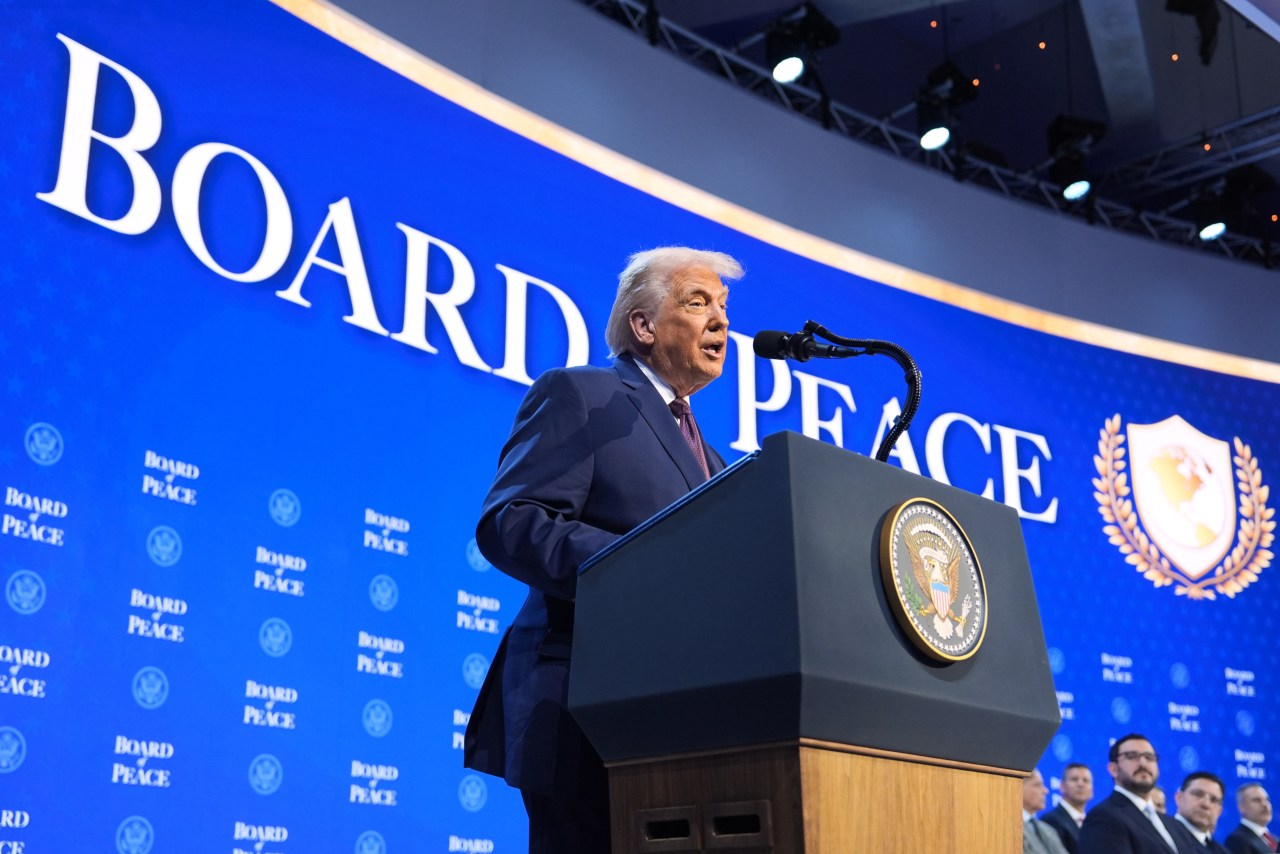
TRUMP ADMINISTRATION—As President Trump oversees a significant military buildup in the Middle East, his administration is set to convene the Board of Peace on Thursday, aiming to showcase his commitment to diplomatic efforts in the region. However, with rising tensions and a bolstered military presence, can Trump convincingly present himself as a President of Peace? This paradox raises questions about the Trump administration’s strategy in the Middle East and its implications for global stability.
The Trump Administration’s Middle East Military Buildup
Introduction to the Middle East Military Buildup
The Middle East has long been a focal point of U.S. foreign policy, with the region’s strategic importance and potential for conflict making it a priority for American presidents. The Trump administration, in particular, has taken a multifaceted approach to the region, combining diplomatic overtures with a significant military buildup. This chapter will explore the rationale behind this buildup and its potential consequences.
Rationale Behind the Military Buildup
The Trump administration’s decision to bolster the U.S. military presence in the Middle East is largely a response to perceived threats from Iran and its proxies. The administration has expressed concern over Iran’s nuclear program, its support for militant groups, and its influence in countries such as Iraq and Syria. By strengthening the U.S. military footprint in the region, the Trump administration aims to deter Iranian aggression and protect American interests.
Potential Consequences of the Military Buildup
While the Trump administration’s military buildup in the Middle East is intended to enhance regional stability, it also carries significant risks. An increased military presence could escalate tensions with Iran, potentially leading to conflict. Moreover, the buildup may be perceived as a provocation by other regional actors, further destabilizing the area. This chapter will examine these potential consequences in greater detail, considering the complex geopolitics of the Middle East and the Trump administration’s strategic objectives.
The Role of the Board of Peace in Trump’s Foreign Policy
Introduction to the Board of Peace
The Board of Peace, convened by the Trump administration, is tasked with exploring diplomatic solutions to conflicts in the Middle East. As the Board meets on Thursday, it will face the daunting challenge of reconciling the administration’s military buildup with its stated commitment to peace. This chapter will analyze the Board’s role in Trump’s foreign policy and its potential impact on the region.
Challenges Facing the Board of Peace
The Board of Peace faces significant hurdles in its mission to promote peace in the Middle East. The Trump administration’s military buildup, while intended to deter aggression, may be perceived as contradictory to the Board’s diplomatic efforts. Furthermore, the complex web of alliances and rivalries in the region poses a substantial challenge to the Board’s ability to forge a lasting peace. This chapter will examine these challenges and the strategies the Board might employ to overcome them.
Potential Outcomes of the Board of Peace
The outcome of the Board of Peace’s meeting on Thursday will be closely watched, both within the region and globally. A successful diplomatic effort could pave the way for a more stable and peaceful Middle East, while failure could exacerbate existing tensions. This chapter will consider the potential outcomes of the Board’s meeting and their implications for U.S. foreign policy and global security.
The Impact of Chinese Pressure on U.S. Arms Deals for Taiwan
Introduction to the U.S.-Taiwan Arms Deal
The United States has historically been a key supplier of arms to Taiwan, providing the island nation with the military capabilities necessary to defend itself against potential Chinese aggression. However, a recent Chinese pressure campaign has threatened to hold up a U.S. arms deal for Taiwan, raising concerns about the implications for regional stability and U.S.-China relations. This chapter will explore the details of the arms deal and the reasons behind China’s opposition.
China’s Motivations for Opposing the Arms Deal
China’s opposition to the U.S. arms deal for Taiwan is rooted in its long-standing policy of reunification with the island. Beijing views the arms deal as a provocation, potentially emboldening Taiwan to pursue independence and undermining China’s claims to sovereignty. This chapter will analyze China’s motivations for opposing the deal and the potential consequences of its pressure campaign.
Potential Consequences of the Chinese Pressure Campaign
The Chinese pressure campaign against the U.S. arms deal for Taiwan has significant implications for regional stability and U.S.-China relations. If successful, the campaign could limit Taiwan’s ability to defend itself, potentially creating a power vacuum that China could exploit. Alternatively, the campaign could strain U.S.-China relations, contributing to a broader deterioration in ties between the two nations. This chapter will examine these potential consequences in greater detail, considering the complex geopolitics of the region and the Trump administration’s strategic objectives.
RFK Jr.’s Leadership Reshuffle and Its Implications
Introduction to RFK Jr.’s Leadership Reshuffle
Robert F. Kennedy Jr., a prominent figure in American politics, has recently reshuffled his leadership ranks, sparking speculation about the implications for his political ambitions and the broader landscape of U.S. politics. This chapter will examine the details of the reshuffle and its potential consequences.
Rationale Behind the Leadership Reshuffle
The reasons behind RFK Jr.’s decision to reshuffle his leadership team are complex and multifaceted. While some speculate that the move is intended to reinvigorate his political campaign, others suggest that it may be a response to internal conflicts or a desire to reorient his strategy. This chapter will analyze the potential motivations behind the reshuffle and their implications for RFK Jr.’s future in politics.
Potential Implications of the Leadership Reshuffle
The leadership reshuffle has significant implications for RFK Jr.’s political ambitions and the broader landscape of U.S. politics. By reorienting his team, RFK Jr. may be attempting to revitalize his campaign and appeal to a wider audience. Alternatively, the reshuffle could create uncertainty and undermine his support, potentially damaging his prospects for future political office. This chapter will examine these potential implications in greater detail, considering the complex dynamics of U.S. politics and RFK Jr.’s strategic objectives.
