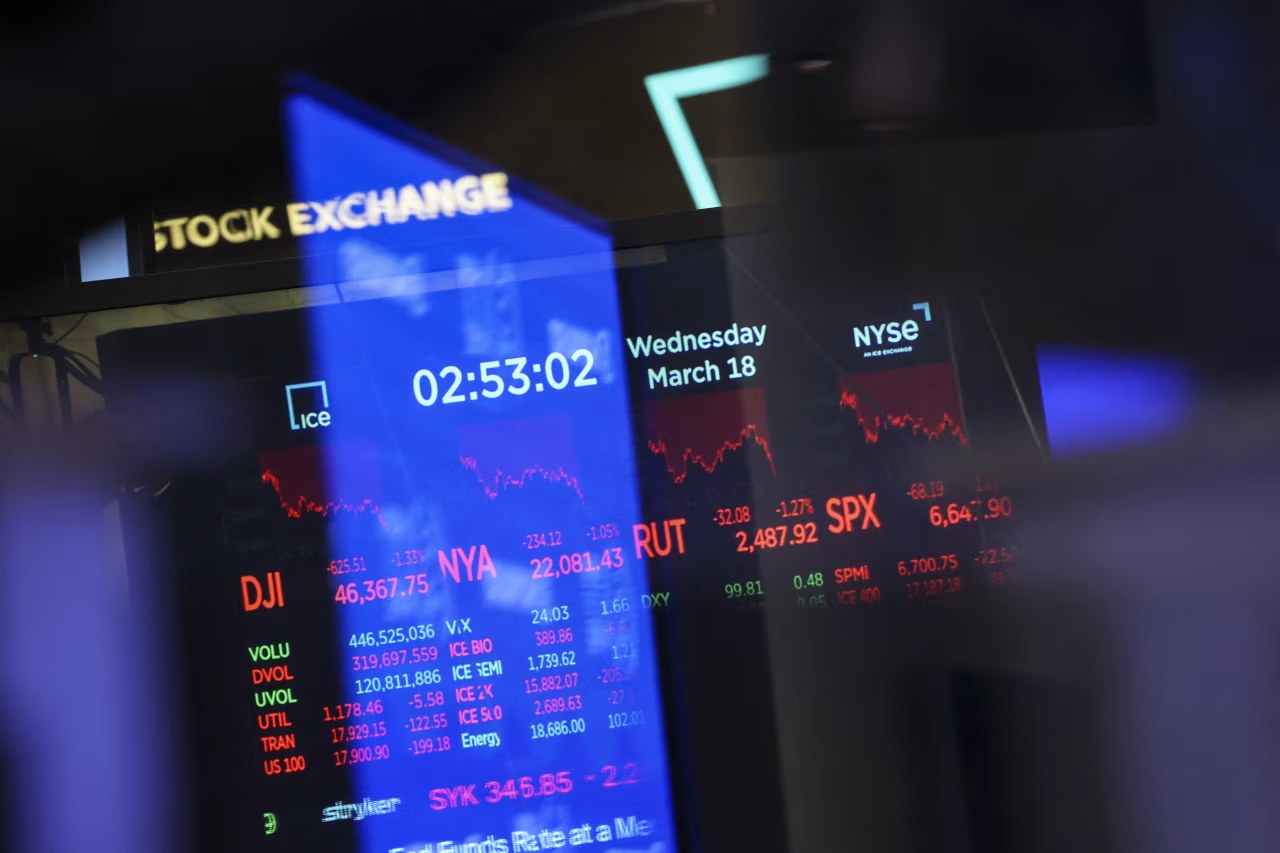
10 Mega-Caps Now 40% of S&P 500—Yet Index Funds Still Beat 88% of Active Managers
- The 10 largest S&P 500 stocks command almost 40% of index value, the most since 1980.
- Vanguard 500 Index Fund’s 15-year annualized return of 11.0% beats 88% of active large-cap peers.
- Market-cap weighting historically self-corrects: top 10 share fell from 27% to 20% after 2000 crash.
- Rock-bottom fees—some ETFs charge 0.03%—lock in a permanent edge over costlier active funds.
Concentration fears are real, but the math shows broad indexing remains the surest path to long-run wealth.
AI BUBBLE—Wall Street’s mood has turned wary. Portfolio managers from J.P. Morgan to BlackRock warn that artificial-intelligence darlings such as Nvidia, Microsoft and Apple have ballooned so large that the S&P 500 now resembles a single-sector bet rather than a diversified benchmark. With the top 10 stocks commanding nearly 40% of the index’s $45 trillion market value, headlines ask whether index-fund investors are sleep-walking into an AI bubble.
The numbers are stark. Nvidia alone added $1.8 trillion in market cap in the 12 months through March, equivalent to the combined value of every stock in Spain’s IBEX 35. Yet selling the index in favor of hand-picked “AI hedged” portfolios is a loser’s game, according to a 2024 SPIVA scorecard that finds 88% of U.S. large-cap active managers underperformed the Vanguard 500 Index Fund over the past 15 years after fees.
Why? Because market-cap weighting is self-cleansing. When tech giants falter, their share of the index shrinks automatically—no stock-picker timing required. Since 1990, investors who simply bought and held the broad S&P 500 through the dot-com crash, financial crisis and COVID drawdown earned 9.9% annualized, beating inflation by more than six percentage points a year.
The Math of a 40% Top-10 Weight
Market historians note that today’s 40% slice for the 10 biggest stocks matches only one other era: March 2000, when Cisco, Microsoft and Intel dominated. Yet even then the index survived. A dollar invested in the SPDR S&P 500 ETF on 31 December 1999—at the peak of the dot-com frenzy—grew to $3.42 by March 2024, despite the top 10 weight collapsing from 27% to 20% between 2000 and 2002.
How index funds rebalance without emotion
Standard & Poor’s reconstitutes the index every quarter, capping any single stock at roughly 11% through its float-adjusted methodology. When a high-flyer stalls, its shrinkage is automatic. “The beauty of cap-weighting is that you don’t have to forecast the next Nvidia,” says Rick Ferri, founder of Michigan-based Ferri Investment Advisors. “The market does the trimming for you.”
Academic evidence backs the claim. A 2023 Journal of Finance study by Arizona State professors found that from 1926-2022, the 10 largest stocks contributed 18% of total index return even though their average weight was 42%. The other 490-plus stocks supplied the remaining 82%, proving diversification still works even inside a top-heavy benchmark.
Why Active Managers Keep Failing
The latest SPIVA scorecard shows 59% of domestic large-cap active funds underperformed the S&P 500 in 2023 alone. Stretch the horizon to 15 years and the failure rate jumps to 88%. Fees explain much of the gap: the average actively managed U.S. equity fund still charges 0.74%, according to Morningstar Direct, while Schwab’s S&P 500 ETF charges 0.03%—a 70-basis-point head start that compounds relentlessly.
Stock-picking skill is rarer than investors think
Brad Barber and Terrance Odean’s landmark 2000 study of 66,000 retail accounts found that the most active traders underperformed the market by 6.5% a year. Professional managers fare little better. A 2022 paper in the Financial Analysts Journal found that only 0.6% of active U.S. equity funds beat their benchmark on a risk-adjusted basis over two decades once survivorship bias is removed.
Even star managers regress. The best-performing quintile of large-cap funds in 2010 produced negative alpha in the following decade, research firm Bespoke found. “Skill is swamped by costs and randomness,” says William Bernstein, neurologist-turned-investment-theorist and author of The Four Pillars of Investing. “Indexing guarantees you the market return minus almost nothing.”
Could AI Concentration End Like 2000?
Parallels to the dot-com era are striking. In March 2000, Cisco traded at 235× trailing earnings; today Nvidia fetches 75×—lower but still lofty. The Nasdaq 100’s forward P/E of 29 exceeds its 25-year average of 22, while the equal-weight S&P 500 trades at 17×, a gap that has preceded sharp reversals in 2000, 2008 and 2020.
History shows diversification wins after peaks
Yet investors who held the broad index through the carnage still won. A $10,000 stake in the Vanguard 500 Index Fund at the 2000 peak grew to $42,300 by December 2023, assuming dividend reinvestment. Those who tried to dodge the crash by shifting into cash locked in a 2% annual return and never recovered. “Time in the market beats timing the market” is cliché because the data are relentless, notes Vanguard senior investment strategist Fran Kinniry.
Regulators are watching. The SEC’s Division of Examinations has begun asking funds how they stress-test portfolios for a 50% single-day drop in a top-five holding. The Fed’s semi-financial stability report flagged that a 20% decline in the six largest AI-linked stocks could erase $3 trillion in household wealth—larger than the 2008 financial sector haircut. Still, history suggests the index adapts faster than regulators act.
What Would It Take to Break the Index Model?
Critics argue that index funds have become “too big to fail.” BlackRock, Vanguard and State Street now control 22% of S&P 500 voting rights, up from 12% in 2008. A 2022 paper by Harvard’s Oliver Hart and Chicago’s Luigi Zingales warns that common ownership could blunt competition, leading to higher airline fares and drug prices. Yet empirical evidence is mixed: a 2023 OECD review of 1,200 industry pairs found no causal link between rising index ownership and price mark-ups once global competition is accounted for.
Policy proposals range from fee caps to ownership limits
Congressional Democrats have floated a 1% fee ceiling on index products and a ban on voting more than 5% of any single company’s shares unless the fund holds a control premium. The latter would force the Big Three to divest $1.3 trillion in stock, according to Bloomberg Intelligence. Industry lobbyists counter that such rules would raise costs for 100 million retail savers and push trading into less-transparent private markets.
More likely are tweaks to index methodology. S&P Dow Jones already caps any issuer at 4.75% in its S&P 500 ESG Index, and the EU’s CSDR requires daily portfolio transparency. A 2024 CFA Institute survey found 62% of allocators expect “ownership concentration” to be the next regulatory flashpoint, surpassing climate disclosure. Still, barring a 1930s-style overhaul of corporate voting law, the index fund structure looks durable.
How to Build an Index-Based Defense Today
Investors need not wait for regulators. A three-fund portfolio—60% total-market index, 30% international index, 10% short-term Treasuries—has delivered 7.8% annual real return since 1970 with a maximum drawdown of 29%, according to Morningstar. Those who want AI diversification without single-stock risk can buy the equal-weight S&P 500 ETF (ticker: RSP) for 0.20% a year or the Schwab Fundamental U.S. Large Company Index (FNDX) at 0.25%.
Tax-advantaged accounts turbo-charge compounding
Maxing out a 401(k) with $23,000 in a 0.03% S&P 500 ETF and reinvesting dividends yields a median $1.4 million balance after 30 years, assuming the historical 10% nominal return. Add a 4% employer match and the terminal value jumps to $2.1 million, Vanguard calculates. The same contribution to a 0.74% active fund would forfeit $340,000 in fees alone.
Behavioral guardrails help. Automating a monthly dollar-cost-average plan reduces the risk of panic selling by 37%, according to a 2021 Journal of Financial Psychology study of 4,800 households. Finally, rebalancing once a year back to target weights forces investors to buy beaten-down sectors and trim hot ones—exactly the discipline the index applies automatically.
Frequently Asked Questions
Q: How concentrated is the S&P 500 today?
The 10 largest stocks now account for roughly 40% of the index’s total market value, the highest share since 1980s data began.
Q: Do index funds still beat active managers?
Yes. Over the past 15 years, 88% of U.S. large-cap active managers underperformed the Vanguard 500 Index Fund after fees.
Q: What’s the cheapest S&P 500 ETF?
The Schwab U.S. Large-Cap ETF charges 0.03% a year—$3 on a $10,000 investment—making it the lowest-cost broad index option.
📰 Related Articles
- S&P 500 Index to Trade Nonstop as Owner Licenses Benchmark to Crypto Exchange Hyperliquid
- Trump Order Targets ESG Funds for Fiduciary Breach, Putting $8.4 Trillion Industry on Notice
- Oil-Supply Jitters and Stubborn Inflation Push U.S. Equities Into Broad Selloff
- Crude Slips Below $95 as Mid-East Supply Fears Cool and Asia Stocks Split
