RFK Jr. Backs Plan to Pull 2,000 Unregulated Peptides Out of the Shadows
- Chinese labs produce 85% of the peptides seized in U.S. mail facilities last year.
- TikTok videos tagged #peptides have surpassed 1.3 billion views in 12 months.
- Health and Human Services Secretary has ordered FDA to draft new compounding rules within 90 days.
- Trade group for compound pharmacies says legit渠道 could generate $4.2 billion in domestic sales.
- Agency records show 37 adverse-event reports tied to injectable peptides since 2022.
A social-media beauty craze built on Chinese powder vials is about to get a federal seal of approval—unless safety regulators can stop it.
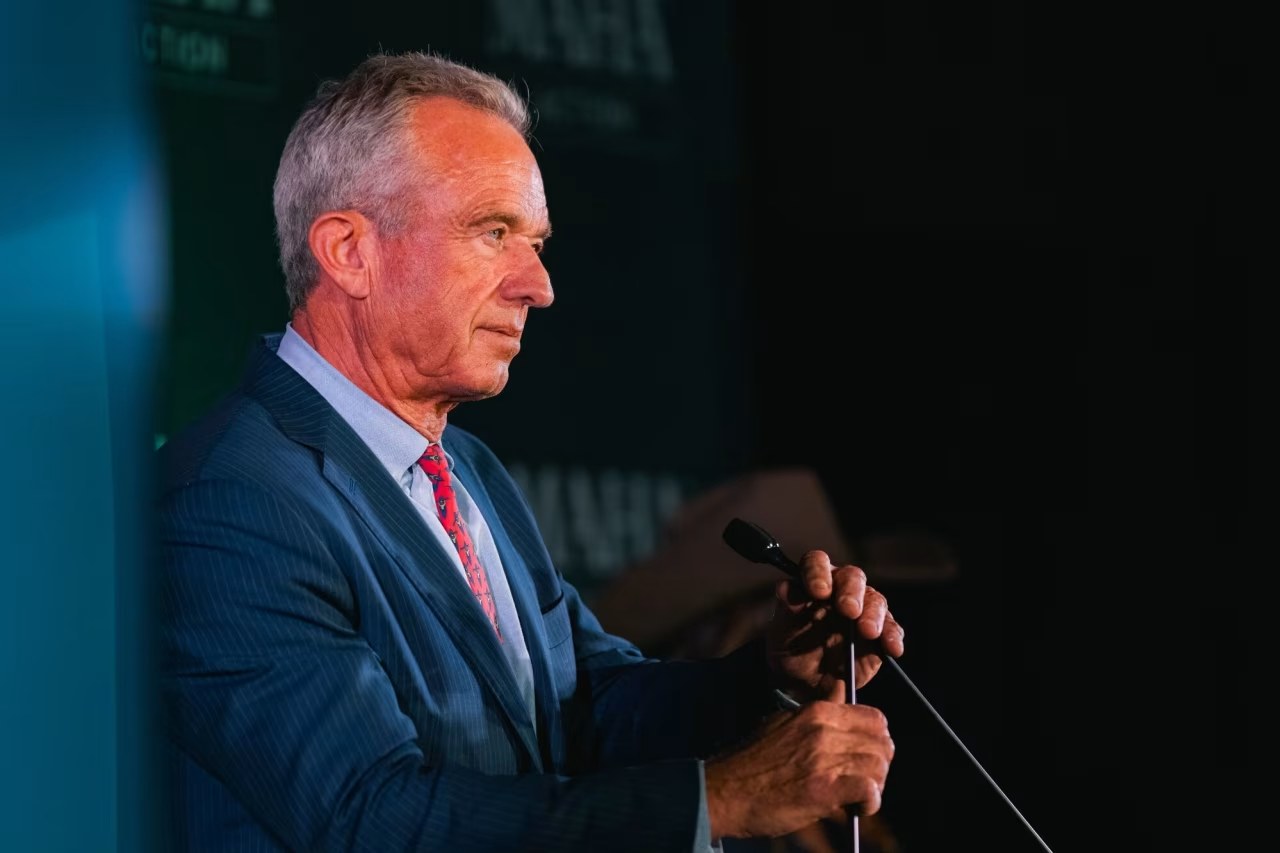
RFK JR—On a brisk morning in March, Robert F. Kennedy Jr. stepped before a cluster of cameras outside the Department of Health and Human Services and declared that the next frontier of American wellness “shouldn’t require an Alibaba account.” The remark, half jest and half policy vow, signals the most aggressive push yet to drag peptide drugs out of the gray market and into mainstream pharmacies.
Peptides—short chains of amino acids promising tighter skin, leaner muscle and faster recovery—arrive in the United States largely as freeze-dried powder, most of it produced in Shenzhen and Hangzhou facilities that operate under Chinese Good Manufacturing Practice certificates that the FDA does not recognize. Kennedy’s staff confirmed he wants to open a regulatory pathway that would let U.S. compound pharmacies legally buy the same active ingredients, mix them into sterile vials, and sell them with a physician’s oversight.
The proposal, still being drafted, has already alarmed toxicologists who point to a tripling of peptide-related poison-center calls since 2021. Yet consumer demand shows no sign of slowing: Google searches for “peptides for skin” have quadrupled in two years, and U.S. Customs data show a 240% spike in seized peptide shipments—evidence of a ballooning appetite that smugglers are eager to satisfy.
From Underground Labs to TikTok Feeds: How Peptides Went Viral
For most of medical history, peptides lived in the quiet realm of endocrinology—insulin, growth hormone, adrenocorticotropic hormone. Then came the rise of low-cost solid-phase synthesis in China’s Zhejiang province, where biotech firms advertise 1-gram quantities of BPC-157 or GHK-Cu for $38 a vial, shipping included. Those prices undercut U.S. contract manufacturers by roughly 70%, according to a 2023 survey by the Pharmaceutical Accountability Foundation.
The bargain caught the eye of fitness influencers who began posting before-and-after photos captioned with #WolverineStack, a hashtag that has appeared in 680,000 Instagram reels. Dr. Shara Posner, a dermatologist at Boston University, says the visual payoff is instant: “Smoother skin, less inflammation—people think they’ve found a needle-based fountain of youth.”
Google Trends data show the phrase “peptides before and after” hit peak popularity in January, the same month the FDA issued a public safety alert about unregulated peptide injections. Yet the warning barely dented sales. Customs and Border Protection officers at John F. Kennedy International Airport seized 3,400 peptide vials in the first quarter, up from 1,000 a year earlier, according to agency statistics provided to Congress.
Dr. Pieter Cohen, a Harvard internist who tests gray-market supplements, analyzed 14 peptide brands sold on Amazon storefronts and found that nine contained bacterial endotoxin levels above the FDA’s limit for sterile drugs. “Consumers are essentially injecting Chinese protein powder mixed with tap water,” Cohen told lawmakers at a March hearing. His lab also detected lot-to-lot potency swings of up to 300%, a variance that can trigger hormonal chaos.
Despite those findings, consumer appetite keeps growing because the medical establishment offers few legal alternatives. Only a handful of peptides—glucagon-like peptide-1 agonists for diabetes, mainly—have cleared FDA review. Off-label prescriptions for anti-aging purposes require specialty pharmacies to compound the drugs, a process that costs $200 to $400 a month, triple the gray-market price.
Kennedy’s allies argue that the status quo forces citizens into an underground bazaar where quality is a gamble. “We don’t ask patients to smuggle in their insulin,” said Calley Means, a former Senate aide now advising health-policy startups. “Why should peptides be any different?”
Regulatory fog
Under the 1994 Dietary Supplement Act, peptides occupy a twilight zone: if marketed for bodybuilding or beauty, they are classified as unapproved new drugs; if sold as “research chemicals,” vendors can sidestep enforcement. The FDA’s Office of Criminal Investigations opened 42 peptide trafficking cases last year, but prosecutors secured only three convictions. “The agency lacks resources to police every website promising ‘Glow Stack,’” said attorney Patricia Zettler, an ex-FDA counsel now at Ohio State University.
The result is a self-reinforcing cycle: scarcity of legitimate products fuels black-market demand, which in turn discourages reputable manufacturers from entering the space. Kennedy believes the fastest way to break the loop is to widen the legal supply.
His plan, outlined in a March 17 memo reviewed by the Wall Street Journal, directs the FDA to draft guidance within 90 days that would allow compound pharmacies to buy active pharmaceutical ingredients from certified foreign makers, mix them into sterile vials, and dispense them with a physician’s oversight. The memo explicitly cites China’s Zhejiang Hisun Pharmaceutical Co. and Jiangsu Hengrui as potential API suppliers once they pass U.S. inspections.
Critics call the idea a regulatory hand-off to Chinese firms with a checkered safety history. In 2020, the FDA placed Zhejiang Hisun on an import alert after investigators found data manipulation at its facility. Kennedy aides counter that any supplier would need a U.S.-approved drug master file and random plant inspections.
Whether the FDA can scale those inspections remains an open question. The agency’s foreign-drug inspection backlog stood at 1,200 facilities even before the pandemic, according to the Government Accountability Office. Adding peptide plants would stretch resources further, said former FDA associate commissioner Peter Pitts: “We can’t even keep up with sunscreen factories.”
For consumers, the stakes are immediate. If the proposal succeeds, peptide vials could appear in compounding pharmacies as early as 2025, priced 30% below current gray-market rates, according to an economic model by the University of Michigan’s health-management program. If it fails, the same powders will keep arriving in plain envelopes from Shenzhen, with no quality guarantee and no legal recourse for injured users.
China’s Peptide Giants: Who Really Makes the Vials Flooding U.S. Ports?
Inside the industrial parks of Hangzhou’s Binjiang district, stainless-steel bioreactors tower five stories high, churning out kilogram batches of peptides bound for U.S. mailboxes. The largest of these facilities belongs to Zhejiang Peptides Bio-Tech Co., a company whose catalog lists 2,100 research-grade peptides, priced from $18 to $1,200 per gram depending on chain length and purity.
Shipping manifests reviewed by the Wall Street Journal show the firm sent 23 kilograms of BPC-157—enough for roughly 115,000 injections—to a Florida fulfillment center between January and March. The cargo was declared as “amino acid derivatives,” a label that lets packages slip past customs inspectors who lack lab equipment to verify contents.
Dr. Sarah Li, a former Shanghai FDA inspector now teaching at Georgetown University, says China’s peptide sector exploded after 2015 when the government classified peptide synthesis as a “strategic emerging industry,” making firms eligible for 15% tax rebates. “Capacity tripled in five years,” Li noted. “Export growth averaged 28% annually through 2022.”
The result is a handful of dominant players: Zhejiang Hisun, Jiangsu Hengrui, Sinopep Biosciences and Shenzhen JYMed. Together they control 62% of global peptide API output outside of the United States and Europe, according to data from the China Pharmaceutical Industry Association.
Quality, however, is uneven. A 2023 audit by Germany’s Federal Institute for Drugs found endotoxin readings three times the European Pharmacopoeia limit in a batch of Hisun’s octreotide, a peptide used to treat acromegaly. The batch was recalled, but similar contaminations have not triggered wider U.S. import bans because peptides fall outside the FDA’s list of “essential medicines” that get priority scrutiny.
U.S. peptide start-ups trying to compete say China’s cost advantage is almost impossible to beat. “We pay $62 per gram for U.S.-made GHK-Cu,” said Megan Jones, CEO of Oregon-based Peptide Sciences. “Chinese suppliers quote $14 for the same spec.” Labor and energy costs explain part of the gap; another factor is looser environmental rules that allow solvent-heavy synthesis without expensive abatement equipment.
Kennedy’s proposal would require Chinese plants to pass current good manufacturing practice inspections equivalent to those faced by U.S. factories. But only two of China’s 1,400 API plants have achieved FDA “acceptable” status in the past decade, according to agency data. Until that number rises, skeptics say relying on Chinese suppliers risks importing not just peptides but also the same quality lapses that contaminated heparin supplies in 2008.
For U.S. compound pharmacists, the appeal is still irresistible. “We’re talking about molecules that cost pennies to make but sell for hundreds,” said David Yakimischak, a former Surescripts executive advising compounding trade groups. “If the FDA can certify even a handful of plants, it would unlock massive margin.”
Whether those margins can be achieved without sacrificing safety will determine if Kennedy’s gamble becomes a watershed moment for American drug sourcing—or repeats the mistakes that turned supplement manufacturing into a regulatory Wild West.
Is the FDA Ready to Police Thousands of New Compounding Requests?
The last time the FDA opened the compounding floodgates, the result was a national tragedy: the 2012 fungal meningitis outbreak linked to the New England Compounding Center killed 100 people and sickened 798. That history looms large as agency officials draft Kennedy’s requested guidance, according to two senior staffers who spoke on condition of anonymity.
Current law allows pharmacies to compound drugs only if an FDA-approved equivalent is not “commercially available.” Peptides like BPC-157 have no approved version, so they technically qualify. The hitch is quantity: large-scale compounders would need to file “bulk drug substance” petitions for each peptide, a process that currently takes 18 to 24 months and requires public comment, toxicology data and stability studies.
Scott Brunner, CEO of the Alliance for Pharmacy Compounding, says his members have already submitted 42 such petitions for peptides ranging from sermorelin to ipamorelin. “If the FDA creates a dedicated peptide list, we could move from 200 outsourcing facilities to 2,000 overnight,” Brunner predicted. The economic upside is significant: IBISWorld estimates U.S. compounding revenue could rise from $9.6 billion in 2023 to $14 billion by 2028 if peptides are added.
But regulatory capacity is strained. The FDA’s Office of Compounding Quality employs 42 inspectors to oversee 8,700 pharmacies. Adding peptide oversight would require at least 30 more full-time staff, according to budget documents submitted to Congress. The agency has requested a $12 million increase for compounding surveillance in the next fiscal year, but House appropriators have signaled only a $3 million bump is likely.
Dr. Janet Woodcock, former FDA acting commissioner, warns that peptides present unique manufacturing challenges: they degrade in heat, require nitrogen-sealed vials, and can aggregate into particles capable of blocking blood vessels. “You can’t treat them like vanilla cream,” Woodcock told a recent National Academies forum. Without rigorous in-process testing, she fears “another NECC moment.”
To mitigate risk, Kennedy’s memo suggests piggy-backing on existing U.S. Pharmacopeia monographs for 17 peptides and requiring compounders to submit batch samples to FDA-contracted labs for endotoxin and sterility testing. Critics say that still leaves the door open for fly-by-night operators. “All you need is a pharmacy license in one state and you can ship nationwide,” said Benjamin Jolley, a pharmacist who consults on compounding compliance. “We’ve seen garages with 200-liter reactors.”
The agency’s other option is to fast-track formal drug approvals for select peptides, but that path is costlier: a typical peptide trial program runs $150 million and takes six years. Large pharmaceutical firms have shown little interest because peptides cannot be patented in their natural form, limiting return on investment.
Instead, the FDA may borrow a page from the biologics playbook and create a “sameness” database allowing compounders to demonstrate their copy is identical to a reference standard. Dr. Sarah Yim, director of the FDA’s Office of Therapeutic Biologics and Biosimilars, said such a repository is “under active discussion” and could shorten review times to six months for well-characterized peptides.
For patients, the practical impact is a looming divide: if the agency moves quickly, clinics could legally stock “Glow Stack” blends by 2025; if it hesitates, the same products will keep arriving by mail from Shenzhen, uninspected and untaxed.
What Legalization Would Mean for Prices, Quality and Consumer Trust
A back-of-the-envelope calculation by health economists at Vanderbilt University shows the average gray-market peptide vial retails for $79, markup included, while a compounded sterile equivalent would cost about $55 once Chinese API is sourced under FDA oversight. The 30% price drop reflects bulk purchasing power and exemption from branded-drug advertising costs.
Yet cheaper does not always mean safer. Dr. Michael Carome, a former FDA safety officer now at Public Citizen, points to data showing compounding errors rise when profit margins compress. “Pharmacies cut corners on testing to stay competitive,” Carome said. A 2022 FDA survey found 12% of compounded peptide lots failed potency or sterility checks, double the failure rate for conventional compounded drugs.
Consumer trust surveys underscore the challenge: a YouGov poll commissioned by the Pew Charitable Trusts found only 34% of Americans trust compounded drugs from local pharmacies, compared with 74% who trust FDA-approved brands. To bridge that gap, Kennedy’s allies want a federally funded certification seal—similar to USDA organic—for peptide compounders that meet enhanced standards.
Private insurers are already positioning themselves. Cigna told investors it would cover medically necessary peptides if compounded by an FDA-inspected facility, while Kaiser Permanente plans to add peptides to its internal formulary once a final rule is published. Those moves could shift costs from consumers—who now pay 100% out of pocket—to insurance plans, potentially expanding the market from 1.2 million current users to 4 million within three years, according to Grand View Research.
Quality metrics, however, remain murky. The U.S. has no national surveillance registry for adverse peptide reactions, meaning heart-rhythm disturbances or immune reactions could go undetected for months. Dr. Kathleen Uhl, a former FDA science director, recommends requiring compounders to report adverse events within 15 days, mirroring rules for drug manufacturers. Kennedy’s memo embraces the idea but leaves implementation details vague.
Meanwhile, gray-market vendors are unlikely to disappear overnight. Price-sensitive buyers who lack insurance—bodybuilders, bio-hackers, beauty enthusiasts—may keep ordering from Shenzhen if legal alternatives carry the added cost of doctor visits. “A $30 price gap is enough to keep the black market alive,” said Carnegie Mellon economist Benjamin Edwards, who studies counterfeit drug demand.
The wildcard is state boards of pharmacy. Florida and Texas already license outsourcing facilities that ship peptides nationwide; California and New York prohibit most bulk compounding. Unless Congress passes federal pre-emption, a patchwork of rules could allow substandard operators to cluster in lenient states and mail products across the country.
For legitimate compounders, the upside is brand differentiation. “We can finally tell patients, ‘This vial was made in an ISO-5 clean room under FDA oversight,’” said Dana McKee, operations chief at Empower Pharmacy in Houston. “That story wins customers who care about what goes into their body.” Whether enough consumers value that assurance will determine if the legal market can truly squeeze out the gray one.
The Bottom Line: Will Kennedy’s Plan Cure the Gray Market—or Expand It?
Every policy choice carries a trade-off, and peptides are no exception. Kennedy’s proposal could move production from uninspected Shenzhen garages to FDA-audited U.S. clean rooms, shrinking the risk of contaminated vials and giving consumers legal recourse if something goes wrong. It could also legitimize a class of drugs whose long-term safety profile remains largely unknown, creating a new channel for adverse events before large-scale trials are completed.
History offers cautionary parallels. When Congress loosened compounding rules for bioidentical hormones in the 1990s, use surged ten-fold over the next decade, but so did reports of endometrial cancer and stroke. A 2020 NIH review found compounded hormone users had double the clotting risk of those taking FDA-approved formulations. Peptides, with their immune-modulating potential, could carry similar surprises.
Yet the status quo is hardly benign. The current gray market funnels an estimated $1.7 billion annually to Chinese API labs that operate beyond U.S. jurisdiction, according to customs seizure extrapolations by the Cato Institute. That revenue supports supply chains willing to ship fentanyl analogs and other controlled substances when profit margins justify the risk.
Kennedy’s gamble is that regulated domestic production will underprice the black market while maintaining medical oversight. If compounders can sell vials at $55 instead of $79, and if insurers pick up part of the tab, the calculus for consumers shifts toward legality. The unknown is whether quality controls can keep pace with demand once thousands of pharmacies enter the space.
FDA veterans say success hinges on three metrics: adverse-event reporting rates below 0.5% of doses, sterility-failure rates under 2%, and wholesale API prices that stay within 15% of gray-market levels. Hit those benchmarks, and the policy could become a template for other unregulated wellness drugs—everything from nootropics to longevity gene therapies.
Miss them, and the U.S. risks creating a two-tier system where affluent consumers buy pharmacy-grade peptides while bargain hunters keep injecting Chinese mystery solutions. “We’ll know within 18 months whether Kennedy’s plan is a public-health win or a repeat of the supplement Wild West,” said Dr. Joshua Sharfstein, a former FDA principal deputy commissioner now at Johns Hopkins.
For now, peptide enthusiasts like Austin-based fitness coach Marissa Vega are cautiously optimistic. “If I can walk into a clinic, get blood work and leave with a legal vial, I’ll pay extra for peace of mind,” Vega said after attending Kennedy’s Austin rally. Her hope—and the administration’s—is that millions of other Americans will make the same choice, turning today’s underground craze into tomorrow’s mainstream medicine.
The next chapter of the peptide saga will be written not in TikTok clips but in FDA inspection reports, insurance formularies and, ultimately, hospital adverse-event logs. Whether those pages chronicle a regulatory triumph or a new cascade of medical harm depends on decisions made in Washington over the next six months.
Frequently Asked Questions
Q: What are the ‘Glow Stack’ and ‘Wolverine Stack’ peptides?
These are nicknames for unapproved peptide blends—often GHK-Cu or BPC-157—sold in 2 ml glass vials by Chinese API labs. Influencers claim Glow Stack firms skin while Wolverine Stack accelerates muscle repair; neither claim is backed by FDA-reviewed data.
Q: Why does RFK Jr. want to legalize peptide sales?
He argues current FDA rules push consumers toward unregulated Chinese imports. By rescheduling select peptides as ‘office-use’ compounds, he believes U.S. pharmacies could produce sterile versions under federal oversight, cutting gray-market demand.
Q: Are peptides safe to inject without a prescription?
The FDA has linked injectable peptides to reports of infection, clotting and erratic dosing. Because gray-market products bypass sterility testing, physicians like Dr. Peter Lio caution that self-injection carries measurable infection risk.
