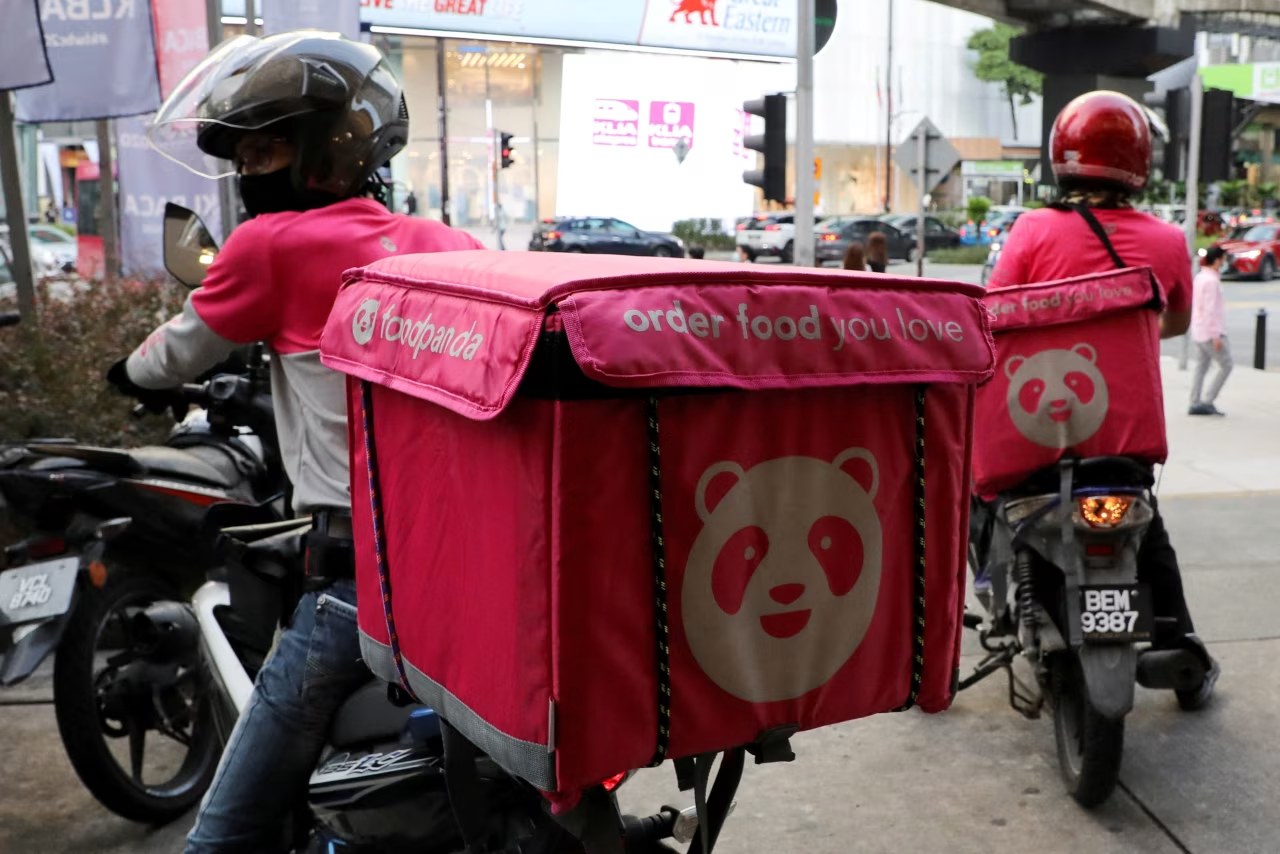
$600 Million Cash: Delivery Hero Sells Foodpanda Taiwan to Grab in Strategic Exit
- Delivery Hero will receive $600 million in cash for its Foodpanda Taiwan operations.
- The transaction is slated to close in the second half of 2026, pending regulatory clearance.
- Foodpanda is Taiwan’s second-largest food-delivery platform after Uber Eats, according to Mordor Intelligence.
- Grab gains an immediate foothold in a market where it previously had no presence.
- The deal marks the German group’s largest divestiture since its 2017 IPO.
The sale underscores shifting investor appetite toward profitable growth over pure scale.
DELIVERY HERO—Berlin-based Delivery Hero on Tuesday announced an exit from Taiwan after 11 years, agreeing to sell its Foodpanda arm to Singapore’s Grab Holdings in an all-cash transaction valued at $600 million. The move caps months of portfolio pruning by Europe’s most valuable food-delivery company, which signaled in March that “selective divestments” were on the table.
Grab, Southeast Asia’s dominant super-app, will absorb Foodpanda Taiwan’s 14,000 active restaurants, 2.3 million monthly active users, and roughly 18,000 active riders, according to internal Foodpanda data seen by industry consultant Momentum Works. Regulators in Taipei must still bless the takeover, a hurdle that has tripped up at least two previous cross-border platform acquisitions in the past five years.
“This transaction allows us to concentrate capital and talent in markets where we can secure sustainable leadership,” Niklas Östberg, Delivery Hero’s co-founder and chief executive, told analysts on a brief conference call. The German company will retain Foodpanda operations in Singapore, Malaysia, the Philippines, Thailand, Bangladesh, Pakistan, and Cambodia.
Why Taiwan Became Delivery Hero’s First Major Asian Exit
Delivery Hero entered Taiwan in 2012 via the acquisition of local startup Foodpanda, then a four-city operation with fewer than 200 restaurant partners. Over the next decade the German group pumped an estimated €350 million into the island, expanding to 22 cities and capturing roughly 38 percent market share by order volume, according to Euromonitor. Yet profitability remained elusive; internal slides leaked to Taiwanese media in 2023 showed Foodpanda Taiwan posting negative EBITDA of €22 million on €180 million revenue.
“Taiwan is a mature, hyper-competitive duopoly,” said Vey-Sern Ling, tech analyst at Union Bancaire Privée. “Margins are structurally thinner than in Southeast Asia because consumers are less willing to pay delivery premiums and labor costs are higher.” Delivery Hero’s board concluded that additional capital would be better deployed in markets like Thailand, where the company commands 70 percent share and can dictate commission structures.
The decision also reflects a broader pivot by global food-delivery incumbents toward cash-flow positivity. Between 2020 and 2023 Delivery Hero’s corporate-level operating losses widened from €317 million to €1.1 billion despite record order growth. Investors pressured management to prune non-core assets, making Taiwan—the company’s smallest Asian operation by revenue—the obvious candidate for divestment.
Regulatory risk added urgency
Taiwan’s Fair Trade Commission has grown wary of platform consolidation. In 2021 it blocked Uber Eats’ proposed acquisition of local rival Foodomo, citing “excessive market concentration.” By exiting voluntarily, Delivery Hero avoids a potential forced breakup while monetizing an asset that could face future compliance costs, said Angela Hsu, antitrust partner at Tsar & Tsai Law Firm in Taipei.
Looking ahead, the €600 million proceeds will be redeployed toward high-growth geographies such as Romania and Ecuador, where Delivery Hero recently launched dark-store operations promising 15-minute grocery delivery. The company’s share price rose 4.7 percent in Frankfurt on the news, trimming year-to-date losses to 11 percent.
Grab’s $600 Million Bet on the World’s Densest Food-Delivery Market
Grab will fund the takeover entirely from its $6.2 billion cash pile as of March 2024, avoiding debt and preserving optionality for other verticals such as digital banking and on-demand logistics. The price tag equals roughly 1.1 times Foodpanda Taiwan’s 2023 gross merchandise value of $540 million, a discount to the 1.4× multiple Delivery Hero paid for South Korean rival Baedal Minjok in 2021.
“Taiwan is the last major missing piece in our regional footprint,” Grab president Ming Maa told investors, noting the island’s 23 million residents generate the highest per-capita food-delivery spend in Asia at $232 annually, according to Statista. Grab’s data science team estimates combining Foodpanda Taiwan’s customer base with Grab’s regional know-how could yield $90 million in annual cost synergies within 24 months, primarily through shared cloud infrastructure and cross-border procurement of delivery gear.
Still, antitrust lawyers warn the deal could face a six- to nine-month probe. Taiwan’s competition watchdog has never approved a merger that reduces the number of national food-delivery platforms from three to two. Grab argues the market will remain contested because Uber Eats and smaller players like Carrefour’s home-delivery service continue to compete. “The key metric regulators watch is local market share, not national,” said Lynn Shen, partner at Lee and Li Attorneys. “In Taipei city Foodpanda plus Grab would exceed 60 percent, inviting deeper scrutiny.”
What happens to riders and restaurants?
Foodpanda Taiwan’s 18,000 active riders currently earn an average NT$52,000 ($1,630) per month after incentives, according to Ministry of Labor statistics. Grab has pledged to maintain existing incentive tiers for at least 12 months post-closing, but labor groups remain skeptical. “Platform consolidation historically leads to lower bonuses,” said Chiu Yu-lung, secretary-general of the Taiwan Delivery Riders Union. Restaurants, by contrast, could benefit from Grab’s superior data analytics, which have boosted order frequency 8-12 percent in pilot markets like Bangkok.
If cleared, the acquisition will expand Grab’s annual gross merchandise value to $16.7 billion across eight countries, solidifying its position as the largest food-delivery operator in Southeast Asia and Greater China combined.
Will Regulators Clear the Deal Before 2026?
Taiwan’s Fair Trade Commission (FTC) must rule on whether the Grab-Foodpanda combination would “have the effect of unduly restricting competition,” the statutory test under the Fair Trade Act. The agency has 30 working days to complete a Phase I review, but complex cases often enter Phase II, extending the timetable to 90 working days or longer. Historically the FTC has blocked two of 14 platform-economy mergers since 2018, most notably Uber Eats-Foodomo in 2021.
Grab plans to file the notification in the fourth quarter of 2024, giving regulators roughly 18 months to decide before the contractual long-stop date of December 31, 2026. Legal experts say the calculus hinges on market definition. “If the FTC views the relevant market as ‘online food ordering and delivery,’ concentration metrics breach safe-harbor thresholds,” said Christine Chen, antitrust partner at Baker McKenzie Taipei. Grab counters that offline food options—supermarkets, night markets, convenience stores—keep its post-merger share below the 35 percent statutory trigger.
Political considerations add another layer. Taiwan’s government has welcomed foreign investment to counterbalance China’s economic pressure, but public sentiment favors protecting gig-worker welfare. The ruling Democratic Progressive Party has signaled it will hold hearings, giving riders and restaurants a platform to air concerns. Grab has already committed to: (1) maintaining rider incentive tiers for 12 months, (2) capping restaurant commission increases at 2 percent annually, and (3) establishing a NT$100 million fund for small merchants’ digital upgrades.
Precedents suggest conditional approval
In 2022 the FTC cleared Delivery Hero’s acquisition of Foodpanda Singapore after the companies offered to divest certain logistics contracts and lower commission caps for micro-restaurants. A similar fix—such as selling Foodpanda’s enterprise delivery arm or licensing its rider app to a third party—could secure approval, said Charles Hsu, former FTC commissioner. “The commission prefers behavioral remedies because structural breakups are harder to monitor,” Hsu noted.
Investors appear cautiously optimistic: Grab shares gained 2.1 percent on the announcement but remain 14 percent below their 2023 peak, reflecting lingering regulatory uncertainty.
What the Sale Means for Delivery Hero’s Balance Sheet
The $600 million cash inflow will boost Delivery Hero’s liquidity buffer to €4.9 billion, according to J.P. Morgan estimates, giving management room to service €1.8 billion in convertible bonds maturing between 2025 and 2027. More importantly, the divestiture removes an annual €25 million EBITDA drag, accelerating the group’s stated target of positive adjusted operating profit by 2025.
Chief Financial Officer Emmanuel Thomassin told analysts the proceeds will be allocated using a “disciplined capital-allocation framework,” prioritizing: (1) organic growth capex in high-margin Latin American markets, (2) selective bolt-on acquisitions such as the recent €150 million purchase of Colombian grocery chain Just Eat, and (3) up to €200 million in share buybacks if the stock trades below 0.8× forward sales, a threshold last seen in March 2024.
Credit-rating agencies reacted positively. S&P revised its outlook to “stable” from “negative,” citing improved leverage metrics. Net debt to EBITDA is now projected at 2.3× by December 2025 versus 3.1× previously. Moody’s warned, however, that further divestitures in cash-generative Asian markets could reduce geographic diversification and expose Delivery Hero to currency volatility in Latin America.
Investor sentiment turns cautiously upbeat
Delivery Hero’s stock trades at 1.2× 2024 consensus revenue, a 35 percent discount to peer DoorDash. Berenberg analysts raised their price target to €48 from €42, arguing the Taiwan exit “de-risks consensus numbers” and highlights management’s willingness to prioritize returns over vanity metrics like GMV growth. Short interest has fallen 8 percent since the announcement, according to S3 Partners data.
Yet some fund managers remain on the sidelines. “Until we see sustainable unit economics in core markets like Germany, the Taiwan sale is just balance-sheet window dressing,” said Stefan Griesel, portfolio manager at Union Investment. Delivery Hero reports second-quarter results on August 14; investors will scrutinize guidance for cash burn and any update on strategic options for its Middle East operations.
Is Southeast Asia’s Food-Delivery Consolidation Now Complete?
Grab’s acquisition of Foodpanda Taiwan effectively ends the decade-long land grab in Southeast Asian food delivery. The sector has contracted from more than 15 regional players in 2015 to four dominant platforms: Grab, Delivery Hero (Foodpanda), GoTo (Gojek-Tokopedia), and ShopeeFood. Combined, these four control 94 percent of a $22 billion GMV market, per Momentum Works 2024 outlook.
Further consolidation is unlikely, analysts say, because regulators in Indonesia and Vietnam have signaled skepticism toward mergers that reduce competition. GoTo already exited food delivery in Vietnam last year, while ShopeeFood scaled back subsidies, narrowing losses but ceding share to Grab. “The next battleground is not M&A but vertical integration—dark stores, fintech, and advertising,” said Jianggan Li, founder of tech consultancy Momentum Works.
For restaurants, the duopoly means higher commission rates. Average take rates across the region have crept up to 28-30 percent from 20 percent in 2020, according to a survey by the Asean Food and Beverage Alliance. Small eateries in Jakarta report that once Grab’s market share in a district exceeds 60 percent, negotiating power erodes and promotional fees rise. Governments are responding: Indonesia’s Ministry of Trade is drafting a regulation capping commissions at 20 percent for micro, small, and medium enterprises.
Profitability replaces growth as key metric
Investors have shifted focus from GMV growth to adjusted EBITDA. Grab recorded positive adjusted EBITDA of $162 million in 2023, while Delivery Hero projects group-level profitability by 2025. GoTo, the last cash-burning major player, achieved breakeven in the first quarter of 2024 after cutting incentives. Public-market rewards have followed: Grab and GoTo shares are up 31 percent and 42 percent year-to-date respectively, outperforming the Nasdaq Composite.
Looking forward, category expansion is the new frontier. Grab is piloting pharmacy delivery in Singapore and courier services in Thailand, leveraging its fleet during off-peak meal times. Delivery Hero is experimenting with 15-minute grocery via its Dmart dark stores, a format it claims reaches EBITDA positivity within 18 months of launch. “The war is not over, but the weapons have changed from subsidies to operational leverage,” said Li.
Frequently Asked Questions
Q: Why is Delivery Hero selling Foodpanda Taiwan?
Delivery Hero is divesting its Taiwan unit as part of a strategic review to streamline its Asian portfolio and raise cash for growth markets where it holds stronger positions.
Q: How much is Grab paying for Foodpanda Taiwan?
Grab will pay $600 million in cash, subject to regulatory approvals, with the transaction expected to close in the second half of 2026.
Q: Will the sale affect Foodpanda users in Taiwan?
Until the deal closes, Foodpanda Taiwan continues normal operations; Grab has not yet detailed potential app integration or branding changes post-completion.
Q: What regulatory hurdles remain?
Taiwan’s Fair Trade Commission must review the acquisition for market-concentration concerns, a process that typically takes 6–12 months for large digital-platform deals.
