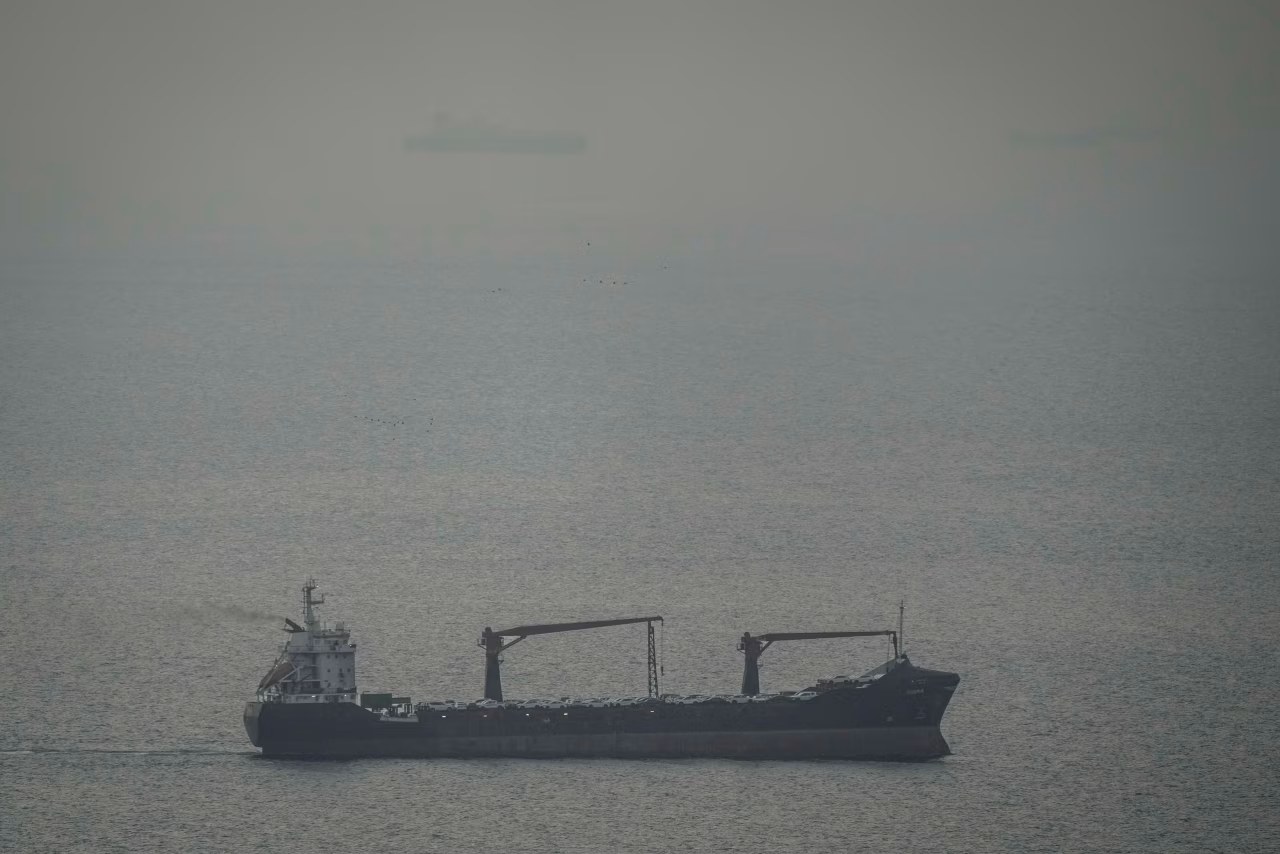
Trump Threatens to Obliterate Iran’s Power Grid if Strait of Hormuz Stays Shut
- Trump gave Tehran “days” to reopen the 21-mile waterway or face strikes on power plants.
- Iran answered that it would hit Gulf critical infrastructure, endangering oil terminals and desalination plants.
- Energy analysts warn a single missile barrage could push Brent crude past $120 a barrel within a week.
- Gulf monarchies quietly urged Washington to de-escalate, fearing collateral damage to their own grids.
A weekend ultimatum turns the world’s most sensitive oil chokepoint into a tinderbox.
STRAIT OF HORMUZ—President Donald Trump’s pledge to “obliterate” Iranian power-generation sites if the Strait of Hormuz is not reopened within days has drawn a precise counter-threat: Tehran will retaliate by striking critical infrastructure across the Arabian Peninsula, two Iranian officials told regional diplomats late Sunday. The ultimatum, delivered via Trump’s social-media account, marks the sharpest escalation in U.S.-Iran tensions since the 2019 tanker attacks and immediately ricocheted through global oil markets, pushing Brent crude up 4.3 percent in after-hours trading.
Gulf diplomats, speaking on condition of anonymity, said the rhetoric has triggered emergency planning sessions in Riyadh, Abu Dhabi, and Manama. Energy ministers fear that even a limited Iranian missile or drone salvo on desalination plants, power substations, or loading berths could send energy prices into triple-digit territory within days. “One hit on a major Saudi booster station and you’re looking at a 10 percent spike overnight,” said a senior OPEC delegate briefed on the contingency calls.
The strait, only 21 nautical miles wide at its narrowest point, funnels roughly 21 million barrels of crude and refined products daily—about one-fifth of global consumption—making it the world’s most economically sensitive maritime chokepoint. Closure scenarios studied by London’s King’s College estimate a daily revenue loss of $1.8 billion to Gulf exporters and a potential 2 percent drag on global GDP if traffic is halted for a month.
Within Hours, Tehran’s Missile Command Went on Elevated Readiness
Iranian Revolutionary Guard Corps (IRGC) naval and aerospace units were placed on “heightened defensive posture” within four hours of Trump’s Sunday-morning post, according to a Western intelligence assessment shared with Gulf allies. Satellite imagery reviewed by the International Institute for Strategic Studies (IISS) shows mobile anti-ship missile batteries moved to new coastal positions along the Strait of Hormuz, while Shahid Bagheri drone squadrons conducted overnight reconnaissance flights over the waterway.
“Tehran’s calculus is that deterrence requires visible preparation, not just words,” says Dr. Sanam Vakil, deputy director of the Middle East program at Chatham House. “By dispersing assets they signal that any U.S. strike would carry immediate regional costs.” Iranian officials privately told Oman’s mediation team that preemptively targeting Arab oil infra-structure is “on the table” if Washington acts, according to two people present at the Muscat talks.
The IRGC’s past playbook supports the warning. In September 2019, cruise missiles and drones slammed into Saudi Aramco’s Abqaiq facility, temporarily halving the kingdom’s output. Although Riyadh and Washington blamed Tehran, Iran denied responsibility. A repeat operation today, U.S. Central Command assesses, could knock 5.7 million barrels per day offline for weeks, eclipsing the Abqaiq shock.
Energy traders have already priced in a 7 percent war-risk premium, but JPMorgan commodities strategist Natasha Kaneva warns that a physical strike could send Brent crude to $125–$130 within five trading sessions. “The market is short spare capacity; any loss above 3 million barrels per day triggers IEA strategic stock releases,” she notes, referring to the 90-day emergency reserves held by OECD members.
Implications for Global Shipping Insurance
War-risk underwriters in London’s marine insurance market have widened the so-called “Listed Areas” to include the entire western Gulf, raising hull premiums by as much as 0.15 percent of insured value—an extra $150,000 on a $100 million tanker. Ship owners now insist on naval escorts or reroute cargoes around the Cape of Good Hope, adding 19 days to Asia-Europe voyages and roughly $3.20 per barrel to delivered crude costs.
Looking ahead, the standoff risks crystallizing into a tit-for-tar cycle reminiscent of the 1980s Tanker War, when 543 commercial vessels were attacked. The difference today: precision-guided munitions held by non-state militias as well as states, making attribution harder and de-escalation more fragile.
Why Gulf Arab States Fear Becoming the Real Targets
While Trump’s threat singled out Iranian power plants, Gulf officials privately acknowledge their own grids are far more vulnerable. Saudi Arabia derives 60 percent of its electricity from natural-gas turbines concentrated in just nine coastal complexes, many within 300 km of Iranian missile launchers. A single successful strike on the Saline Water Conversion Corporation’s massive desal complex at Jubail could cut potable water output by 1.5 million cubic meters per day, affecting 3 million residents.
“Our critical nodes are softer than people think,” says Dr. Mohamed al-Rasheed, a former Saudi deputy electricity regulator. “Redundancy exists on paper, but fuel-stock buffers average only 14 days, below international best practice of 30.” The kingdom’s Vision 2030 diversification plan relies on steady power for data centers and aluminum smelters; a prolonged outage could shave 0.7 percentage points off GDP growth, according to Riyadh-based Al Rajhi Capital.
UAE officials are similarly alarmed. Abu Dhabi’s Barakah nuclear plant—designed to supply 25 percent of the country’s power—sits on a coastline frequently transited by IRGC speedboats. Although the four-reactor site is hardened against aircraft impact, experts question its resilience to swarming drone attacks. “Nuclear facilities have robust containment domes, but switchyards and backup diesel farms are exposed,” notes Dr. Paul Dorfman of the University of Sussex’s Nuclear Consulting Group.
Kuwait and Bahrain, hosting U.S. bases at Ali Al Salem and Naval Support Activity Bahrain respectively, fear being drawn into any cross-fire. Bahrain’s 1.7 million population depends on a single 220-kV interconnector with Saudi Arabia for 40 percent of peak demand; severing that line could black out the island within hours, U.S. embassy cables warned in 2020.
Domestic Political Costs of Alignment With Washington
Gulf rulers walk a tightrope: backing U.S. deterrence invites Iranian reprisals, yet public neutrality angers Washington. Qatar, which shares the North Field gas basin with Tehran, has already dispatched its foreign minister to both Tehran and Washington urging restraint. Analysts say any perception that Gulf states green-lighted U.S. strikes could ignite domestic unrest, particularly among Shiite communities in eastern Saudi Arabia.
Looking forward, diplomats expect a quiet lobbying campaign urging Washington to pivot from kinetic threats to multilateral diplomacy—possibly reviving the 2015 nuclear deal framework as an off-ramp, even if Trump officials publicly dismiss it.
Could the U.S. Actually Take Out Iran’s Grid Without Regional Fallout?
Defense analysts say the Pentagon has refined contingency plans for disabling Iran’s 63 GW power network since 2007, focusing on high-voltage substations and turbine control software rather than carpet bombing. “You can drop a carbon-fiber spool onto a 400 kV busbar and shut down a plant for weeks without crater photos,” notes a former U.S. Air Force planner who worked on Iran scenarios. Cyber-options include re-using versions of the Stuxnet worm that sabotaged Natanz centrifuges in 2010.
Yet Iran has spent a decade hardening its grid. Control rooms are now duplicated in underground bunkers; gas turbines sourced from Siemens and GE have been retrofitted with domestic control chips after sanctions blocked software updates. “We estimate 30–35 percent of generating capacity can be isolated from external networks,” says Dr. Kaveh Madani, a former deputy Iranian environment head now at Yale. “That limits cyber-effectiveness.”
Physical strikes would rely on B-2 stealth bombers flying from Diego Garcia with 30,000-pound bunker-busting bombs, targeting 42 identified electrical nodes. U.S. Central Command assesses that Iran could restore 40 percent of lost capacity within six months using Chinese and Russian equipment, but rolling blackouts would cripple water-pumping stations and telecom exchanges, potentially stirring domestic unrest.
Regional diplomatic backlash could be severe. Iraq, which imports 1,200 MW of Iranian electricity, would see its own grid destabilized, risking renewed protests in Basra. European allies, already critical of Washington’s 2018 exit from the JCPOA nuclear deal, would likely withhold diplomatic cover, complicating sanctions enforcement.
Legal Constraints Under International Law
Article 56 of the 1977 Additional Protocol I to the Geneva Conventions classifies “installations containing dangerous forces”—dams, nuclear stations, power grids—as prohibited targets if attack would release severe losses among civilians. Former State Department legal adviser Brian Egan warns that unilateral U.S. action without UN Security Council approval could breach the UN Charter’s Article 2(4) prohibition on force. “Precedent matters; Russia could cite a U.S. strike to justify hitting Ukrainian substations,” he says.
Congressional authorization is another hurdle. While the 1973 War Powers Resolution allows the president 60 days of action without formal declaration, House Speaker Mike Johnson has signaled he would convene an emergency session to challenge offensive strikes lacking imminent threat to U.S. forces. Any prolonged campaign would require supplemental defense appropriations at a time when Capitol Hill remains deadlocked over domestic spending bills.
Looking ahead, military planners privately favor a hybrid approach: limited kinetic strikes paired with cyber disruption, calibrated to avoid tipping into full-scale war. The dilemma is escalation control—Tehran’s promised retaliation against Gulf infrastructure could still drag Washington into a regional conflict it insists it wants to avoid.
Economic Shockwaves: How Oil Could Top $120 and Stay There
Goldman Sachs commodities strategist Damien Courvalin models three scenarios: a 48-hour disruption adds $5–7 per barrel; a two-week shutdown spikes Brent to $95; a month-long closure catapults prices past $120, rivaling 2008’s record. Each $10 increase shaves 0.3 percent off global GDP within a year, the IMF calculates, with emerging markets bearing the brunt via higher import bills and depreciating currencies.
Airlines would be first casualties. jet-fuel costs account for 25 percent of operating expenses; carriers like Emirates and Qatar Airways rely on ultra-long-haul routes through Gulf hubs. Analysts at Raymond James estimate U.S. airline earnings would fall 15 percent if Brent averages $110 for 2025. Container-shipping liners would add emergency bunker surcharges of $80 per twenty-foot box on Asia-Europe loops.
Central banks already battling sticky inflation would face a new supply shock. Federal Reserve Chair Jerome Powell hinted in recent testimony that an energy spike could delay projected rate cuts. Euro-zone inflation, which eased to 2.4 percent in May, could rebound above 4 percent, complicating the European Central Bank’s September policy path.
Consumer behavior shifts quickly: U.S. gasoline demand dropped 6 percent during the 2008 price surge, accelerating the shift toward electric vehicles. A repeat above $4 per gallon nationally would boost EV sales by an extra 400,000 units in 2025, according to BloombergNEF, straining lithium and copper supply chains already grappling with under-investment.
Fiscal Windfalls and Pitfalls for Producers
For OPEC members with spare capacity, a price spike is a fiscal lifeline. Saudi Arabia needs roughly $81 per barrel to balance its budget; every $10 increment adds $25 billion in annual revenue, enough to fund Crown Prince Mohammed bin Salman’s NEOM megaproject without further borrowing. Yet persistent high prices also hasten demand destruction and accelerate Western transitions to renewables, undermining long-term market share.
U.S. shale producers, disciplined by investor demands for returns, are unlikely to repeat 2014’s rapid ramp-up. The rig count has fallen 18 percent year-over-year; frack crews remain scarce. Bernstein Energy estimates output growth at a modest 300,000 barrels per day in 2025 even at $100 crude, insufficient to plug a Hormuz-sized hole.
Looking ahead, analysts warn that triple-digit oil could entrench inflationary psychology, emboldening commodity traders to keep prices elevated even after the strait reopens, echoing the aftermath of the 1973 Arab oil embargo.
Diplomatic Off-Ramps: Can Oman or Qatar De-Fuse the Standoff?
Within 24 hours of the threats, Oman’s Sultan Haitham bin Tarik dispatched his long-serving envoy to Tehran and Washington, reviving Muscat’s back-channel role that secured the 2015 JCPOA. Sultan Qaboos previously hosted secret U.S.-Iran talks in a villa near the airport, away from media glare. “Oman’s value is acceptance by both sides as an honest broker,” says Dr. Cinzia Bianco, Gulf research fellow at the European Council on Foreign Relations. Qatar, which shares the world’s largest gas field with Iran, simultaneously offered to host direct talks on a maritime-safety framework, a proposal first floated in 2019 but stalled by sanctions disputes.
European powers, sidelined by Washington’s maximum-pressure campaign, see the Hormuz crisis as a chance to re-insert themselves. France’s foreign ministry proposed expanding the European-led maritime surveillance mission, known as EMASOH, to include U.S. and Iranian officers in a joint observer cell—an idea Tehran rejects as long as EU sanctions remain. Germany advocates a phased approach: Iran allows commercial traffic while Washington issues partial waivers on oil-sales restrictions, effectively returning to the pre-2018 status quo.
China, the largest buyer of Iranian crude, has urged restraint through its Gulf envoy, warning that energy volatility threatens Beijing’s fragile post-COVID recovery. Sources at the People’s Bank of China say officials floated purchasing an extra 500,000 barrels per day via non-dollar barter to give Tehran economic breathing space without violating U.S. sanctions. Russia, meanwhile, sees advantage in higher oil prices and has quietly lobbied Gulf states to reject U.S. base usage for offensive operations, according to leaked GCC correspondence.
UN Secretary-General António Guterres appealed for a 48-hour cooling-off period, invoking Chapter VI provisions for peaceful dispute resolution. Yet Security Council action is unlikely; Russia and the U.S. wield vetoes and remain at loggerheads over Ukraine. Instead, diplomats expect a Gulf Cooperation Council summit in Riyadh this weekend to issue a collective call for dialogue, backed by a pledge to deploy regional naval patrols under a revived 1981 GCC defense clause.
Prospects for a Mini-Deal on the Nuclear Front
Veteran negotiator Robert Malley argues that Washington could bundle Hormuz security with limited sanctions relief if Iran rolls back uranium enrichment to 3.67 percent—a key JCPOA cap Tehran exceeded in 2019. Iranian diplomats hinted they would consider such a trade, but demand guarantees that future U.S. administrations cannot renege—possibly through ratification by the UN Security Council under Chapter VII. Capitol Hill opposition makes that unlikely, so mediators are exploring executive-to-executive memoranda similar to the 1972 U.S.-Soviet Incidents at Sea agreement.
Looking ahead, the next 72 hours are pivotal. If Oman can secure a temporary Iranian pledge to escort flagged tankers through Hormuz under its naval watch, and Washington withholds strikes, diplomats believe a face-saving détente is achievable. Failure would push the region closer to a confrontation neither side claims to want but both are rhetorically boxed into launching.
Frequently Asked Questions
Q: What did Trump threaten Iran with over the Strait of Hormuz?
Trump warned he would “obliterate” Iranian power plants if Tehran did not reopen the Strait of Hormuz within days, raising the specter of direct strikes on critical energy infrastructure.
Q: How did Iran respond to Trump’s ultimatum?
Iranian officials said they would retaliate by targeting critical infrastructure across the Gulf, signaling potential missile or drone attacks on oil terminals, desalination plants, and power grids.
Q: Why is the Strait of Hormuz vital to the global economy?
Roughly 21 million barrels of oil—about one-fifth of global consumption—pass through the 21-mile-wide channel daily; any prolonged closure would send energy prices soaring worldwide.
