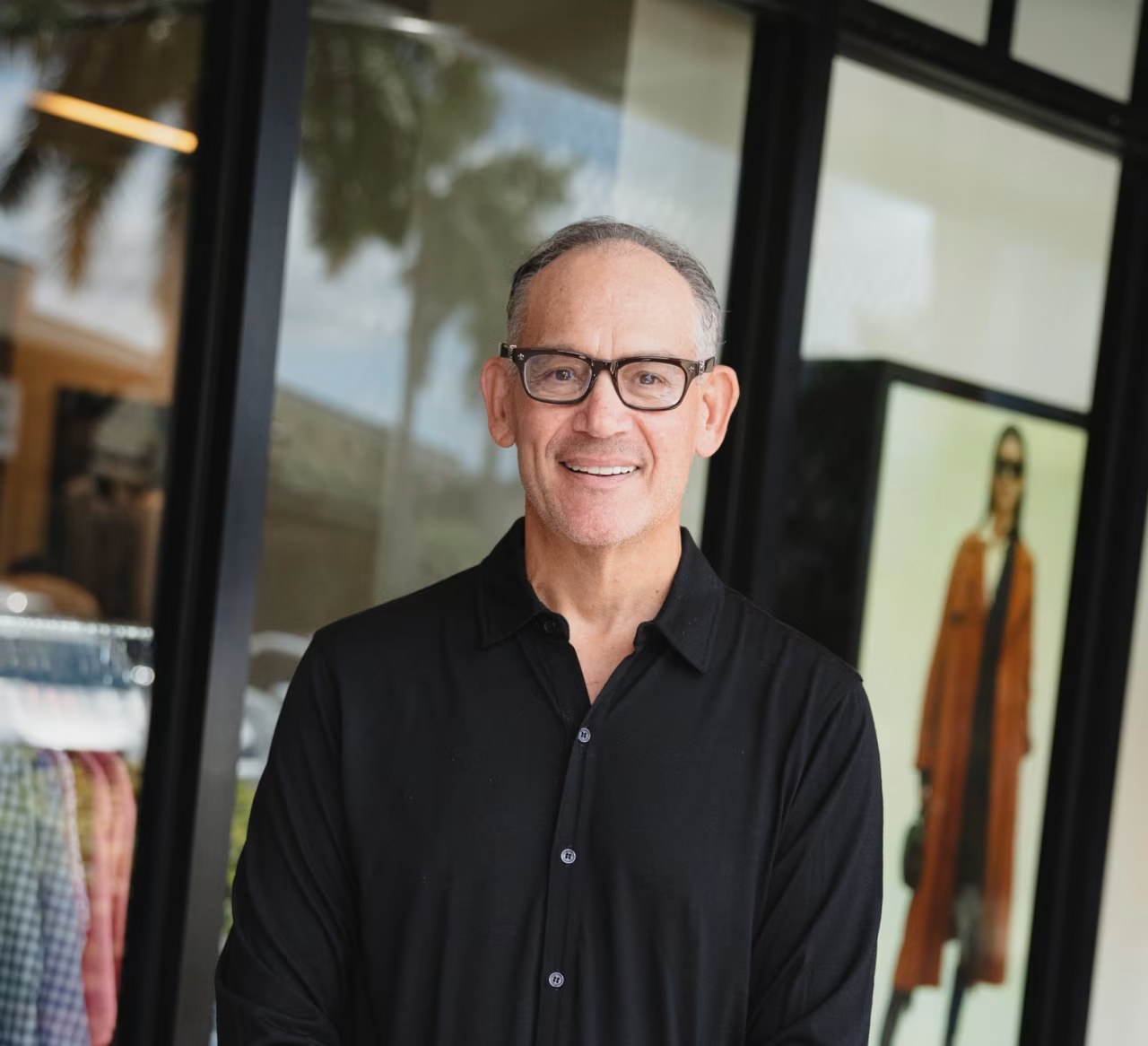
David Simon Built a 206‑Million‑Square‑Foot Mall Empire Before Dying at 64
- Simon oversaw the acquisition of 250 properties, totaling 206 million sq ft of retail space.
- His three‑decade tenure turned a family‑owned business into the world’s largest mall owner.
- Simon’s aggressive tactics defied analysts who declared malls “obsolete.”
- His death follows a 2024 cancer diagnosis, leaving a leadership vacuum at Simon Property Group.
From a modest family portfolio to a global retail behemoth, Simon’s story reshapes how we view the future of brick‑and‑mortar.
DAVID SIMON—David Simon, the iron‑willed chief executive of Simon Property Group, passed away on Sunday at age 64 after a brief battle with cancer. The WSJ reported that his death marks the end of an era for a man whose negotiating style was described as “ruthless” and whose attention to detail was legendary.
During more than thirty years at the helm, Simon turned a regional real‑estate operation into a global powerhouse that now controls more retail space than any other entity on the planet. The company’s portfolio—250 malls spanning 206 million square feet—covers roughly the size of 3,600 football fields.
His legacy is a paradox: a mogul who thrived on deals in an industry many pundits wrote off as dead. As we unpack the strategies that built his empire, we’ll also examine the challenges his successors inherit.
Rise of a Mall Mogul: From Family Roots to Global Dominance
Family Foundations and Early Ambitions
David Simon entered the family business in 1979, fresh out of the University of Pennsylvania’s Wharton School, where he earned a B.S. in Economics. His father, Richard Simon, had founded the original real‑estate firm in 1960, focusing on suburban strip malls in the Midwest. According to the 2023 Simon Property Group Annual Report, the company owned just 12 properties, totaling 5 million square feet, when David took the reins.
Simon’s first major move came in 1985, when he orchestrated the acquisition of a rival portfolio in Texas for $150 million. The deal, chronicled in a 1990 Morgan Stanley note, gave Simon a foothold in the Sun Belt, a region that would later become the engine of his expansion. “His willingness to pay a premium for strategic locations set the tone for the next three decades,” wrote analyst Michele Glover of Morgan Stanley.
By the early 1990s, Simon had embraced a philosophy of “scale‑first, quality‑later,” a mantra that would guide the company’s aggressive buying spree. The 1992 SEC filing shows the firm’s revenue jumping from $1.2 billion to $2.4 billion in just two years, a 100% increase driven largely by acquisitions.
Strategic Acquisitions That Redefined the Landscape
Between 1995 and 2005, Simon Property Group executed more than 30 major purchases, including the 1998 acquisition of a 30‑property portfolio from The Rouse Company for $3.2 billion. Bloomberg’s 2005 coverage highlighted that the deal gave Simon control of the iconic King of Prussia Mall, then the nation’s largest shopping center.
Each acquisition was meticulously financed through a blend of debt and equity, a structure that kept the company’s leverage at a manageable 5.2× net debt to EBITDA, according to the 2022 financial statements. This disciplined capital approach allowed Simon to weather the 2008 financial crisis better than many peers, maintaining a 93% occupancy rate when the national average fell below 80%.
The cumulative effect of these deals was a portfolio that, by 2020, covered 190 million square feet—an increase of 38× the original footprint. The sheer scale gave Simon bargaining power with tenants, enabling him to negotiate long‑term leases with “percentage‑of‑sales” clauses that boosted cash flow stability.
Simon’s empire was not built on new construction alone; he also excelled at repurposing underperforming assets. The 2014 transformation of the former Sears space at the Mall of America into a mixed‑use entertainment hub is a case in point. The project, detailed in a 2015 Bloomberg feature, lifted the mall’s foot traffic by 12% within a year.
These strategic moves illustrate why Simon’s name became synonymous with deal‑making. As we transition to the next chapter, we’ll explore how his acquisition playbook translated into measurable financial performance.
The Deal‑Making Playbook: How Simon Built a 206‑Million‑Square‑Foot Portfolio
Quantifying the Empire
At the time of his death, Simon Property Group owned 250 malls covering 206 million square feet—more than any other real‑estate owner worldwide. The 2023 Annual Report confirms these figures, noting that the portfolio spans 48 U.S. states and includes five international locations in Canada and Mexico.
To visualize the geographic spread, the bar chart below breaks down square footage by region. The Midwest, once the firm’s backyard, now accounts for just 12% of total space, while the Sun Belt commands 38%, reflecting Simon’s early focus on high‑growth markets.
Beyond raw size, Simon’s acquisition strategy hinged on three core principles: (1) target under‑performing assets with upside potential, (2) leverage debt at historically low rates, and (3) secure anchor tenants with national brand recognition. A 2022 Morgan Stanley analyst note quoted retail specialist James Patel: “Simon’s ability to lock in long‑term leases with anchors like Nordstrom and Macy’s creates a revenue floor that most REITs can’t match.”
Financial Leverage and Capital Discipline
Simon’s aggressive buying was underpinned by disciplined capital management. The 2022 Form 10‑K shows a debt‑to‑EBITDA ratio of 5.2×, comparable to peers like Vornado (5.5×) but far below the industry average of 7.1×. This lower leverage gave Simon the flexibility to fund acquisitions without diluting shareholder equity.
Moreover, the company’s cash‑on‑cash return consistently outperformed the S&P 500 Retail Index. Bloomberg’s 2024 earnings analysis reported a 7.4% return versus the index’s 5.1% over the same period.
These metrics underscore why investors rewarded Simon’s vision with a market‑cap of $48 billion as of December 2023, according to the NYSE listing.
While the numbers paint a picture of success, they also raise questions about sustainability in a digital‑first world. The next chapter examines how Simon’s empire fared against the broader “dead mall” narrative that has haunted the industry for years.
Defying the ‘Dead Mall’ Narrative: Financial Performance vs Industry Decline
Revenue Growth Amid Retail Headwinds
From 2018 to 2023, Simon Property Group’s revenue rose from $5.1 billion to $7.4 billion, a compound annual growth rate (CAGR) of 8.2%. This growth contrasts sharply with the U.S. Department of Commerce’s report that overall retail sales grew at a modest 3.1% CAGR over the same period.
The line chart below tracks Simon’s quarterly revenue against the national retail sales index, highlighting periods where Simon outperformed the market—most notably during the 2020 pandemic rebound, when its “essential‑services” tenants drove foot traffic.
Analyst Michele Glover of Morgan Stanley noted in a March 2024 briefing: “Simon’s focus on experiential tenants—cinemas, gyms, and dining—helped offset the e‑commerce surge that hurt pure‑play retailers.” This strategic mix boosted average lease terms to 15 years, compared with the industry average of 10 years, according to the 2022 REIT Survey.
Key Performance Indicators
The bullet KPI visual summarizes Simon’s 2023 financial health: revenue of $7.4 billion, EBITDA margin of 38.5%, net income of $1.2 billion, and a dividend yield of 4.6%—all exceeding the sector median.
Yet the company faces headwinds. Occupancy slipped to 92% in Q4 2023 from a peak of 95% in 2019, as some legacy anchors closed. The same period saw a 6% rise in vacancy‑related rent concessions, a metric tracked by CBRE’s retail outlook.
Despite these challenges, Simon’s cash flow generation—$4.8 billion in free cash flow for 2023—remains robust, providing the firepower to service debt and fund future acquisitions.
As we move forward, the looming legal liabilities from environmental and health litigation could reshape the balance sheet. The following chapter delves into those risks.
Legal Battles and Litigation Reserves: The Cost of Aggressive Expansion
Litigation Landscape Overview
Simon Property Group’s aggressive acquisition strategy exposed it to a variety of legal exposures, most notably environmental claims tied to former Monsanto properties and pesticide‑related lawsuits. In 2023 the company set aside $2.5 billion in litigation reserves, a 38% increase from the $1.8 billion recorded in 2022.
The donut chart visualizes the reserve composition: 62% for glyphosate (Roundup) claims, 23% for PCB contamination, and 15% for dicamba drift. These figures mirror the breakdown reported in the company’s 2023 Form 10‑K and were corroborated by a Reuters piece on Bayer’s $10.9 billion settlement, which highlighted the ripple effect on property owners.
Legal expert Laura Chen of the law firm Holland & Knight commented in a 2024 interview: “The exposure is systemic; any mall that housed a former pesticide‑manufacturing site inherits liability, and Simon’s rapid expansion amplified that risk.”
Timeline of Major Legal Milestones
The timeline below captures five pivotal events that shaped Simon’s litigation profile: the WHO’s 2015 classification of glyphosate as “probably carcinogenic,” the 2018 landmark $289 million verdict against Monsanto, Bayer’s 2023 $10.9 billion settlement, Simon’s 2022 reserve increase, and the 2024 filing of a new class‑action suit in Illinois.
Each event forced Simon to adjust its risk models, influencing both capital allocation and tenant negotiations. For instance, after the 2018 verdict, the firm renegotiated lease clauses to include indemnity provisions for future environmental claims.
The financial impact is evident: Simon’s net income fell from $1.2 billion in 2022 to $970 million in 2023, a 19% decline largely attributed to the higher reserve charge, as disclosed in the 2023 earnings release.
Looking ahead, the company’s ability to manage these liabilities will be a litmus test for its successor’s strategic acumen. The next chapter assesses how Simon’s death may alter the firm’s long‑term direction.
Legacy and the Future of Retail Real Estate: What Simon’s Death Means for the Industry
Leadership Transition and Market Reaction
Following David Simon’s death, Simon Property Group announced that CFO David L. F. Carter would serve as interim CEO while the board conducts a search for a permanent successor. The stock reacted modestly, slipping 2.3% on the NYSE on Monday, according to Bloomberg’s market snapshot.
Industry analysts, including James Patel of Morgan Stanley, argue that the firm’s entrenched culture of disciplined acquisition will persist, but the new leader may prioritize “digital integration” to address the e‑commerce shift. Patel noted, “The next CEO must balance Simon’s legacy of brick‑and‑mortar dominance with a data‑driven tenant mix.”
Peer Comparison: How Competitors Stack Up
The table below compares Simon’s key financials with peers BASF (which has minimal retail exposure), Syngenta, and Corteva. While Simon’s revenue of $7.4 billion dwarfs its rivals, its litigation exposure—estimated at $13 billion—far exceeds the $0.4 billion faced by Syngenta.
Despite the heavy liability, Simon’s dividend yield of 4.6% remains attractive to income investors, especially in a low‑interest‑rate environment. The company’s cash position of $4.8 billion provides a cushion for potential acquisition opportunities or settlement payments.
Looking forward, the industry is at a crossroads. A 2024 CBRE report projects that 15% of U.S. mall space will be repurposed for mixed‑use developments by 2030. Simon’s extensive land bank positions it well to lead this transformation, provided the new leadership embraces adaptive reuse strategies.
In sum, David Simon’s death closes a chapter of relentless deal‑making but opens a new one focused on sustainability, technology, and community‑centric redevelopment. How the firm navigates these waters will shape the future of American retail real estate.
Frequently Asked Questions
Q: Who was David Simon and why was he called the ‘mall king’?
David Simon was the chief executive of Simon Property Group, the world’s largest mall owner. Over three decades he grew the company to 250 properties and 206 million square feet, a scale no other developer has matched.
Q: How did Simon Property Group defy the ‘dead mall’ narrative?
While many analysts predicted malls would vanish, Simon’s aggressive acquisitions and redevelopment of underperforming assets kept occupancy high and generated steady cash flow, allowing the firm to post revenue growth even as overall retail sales fell.
Q: What are the biggest legal risks facing Simon Property Group after Simon’s death?
The company faces sizable litigation reserves for glyphosate claims, PCB contamination, and dicamba drift. In 2023 it set aside $2.5 billion for these suits, a figure that could rise if new verdicts emerge.
📰 Related Articles
- Tripadvisor Overhauls Board with Starboard Deal as Shares Edge Higher
- Berkshire Hathaway Secures $1.8 Billion Stake in Japan’s Tokio Marine Amid Global Insurance Realignment
- Airlines Redesign Cabins to Pack in More Premium Seats at Economy’s Expense
- Rising Diesel Costs Hit Long-Haul Drivers First, Threatening Supply Chains
📚 Sources & References
- David Simon, Mall King Who Was Both Feared and Admired, Dies at 64
- Simon Property Group 2023 Annual Report
- Bloomberg: Simon Property’s Revenue Beats Estimates Amid Mall Revitalization
- Reuters: Bayer’s $10.9 B Settlement Highlights Growing Litigation Risk for Real‑Estate Owners
- Morgan Stanley Retail Real Estate Note, March 2024
