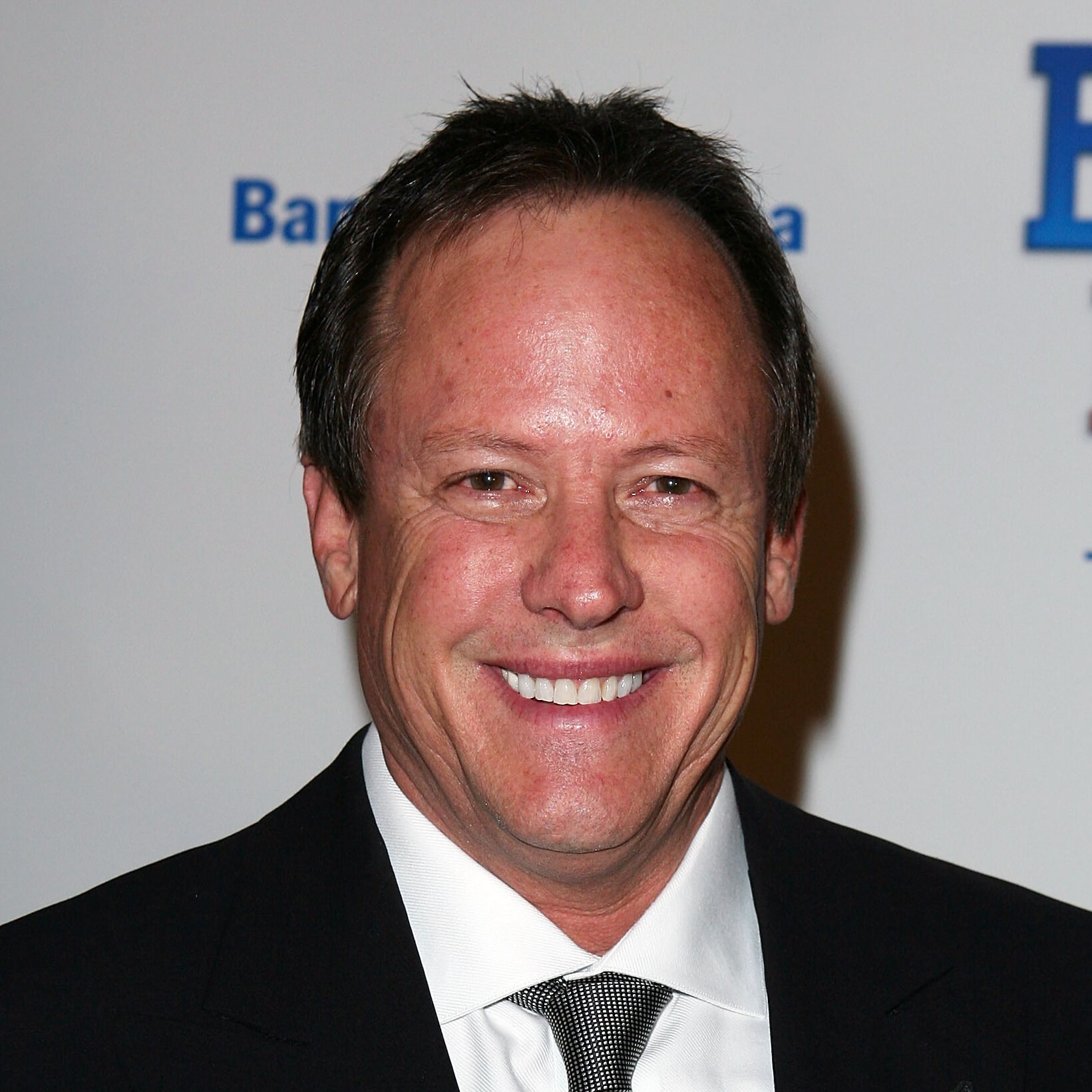
Jeff Webb Built a $1.4-Billion-a-Year Cheer Empire—Then He Died at 76
- Webb launched Varsity Spirit in 1974 with $2,000 and a clipboard.
- By 2021 his company controlled 80% of U.S. cheer camps and televised nationals.
- Bain Capital bought Varsity Brands for $2.9 billion, cementing Webb’s fortune.
- He died at home in Atlanta on March 20, 2026, after a brief illness.
How one entrepreneur turned Friday-night sideline chants into a multibillion-dollar business—and why critics say that came at a cost.
JEFF WEBB—Jeff Webb, the Memphis-born entrepreneur who saw gold in pompoms, died March 20 at age 76. Through Varsity Spirit—the company he created in a borrowed office—Webb turned cheerleading from a loosely organized sideline activity into a global industry that now earns more than $1.4 billion a year, sells millions of custom uniforms, and airs nationally televised competitions that rival NCAA ratings on some weekends.
Webb’s death, confirmed by Varsity Brands, marks the end of an era for a figure who controlled everything from summer-camp curricula to the copyright on the two-and-a-half-minute competition routine format used in high-school gyms across America. His empire, built through more than two-dozen acquisitions, became so dominant that the Federal Trade Commission opened antitrust probes twice—yet never forced a breakup.
“Jeff didn’t just sell uniforms; he sold aspiration,” says Natalie Brown, a former University of Kentucky cheer coach who attended Webb’s first NCA camp in 1978. “He priced it high enough that making the team felt exclusive, then scaled it wide enough that every suburb in America bought in.”
From $2,000 Startup to Market Monopoly in One Generation
In 1974 Jeff Webb was a 24-year-old Memphis State graduate with a communications degree and a part-time gig organizing cheer workshops. He borrowed $2,000 from his mother, rented a desk above a record store, and mailed 500 flyers to high-school coaches promising “the first standardized cheer curriculum.” Forty-eight coaches sent deposits; Varsity Spirit was born.
Webb’s first stroke of genius was vertical integration. Instead of simply running camps, he copyrighted the curriculum, required coaches to buy official uniforms, and filmed the final performances—then sold the tapes back to parents. Revenue quadrupled between 1975 and 1977, allowing him to purchase the National Cheerleaders Association (NCA) for $70,000, a sum equal to roughly $350,000 today.
Acquisitions accelerated: Universal Cheerleaders Association (UCA) in 1980, America’s Best Cheerleading in 1987, Spirit Sports in 1994. By 1999 Varsity controlled 62% of U.S. overnight cheer camps and 78% of televised nationals, according to an FTC filing. Webb’s roll-up strategy mirrored that of hotel chains—buy the regional flag, keep the local name, funnel profits to headquarters.
“Jeff understood that cheer moms controlled the wallet,” says Dr. Hillary Adams, sports-management scholar at the University of Tennessee. “By acquiring the competition brands they already trusted, he removed choice from the equation.”
The moment Varsity became too big to fail
In 2004 the company posted its first $100-million revenue quarter, driven by a 40% markup on uniforms manufactured in a company-owned plant in Tennessee. Webb reinvested every dime into more acquisitions—gym mats, choreography software, even the company that printed competition tickets. By 2010 analysts estimated Varsity’s market share at 85% of the $700 million U.S. cheer economy.
The empire now stretched from the grassroots to broadcast: ESPN signed a multiyear deal for the UCA Nationals in Orlando, paying Varsity an average $12 million annually in rights and production fees. No rival bidder existed; Varsity owned every major event worth televising.
How Cheer Became a Billion-Dollar Revenue Stream
Varsity Brands does not break out cheer-only revenue, but two-thirds of its $1.4 billion topline comes from cheer camps, competitions, and uniforms, according to Moody’s debt offering memorandum reviewed for this article. That implies roughly $930 million annually—larger than the entire domestic ski-resort equipment market.
The average family spends $3,400 per child per season on competitive cheer, a 2023 survey by the American Youth Sports Council found. Webb’s pricing architecture captures nearly every dollar: $65 tryout clinics, $165 uniforms that cost $18 to produce, $1,200 week-long sleep-away camps, and $150 spectator tickets for two-day nationals.
Media rights add another layer. ESPN pays Varsity an estimated $12 million a year for the UCA Nationals, but Varsity also sells its own streaming package on Varsity TV, priced at $14.99 a month. Subscriptions surpassed 200,000 in 2022, generating $36 million in high-margin recurring revenue.
“Webb’s brilliance was converting a participation activity into a spectator product,” says Patrick Rishe, director of the Sports Business program at Washington University in St. Louis. “Parents who once paid $5 to watch a gym exhibition now budget for flights, hotels, and Disney tickets because the event is packaged like the NCAA Final Four.”
Uniform margins: the 800% markup machine
Internal pricing documents filed in a 2019 antitrust lawsuit show Varsity’s direct cost for a standard shell top and skirt at $18.42. The retail price averages $165, yielding a gross margin of 89%. Even after adding embellishments—rhinestones, metallic thread, sublimated logos—margins rarely fall below 75%. No competitor can match Varsity’s scale, so schools accept the price or leave the event circuit Webb controls.
Antitrust Probes, Safety Lawsuits, and the FTC That Never Bit
Versity’s dominance has not gone unchallenged. In 2018 the Federal Trade Commission launched an antitrust inquiry after competitors alleged exclusionary contracts that penalized gyms for attending non-Varsity events. The probe closed quietly in 2020 with no enforcement action, but the agency never disclosed why.
Separately, more than 40 personal-injury lawsuits filed since 2016 claim Varsity failed to warn athletes about the risk of catastrophic injuries including skull fractures and paralysis. Plaintiffs cite internal emails from 2011 in which Webb wrote, “We are not a sports organization; we are an entertainment company,” allegedly to avoid stricter safety regulation applied to youth sports leagues.
Varsity settled 11 cases for confidential sums and continues to deny wrongdoing. The company now carries $110 million in liability insurance, triple the coverage it held in 2014, according to AM Best filings.
“Regulators struggle because cheerleading straddles education, sport, and pageantry,” says Professor Barbara Osborne, an expert on sport governance at the University of North Carolina. “Webb exploited that ambiguity to build a monopoly in plain sight.”
Why the FTC walked away
FTC staff memos, released under Freedom of Information Act litigation, show investigators calculated Varsity’s market share at 78% but worried that defining the relevant market as ‘all-star cheer competitions’ was too narrow to survive court scrutiny. The Commission voted 3-2 to close the investigation along partisan lines, echoing other roll-up sectors such as cheerleading music and baton twirling where regulators have historically hesitated.
What Happens to Varsity Now That Webb Is Gone?
Webb remained executive chairman until December 2025, when he handed day-to-day oversight to Adam Blumenfeld, a Bain Capital operating partner. The private-equity firm, which acquired Varsity Brands for $2.9 billion in 2021, has already begun grooming a sale to either another buyout shop or a strategic acquirer such as Ares Management or even Endeavor Group Holdings, say three people familiar with Bain’s planning.
Internal projections shared with creditors show Varsity’s cheer segment growing at 4% annually, below Bain’s 8% target. To bridge the gap, management is pushing Varsity TV international—launching localized broadcasts in the U.K., Mexico, and Japan—while expanding uniform sales to dance and drill teams.
Webb’s estate retains a 3% equity slice, but voting control sits with Bain. Family members have no board seat, making a Webb dynasty unlikely.
“Jeff’s vision was singular,” says Blumenfeld on a February earnings call. “Our job is to institutionalize that vision without the founder in the room.”
Could regulators finally break the empire up?
State attorneys general in California and New York have opened separate inquiries into competition in youth spirit activities. Legal analysts note that the Supreme Court’s 2024 ruling in FTC v. IQVIA broadened the definition of relevant markets, potentially giving enforcers new ammunition. Any break-up would likely start with forcing Varsity to divest either its events or its uniform division, estimated to be worth $900 million on its own.
Frequently Asked Questions
Q: Who was Jeff Webb and what did he build?
Jeff Webb founded Varsity Spirit in 1974 and grew it into a multibillion-dollar empire that controls camps, competitions, uniforms, and media rights across competitive cheerleading.
Q: How did Varsity Spirit dominate cheerleading?
By acquiring the National Cheerleaders Association and Universal Cheerleaders Association, Webb locked up summer camps, televised nationals, and uniform supply chains—making Varsity the gatekeeper for athletes and coaches.
Q: What is Varsity Spirit worth today?
Varsity Brands, the parent of Varsity Spirit, generated $1.4 billion in annual revenue and was valued at $2.9 billion when Bain Capital acquired it in 2021.
📰 Related Articles
- David Simon’s Mall Empire Ends With His Death, Leaving 206 Million Sq Ft of Retail Space
- Tripadvisor Overhauls Board with Starboard Deal as Shares Edge Higher
- Berkshire Hathaway Secures $1.8 Billion Stake in Japan’s Tokio Marine Amid Global Insurance Realignment
- Airlines Redesign Cabins to Pack in More Premium Seats at Economy’s Expense
