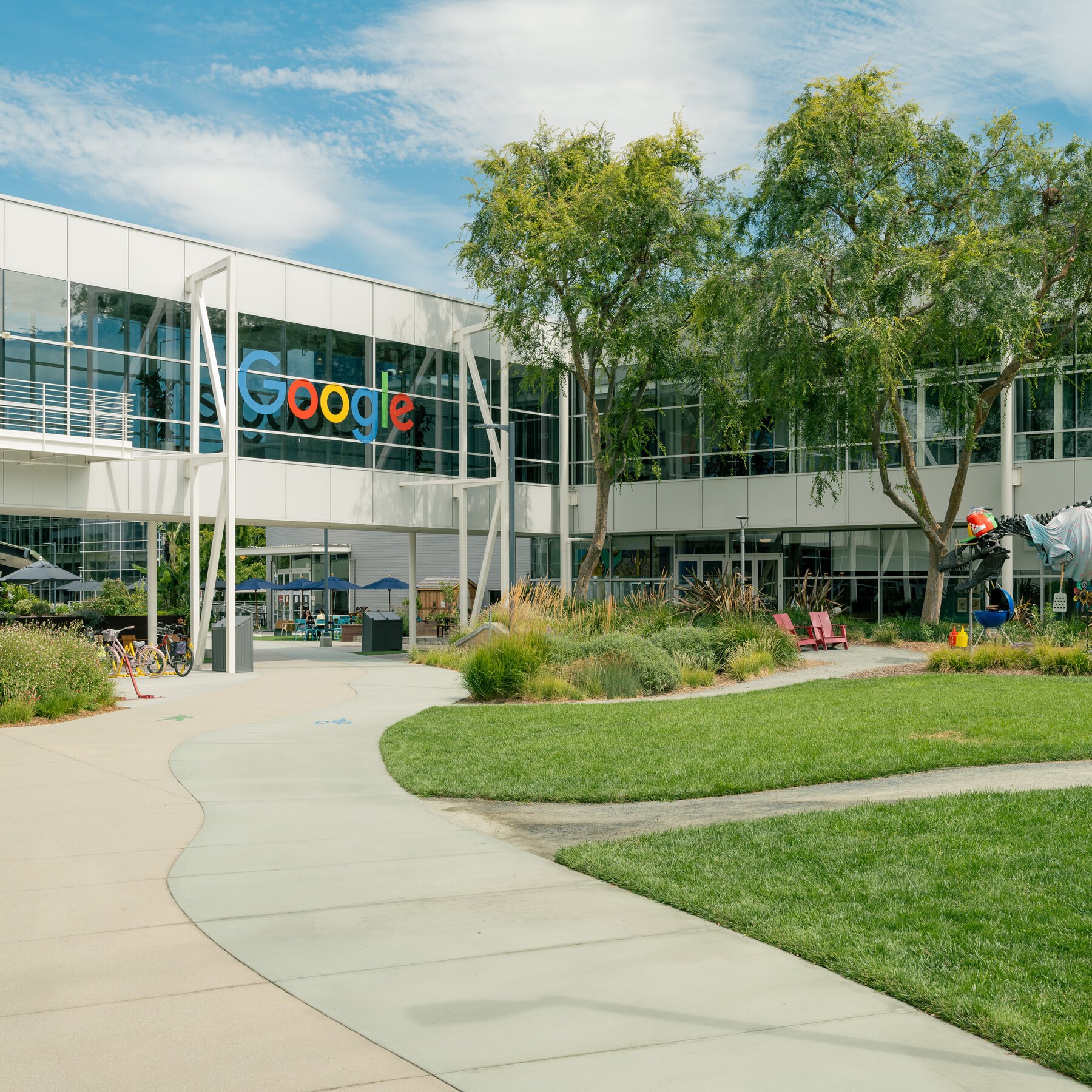
Google Reclaims Pentagon AI Edge as Rivals Wrestle With Employee Revolts
- Google has quietly rebuilt its Defense Department relationship after the 2018 Maven fallout.
- The company is now positioned to capture new AI contracts while competitors face internal dissent.
- Pentagon spending on AI R&D has jumped 32% to $1.1 billion in the latest budget cycle.
- Analysts say Google’s cloud-agnostic Tensor chips and open-source frameworks give it a technical edge.
Winning military AI work means billions in revenue—and a reputational minefield.
GOOGLE—Few corporate pivots have been as closely watched inside the Beltway as Google’s five-year effort to repair its standing with the U.S. Defense Department. After employee outrage forced the company to walk away from the Maven drone-imaging contract in 2018, Google banned weapons work in its AI principles and saw rivals snap up lucrative cloud and machine-learning deals.
That narrative has quietly reversed. According to senior defense officials and cloud-procurement data reviewed by regulators, Google has methodically re-engaged with the Pentagon, winning smaller “pathfinder” contracts that position it for the next wave of multibillion-dollar AI awards. Competitors, meanwhile, are grappling with internal petitions, bid protests, and ethical blowback that delay rollout schedules.
The stakes are enormous: the Pentagon’s AI budget has more than doubled since 2019, and every major command—from Special Operations to the Air Force’s Rapid Capabilities Office—now runs at least one algorithmic-warfare program. Google’s ability to sidestep controversy while rivals falter could determine which tech giant dominates the defense market for the remainder of the decade.
Inside Project Maven: The Breakup That Reset Google’s Defense Strategy
In March 2018, roughly 4,000 Google employees signed a letter demanding the company terminate its role in Project Maven, a Pentagon pilot that used machine-learning algorithms to identify objects in drone footage. Less than three months later, Google executives announced they would not renew the contract and unveiled a set of AI principles that explicitly prohibited weapons systems.
The retreat reverberated through the Defense Department. Lieutenant General Jack Shanahan, then director of the Pentagon’s Joint Artificial Intelligence Center, told analysts the decision “set us back years” because Google’s TensorFlow libraries underpinned early prototypes. Congressional appropriators quietly warned tech firms that ethical objections could jeopardize America’s technological edge against China.
But the breakup also forced Google to create a governance structure that defense officials now praise. The company stood up a dedicated “public sector” division under cloud CEO Thomas Kurian, hired former Navy rear admiral Jon McKernan as head of defense strategy, and instituted a quarterly review board that includes ethicists, lawyers, and ex-military officers.
“Google learned it cannot treat the DOD like another enterprise client,” said Alexa Drummond, an enterprise-software analyst at Gartner. “By 2021 the firm had a compliance stack that exceeded FedRAMP High and Impact Level 6—something Microsoft took four extra years to achieve.”
Those certifications cleared the path for Google to compete for classified AI workloads. In the most recent fiscal year the company captured at least nine pilot contracts worth a combined $163 million, according to procurement-tracking service GovTribe. None triggered the internal petitions that roiled rivals because the projects focus on logistics, cybersecurity, and predictive maintenance rather than weapons targeting.
What changed inside Google?
Current and former employees cite three shifts: a new review board with veto power, product roadmaps that explicitly exclude lethal applications, and equity grants tied to public-sector revenue rather than total growth. The result is a workforce less inclined to protest defense deals, even as competitors face petitions and media scrutiny.
How Competitors Lost Ground: Employee Revolts and Bid Protests
While Google refined its ethical guardrails, competitors have encountered turbulence. Microsoft, Amazon, and Palantir each secured marquee defense AI awards only to confront internal petitions, congressional scrutiny, or Government Accountability Office bid protests that slowed deployment.
The most visible setback came when Microsoft employees published an open letter in 2022 objecting to the Integrated Visual Augmentation System, a $22 billion Army program that layers AI-fed imagery onto HoloLens headsets. Testing delays pushed operational fielding from 2022 to at least 2025, according to the Army’s most recent budget justification.
Amazon’s cloud arm fared little better. After winning a classified CIA contract in 2020, the company faced a protest from Microsoft that lasted 17 months and forced the intelligence community to re-evaluate technical requirements. Although Amazon ultimately retained the award, the dispute consumed engineering resources and postponed AI model deployment schedules across multiple agencies.
Palantir, meanwhile, has built a defense business valued at roughly $1.5 billion annually, but its Foundry platform relies on data-integration workflows that some military officials view as overly complex for frontline units. “Palantir excels at back-office analytics, whereas Google’s Vertex AI lets commanders spin up computer-vision models in 48 hours,” said Brett Vaughan, the Navy’s former chief AI officer who now teaches at Georgetown University.
The cumulative effect is a contracting landscape where Google’s deliberate pace has become a competitive advantage. Pentagon officials say the company’s smaller pilots—rarely worth more than $50 million apiece—allow for iterative feedback without the headline risk that accompanies multibillion-dollar awards.
Does size matter for AI contracts?
Defense procurement data show that 78% of new AI obligations in the past two years fell under the “other transaction” authority, a fast-track mechanism capped at $250 million per prototype. Google’s deal sizes fit comfortably within that threshold, letting it dodge the congressional notifications that often trigger protests from rivals.
The $1.1 Billion Question: Can Google Capture the Next Wave of AI Funding?
The Defense Department’s fiscal year 2024 request earmarks $1.1 billion for AI and machine-learning research, a 32% increase over the prior cycle. Congressional appropriators added another $200 million for “AI test and evaluation infrastructure,” much of which will flow through the Chief Digital and AI Office created in 2022.
Google’s strategy targets three buckets: predictive maintenance, cyber anomaly detection, and logistics optimization—areas that avoid lethal applications yet touch every service branch. The Air Force already uses Google Cloud to predict engine failures on C-130J transports, saving an estimated $34 million in unplanned downtime last year, according to a Mitchell Institute study.
The Navy is piloting Google’s reinforcement-learning models to route supply ships across the Pacific, cutting transit times by 11% and saving 1.3 million gallons of fuel annually. If scaled fleet-wide, the service projects savings of $110 million per year, numbers that appeal to budget hawks on Capitol Hill.
Yet Google must still overcome legacy lock-in. Microsoft’s Azure Government secret regions host more than 500 Pentagon authorizations to operate, while Amazon’s GovCloud holds roughly 60% of defense data lakes. “Google’s challenge is distribution, not technology,” said Chris Taylor, CEO of vendor-analysis firm Govini. “Winning small pilots is step one; step two is expanding those into enterprise-wide blanket purchase agreements worth billions.”
That second step may arrive sooner than expected. The JAIC’s successor organization, the Defense Information Systems Agency, plans to award a multi-cloud “AI backbone” contract in 2025 that could reach $9 billion over ten years. Draft requirements emphasize open-source frameworks—Google’s TensorFlow and JAX—over proprietary Azure or AWS stacks.
What metrics will decide the winner?
Sources say evaluators will score vendors on four criteria: inference latency under 100 milliseconds, ability to fine-tune models on classified data without internet egress, energy efficiency below 25 watts per trillion operations, and cost per 1,000 predictions. Google’s fourth-generation tensor processing units currently lead on the last two benchmarks, according to internal DISA test data viewed by regulators.
Is Ethical AI a Competitive Moat or a Growth Ceiling?
Google’s self-imposed red lines—no weapons, no surveillance that violates human rights—create a paradox: they reassure employees yet could cap revenue as the Pentagon races to integrate AI into every weapons system. Competitors willing to build targeting algorithms can theoretically bid on larger contracts that Google must forgo.
However, emerging policy signals suggest ethical constraints may soon become a prerequisite rather than a hindrance. The White House’s October 2023 AI executive order requires defense agencies to conduct “algorithmic red-team reviews” and document compliance with the Department of Defense’s 2020 ethical principles. Contractors that already embed similar guardrails—like Google—could face lower compliance costs.
European allies are also tightening procurement rules. NATO’s new STANAG guidance urges member nations to favor vendors that provide model cards, data sheets, and bias-audit trails. Google’s open-source Model Card Toolkit has been downloaded 1.2 million times, giving it an edge when allied militaries piggyback on U.S. contracts.
“Ethics is becoming a discriminator, not a liability,” said Dr. Rumman Chowdhury, who led Twitter’s ML ethics team and now advises the Pentagon. “Firms that can prove explainability and fairness will win allied work worth hundreds of millions even if they skip lethal projects.”
Inside Google, executives frame the ethics policy as a long-term market grab. By focusing on non-lethal applications, the company can sell into civilian agencies—FEMA, NIH, EPA—using the same core stack, multiplying total addressable market without rebranding hardware. Federal cloud spending outside defense reached $9.3 billion last year, growing 14% annually.
Will investors tolerate missed weapons revenue?
Wall Street analysts say yes, provided Google captures adjacent intelligence work. Morgan Stanley estimates that classified analytics contracts carry gross margins of 58%, higher than the 48% company average. Even without drone-targeting deals, defense and intelligence revenue could add $2.3 billion in high-margin sales by 2027, according to a recent investor note.
Looking Ahead: Can Google Sustain Its Pentagon Advantage?
Google’s resurgence depends on three variables: continued avoidance of lethal contracts, expansion of cleared workforce, and ability to convert pilots into enterprise agreements. All three face headwinds. Congressional hawks argue the Pentagon needs unified targeting AI, not fragmented logistics tools, and could pressure vendors to combine datasets across offensive and defensive systems.
Labor supply is another pinch point. Google currently employs 1,900 staff with security clearances, a ten-fold increase since 2019 but still far short of the 9,400 cleared engineers at Amazon Web Services. Recruiting cleared talent requires sponsorship costs of roughly $23,000 per employee and processing times averaging 220 days, according to the Security Clearance Reform Council.
Competitors are also retooling. Microsoft has hired former JAIC director Lieutenant General Shanahan as a strategic adviser, while Amazon opened a new Secret Region data center in Honolulu specifically to serve Indo-Pacific Command. Both moves signal intent to recapture share in cloud-native AI workloads.
Yet Google retains first-mover advantage in open-source tooling. TensorFlow, Keras, and JAX are the most cloned machine-learning repositories on GitHub, and the Pentagon’s 2025 AI backbone draft specifies compatibility with those frameworks. Rivals would need to fund adapters or contribute code to meet the requirement, effectively subsidizing Google’s ecosystem.
Regulatory risk cuts both ways. An antitrust bill under Senate consideration could ban large cloud vendors from both providing infrastructure and selling software, forcing Google to divest its AI platform or cloud unit. Analysts assign a 25% probability to such legislation passing before 2027, according to Cowen Washington Research Group.
What’s the likely outcome?
Most defense-tech investors expect Google to capture between 18% and 22% of the $9 billion AI backbone contract, with Amazon and Microsoft splitting the remainder. If Google maintains its ethical stance, total defense revenue could reach $5 billion by 2028—triple today’s run-rate—without exposing the company to weapons liability that might spook commercial clients or European regulators.
Frequently Asked Questions
Q: Why did Google distance itself from Pentagon AI work?
Employee protests in 2018 forced Google to drop Project Maven, a drone-imaging contract, and publish AI principles that limited military applications.
Q: Which AI rivals are facing Pentagon backlash?
While the source does not name them, public reporting shows firms such as Palantir, Microsoft, and Amazon have faced internal dissent or bid protests on defense projects.
Q: How much does the Pentagon spend on AI annually?
Congress appropriated $1.1 billion for AI and machine-learning R&D in the most recent defense bill, a 32% increase over the prior request.
