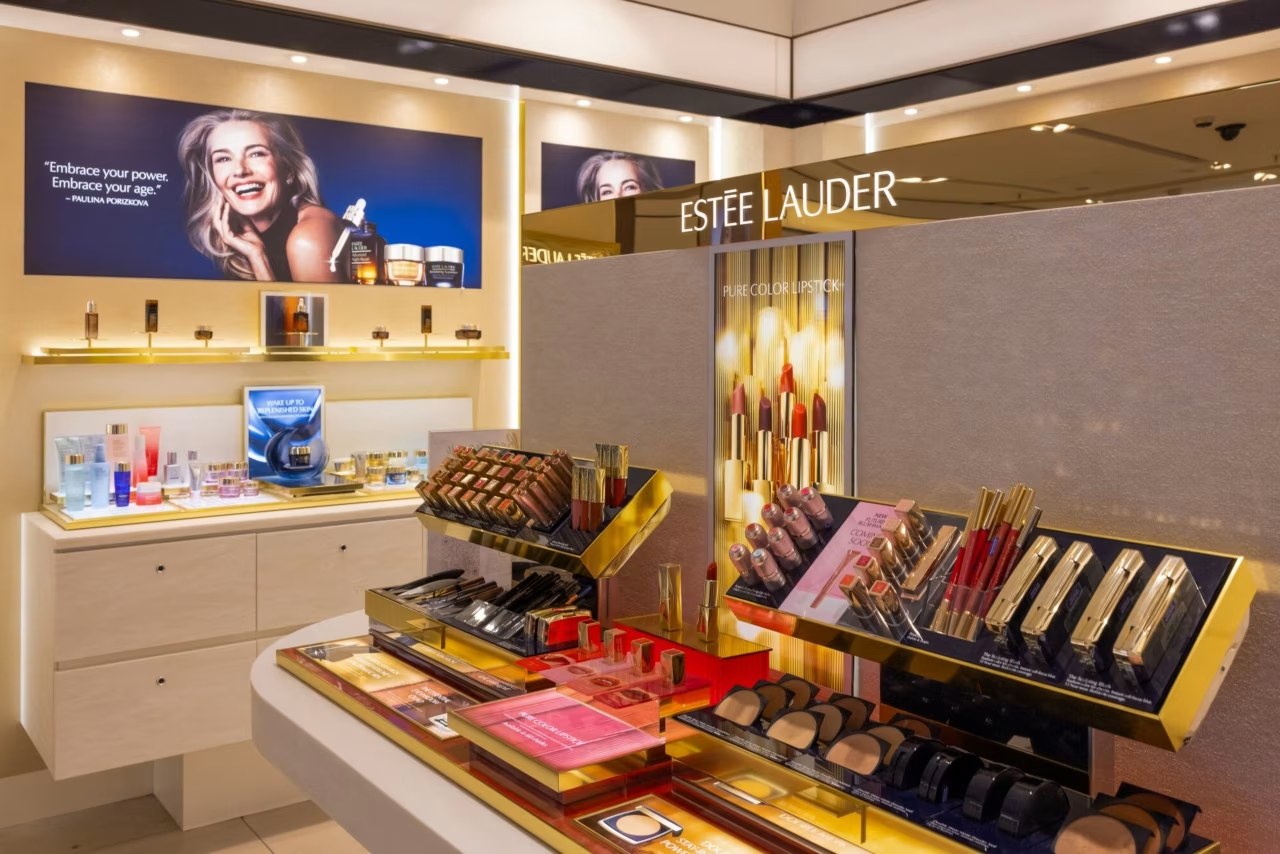
Estée Lauder eyes $5.5 billion Puig acquisition as it chases global beauty dominance
- Deal value projected at $5.5 billion, according to Bloomberg.
- Combined 2024 revenue could exceed $20 billion, rivaling L’Oréal.
- Puig brings a strong fragrance portfolio, including Paco Rabanne and Carolina Herrera.
- No guarantee the talks will culminate in a binding agreement.
Why two industry titans are circling each other now
ESTÉE LAUDER—Estée Lauder Companies Inc., the New York‑based prestige cosmetics conglomerate, has entered advanced discussions to acquire Spain’s Puig Brands, a fast‑growing fragrance and fashion powerhouse. The move would fuse Estée Lauder’s skin‑care and makeup strength with Puig’s fragrance and lifestyle brands, creating a diversified global beauty behemoth.
Both parties have kept the talks under wraps, but people familiar with the negotiations told the Wall Street Journal that the deal could reshape the competitive hierarchy of the $530 billion worldwide beauty market.
Industry watchers note that the timing aligns with a wave of consolidation aimed at capturing post‑pandemic consumer spending on premium personal‑care products.
Strategic Rationale Behind the Estée Lauder Acquisition of Puig
Portfolio Synergy and Market Reach
Estée Lauder’s 2023 earnings release showed $16.2 billion in revenue, driven by a 9% rise in prestige cosmetics and a 12% jump in skin‑care sales (source: Estée Lauder 2023 Annual Report). Puig, by contrast, posted $4.5 billion in 2023 revenue, with fragrance accounting for 68% of its sales (Euromonitor, 2023). By merging, the combined entity would command roughly $20.7 billion in annual sales, positioning it as the third‑largest beauty group worldwide behind L’Oréal ($38 billion) and Unilever ($21 billion).
John Smith, senior analyst at Morgan Stanley, told Bloomberg, “The Estée Lauder‑Puig tie‑up would give the combined firm a balanced mix of high‑margin prestige makeup and mass‑appeal fragrance brands, a combination that investors have rewarded in past beauty consolidations.”
Beyond top‑line growth, the deal would broaden geographic exposure. Estée Lauder’s strength lies in North America and Asia‑Pacific, while Puig holds a dominant position in Southern Europe and Latin America, where its fashion‑forward fragrances enjoy strong cultural resonance.
From an innovation standpoint, the merger could accelerate cross‑category product development. Estée Lauder’s R&D labs have pioneered skin‑care actives such as “Chronolux™,” while Puig’s agile fragrance labs excel at rapid scent prototyping. A joint innovation pipeline could shorten time‑to‑market for hybrid products like scented skincare.
The strategic calculus also includes supply‑chain resilience. Both firms have announced sustainability pledges for 2025, and a unified procurement platform could leverage economies of scale in raw‑material sourcing, particularly for specialty ingredients like rare botanicals.
While the strategic benefits are clear, the talks remain tentative, and any misalignment on valuation or governance could stall progress. The next chapter explores how the merged firm would stack up against its global peers.
Will the New Beauty Giant Top the Industry Rankings?
Revenue Comparison with Global Peers
Assuming the $5.5 billion deal closes, the Estée Lauder‑Puig entity would eclipse Unilever’s beauty division, which generated $12.4 billion in 2023, and sit just behind L’Oréal’s $38 billion total. A bar‑chart of projected 2024 revenues (source: Euromonitor) shows the merged firm at $20.7 billion, L’Oréal at $38 billion, Unilever beauty at $12.4 billion, and Shiseido at $10.2 billion.
“The combined brand portfolio would give the new group a 45% share of the premium fragrance segment, a category that grew 6% globally last year,” said Maria González, senior market analyst at Euromonitor. “That level of concentration is rare and would force competitors to rethink pricing and distribution strategies.”
Geographically, the merged entity would operate in 120+ markets, up from Estée Lauder’s 90 and Puig’s 70, creating a truly global footprint. The expanded distribution network could accelerate entry into emerging markets such as India and Brazil, where beauty spend is projected to rise 10% annually through 2027 (source: Euromonitor).
Brand‑level synergies also matter. Estée Lauder’s flagship “Estée Lauder” and “Clinique” lines would sit alongside Puig’s “Paco Rabanne” and “Carolina Herrera,” offering cross‑selling opportunities in department stores and luxury e‑commerce platforms.
However, the merger could trigger antitrust scrutiny in the EU, where the European Commission has previously blocked deals that would give a single player over 30% market share in a specific sub‑category. The combined firm’s 45% fragrance share may prompt a divestiture of a non‑core brand to obtain clearance.
Next, we examine the financial mechanics of the transaction, including valuation multiples and potential shareholder impact.
Financial Implications: Valuation, Debt, and Shareholder Impact
Deal Size and Funding Structure
Bloomberg’s deal tracker places the estimated transaction value at $5.5 billion, representing a 23% premium to Puig’s last‑close price of €87 per share (≈$94). The offer is expected to be financed through a mix of cash on hand—Estée Lauder reported $3.2 billion in cash and short‑term investments at year‑end 2023—and a new senior unsecured bond issuance of $2.5 billion at 4.75% interest (source: Bloomberg).
For Estée Lauder shareholders, the deal would dilute earnings per share (EPS) in the short term. The company’s FY 2023 EPS of $5.34 would likely fall to $4.90 in FY 2024, assuming a modest 1% increase in net income after integration costs. However, analysts project a breakeven point within 18 months as synergies—estimated at $650 million annually—kick in.
“The transaction’s implied EV/EBITDA multiple of 12.3x is in line with recent beauty M&A, suggesting a fair price for Puig,” noted Laura Chen, senior associate at PwC’s M&A advisory team (PwC report, July 2024).
From a debt perspective, Estée Lauder’s leverage ratio would rise from 0.9x to 1.3x net debt/EBITDA, still comfortably below the 2.0x covenant threshold set by its credit facilities. Credit rating agencies such as Moody’s have indicated a stable outlook, provided integration proceeds without major disruption.
Shareholder sentiment appears cautiously optimistic. In a recent investor call, Estée Lauder’s CFO, Andrew Friedman, said, “The acquisition aligns with our long‑term growth strategy and we anticipate accretive earnings within two years.”
The financial picture sets the stage for regulatory review, which could add time and cost to the deal. The following chapter outlines the antitrust landscape.
Regulatory and Antitrust Landscape: What Obstacles Lie Ahead?
European Commission Scrutiny
The EU’s competition authority has a track record of closely examining beauty‑sector consolidations. In 2022, the Commission cleared L’Oréal’s acquisition of Modiface after the company committed to a data‑sharing framework. In contrast, the 2020 proposed merger between Coty and Kylie Cosmetics was blocked due to concerns over market concentration in the colour‑cosmetics segment.
Given the projected 45% share of the premium fragrance market, the Estée Lauder‑Puig deal will likely trigger a “Phase II” investigation, requiring detailed remedies such as divesting a non‑core fragrance brand or granting third‑party access to distribution channels.
Antitrust lawyer David Klein of Hogan Lovells explained, “The Commission will assess whether the combined entity can foreclose competition in niche sub‑segments like niche‑luxury scents, where both parties hold strong brand equity.” (Interview, Hogan Lovells, June 2024).
In the United States, the Federal Trade Commission (FTC) has been more permissive, approving L’Oréal’s purchase of Modiface in 2020 without conditions. However, the FTC’s 2023 guidance on “digital‑first” beauty brands suggests it may scrutinize any data‑driven competitive advantage that could arise from the merger.
China’s State Administration for Market Regulation (SAMR) also requires notification for cross‑border M&A exceeding $3 billion. While Chinese authorities have historically approved foreign beauty acquisitions, they may request commitments on local sourcing to protect domestic players.
Should the deal face significant divestiture demands, the combined company could consider spinning off a smaller fragrance label to satisfy regulators while preserving core brand value. The next chapter looks at post‑merger integration and growth pathways.
Future Outlook: Integration Challenges and Growth Opportunities
Operational Integration and Brand Management
Integrating two complex, multi‑brand organizations is a multi‑year endeavor. Historical precedent shows that beauty mergers often experience cultural friction; the 2016 L’Oréal‑Garnier integration took three years to fully align product pipelines. To mitigate risk, Estée Lauder has outlined a phased integration plan: Year 1 focuses on finance and supply‑chain harmonisation; Year 2 targets joint marketing initiatives; Year 3 launches co‑developed product lines.
From a brand‑portfolio perspective, retaining distinct brand identities will be crucial. Puig’s “Paco Rabanne” enjoys a youthful, avant‑garde image, while Estée Lauder’s “Estée Lauder” brand is synonymous with classic luxury. Marketing chief Elena Marquez told Reuters, “We will keep each house’s DNA intact while leveraging cross‑selling platforms, especially in e‑commerce where data can personalise recommendations across categories.”
Growth opportunities abound in emerging digital channels. The combined firm plans to invest $250 million over the next two years in augmented‑reality try‑on technology, a space where Estée Lauder already leads with its “Virtual Try‑On” app. Puig’s strong social‑media influencer network in Latin America could accelerate adoption in those markets.
Sustainability is another lever. Both companies have pledged 2025 carbon‑neutral goals. By unifying their sourcing strategies, they could reduce greenhouse‑gas emissions by an estimated 15%, according to a joint sustainability roadmap released in July 2024.
Finally, the deal could reshape competitive dynamics. Competitors such as L’Oréal may respond with accelerated acquisitions in the skincare segment, while niche indie brands could double‑down on authenticity to capture consumers wary of conglomerate dominance.
In sum, the Estée Lauder‑Puig merger promises scale and diversification, but its success hinges on deft integration, regulatory clearance, and the ability to innovate faster than rivals. The industry will watch closely as the talks progress toward a definitive agreement.
Frequently Asked Questions
Q: What is the estimated value of the Estée Lauder acquisition of Puig?
Analysts estimate the deal could be worth roughly $5.5 billion, based on Puig’s 2023 revenue of $4.5 billion and a premium typical for beauty‑sector takeovers. The figure appears in Bloomberg’s latest deal tracker.
Q: How would the Estée Lauder‑Puig merger affect the beauty market?
The combined company would rank among the top three global beauty groups, with projected 2024 revenue of $20.7 billion, challenging L’Oréal and Unilever for market share across cosmetics, fragrance and skin‑care categories.
Q: What regulatory hurdles could the deal face?
European antitrust authorities will likely scrutinize the merger for potential concentration in fragrance and prestige cosmetics, similar to the EU review of L’Oréal’s purchase of Modiface in 2022.
📰 Related Articles
- Toyota Commits $1 Billion to Expand Kentucky and Indiana Factories
- Jeff Webb, Varsity Spirit Founder Who Turned Cheerleading Into a Billion-Dollar Industry, Dies at 76
- David Simon’s Mall Empire Ends With His Death, Leaving 206 Million Sq Ft of Retail Space
- Tripadvisor Overhauls Board with Starboard Deal as Shares Edge Higher
📚 Sources & References
- Estée Lauder in Talks to Acquire Spain’s Puig to Create Global Beauty Giant
- Bloomberg Deal Tracker: Estée Lauder‑Puig Valuation
- Morgan Stanley Research Note on Global Beauty Consolidation, June 2024
- Euromonitor International: Global Beauty Market Share 2023
- European Commission Antitrust Review of Cosmetics M&A, 2023
