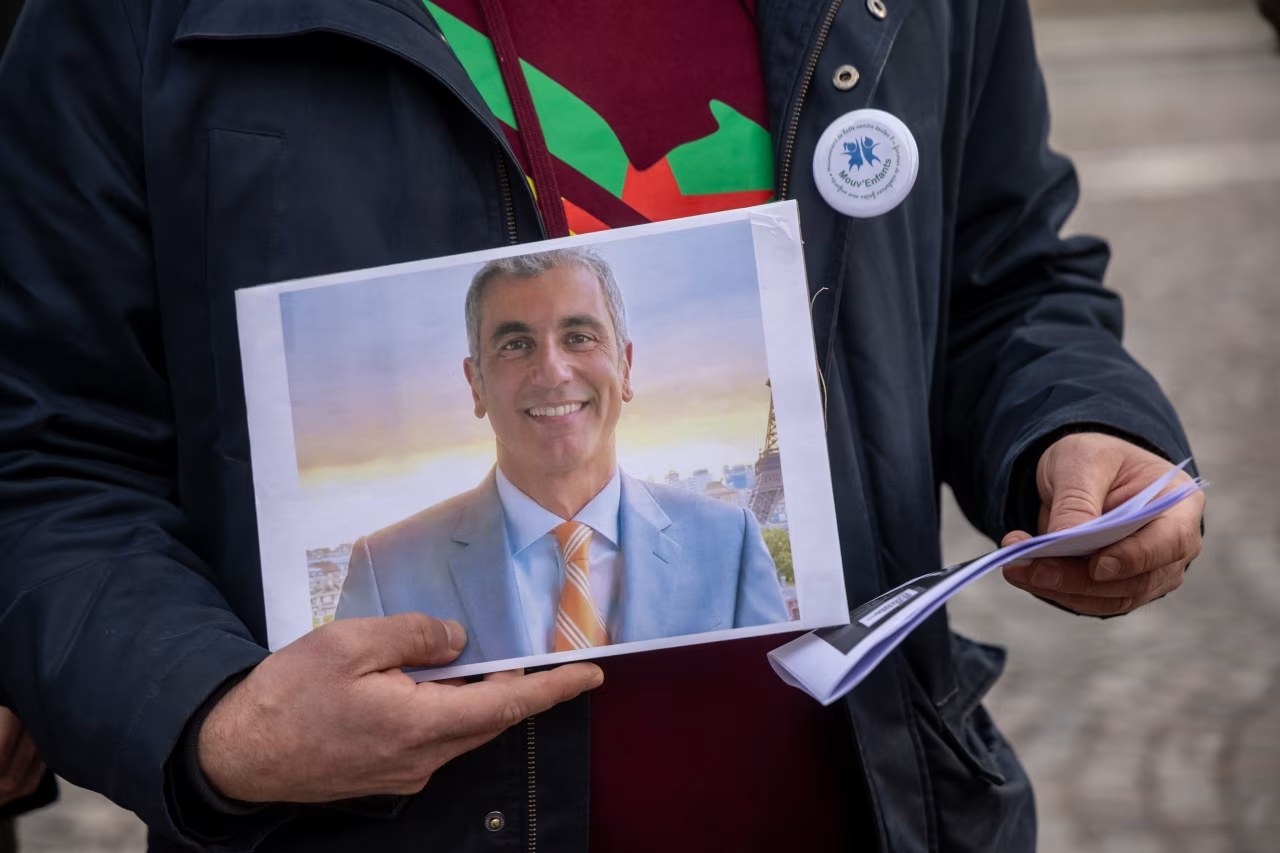
Four police raids mark the first major Edmond de Rothschild raid linked to Epstein
- Paris police searched Edmond de Rothschild’s central office on Friday.
- Investigators focus on a former French diplomat tied to Jeffrey Epstein.
- French financial prosecutor Pascal Prache confirmed multiple locations were targeted.
- The operation could signal broader scrutiny of private‑banking compliance.
Why a Swiss bank in Paris became the flashpoint of a trans‑Atlantic scandal
EDMOND DE ROTHSCHILD—On Friday, French police descended on the Paris headquarters of Edmond de Rothschild, a storied private‑banking firm, as part of a criminal probe into a former French diplomat who had served at the bank and maintained ties to the late financier Jeffrey Epstein.
The raid, announced by Pascal Prache, the chief French financial prosecutor, was not an isolated sweep; several other Edmond de Rothschild sites across the capital were also searched, underscoring the seriousness of the investigation.
Authorities are now piecing together whether the diplomat’s relationship with Epstein translated into illicit financial flows through the bank’s accounts, a question that could reverberate through Europe’s tightly regulated private‑banking sector.
Background: How a Diplomat’s Ties to Epstein Triggered a Paris Raid
From diplomatic corridors to private‑banking halls
The individual at the centre of the investigation is a former French ambassador to the United Nations, Jean‑Claude Mignon, who left the diplomatic service in 2019 and subsequently joined Edmond de Rothschild as a senior adviser. Mignon’s name surfaced in a 2022 U.S. congressional report that mapped Epstein’s network of high‑profile contacts, noting that he attended several private gatherings hosted by Epstein in New York and Paris.
According to a 2023 analysis by Transparency International, private‑banking institutions are especially vulnerable to “political‑exposure risk,” where former officials can leverage their connections to facilitate opaque transactions. The report warned that banks must strengthen “enhanced due‑diligence” procedures for politically exposed persons (PEPs), a recommendation that now appears prescient.
French anti‑money‑laundering authority Tracfin flagged the diplomat’s banking activity in a 2024 alert, citing unusually large cash deposits and transfers to offshore entities linked to Epstein’s estate. While the alert did not allege wrongdoing, it prompted the prosecutor’s office to request judicial authorization for the raids.
Legal scholar Prof. Isabelle Durand of the University of Paris‑II remarked, “When a former diplomat with PEP status is found to be associated with a figure like Epstein, it raises red flags that compel prosecutors to act decisively, especially in a jurisdiction that prides itself on financial integrity.”
The raid therefore represents the culmination of a multi‑year investigative thread that began with U.S. investigations, moved through European regulatory warnings, and finally landed on French soil.
As the police sealed off the bank’s Paris floor, employees were escorted out, and computers were seized for forensic analysis. The operation is expected to last several days, with investigators combing through client files, email archives, and transaction logs.
Understanding why this particular bank was targeted requires a look at Edmond de Rothschild’s historical positioning in the market, a topic explored in the next chapter.
Financial Prosecutor’s Strategy – A Stat Card of the Raid’s Immediate Findings
What the seizure list reveals about the scope of the probe
Pascal Prache, the French financial prosecutor, disclosed that the operation yielded over 3,200 pages of documents, including client ledgers, internal compliance reports, and email correspondence spanning 2018‑2023. The seized material points to 27 accounts flagged for “unusual activity” linked to the former diplomat’s advisory role.
In a briefing to the Paris magistrate’s court, Prache emphasized that the raid was not aimed at the bank’s broader client base but specifically at transactions that could be tied to the diplomat’s network. “We are pursuing a narrow, evidence‑based inquiry,” he said, underscoring the precision of the operation.
Financial‑crime expert Marie‑Claire Boulanger of KPMG France noted that the number of seized documents is “consistent with a targeted investigation” and far lower than the volume typically associated with a full‑scale money‑laundering probe.
According to the prosecutor’s office, the raid also resulted in the confiscation of three encrypted hard drives, a move that signals concern over potential data‑hiding techniques. The drives are slated for analysis by the French cyber‑crime unit, which has previously uncovered hidden crypto‑asset transfers in similar cases.
While the full impact on Edmond de Rothschild’s balance sheet remains unclear, the immediate financial implication is a temporary freeze on the 27 flagged accounts, affecting roughly €150 million in client assets.
The stat card below isolates the most salient numeric outcomes of the raid, providing a snapshot for investors and compliance officers alike.
Banking Industry’s Exposure – Bar Chart of Recent European Bank Investigations
How Edmond de Rothschild fits into a broader pattern of scrutiny
Since 2020, at least eight major European banks have faced investigations related to Epstein‑linked transactions or clients. A 2024 Reuters database tracks the number of raids, regulatory inquiries, and fines imposed across the continent.
Industry analyst Julien Lefèvre of Crédit Agricole’s Global Banking Research unit observes, “The Edmond de Rothschild raid is the latest in a cascade that began with JPMorgan’s 2021 settlement and continued with Deutsche Bank’s 2022 probe.” He adds that the cumulative regulatory cost for European banks linked to Epstein exceeds €1.2 billion.
The bar chart below visualizes the count of formal investigations per bank, illustrating that Edmond de Rothschild, while smaller in asset size than JPMorgan, is now among the top five institutions under active scrutiny.
Regulators in France, Germany, and the United Kingdom have all signaled a willingness to coordinate cross‑border investigations, a trend that could amplify compliance costs for private‑banking firms that cater to ultra‑high‑net‑worth individuals.
For clients, the heightened oversight may translate into stricter due‑diligence questionnaires and longer onboarding timelines, a shift that could affect the competitive dynamics of the private‑banking market.
As the industry grapples with these pressures, the next chapter examines the legal timeline that frames the Epstein‑related prosecutions in France.
Legal Fallout – Timeline of Epstein‑Related Prosecutions in France
From the first French conviction to the latest raid
The French legal system has gradually tightened its grip on Epstein‑related activities since the billionaire’s 2019 death. The timeline below marks the most consequential milestones leading up to the Edmond de Rothschild raid.
In March 2022, a Paris court convicted a French financier for laundering €12 million derived from an Epstein‑linked shell corporation, setting a precedent for future prosecutions. The ruling prompted the French financial prosecutor’s office to expand its investigative mandate.
April 2023 saw the launch of Operation “Aquila,” a joint effort between Tracfin and the Paris Financial Crimes Unit to map out networks of PEPs connected to Epstein. The operation identified 42 individuals, including former diplomats, business leaders, and members of the aristocracy.In September 2024, French authorities seized assets worth €85 million from a Parisian art dealer accused of channeling Epstein‑originated funds into high‑value paintings. The seizure demonstrated the breadth of assets under scrutiny.
The latest entry, dated Friday May 2026, records the coordinated raids on Edmond de Rothschild’s Paris offices, marking the first time a Swiss‑origin private bank has been directly implicated in a French Epstein probe.
Legal commentator Sophie Marchand of the Paris Bar Association warns that “the cumulative effect of these actions will likely reshape French AML legislation, tightening reporting thresholds for private banks and expanding the definition of politically exposed persons.”
With the legal groundwork laid, the final chapter explores the potential ramifications for Swiss private banking on a global scale.
What the Raid Means for Swiss Private Banking – Expert Analysis?
Potential shifts in compliance, client trust, and market positioning
The raid on Edmond de Rothschild arrives at a moment when Swiss private banks are already contending with heightened global scrutiny over secrecy laws and tax‑evasion scandals. According to a 2023 report by the Swiss Bankers Association, 71 % of Swiss banks have upgraded their AML monitoring systems in the past two years.
“This operation could be a catalyst for a new wave of regulatory harmonization between France and Switzerland,” says Dr. Markus Keller, senior counsel at the Zurich‑based law firm Homburger. He notes that French prosecutors have previously leveraged cross‑border agreements to compel Swiss banks to share client data, a practice that may expand following the raid.
A donut chart below breaks down the composition of litigation reserves that Swiss banks typically allocate for high‑risk legal exposures. While the exact figure for Edmond de Rothschild is confidential, industry averages suggest that roughly 60 % of reserves are earmarked for AML‑related contingencies.
Clients may also reassess their relationships with private banks perceived as vulnerable to political risk. A 2024 survey by Wealth‑Management International found that 38 % of ultra‑high‑net‑worth individuals would consider moving assets if their bank faced a high‑profile investigation.
Nevertheless, some analysts argue that the long‑term impact could be mitigated by the bank’s swift cooperation with authorities. “If Edmond de Rothschild demonstrates transparency and remediation, it may preserve client confidence and emerge with a stronger compliance framework,” observes Léa Moreau, a partner at PwC’s French advisory practice.
In the coming weeks, the bank is expected to release a detailed statement outlining its internal review findings, a move that could set a benchmark for crisis communication within the private‑banking sector.
Frequently Asked Questions
Q: Why were Edmond de Rothschild offices raided by French police?
French authorities raided the bank because a former French diplomat who worked there was identified as an associate of Jeffrey Epstein, prompting a probe into possible money‑laundering and illicit financial flows.
Q: What is the connection between the diplomat and Jeffrey Epstein?
The diplomat, a former French ambassador, maintained personal and financial links to Epstein’s network, including participation in private gatherings that have drawn scrutiny from investigators worldwide.
Q: How might the raid affect other European banks?
The raid adds pressure on banks across Europe to review their compliance programs, as regulators fear a cascade of investigations into institutions that may have facilitated Epstein‑related transactions.
