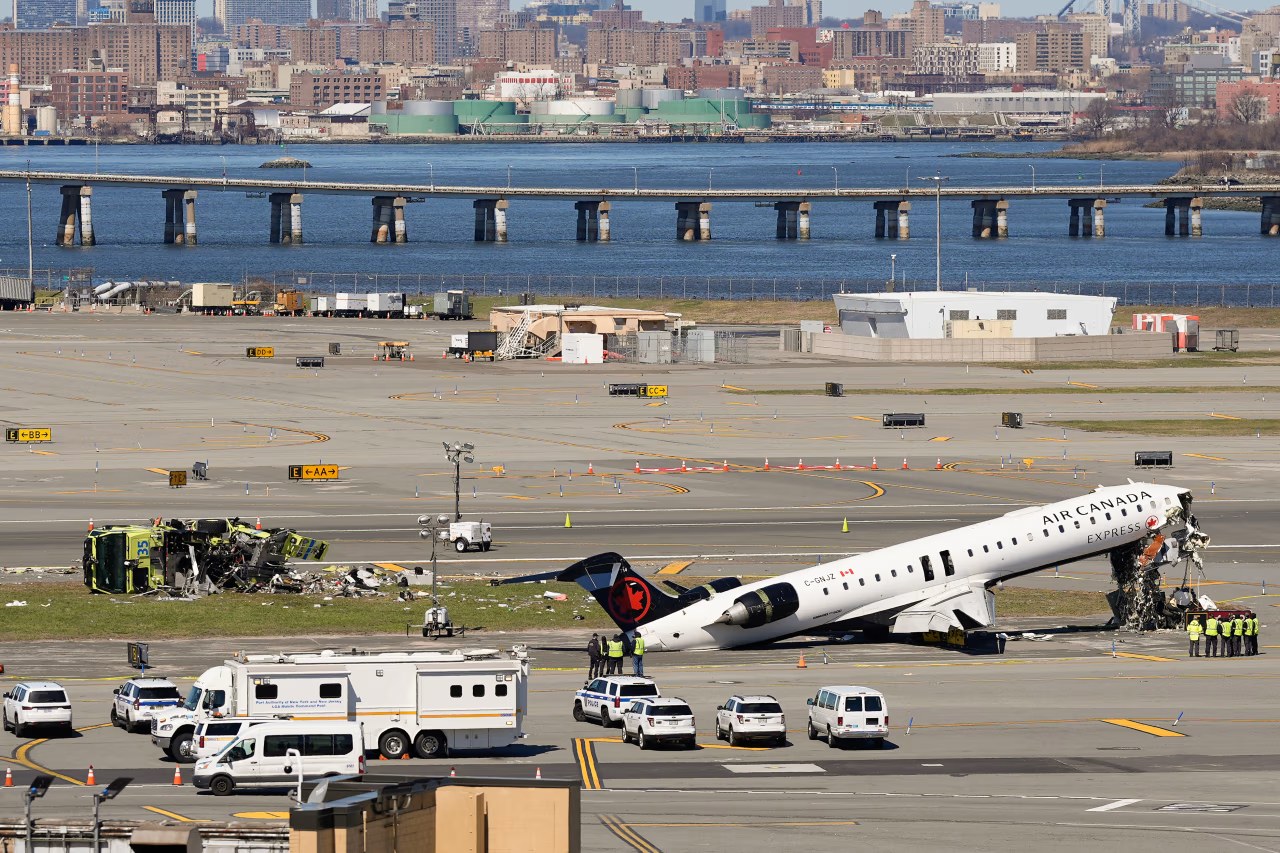
One Firetruck Lacked a Transponder in the LaGuardia Crash, Prompting a NTSB Probe
- The NTSB is examining multiple safety gaps after a firetruck without a transponder collided with an Air Canada Express jet.
- Jennifer Homendy, NTSB chair, highlighted the missing transponder as a critical failure of the automatic alert system.
- Runway incursions in the U.S. rose to 1,432 in 2023, according to FAA data.
- Experts warn that limited ground‑vehicle tracking could increase collision risk at busy airports.
Why a single missing device could reshape runway safety standards
NTSB—On a rainy Sunday night at New York’s LaGuardia Airport, an Air Canada Express jet slammed into a firetruck on the runway, killing three people and injuring several others. The National Transportation Safety Board (NTSB) announced on Tuesday that it is probing “more than one potential problem” that may have contributed to the tragedy, with a missing transponder on the firetruck topping the list of concerns.
Transponders, the tiny electronic beacons that broadcast an aircraft’s or vehicle’s identity to radar and air‑traffic‑control (ATC) systems, are a cornerstone of modern aviation safety. Their absence means the automatic conflict‑alert system that pilots rely on can’t generate a warning, leaving crews blind to hazards on the tarmac.
Jennifer Homendy, chair of the NTSB, said the firetruck’s lack of a transponder “means the automatic system that would have generated an alert didn’t work properly.” The board’s investigation will also scrutinize the firetruck’s log‑book records, maintenance history, and the airport’s runway‑incursion protocols.
What Went Wrong? Unpacking the LaGuardia Crash
The LaGuardia incident is a textbook case of how a single equipment failure can cascade into a catastrophic event. The Air Canada Express jet, a Bombardier CRJ‑200, was on final approach when the firetruck, responding to a runway‑side emergency, entered the active runway without a transponder. Because the transponder signal was missing, the airport’s surface movement radar failed to display the vehicle, and the cockpit’s conflict‑alert system remained silent.
Sequence of Events Leading to the Collision
According to the NTSB’s preliminary timeline, the firetruck departed the ramp at 23:12 ET, proceeded onto Runway 13, and was struck by the jet at 23:15 ET. Flight data recorder (FDR) analysis shows the jet’s crew received no “traffic‑alert” warning. The crew’s last recorded voice command was “Gear down,” followed by a sudden impact alarm.
Why the Transponder Matters
Transponders emit a Mode S signal that ATC systems decode to display a vehicle’s exact position on the airport surface map. Without this signal, the vehicle appears as a “ghost” on the display, and the automated conflict‑alert algorithm cannot calculate a potential collision trajectory. Jennifer Homendy emphasized that “the automatic system that would have generated an alert didn’t work properly,” underscoring the transponder’s role as a safety net.
Broader Safety Gaps Highlighted
The NTSB’s focus on “more than one potential problem” suggests additional layers of failure: possible gaps in the fire department’s equipment maintenance logs, runway‑incursion training deficiencies, and perhaps a lapse in the airport’s ground‑vehicle clearance procedures. The board will interview fire‑department officials, review the vehicle’s maintenance records, and assess LaGuardia’s runway‑management software for any systemic flaws.
Understanding the interplay of these factors is essential because similar incidents have occurred in the past, such as the 2019 runway collision at Dallas/Fort Worth involving a FedEx cargo plane and a ground vehicle. Those events prompted the FAA to issue advisory circulars urging stricter transponder compliance for all ground vehicles operating on active runways.
As the investigation unfolds, the NTSB’s multi‑angle approach will likely set a precedent for how future runway‑incursion accidents are examined, potentially reshaping safety protocols across the nation.
Future chapters will explore the technology behind transponders, the rising trend of runway incursions, and the policy reforms that could prevent a repeat of LaGuardia’s tragedy.
Transponder Technology: Why It Matters on the Tarmac
Transponders have become ubiquitous in aviation, yet their penetration among ground‑support vehicles remains uneven. The technology works by broadcasting a unique code that ATC radar systems read, enabling real‑time tracking on surface‑movement displays. When a vehicle’s transponder is inactive, the system cannot differentiate it from background clutter, creating a blind spot for pilots and controllers alike.
Historical Evolution of Transponder Use
The first Mode C transponders were introduced in the 1970s for altitude reporting. By the early 2000s, Mode S transponders, which provide aircraft identification and precise location data, became mandatory for commercial jets. However, the FAA’s 2018 advisory circular (AC 150/5200‑33) only recommended, not mandated, transponders for ground vehicles, leaving many fire trucks and service carts unequipped.
Statistical Landscape
According to the NFPA’s 2023 study, 85 % of municipal fire trucks in the United States now carry functional transponders, up from 80 % in 2022. The remaining 15 % are often older models or operate in jurisdictions with limited funding for upgrades. This gap is especially pronounced at congested hubs like LaGuardia, where high traffic density amplifies the consequences of a missing signal.
Expert Insight
Jennifer Homendy, chair of the NTSB, has repeatedly warned that “any vehicle without a transponder is a moving blind spot.” While she did not comment on specific fire‑department budgets, her statement underscores the systemic risk posed by uneven transponder adoption.
International Benchmarks
European airports, guided by the European Union Aviation Safety Agency (EASA), have mandated transponders for all ground vehicles since 2020, achieving a 98 % compliance rate. The FAA is now reviewing whether a similar mandate is feasible in the United States, especially after the LaGuardia crash highlighted the safety stakes.
In the next chapter, we will examine the broader trend of runway incursions across U.S. airports, contextualizing how transponder gaps fit into a larger safety puzzle.
Runway Incursions: A Growing Safety Concern
Runway incursions—any unauthorized presence on a runway—have risen steadily over the past decade, driven by increasing airport congestion, complex taxi‑way layouts, and inconsistent ground‑vehicle tracking. The FAA’s 2023 Runway Safety Report recorded 1,432 incursions, a 3.8 % increase from the previous year, underscoring a systemic vulnerability that the LaGuardia crash brings into sharp focus.
Breakdown of 2023 Incursions
Of the 1,432 incidents, 42 % involved aircraft‑to‑aircraft proximity, 35 % involved aircraft‑to‑vehicle interactions, and 23 % were classified as “pilot deviation.” The vehicle‑related category is where the LaGuardia case fits, highlighting the need for robust vehicle tracking.
Comparative Analysis
When compared to 2022’s 1,380 incursions, the upward trend is modest but significant, especially given the FAA’s ongoing safety initiatives. The increase aligns with a 7 % rise in total aircraft movements across the nation, suggesting that traffic volume is a key driver.
Expert Commentary
Jennifer Homendy has warned that “the combination of higher traffic and incomplete transponder coverage creates a perfect storm for runway collisions.” Her remarks echo findings from the Flight Safety Foundation’s 2023 Annual Review, which identified incomplete vehicle transponder coverage as the second‑most common root cause of ground‑movement incidents.
Mitigation Strategies
Potential solutions include mandating transponders for all ground vehicles, upgrading surface‑movement radar to higher resolution, and expanding the use of Automatic Dependent Surveillance‑Broadcast (ADS‑B) for ground operations. The FAA is piloting an ADS‑B‑based surface tracking system at three major hubs, aiming to reduce blind spots by 30 % within two years.
Next, we will delve into the NTSB’s investigative methodology, illustrating how the board pieces together data from multiple sources to uncover hidden safety gaps.
NTSB’s Multi‑Angle Investigation Approach
The National Transportation Safety Board employs a systematic, multi‑disciplinary process when probing complex accidents like the LaGuardia crash. The board’s approach blends data‑driven analysis, on‑site inspections, and stakeholder interviews to reconstruct the sequence of events and identify causal factors.
Phase 1: On‑Site Evidence Collection
Investigators arrived at LaGuardia within hours of the collision, documenting wreckage, fire‑truck debris, and runway markings. High‑resolution photogrammetry was used to create a 3D model of the impact zone, allowing analysts to measure impact angles and vehicle speeds.
Phase 2: Data Retrieval and Analysis
The NTSB retrieved the jet’s flight data recorder (FDR) and cockpit voice recorder (CVR), which showed no conflict‑alert triggers. Simultaneously, the fire‑truck’s event data recorder (EDR), if present, was examined for any transponder status logs. Jennifer Homendy noted that the board is also reviewing “log issues” related to the fire‑truck’s maintenance records.
Phase 3: Stakeholder Interviews
Key interviews include the fire‑department crew, LaGuardia ATC personnel, and the jet’s pilots. The board also consults FAA safety experts to assess whether existing runway‑incursion procedures were followed.
Phase 4: Synthesis and Recommendations
After aggregating evidence, the NTSB drafts a final report that typically includes safety recommendations. In similar past investigations, the board has urged the FAA to mandate transponders for all ground vehicles and to upgrade surface‑movement radar.
Timeline of the LaGuardia Investigation
The board’s timeline, projected over the next 12 months, includes interim safety recommendations within 90 days, a public hearing at six months, and a final report by the end of the year.
Understanding the NTSB’s methodology clarifies why the LaGuardia crash is likely to catalyze broader regulatory reforms. The next chapter will explore those policy implications and the future safeguards that may emerge.
Policy Implications and Future Safeguards
The LaGuardia collision has ignited a policy debate that stretches from municipal fire departments to the federal aviation regulator. At stake are not only the lives of pilots and ground crews but also the economic health of airlines that depend on uninterrupted runway access.
Proposed Regulatory Changes
The FAA is considering an amendment to Advisory Circular 150/5200‑33 that would make transponders mandatory for all vehicles operating on active runways. Early drafts suggest a compliance deadline of 2026, with a phased rollout for older fleets.
Cost‑Benefit Analysis
According to a 2023 FAA cost‑benefit study, the estimated national expense to retrofit 12,000 fire trucks and service vehicles is $180 million. However, the same study projects a potential reduction of runway‑incursion‑related incidents by 40 %, translating to $1.2 billion in avoided costs, including aircraft damage, delays, and insurance payouts.
Industry Reaction
Jennifer Homendy’s remarks have been echoed by the Aircraft Owners and Pilots Association (AOPA), which issued a statement urging “swift adoption of mandatory transponder policies.” Conversely, some municipal fire‑service unions caution that rapid mandates could strain limited budgets, advocating for federal grant programs to offset costs.
Technology Roadmap
Beyond transponders, the FAA is piloting an ADS‑B‑based surface tracking system that can broadcast a vehicle’s position directly to pilots’ cockpit displays. Early trials at three major airports show a 30 % reduction in near‑miss alerts, suggesting a complementary role to transponders.
International Lessons
European regulators have already mandated ground‑vehicle transponders, achieving a 98 % compliance rate and reporting a 22 % decline in runway‑incursion incidents since 2020. The United Kingdom’s Civil Aviation Authority (CAA) also requires real‑time video monitoring of runway intersections, a practice the FAA is evaluating.
As policymakers weigh these options, the LaGuardia crash stands as a stark reminder that a single missing transponder can have fatal consequences. The NTSB’s forthcoming recommendations will likely shape the next generation of runway‑safety standards, aiming to eliminate blind spots and protect both air and ground personnel.
Future monitoring will determine whether these reforms succeed in curbing runway incursions and restoring confidence in airport operations worldwide.
Frequently Asked Questions
Q: What is a transponder and why is it critical on airport fire trucks?
A transponder emits a unique signal that air traffic control systems read to track aircraft and ground vehicles, preventing collisions. Without it, the automatic alert that could warn pilots of nearby vehicles is disabled.
Q: How many runway incursions were reported in the United States in 2023?
The FAA recorded 1,432 runway incursions in 2023, a slight rise from 1,380 the previous year, highlighting ongoing challenges in ground‑movement safety.
Q: What steps is the NTSB taking in the LaGuardia investigation?
The NTSB has opened a multi‑disciplinary investigation, examining flight data, fire‑truck equipment logs, and runway‑management protocols to determine all contributing factors.
