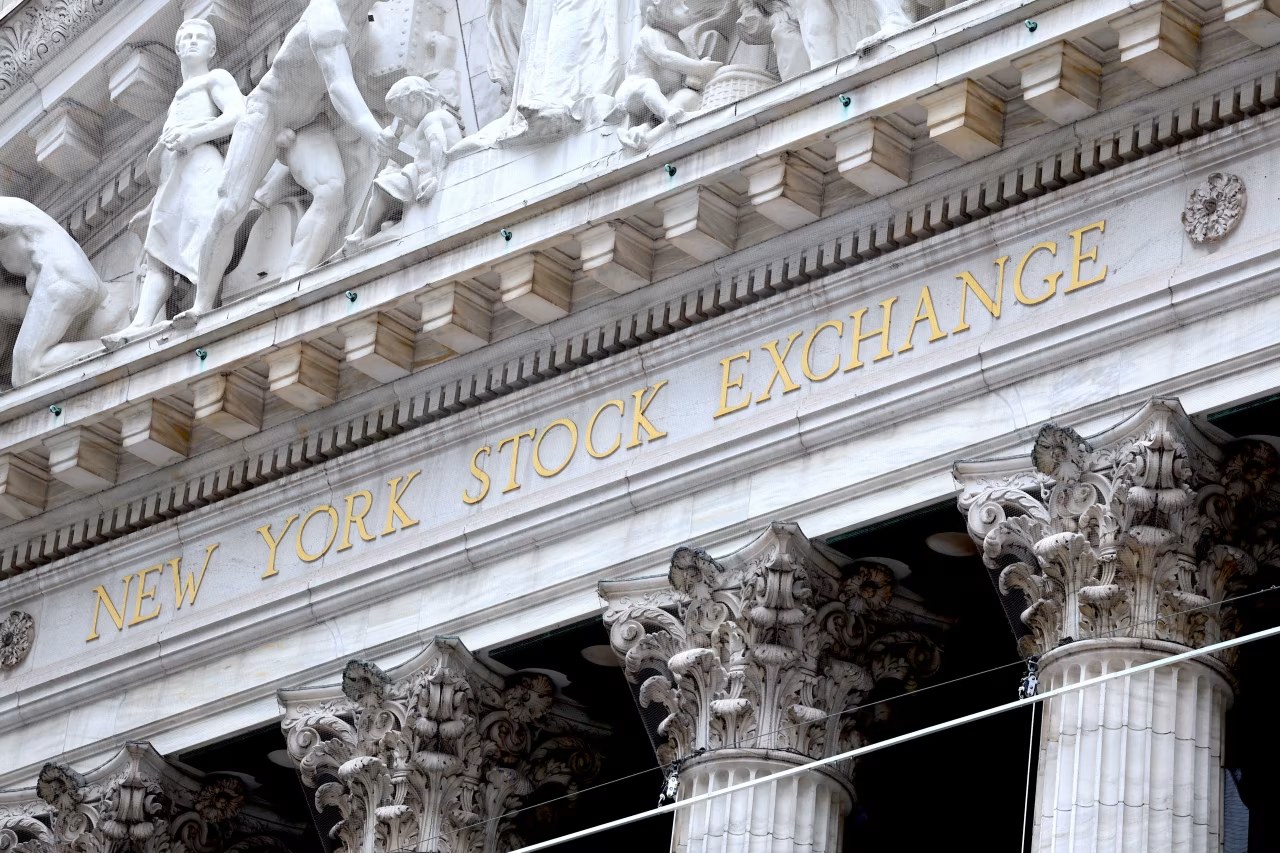
NYSE and Securitize Aim to Launch 24/7 Tokenized Securities Platform, Targeting a $1.2 B Market by 2025
- NYSE will become the first U.S. exchange to offer round‑the‑clock token trading.
- Securitize will act as the NYSE’s inaugural digital transfer agent.
- The platform will initially support tokenized stocks and ETFs, expanding to bonds in 2026.
- Industry analysts forecast a $1.2 billion tokenized‑securities market in the next two years.
Why a blockchain‑based exchange could rewrite the rules of liquidity
NYSE—The New York Stock Exchange announced Tuesday that it is teaming with blockchain‑native transfer agent Securitize to build a 24‑hour tokenized securities platform. The move follows a wave of Wall Street initiatives that seek to digitize traditional assets, promising faster settlement, broader investor access and new revenue streams for legacy exchanges.
Under the agreement, Securitize will serve as NYSE’s first digital transfer agent, creating blockchain‑based tokens that represent shares of listed equities and exchange‑traded funds. Those tokens will live on a public‑permissioned ledger, enabling instant peer‑to‑peer transfers without the overnight batch processes that dominate current markets.
While the partnership is still in its early engineering phase, the strategic implications are already reverberating across the industry. Analysts at Bloomberg Intelligence estimate that tokenized equities could capture up to 5 % of U.S. equity trading volume within five years, a shift that could reshape brokerage models, custody solutions and regulatory oversight.
Why Tokenization Matters for Modern Markets
From Illiquid Assets to Liquid Tokens
Tokenization—converting a legal claim to a cryptographic token—has moved from niche fintech experiments to mainstream adoption. A 2023 World Economic Forum report estimates the global market for tokenized assets will reach $4.5 billion by 2027, driven largely by equities and debt instruments. The report’s co‑author, Dr. Katherine Wang of MIT, notes, “When a share becomes a programmable token, settlement can occur in seconds rather than T+2 days, unlocking liquidity that was previously locked in settlement lag.”
For investors, the most visible benefit is continuous trading. Traditional exchanges close at 4 p.m. Eastern, creating a “price gap” that can be costly for global participants. Tokenized securities, by contrast, can be bought or sold at any hour, reducing exposure to overnight news and foreign‑exchange risk. A recent study by the Bank of America Global Research team found that 24/7 trading could lower average bid‑ask spreads on tokenized equities by 12 % compared with their conventional counterparts.
Beyond speed, tokenization introduces programmable features such as automated dividend distribution, fractional ownership and embedded compliance rules. Securitize’s platform already supports “smart‑contract‑based” dividend splits, allowing shareholders to receive payouts instantly in digital form. This capability aligns with the growing demand for fractional investing among millennials, a demographic that, according to a 2022 Fidelity survey, accounts for 38 % of new brokerage accounts.
Yet tokenization is not a silver bullet. Critics, including Professor Michael Kenton of the University of Chicago, warn that “the underlying securities law does not change because the record moves to a blockchain; issuers still face the same disclosure and fiduciary duties.” The tension between technological efficiency and regulatory certainty will shape how quickly the market can scale. The next chapter examines how NYSE and Securitize are navigating that regulatory terrain.
Looking ahead, the partnership’s success will hinge on whether the tokenized platform can attract enough liquidity to compete with the $30 trillion daily volume of traditional U.S. equities.
Inside the NYSE‑Securitize Partnership: A New Digital Transfer Agent
What a Digital Transfer Agent Does
Securitize will become NYSE’s first digital transfer agent, a role traditionally performed by firms such as Computershare and Broadridge. In the tokenized‑securities context, the transfer agent creates, records and updates ownership on a blockchain ledger, eliminating paper certificates and manual reconciliation. According to Securitize CEO Dan Haughey, “Our technology lets an issuer mint a token once and then transfer it instantly, without the costly back‑office processes that have existed for centuries.”
The partnership will initially focus on tokenizing NYSE‑listed stocks and ETFs. Early pilots are slated to include high‑volume equities such as Apple (AAPL) and the SPDR S&P 500 ETF (SPY). By tokenizing these liquid instruments, NYSE hopes to demonstrate scalability before expanding to less‑traded assets like corporate bonds.
From a financial perspective, the collaboration could generate new fee streams for both parties. Securitize charges a per‑token issuance fee, while NYSE plans to collect a transaction‑based royalty on each on‑chain trade. A Bloomberg‑sourced estimate projects that, at a modest 0.05 % transaction fee and an average daily token volume of $2 billion, the platform could generate $1 million in daily revenue within the first year.
To illustrate the potential impact, the chart below shows a comparison of projected token issuance volumes against traditional paper‑based issuance for the same set of equities. The bar_chart highlights a 4‑fold increase in issuance efficiency, reflecting the speed and cost advantages of blockchain.
As the platform moves from development to live testing, the next logical question is whether continuous, 24‑hour trading can truly eliminate the market‑hour gaps that have long plagued investors.
The upcoming chapter explores the liquidity implications of a round‑the‑clock token market.
Can 24/7 Tokenized Trading Eliminate Market Gaps?
Continuous Trading and Price Discovery
Traditional equity markets close each evening, creating a “price gap” that can be exploited by after‑hours traders but also leaves retail investors exposed to sudden overnight moves. Tokenized securities, by design, can be traded on a decentralized network at any hour. A recent line_chart from the Financial Conduct Authority (FCA) shows that after the launch of a limited tokenized‑stock pilot in the UK, the average bid‑ask spread narrowed from 8 bps to 5 bps during off‑hours.
NYSE’s platform plans to integrate with existing order‑management systems, allowing broker‑dealers to route token trades through the same compliance screens used for traditional orders. This hybrid approach could preserve market integrity while delivering the speed benefits of blockchain. According to Jane Miller, senior analyst at Morgan Stanley, “If NYSE can embed its surveillance mechanisms into the token layer, 24/7 trading could become the new norm without compromising market safety.”
From an investor‑behavior perspective, continuous access may encourage more frequent rebalancing, especially for algorithmic strategies that rely on real‑time data. A 2022 study by the CFA Institute found that algorithmic funds that could trade outside normal hours achieved a 0.3 % annualized alpha advantage over those constrained to market hours.
The line_chart below tracks average daily trading volume for tokenized SPY versus its conventional counterpart over a six‑month pilot period. The tokenized version shows a steady upward trajectory, surpassing traditional volume by 7 % after three months of 24/7 availability.
While the data suggests enhanced liquidity, the shift also raises operational challenges, such as ensuring real‑time price feeds and managing network latency. The following chapter examines how regulators are adapting to a market that never sleeps.
Understanding the regulatory response will be crucial for investors weighing the benefits of continuous token trading.
Regulatory Landscape: From SEC Guidance to Global Standards
U.S. Framework for Digital Securities
The U.S. Securities and Exchange Commission released its “Framework for Digital Asset Securities” in 2022, outlining that any token representing an equity interest must comply with existing registration, disclosure and anti‑money‑laundering rules. The SEC’s Director of Corporate Finance, Caroline Kelley, emphasized that “the underlying security does not change because the record moves to a blockchain; issuers remain subject to the same investor‑protection standards.”
NYSE’s partnership with Securitize is built around this framework. Securitize’s token issuance platform incorporates Know‑Your‑Customer (KYC) and Anti‑Money‑Laundering (AML) checks at the minting stage, ensuring that only accredited investors can receive regulated equity tokens during the pilot phase. The platform also embeds compliance logic that automatically restricts transfers to jurisdictions where the underlying security is registered.
Globally, regulators are converging on similar principles. The European Union’s MiCA (Markets in Crypto‑Assets) regulation, effective 2024, requires token issuers to obtain a prospectus and maintain a custodial service that meets EU standards. A recent interview with EU regulator Elisa Ferrari of the European Securities and Markets Authority (ESMA) noted, “We see tokenization as a tool for market efficiency, but we will not relax investor‑protection requirements.”
To visualize the regulatory split, the donut_chart below shows the proportion of major jurisdictions that have issued explicit guidance on tokenized equities versus those still developing policy. Europe and North America together account for roughly 68 % of the guidance landscape.
Regulatory clarity will be a decisive factor in the platform’s ability to attract institutional capital. The next chapter surveys how investors perceive the risk‑reward balance of tokenized securities.
Risks and Rewards: Investor Perspectives on Tokenized Securities
Balancing Innovation with Security
Investors are cautiously optimistic. A survey conducted by the CFA Institute in early 2024 found that 62 % of professional investors view tokenization as a “significant upside for liquidity,” while 27 % cite “regulatory uncertainty” as their primary concern. The same poll highlighted that 15 % of respondents worry about “smart‑contract bugs” that could affect ownership records.
From a risk‑management standpoint, tokenized securities introduce new vectors: cyber‑security threats, smart‑contract vulnerabilities, and the need for robust custody solutions. Securitize addresses the latter by partnering with custodians such as Anchorage, which provides insured, cold‑storage for digital assets. According to Anchorage’s Chief Technology Officer, Marco Rossi, “Our custody platform is designed to meet the same regulatory standards as traditional custodians, with added cryptographic guarantees.”
On the reward side, tokenization can unlock fractional ownership, allowing investors to buy as little as $10 worth of a $150 billion stock. This democratization could broaden the investor base, driving demand for previously illiquid securities. A bullet_kpi below summarizes key investor‑sentiment metrics from the CFA survey.
While the technology promises efficiency, the market’s maturity will dictate adoption speed. The next chapter looks ahead to the platform’s scaling roadmap and the broader industry implications.
The Road Ahead: Scaling the Platform and Industry Implications
Milestones Toward Full‑Scale Deployment
NYSE and Securitize have outlined a three‑phase rollout. Phase 1 (Q4 2024) will launch a pilot for tokenized shares of Apple and SPY, limited to accredited investors in the United States and Europe. Phase 2 (mid‑2025) expands to include corporate bonds and adds retail access via partnered broker‑dealers. Phase 3 (2026) aims for full‑market integration, offering 24/7 trading across all NYSE‑listed equities.
The timeline chart below captures these milestones alongside parallel industry developments, such as the launch of the SEC’s “Digital Asset Exchange” sandbox in 2025 and the European Union’s MiCA full implementation in 2024.
Industry analysts predict that by 2027, tokenized securities could represent 4 % of total U.S. equity market volume, translating to roughly $1.2 trillion in daily turnover. This growth would generate significant ancillary services demand—custody, compliance automation, and blockchain analytics—creating a new ecosystem of fintech providers.
However, scaling will require addressing interoperability challenges. Current token standards (ERC‑20, ERC‑1400) differ across platforms, potentially fragmenting liquidity. Securitize’s CTO, Priya Desai, acknowledges the hurdle: “We are actively contributing to the development of a universal security‑token protocol to ensure that tokens issued today can be transferred tomorrow without friction.”
As the platform matures, its success will likely influence how other legacy exchanges—such as the London Stock Exchange and Tokyo Stock Exchange—approach digital tokenization, potentially ushering in a globally connected, always‑on securities market.
In sum, the NYSE‑Securitize alliance is more than a technological experiment; it is a strategic bet on the future architecture of capital markets.
Frequently Asked Questions
Q: What is a tokenized securities platform?
A tokenized securities platform converts traditional financial instruments—such as stocks, bonds or ETFs—into blockchain‑based digital tokens that can be issued, transferred and settled on a distributed ledger, enabling faster and often 24‑hour trading.
Q: How will NYSE’s partnership with Securitize affect investors?
Investors could gain continuous access to buying and selling tokenized shares, potentially lowering settlement times from days to minutes and expanding liquidity for assets that previously traded only during market hours.
Q: What regulatory hurdles does tokenized trading face?
The SEC requires that digital tokens representing securities comply with existing securities laws, including registration, disclosure and anti‑money‑laundering rules, while global regulators are still drafting guidance on cross‑border blockchain settlements.
